Haití
Nayib Bukele
Viv Ansanm
El Salvador
Erik Prince
Crisis humanitaria
Pandillas
Fuerzas armadas
Nayib Bukele envió más de dos mil soldados salvadoreños a Haití con la excusa de rescatar a cuatro técnicos aeronáuticos, pero este despliegue militar pronto se convirtió en una promesa de combatir a las bandas criminales que controlan más del 80 por ciento de la capital, y en una apuesta de imagen de Bukele. Sus tropas ya han ejecutado un par de ataques muy publicitados contra posiciones dominadas por pandillas haitianas. La escala de la ofensiva, la opacidad de los acuerdos y la falta de claridad sobre quién dirige las operaciones han desatado dudas sobre sus objetivos y consecuencias. En este episodio hablamos con Diego Da Rin, analista del International Crisis Group, para entender qué está haciendo El Salvador en Haití, cuál ha sido la reacción de la población y en qué tipo de escenario se inserta la intervención salvadoreña, que puede volverse un arma de doble filo.
Créditos:
-
Producción
Jesús Delgadillo -
Edición
Eliezer Budasoff, Daniela Cruzat -
Verificación de datos
Bruno Scelza -
Producción digital
Samantha Proaño, Franklin Villavicencio, Diego Corzo -
Diseño de sonido y mezcla
Elías González -
Música
Elías González -
Tema musical
Pauchi Sasaki -
Fotografía
Getty Images / Clarens Siffroy
Etiquetas:
Transcripciones:
Transcripción:
Eliezer Budasoff: Hola. Antes de empezar con el episodio de hoy quiero contarles que esta semana comenzó nuestra campaña de membresías más importante del año y necesitamos tu apoyo más que nunca. Desde el año que viene, El hilo será 100% independiente, es decir que para cada episodio que produzcamos, debemos encontrar cómo financiarlo.
Hoy en El hilo buscamos entender el objetivo y los efectos del despliegue militar de El Salvador en Haití, cuál es la apuesta de Nayib Bukele, y hasta qué punto puede ayudar a recuperar el territorio controlado por pandillas o se puede volver un arma de doble filo para la imagen que quiere mantener Bukele. En otros episodios tratamos de entender por qué tantas familias en América Latina se endeudan para pagar el alquiler o la comida, cómo hizo el partido de Lula para cambiar el rumbo de las elecciones en Brasil y cómo se usan los algoritmos para decidir nuestro futuro.
Son realidades muy distintas, pero detrás de cada episodio nos preguntamos qué significa lo que está pasando en América Latina, qué podemos aprender de las noticias y por qué importa.
Si valoras nuestro trabajo y tienes posibilidades, ayúdanos con una donación, ya sea por una sola vez o con un aporte mensual. Nuestro periodismo depende del apoyo de oyentes como tú. Nuestra meta es que 3.000 oyentes puedan contribuir antes de que termine el año. Entra a elhilo.audio barra donar. Todo suma, cualquier monto es importante. ¡Mil gracias!
Aquí el episodio.
Bienvenidos a El hilo, un podcast de Radio Ambulante Studios. Soy Eliezer Budasoff.
Archivo audio, Presentadora, Meganoticias: Helicópteros militares atacando edificios y más de dos mil soldados desplegados.
Archivo audio, Presentador, FRANCE 24 Español: A finales de octubre, el mandatario salvadoreño envió sus tropas a suelo haitiano.
Archivo audio, Presentadora, BBC Mundo: Todo empezó luego de que cuatro militares salvadoreños desaparecieran.
Archivo audio, Presentador, FRANCE 24 Español: Durante un ataque de grupos criminales en la capital Puerto Príncipe.
Archivo audio, Presentadora, Telemundo: El presidente Nayib Bukele presentó el despliegue como una misión de rescate.
Archivo audio, Nayib Bukele, FRANCE 24 Español: Nuestra misión no es para acabar con las pandillas de Haití, pero nuestra misión es para rescatar a nuestros cuatro aerotécnicos. Ahora bien, si no los entregan por las buenas, pues los vamos a rescatar por las malas.
Eliezer: A finales de octubre, Nayib Bukele envió más de dos mil soldados salvadoreños a Haití: es el contingente más grande que ha desplegado un país en suelo haitiano desde el retiro de la Misión de Estabilización de las Naciones Unidas en 2017.
El objetivo inicial de esta misión, según el gobierno de El Salvador, era rescatar a cuatro técnicos militares salvadoreños que desaparecieron después de una emboscada en las afueras de Puerto Príncipe, la capital del país, controlada en más de un 80% por bandas criminales. Pero el discurso de Bukele pronto se volvió mesiánico y publicitario: dijo que el creador del universo estaba con sus soldados y que las pandillas eran satánicas, prometió que Haití volvería a ser libre, publicó un video con filmaciones cinematográficas de helicópteros bombardeando la casa de un jefe pandillero como “regalo al pueblo haitiano” en el aniversario de una batalla por la independencia… Parece claro que el presidente salvadoreño está apostando por algo más que el rescate de sus técnicos. Lo que no queda muy claro es cuál es su apuesta.
La escala de la ofensiva, la opacidad de los acuerdos establecidos para este despliegue y la falta de claridad sobre quién dirige las operaciones han abierto una serie de dudas sobre sus objetivos y sus consecuencias. Además de un par de ataques muy publicitados contra posiciones controladas por las pandillas haitianas, la intervención salvadoreña pone a prueba la imagen que ha construido Bukele sobre su modelo de seguridad en la región y su capacidad para combatir a los grupos criminales, justo en el momento en que empieza su nueva campaña por una segunda reelección.
En este episodio hablamos con Diego Da Rin, analista del International Crisis Group, para entender qué está haciendo El Salvador en Haití, cuál ha sido la reacción por parte de la población y en qué tipo de escenario se inserta la operación salvadoreña, que puede convertirse en un arma de doble filo para Bukele.
Eliezer: Es 27 de noviembre de 2026.
Hacemos una pausa y volvemos.
Estamos de vuelta en El hilo.
Diego, mira, nosotros hicimos un episodio sobre Haití en mayo, en un momento que ya parecía bastante crítico, ¿no? La misión liderada por Kenia se estaba retirando con malos resultados, entraba una nueva misión internacional respaldada por la ONU y las pandillas seguían expandiendo un control brutal sobre Puerto Príncipe, ¿no? Entonces, para empezar, nos gustaría si nos puedes contar qué ha pasado desde entonces, ¿no? ¿Qué resultados ha tenido la nueva fuerza internacional y cómo ha evolucionado la crisis humanitaria en estos meses?
Diego Da Rin: La misión liderada por Kenia había sido una especie de nuevo modelo de mantenimiento de paz, porque en 2022, cuando el gobierno haitiano pidió un apoyo de seguridad para ayudar a luchar contra las pandillas, había tres alternativas. La primera era un despliegue bilateral de tropas de algún país con capacidades militares y técnicas para llevar a cabo operaciones de alto riesgo en una ciudad, en barriadas densamente pobladas como en Puerto Príncipe. Muchos claramente miraban hacia los lados de Estados Unidos, pero tanto la administración Biden como la administración Trump han dejado claro que, por ahora, no quieren mandar tropas estadounidenses a Puerto Príncipe ni a Haití. La segunda alternativa era una operación de mantenimiento de la paz de la ONU, como la que estuvo en Haití entre 2004 y 2017, la MINUSTAH, que dejó un legado, que estuvo mancillado por casos abuso sexual y por la introducción de cólera pocos meses después del terrible terremoto de 2010, pero que ayudó a disminuir los niveles de violencia de manera importante. Solo que no hubo fuerzas de seguridad en Haití que pudieran mantener esos niveles, esas mejorías de seguridad que se habían logrado con el apoyo de la misión. La tercera alternativa era intentar algo nuevo y eso fue lo que se intentó en 2023, cuando Estados Unidos, bajo la administración Biden propuso, junto con Ecuador, al Consejo de Seguridad de la ONU aprobar una misión que iba a ser una coalición de países que iba a mandar tropas, iba a ser una operación policial y que iba a ser financiada por contribuciones voluntarias. He ahí la principal flaqueza de ese antiguo modelo. Y por eso, la misión nunca llegó a desplegar más de 40 % de los dos mil quinientos policías que esperaba tener en el terreno y nunca logró implementar su estrategia para luchar contra las pandillas y retomar territorio. Por eso la administración Trump en 2025, propuso un nuevo modelo para tener un financiamiento más seguro, ya que la nueva misión está financiada principalmente por el Fondo de Mantenimiento de la Paz de la ONU, a través de una oficina que se encarga de la logística de la misión. Esa era otra debilidad de la antigua misión. No contaba con todos los servicios logísticos que las operaciones de mantenimiento de la paz de la ONU normalmente han tenido en otros contextos. Entonces, esta nueva misión tiene mejor logística, un financiamiento más seguro y, sobre todo, esta es una operación con un mandato mucho más ofensivo.
El personal que está siendo desplegado es personal militar, no policial. Esta nueva misión entonces comenzó a ser desplegada en abril, hace poco más de seis meses, pero tuvo un despliegue más lento de lo que se tenía previsto. Por un lado, algunos de los países que prometieron contribuir tropas no tenían la preparación que se esperaba para desplegarse rápidamente. Pero por otro lado, también jugó el incremento en el costo de transporte marítimo y aéreo de tropas y material por la guerra en Irán. Entonces, por estas dos razones, principalmente, el despliegue se demoró un poco más. También estos despliegues tienen que cumplir con ciertos requisitos. Por ejemplo, tiene que haber un vetting, que es una examinación a profundidad de las tropas que van a ser desplegadas. Tiene que haber un entrenamiento para que cumplan con los protocolos de respeto de derechos humanos. Revisar todo el equipo que van a desplegar, tanto el material letal, armas, municiones, como carpas y otros utensilios que necesitan para su sostenimiento cotidiano. Así que es un despliegue que toma tiempo en hacerse y hasta recientemente, hasta antes del despliegue de las tropas salvadoreñas independientes, a finales de octubre, la misión no había llegado a su fase de operaciones decisivas contra las pandillas. Así que, por ejemplo, la población, vio con gran frustración que entre julio y agosto hubo terribles masacres llevadas a cabo por las pandillas en Kenscoff, que es una zona montañosa arriba de la capital, y la fuerza multinacional no pareció responder a esto. No fue desplegada en esa zona para apoyar operaciones para, contraatacar a las pandillas, porque precisamente la misión tiene un programa muy detallado de cómo se despliega y en qué áreas va a estar operando, con unos objetivos y metas muy detallados que están previstos meses antes de que se vayan a llevar a cabo.
Eliezer: Haití ya tenía varias fuerzas intentando contener a las pandillas, ¿no? Estaba la Policía Nacional, las Fuerzas Armadas haitianas, la Fuerza de Supresión de Pandillas y la empresa privada Vectus Global, ¿no? ¿Nos puedes explicar brevemente quién es quién y qué función tiene cada una, quién manda sobre todas ellas y qué tan coordinadas están entre ellas?
Diego Da Rin: Bueno, primero para comenzar por las fuerzas locales. Está la policía, que comenzó a ser creada en el 95, en la misma fecha cuando se desmanteló el ejército, y el ejército que está siendo ahora reconstruido desde hace algunos años.
Eliezer: Después de décadas de intervenir en la política, participar en golpes de Estado y cometer graves abusos contra la población, las Fuerzas Armadas de Haití se desmantelaron en 1995. En su lugar se creó la Policía Nacional civil, subordinada al Ministerio de Justicia. A pesar de recibir apoyo y entrenamiento internacional, el cuerpo de seguridad no cuenta con suficiente personal capacitado para lidiar con la crisis que enfrenta.
Diego: Hoy en día solo cuenta con alrededor de diez mil policías activos. Claramente, la mayoría de estos efectivos no están listos para ir al combate. Muchos de ellos son policías de tráfico, otros están asignados a protección como guardaespaldas de personalidades políticas, y solo algunos cientos de estos están realmente entrenados y tienen el equipo adecuado para ir a el tipo de combate de alta intensidad contra las pandillas. Las Fuerzas Armadas comenzaron a ser reinstauradas en el 2017, pero hasta hace pocos años comenzaron los esfuerzos realmente encaminados a tener una infantería. Realmente, hasta el año pasado comenzaron a haber, realmente entrenamientos para tener soldados que pudieran ir a apoyar las labores de combate contra las pandillas. Y la tercera fuerza importante acá es la compañía de seguridad privada Vectus Global, que es dirigida por Erik Prince, el fundador de Blackwater.
Eliezer: Erik Prince es un exintegrante de los Navy SEAL y el fundador de Blackwater, una compañía militar privada que trabajó durante las guerras de Irak y Afganistán. En 2007 contratistas de esta empresa mataron a 17 civiles iraquíes e hirieron a otros 20. Tras años de disputas legales, cuatro ex contratistas fueron condenados en 2014, pero durante su primer mandato Trump les concedió un indulto.
Diego: Nosotros hicimos una investigación en la que analizamos el aparato de seguridad, tanto de fuerzas locales como extranjeras, que están en lucha contra las pandillas. Y lo que encontramos es que esta compañía logró firmar un acuerdo de seguridad en diciembre de 2024 con el gobierno haitiano. Y en ese momento no se tenía grandes esperanzas en que la misión multinacional dirigida por Kenia lograra contrarrestar las ofensivas que estaba llevando la coalición de pandillas en la capital y en otras regiones. Y la gente en Puerto Príncipe sentía que ya era una cuestión de semanas o días para que la coalición de pandillas terminara de tomar todo el control de la capital. Los miembros del gobierno haitiano y misiones diplomáticas estaban discutiendo sobre cuándo les iba a tocar relocalizarse a otra ciudad. Así que como último recurso, el gobierno haitiano decidió contratar a esta compañía de seguridad privada dirigida por Erik Prince.
Archivo audio, Presentador, FRANCE 24 Español: El destacado partidario de Donald Trump y ejecutivo de seguridad privada, Erik Prince, afirmó que su empresa Vectus Global llegó a un acuerdo de diez años con Haití para combatir las bandas criminales que dominan hasta el 85% de la capital, Puerto Príncipe.
Diego Da Rin: Introdujo nuevas tácticas que permitieron de alguna manera cambiar el balance de fuerzas entre las fuerzas de seguridad y las pandillas. Lo más importante que trajeron en ese momento y que comenzaron a operar rápidamente a partir de marzo del 2025, fueron drones explosivos. Esto fue muy significativo, aunque esta tecnología claramente crea muchas incertidumbres sobre los daños que pueden tener sobre la población civil.
Eliezer: Entre el 1 de marzo de 2025 y el 21 de enero de 2026 el gobierno de Fils-Aimé lanzó 141 ataques con drones kamikaze. Son drones cargados de explosivos que se dirigen contra un objetivo y estallan al impactar. Un informe de la organización Human Rights Watch denunció que esos ataques mataron a al menos 1,243 personas, entre ellas 17 niños, pero ningún líder pandillero.
Diego: Pero esta era la primera vez que las fuerzas de seguridad tenían una manera de atacar a las pandillas adentro de sus bastiones, que las fuerzas de seguridad no habían logrado penetrar durante años. Así que el 1 de marzo, en una acción de contraataque contra las pandillas, lograron, por ejemplo, enviar un dron que cayó muy cerca de uno de los líderes de pandillas más conocidos en Haití, Jimmy Chérizier, también conocido como Barbecue. Así que desde entonces, esta compañía de seguridad, que tiene alrededor de cien contractors en el terreno, está operando con algunos miembros de la policía en un grupo que le dicen la task force de seguridad. Y es gracias a esta task force, en cierta medida, que se han logrado los modestos avances en seguridad durante el último año y medio.
Eliezer: Una pausa y volvemos.
Eliezer: Estamos de vuelta en El hilo.
Eliezer: Ahora sí, entonces ayúdanos a dimensionar el despliegue militar de Bukele, ¿no? O sea, primero una cosa básica, pero ¿cómo se gestó y por qué? Y después más, en términos descriptivos, ¿cuántos soldados salvadoreños hay hoy en Haití? ¿Qué capacidades llevaron y qué tipo de operaciones se supone que van a realizar o están realizando?
Diego Da Rin: Bueno, primero El Salvador ya estaba presente en Haití. El Salvador, de hecho, fue uno de los primeros países que decidió contribuir tropas para la antigua misión multinacional dirigida por Kenia y que mantuvo sus tropas bajo la fuerza de represión de pandillas, la Gang Suppression Force. El Salvador se había limitado a contribuir personal de aviación. Es decir, era personal que operaba helicópteros para operaciones de evacuación médica, en teatros de operaciones. Gente que haya sido, por ejemplo, herida en combate, ellos los sacan, los llevan a los centros médicos para que sean tratados. El Salvador, antes de este incidente que ocurrió a finales de octubre, tenía alrededor de 125 miembros de su fuerza aérea, como parte de esta misión.
Eliezer: El domingo 18 de octubre, cuatro técnicos de aviación salvadoreños fueron atacados en Croix de Bouquets, un barrio al norte de Puerto Príncipe. El vehículo blindado en el que viajaban fue emboscado, después de un enfrentamiento los técnicos huyeron de la zona y desaparecieron.
Diego: Las circunstancias de ese incidente todavía son muy poco claras. Cuatro salvadoreños que hacían parte de este contingente de aviación de la misión multinacional fueron a una zona claramente controlada por pandillas. Autoridades salvadoreñas dicen que estaban yendo a comprar comida, aunque resulta difícil de entender por qué se fueron a aventurar a esta zona, siendo que, normalmente cuando uno entra a uno de estos territorios, uno ve muy claramente a miembros de estos grupos armados con armas de largo alcance posicionados en puntos estratégicos. En todo caso, fueron atacados. Parece que murieron en el intercambio de fuego que hubo, cerca del supermercado en el que, se dice que estaban comprando alimentos. Y el presidente de El Salvador, Bukele, decidió dar una respuesta contundente a este episodio. Quiso tener un despliegue rápido, masivo, que mostrara una acción determinada para rescatar a esta gente.
Eliezer: Algunos días después del ataque la Policía Nacional haitiana encontró los restos calcinados del vehículo blindado. Existen versiones distintas sobre el estado de los cuatro técnicos, pero el presidente Bukele insiste en que el rescate con vida es la máxima prioridad del despliegue.
Diego: Como lo recordaba antes, hay un montón de requisitos que se tienen que cumplir para desplegarse bajo la fuerza multinacional. Esto no era lo que quería el presidente Bukele, que en más o menos dos semanas desplegó más personal de lo que la fuerza de represión de pandillas logró desplegar en más de seis meses. Esto desde el principio ha sido presentado como una operación de rescate del personal que desapareció, aunque desde el principio se ha mantenido una cierta ambigüedad sobre los objetivos y el alcance de este despliegue. Si bien, tanto el presidente Bukele como el vicepresidente Ulloa han insistido en muchas ocasiones que esto es una misión de rescate, también han dejado la puerta abierta a que esto sea una operación de más largo aliento, diciendo que El Salvador también puede ayudar a erradicar los grupos criminales en Haití, como lo hizo en su propio país.
Archivo audio, Nayib Bukele, BBC Mundo: Si acabamos con las pandillas de acá, podemos acabar con ellos.
Diego: En cuanto a qué han desplegado, al principio se esperaba que los primeros doscientos tropas que llegaron iban a ser parte de la fuerza de represión de pandillas. De hecho, había un acuerdo, pero después la idea de este despliegue comenzó a evolucionar muy rápidamente. El presidente Bukele quiso desplegar muchas más tropas de lo que se esperaba inicialmente y estas tropas no podían ser tan rápidamente absorbidas por la fuerza de represión de pandillas. Entonces, se terminaron desplegando todas las fuerzas que han llegado desde finales de octubre de El Salvador. Están operando bajo su propio comando, no están operando bajo la fuerza de represión de pandillas. Lo que se ha desplegado es, contrariamente antes que se tenía personal de aviación en la fuerza de represión de pandillas, ahora la que llegó fueron miembros de la infantería de El Salvador, fuerzas especiales acompañados por alrededor cinco helicópteros de ataque, diferentes tipos de vehículos blindados, algunos más grandes, unos más cortos, ya que son operaciones que no solo van a ser llevadas a cabo en grandes carreteras, sino en pequeños corredores y en vías, en estas barriadas de Puerto Príncipe. Hay una falta de transparencia sobre lo que está siendo desplegado. También vimos, pues muy claramente en uno de los videos que publicó el presidente Bukele, que las tropas salvadoreñas están siendo apoyadas por nuevos tipos de…¿Cómo decirlo? perros robots, que son robots cuadrúpedos, con fusiles sobre sus lomos. No se sabe muy bien si esto se está utilizando para apoyar las ofensivas. Esto sería claramente muy preocupante, porque cómo puede diferenciar un robot que es un miembro de la población que no tiene nada que ver con las pandillas y quién es un miembro armado, sobre todo sabiendo que los miembros de pandillas no usan uniforme y muchos de ellos ni siquiera usan equipo de protección para el combate, la única manera de diferenciarlos es si tienen un arma o no. Y también hubo un incidente hace pocos días en el que murieron tres miembros de las fuerzas armadas de El Salvador, manipulando material explosivo. El Salvador ha desplegado también sus propios drones explosivos, aunque no hay muchos detalles al respecto todavía. Entonces lo que están haciendo las tropas salvadoreñas es, por un lado, hacer acciones conjuntas con ciertas fuerzas de seguridad que tienen el conocimiento del terreno, que han estado recopilando inteligencia sobre el modus operandi de estos grupos. Y, por otro lado, llevar a cabo acciones espectaculares contra ciertas pandillas. Por ejemplo, destruir las mansiones de dos de los líderes criminales más poderosos de la capital, conocidos como Jeff Gaula y Lanmo Sanjou. Y todo esto acompañado con una muy sofisticada campaña de comunicaciones con videos. Por ejemplo, las dos destrucciones de estas mansiones se hicieron con helicópteros armados con lanzacohetes.
Archivo audio, Presentador, FRANCE 24 Español: En un video publicado en sus redes sociales, el presidente salvadoreño, afirma darle un regalo al pueblo haitiano. El obsequio: las tropas de su país desplegadas en Haití destruyeron la supuesta vivienda de un líder pandillero.
Diego: Y precisamente estos videos fueron hechos y la destrucción fue hecha justo cuando estaba saliendo el sol, lo que le da, pues las condiciones perfectas para hacer una como operación cinematográfica que acompañe estas operaciones militares, que claramente crea un enorme apoyo popular a estas acciones.
Eliezer: Claro, lo cinematográfico además es uno de los fuertes de Bukele, ¿no? Pero antes de entrar a preguntarte en detalle, tengo esta curiosidad: algo que tú comentabas al principio, que no sé si lo entendí bien, pero ¿el presidente Bukele de pronto puede decidir voy a mandar a miles de efectivos y no sé qué a Haití sin necesitar ninguna autorización, ningún proceso previo O sea, ¿él hizo eso como unilateralmente?
Diego Da Rin: Bueno, desde que comenzó el despliegue, tanto las autoridades haitianas como de El Salvador dijeron que esto era fruto de un acuerdo bilateral. Es decir, que El Salvador no estaba invadiendo Haití y que claramente contaba no solo con la aprobación, sino con la invitación del gobierno dirigido por el primer ministro, Alix Didier Fils-Aimé. Aunque sí ha habido muchos interrogantes sobre los detalles de la base legal de este despliegue, qué tipo de acuerdo se firmó. Esto es un memorandum of understanding u otro tipo de acuerdo que se suele firmar para legalizar este tipo de despliegue y también detallar quién va a tener jurisdicción sobre los soldados salvadoreños si llegan a cometer un crimen, o cometer fallas durante sus operativos. Solo hasta hace poco el gobierno haitiano anunció que el Consejo de Ministros, dirigido por el primer ministro Fils-Aimé, había aprobado un acuerdo de cooperación entre Haití y El Salvador. Este tipo de acuerdos, de todas formas, muy rara vez son públicos a menos de que sean filtrados a la prensa. Los detalles muy posiblemente no los vamos a conocer.
Así que al principio lo que vimos fue que había acciones conjuntas con otras fuerzas de seguridad, especialmente en las áreas alrededor de donde ocurrió este incidente, al noreste de Puerto Príncipe Pero ahora, en los últimos días lo que hemos visto es que se están llevando operativos en una dirección opuesta a donde ocurrió este incidente. Por ejemplo, las tropas salvadoreñas ahora tienen una base en el estadio Sylvio Cator, que está en la entrada sur de la capital, en lo que se conoce como el centro de Puerto Príncipe. Esto está más o menos a quince kilómetros de donde ocurrió el incidente. Y las tropas salvadoreñas, según lo que nos dicen fuentes en el terreno, están llevando a cabo operativos contra pandillas en sus bastiones, en estas zonas donde hasta ahora no hay ningún indicio de que esté este personal que ha sido desaparecido. Entonces, todavía no se sabe muy bien hasta dónde va a llegar este despliegue, seguramente esto va a depender en gran medida de la sostenibilidad financiera de este despliegue, porque el presidente Bukele ha dicho que El Salvador está cubriendo noventa por ciento de los costos de esta operación. Hasta ahora, ningún Estado ha manifestado su voluntad de contribuir financieramente a este esfuerzo de El Salvador, ya que los ojos han estado puestos en los últimos meses en poner en marcha la operación multinacional, autorizada por el Consejo de Seguridad, precisamente.
Eliezer: Diego, ¿ qué ocurre en los operativos? ¿Hay algo que los hace diferentes a lo que ya hemos visto en otras intervenciones en Haití? Y también un poco, digamos, esta duda de qué ocurre al día siguiente, ¿no? ¿Qué pasa en las comunidades cuando los militares llegan, hacen un operativo y se retiran? Tener una idea de qué es lo que están haciendo.
Diego Da Rin: Desde que las tropas independientes salvadoreñas comenzaron a desplegarse, lo que comenzaron a hacer, fue llevar a cabo operativos en la parte del noreste de la capital donde desapareció su personal. Es importante resaltar que todas las operaciones que han sido llevadas a cabo por las fuerzas salvadoreñas, han sido operaciones conjuntas con otras fuerzas de seguridad: la policía haitiana, la task force, en la cual participan miembros de esta compañía privada de la que hablábamos, y, no tanto con la fuerza multinacional, porque la fuerza multinacional, por su mandato que le fue dado por el Consejo de Seguridad de la ONU, sólo puede colaborar realmente con la policía haitiana y con el ejército haitiano. Así que hace poco, como había tantas fuerzas desparramadas, con mandatos diferentes, tácticas diferentes y objetivos diferentes en el terreno, esto obligó al gobierno haitiano a comenzar a fortalecer los mecanismos, si no de colaboración, al menos lo que se llama en la jerga militar, el deconfliction. Es decir, cómo diferentes fuerzas que están en territorios contiguos pueden llevar a cabo operaciones sin volverse un riesgo las unas para las otras. Es decir, que cada una tenga su área de operaciones y que no se pisen las mangueras. Después de estos primeros operativos estamos viendo, como lo mencionaba antes, que los contingentes de El Salvador están tratando de llevar a cabo operaciones para penetrar bastiones de pandillas que están un poco alejados de esta área inicial de operaciones. Así que el objetivo parece estar cambiando o parece haber objetivos adicionales a rescatar a su personal. Además de haber destruido las mansiones de estos dos grandes líderes, ahora están colaborando con otras fuerzas de seguridad para reabrir, la entrada sur de la capital, que ha sido controlada por las pandillas desde junio de 2021. Las pandillas controlan todo lo que entra y sale, no solo desde ese eje que comunica Puerto Príncipe con el sur del país, sino hoy en día controlan todas las entradas a la capital y todas las rutas que comunican Puerto Príncipe con el resto de las regiones. Las tropas salvadoreñas ahora están colaborando en esa zona, en lo que parece una operación que tiene un poco más de estrategia de lo que intentaron inicialmente, ya que estos operativos en los que destruyeron las mansiones de los líderes, no estuvo enmarcado en una estrategia para retomar territorio y proteger a la población civil que vive en esas zonas. Estos fueron operaciones puntuales, como especies de victorias simbólicas que de alguna manera también mandan un mensaje a las pandillas diciéndole a estos líderes que se creían intocables hasta hace poco, diciéndoles: “Miren, hasta sus mansiones están siendo destruidas ahora. No tienen dónde resguardarse”. Algunos de los líderes han estado huyendo a otras partes de la capital y hasta otras partes del país, aunque no hay confirmación de esos rumores todavía. Pero las pandillas sí claramente están ahora a la defensiva y no han lanzado ataques contra estas fuerzas. Pero lo que hemos visto es que cuando estas operaciones, por más de que puedan suscitar un enorme apoyo popular, cuando se tiene esta campaña de comunicación tan bien armada, tan cinematográfica, y que, logra atacar estos líderes que se sentían, pues fuera del alcance de las fuerzas de seguridad, crean un gran apoyo popular, pero también implican grandes riesgos para los civiles. La pregunta que nosotros, por ejemplo, hemos hecho es: ¿por qué esa mansión de la Lanmo San Jou, en vez de haberla destruido, no la usaron como una infraestructura para instalar una base de operaciones avanzada, para tener una presencia permanente en esa área? Y precisamente para comenzar a retomar territorio en esa zona en donde las pandillas han sido la autoridad de facto durante años.
Se prefirió el objetivo del espectáculo al que parece mucho menos, digamos, sexy para redes sociales, que es una estrategia seria de retoma de territorio. Lo que pasó después de este operativo es que los grupos armados volvieron a la zona, comenzaron a intimidar a las poblaciones, a revisar sus celulares y a sancionar de diferentes maneras a las personas que eran sospechadas de haber colaborado con las fuerzas de seguridad o simplemente expresado apoyo a las operaciones de las tropas salvadoreñas en el país. No se tienen cifras exactas, pero nos dicen de diferentes partes del norte de la capital que personas han sido asesinadas por ser sospechadas de haber colaborado con las fuerzas de seguridad.
Eliezer: Una última pausa y volvemos.
Eliezer: Estamos de vuelta en El hilo. Bukele lleva años diciendo que su modelo de seguridad es exportable, ¿no? En 2024 incluso dijo que él podía arreglar Haití si le daban autorización y le pagaban la operación. Dos años después envía más de dos mil soldados, helicópteros y capacidad ofensiva que parece exceder por mucho la misión de búsqueda y de rescate, que es como la justificación oficial, digamos, ¿no? ¿Cómo interpretas esta decisión? Yo sé que tú eres analista y tú trabajas sobre hechos consumados, sobre declaraciones oficiales, sobre lo que se sabe, pero también sobre información en territorio. Y la gran pregunta es: ¿qué incentivos, digamos, puede tener, Nayib Bukele para involucrarse de esta manera más allá de los publicitarios, no? O ¿qué es lo que gana con esto?
Diego Da Rin: Primero que todo, mirando las tasas de aprobación de Bukele en El Salvador, creo que es algo que él se podía permitir. Manteniendo como justificación de la operación que esto era una operación de rescate y, por otro lado, insistiendo siempre que esto era un despliegue que respeta de todas formas la soberanía de Haití. Por otro lado, yo creo que lo que se juega más para el presidente Bukele no es tanto que él quiera hacer crecer su apoyo en El Salvador, sino reivindicar su postura ante el crimen organizado a nivel regional y global. Yo no hablaría tanto de un modelo, porque tanto miembros del gobierno y fuerzas de seguridad del Salvador reconocen que el contexto en Haití es muy diferente al del crimen organizado en El Salvador. Pero es más lo que Bukele de alguna manera percibe como una postura moral ante el crimen organizado. Es decir: la mano dura se vale cuando la población ha estado subyugada a grupos armados criminales que torturan, violan, asesinan, desplazan población. Es decir, el fin prima sobre los medios que son utilizados y es la seguridad a todo precio. Más que hablar de un modelo, yo creo que es más de reivindicar a nivel regional, pues también presentarse como un héroe y consolidar su imagen como un héroe contra el crimen organizado. Pero también, decirle a la comunidad internacional y a organizaciones de derechos humanos que han criticado sus métodos en El Salvador: “Miren, nos han criticado, pero ahora estamos también ayudando a otra de las crisis que parecían irresolubles, que es la de Haití, y la gente nos ama”. Y lo que vimos es que ha habido un apoyo masivo. El 17 de noviembre y el 18 de noviembre se llevaron a cabo las manifestaciones más masivas que se han visto en los últimos años a favor de la continuación de las tropas salvadoreñas en Haití. Ahora, como yo decía, también la percepción del público de estas operaciones ha sido moldeada por cómo se ha presentado también una gran cantidad de informaciones falsas que están circulando y mucho contenido generado por inteligencia artificial. En las últimas semanas se han visto muchas imágenes y videos de tropas salvadoreñas entrando a bastiones de pandillas a los que no han entrado, arrestando y teniendo de rodillas a pandilleros haitianos que no han sido arrestados. Y también muchos haitianos y gente en general piensa que todos estos operativos están siendo llevados a cabo por las fuerzas salvadoreñas y que ellos son la punta de lanza de estas operaciones. Claramente, el despliegue de las tropas salvadoreñas funcionaron como un catalizador en la que todas las fuerzas entraron en una competencia por mostrar sus resultados de seguridad. Ahora no solo El Salvador, sino la fuerza multinacional, la Gang Suppression Force, está haciendo un montón de videos mostrando sus operaciones ofensivas en diferentes partes de la capital y en Artibonito, en un departamento al norte de la capital. El mismo primer ministro haitiano está haciendo videos de sus consejos de ministros. Todo el mundo está en un afán de mostrar sus propios resultados y esto creó una dinámica en la que, como explicaba al principio, la fuerza multinacional no había llegado a su fase de operaciones ofensivas, pero estuvo obligada a entrar, de manera, digamos, prematura a este momento de las operaciones. Así que ha tenido un cierto efecto positivo en lo que la gente está comenzando a llamar en Haití un momentum Bukele.
Eliezer: Guau. Es que el escenario que nos presentas es bien complejo, ¿no? Estaba pensando cuando te he escuchado hablar recién de que, claro, hay un montón de cosas del modelo Bukele que no es exportable porque él tenía, digamos, grupos criminales muy verticalistas territorialmente, digamos, como controlando casi el 90 % del territorio. Bueno, y las negociaciones por debajo de la mesa y otras cosas. Pero hay cuestiones que sí son exportables, que es como, la falta de respeto absoluto por los derechos humanos, por los procesos, por las garantías de cualquiera que es sospechoso. Y eso puede conducir a justamente lo que organismos internacionales advierten, que esta escalada de violencia puede terminar en un baño de sangre, ¿no? Justo decías que en Puerto Príncipe cientos de personas han salido a las calles para agradecerle a Bukele. ¿Cómo explicas estas reacciones de la ciudadanía civil haitiana, no? ¿Crees que son principalmente producto de la desesperación y de tener algo de esperanza que tú dices que son más resultados del efecto publicitario que introduce Bukele, digamos, en todas estas operaciones? O que es también como un afán de revancha, ¿no? ¿Cómo interpretas el tipo de apoyo o las reacciones que está teniendo la población a esto?
Diego Da Rin: La intervención de las tropas salvadoreñas está llegando después de cuatro años que el Estado haitiano ha estado pidiendo una ayuda de seguridad para luchar contra las pandillas. Y la población haitiana se siente desahuciada, desamparada, abandonada y casi que manipulada, no solo por las autoridades haitianas, que hasta ahora no tienen un plan claro ni para lidiar en el corto plazo en la lucha y coordinar las diferentes fuerzas en el terreno para tener una lucha efectiva y que proteja a los civiles contra las pandillas, sino también como un plan más a largo plazo para mantener las mejorías que se logren, con el apoyo de fuerzas internacionales. Pero lo que hemos visto hasta ahora es que el Consejo de Seguridad se demoró un año, entre 2022 y en 2023, en llegar a un acuerdo sobre quién va a dirigir la misión, cuál va a ser el modelo. Después, la misión dirigida por Kenia se demoró un montón de tiempo en desplegarse, nunca tuvo los recursos suficientes para actuar e implementar su estrategia de seguridad. Tuvo que ser cambiada con un nuevo modelo, que es la Gang Suppression Force. Se demoró esta también en desplegarse y comenzar a pasar a la ofensiva. Así que todo esto, como la percepción de la inacción de las autoridades haitianas, que también está muy limitada por la cantidad de recursos, no solo de los efectivos que tienen en el terreno, sino la capacidad de recopilación y análisis de inteligencias contra las pandillas, todas las limitaciones que se han visto, tanto en el apoyo de seguridad extranjero como en la capacidad de respuesta doméstica, hacen que esto, hay un enorme contraste con la rapidez y la decisión con la que perciben los haitianos que fue esta, esta intervención, dirigida por el presidente Bukele en Haití. Así que esto es como la primera fuente real de esperanza que tienen los haitianos desde hace muchos años. También hay efectos que quizás van a ser difíciles de controlar y es que con esta bocanada de oxígeno que tiene por fin y algo de esperanza que tienen los haitianos en que, las cosas están comenzando a cambiar, mucha gente está llamando a que se hagan operaciones de mano dura en estos territorios sin importar los daños que se hagan en el camino. No se puede, digamos, hablar todavía de guerra civil en Haití, pero sí se ve una población muy dividida entre quienes viven en barrios controlados por pandillas y quienes viven en zonas que están controladas o por brigadas de vigilancia o por fuerzas locales. Y es un antagonismo en el que la gente del otro lado se ve casi como un enemigo. Así que si toca entrar a ese bastión de pandillas y matar a un montón de gente, pues de todas maneras está la percepción que mucha de esa gente hubiera podido huir de esas zonas. Y si no han huido es porque tienen un cierto nivel de complicidad con estos grupos armados. Y en este momento, en muchos de los cánticos que coreaban los manifestantes en estas manifestaciones recientes era Bukele y Bwa kale.
Bwa kale es un canto que comenzó a hacerse muy popular a inicios de 2023, cuando grupos de brigadas de vigilancia y grupos de autodefensa en la capital y en otras regiones comenzaron a linchar gente que llegaban a sus zonas, que eran sospechosos porque tenían tatuajes o dreadlocks o porque en canales de WhatsApp decían que eran miembros de pandillas. Los linchaban, los quemaban, y el canto de guerra era Bwa kale, que en creol quiere decir, gran erección, pero que quiere decir como: “A la carga” o “Matémoslos”. Y ahora, digamos, está como esta similaridad entre el apellido del presidente y este cántico, Bukele, Bwa kale y en la población hay como un sentimiento de que esto se puede desbordar y que se pueden cometer muchas exacciones en este momento con todas estas emociones exaltadas que hay con este inicio de la ofensiva contra las pandillas.
Eliezer: O sea, el peligro de que se produzca una especie de ajuste de cuentas violento que involucre a la población civil. Las bandas criminales dominan entre el 80 o 90 por ciento de la capital y se han ido expandiendo a otras regiones. Más de tres millones de personas viven bajo control de las pandillas, pero deshacer ese control requiere más que una gran ofensiva. Diego explica que las operaciones militares no van a resolver por sí solas la crisis. Después de la intervención hace falta retomar gradualmente los territorios, establecer policías comunitarias y, tal vez más importante todavía, la reconstrucción de colegios, hospitales y todos los servicios públicos cuya ausencia ha sido el caldo de cultivo perfecto para la emergencia de las pandillas.
Diego: Estos grupos armados, fueron creados por las mismas élites que hoy están siendo amenazadas por ellos. Son grupos que fueron creados por las élites políticas y económicas y que poco a poco, mientras fueron diversificando su portafolio criminal, teniendo sus propias fuentes de ingresos, se independizaron de sus antiguos patrones y se les salieron de control, pero siguen teniendo muchos vínculos con estas élites. Así que para proteger civiles, para que esto no se vuelva precisamente un baño de sangre, tiene que haber una estrategia de dos vías. Claramente, tener una presión militar sostenida sobre estos grupos, pero al mismo tiempo va a tocar en algún momento crear canales de comunicación con estos grupos para lograr una desmovilización, primero, de los miles de niños que están en estos grupos, que han sido reclutados por las puras necesidades que tienen. Son niños que les ofrecen uno o dos platos calientes al día y un poco de dinero cada quince días, y eso es algo que no pueden encontrar en ninguna otra parte. Es por eso que las pandillas han sido como la principal fuente de trabajo para mucha gente en la capital y en otras zonas que ellos controlan. Así que no solo para desmovilizar estos niños y quizás a otras personas que trabajan con ellos, pero que no han cometido crímenes graves, por ejemplo, los informantes que trabajan como mototaxis en zonas circundantes a sus territorios, pero que para lograr poner un poco de alimento en la mesa al final del día a veces trabajan como informantes. Toda la economía en estas zonas, gira alrededor de estas pandillas. Así que mucha de esta gente debería poder ser desmovilizada. Pero también está el riesgo de que cuando un líder de pandillas sospecha que alguien está queriendo salirse del grupo, o bien le disparan en el pie, en la mano, o en el peor de los casos, los asesinan. Así que para lograr una desmovilización en condiciones que no pongan en riesgo a los que quieren salir de estos grupos, en algún momento va a tocar entrar en diálogos con estos grupos para proteger a los civiles, crear como corredores humanitarios durante los combates y también para finalmente tener un esquema de justicia, quizás transicional, en el que no solo se determine la responsabilidad de los grupos armados, sino de también los que los crearon y los que los siguen apoyando entre los miembros influyentes de las élites. Así que por más de que la mayoría de los haitianos se opone a diálogos con las pandillas, porque temen que los diálogos desemboquen en una impunidad total por sus crímenes, las autoridades van a tener que comenzar a presentar las posibilidades de diálogo sin impunidad con estos grupos para lograr que haya justicia, pero también paz y lograr balancear esos dos objetivos.
Eliezer: Claro, porque además estás mencionando algo que es clave en el éxito del modelo Bukele en El Salvador, que él nunca ha reconocido abiertamente, que son sus negociaciones con los líderes de las pandillas por debajo de las cuerdas, ¿no? Porque claro, no es algo que hizo de manera, digamos, abierta, porque es sumamente impopular en El Salvador por los mismos motivos, ¿no? Pero evidentemente no puedes, con unas fuerzas que tienen tanta gente, incorporada, que han reclutado a tantos niños que en este momento, digamos, son el único ingreso económico, para esta gente que está incorporada, digamos, ahí, ¿no? Que es justamente parte de la negociación con las pandillas.
Diego: Sí, de todos modos, lo que sería necesario en Haití es un modelo de diálogo formal, transparente, en el que se conozcan los objetivos de posibles diálogos con estos grupos armados, teniendo en cuenta que estos no son insurgencias, no son grupos con motivaciones religiosas ni políticas. Por más de que se, se han estado presentando en los últimos años, como de hecho hicieron como si estuvieran creando un partido político, pero nunca ni siquiera trataron de registrarlo ante el Ministerio de Justicia. Pero se han tratado de presentar como autoridades locales. Algunos grupos han comenzado a construir carreteras en sus zonas, han hecho algo de alumbrado público. Una pandilla creó una especie de fuerza de seguridad municipal. Y todo esto es para presentarse como una contraparte legítima en una mesa de negociaciones. Pero toca tener claro que estos son grupos armados criminales. Así que en la mesa de negociación quizás no se tienen que tratar temas políticos, sino cómo se va a desmovilizar esta gente y cómo se va a proteger a la población civil que va a estar en riesgo durante estas operaciones.
Eliezer: Diego Darín, muchísimas gracias por hacerte un tiempo para hablar con nosotros.
Diego: Muchas gracias por la invitación. Es un placer.
Jesús Delgadillo: Este episodio fue producido por mí, Jesús Delgadillo. Lo editaron Daniela Cruzat y Eliezer. Bruno Scelza hizo la verificación de datos. El diseño de sonido y la música son de Elías González.
El equipo de producción de El hilo está formado también por Samantha Proaño y Franklin Villavicencio, con el arte y diseño de Diego Corzo. El resto del equipo incluye a Natalia Ramírez, Paola Alean, Camilo Jiménez Santofimio, Elsa Liliana Ulloa, Silvia Viñas y Daniel Alarcón. Carolina Guerrero es la CEO de Radio Ambulante Studios. Nuestro tema musical lo compuso Pauchi Sasaki.
El hilo es un podcast de Radio Ambulante Studios. Si valoras el periodismo independiente y riguroso, te pedimos que te unas a nuestras membresías. América Latina es una región compleja y nuestro periodismo necesita de oyentes como tú. Visita elhilo.audio/donar y ayúdanos con una donación.
Si quieres profundizar sobre el episodio de hoy, suscríbete a nuestro boletín de correo entrando a elhilo.audio/boletin. Lo enviamos cada viernes.
También puedes seguirnos en nuestras redes sociales. Estamos en Instagram, X, BlueSky, Facebook y Threads. Nos encuentras como @elhilopodcast. Déjanos allí tus comentarios y etiquétanos cuando compartas los episodios.
Gracias por escuchar.
Transcript:
The following English translation was generated with the assistance of artificial intelligence and has been reviewed and edited by our team for accuracy and clarity.
Eliezer Budasoff: Hi. Before we start today’s episode, I want to tell you that this week we launched our most important membership campaign of the year, and we need your support more than ever. Starting next year, El hilo will be 100% independent, which means that for every episode we produce, we have to find a way to fund it.
Today on El hilo, we try to understand the goal and the effects of El Salvador’s military deployment in Haiti: what Nayib Bukele is betting on, and to what extent it can help take back territory controlled by gangs, or whether it could become a double-edged sword for the image Bukele wants to maintain. In other episodes, we’ve tried to understand why so many families in Latin America go into debt to pay their rent or buy food, how Lula’s party managed to turn the tide of the elections in Brazil, and how algorithms are used to decide our future.
These are very different realities, but behind every episode, we ask ourselves what the events unfolding in Latin America mean, what we can learn from the news, and why it matters.
If you value our work and are able to, please support us with a donation, either a one-time gift or a monthly contribution. Our journalism depends on the support of listeners like you. Our goal is for 3,000 listeners to contribute before the end of the year. Go to elhilo.audio slash donar. Everything helps; any amount makes a difference. Thank you so much!
Here’s the episode.
Welcome to El hilo, a podcast from Radio Ambulante Studios. I’m Eliezer Budasoff.
Archival audio, Anchor, Meganoticias: Military helicopters attacking buildings and more than two thousand soldiers deployed.
Archival audio, Anchor, FRANCE 24 Español: At the end of October, the Salvadoran president sent his troops onto Haitian soil.
Archival audio, Anchor, BBC Mundo: It all began after four Salvadoran service members went missing.
Archival audio, Anchor, FRANCE 24 Español: During an attack by criminal groups in the capital, Port-au-Prince.
Archival audio, Anchor, Telemundo: President Nayib Bukele presented the deployment as a rescue mission.
Archival audio, Nayib Bukele, FRANCE 24 Español: Our mission is not to wipe out Haiti’s gangs; our mission is to rescue our four aviation technicians. Now, if they don’t hand them over the easy way, then we’ll rescue them the hard way.
Eliezer: At the end of October, Nayib Bukele sent more than two thousand Salvadoran soldiers to Haiti. It’s the largest contingent any country has deployed on Haitian soil since the United Nations Stabilization Mission withdrew in 2017.
The initial goal of this mission, according to El Salvador’s government, was to rescue four Salvadoran military technicians who went missing after an ambush on the outskirts of Port-au-Prince, the country’s capital, more than 80% of which is controlled by criminal gangs. But Bukele’s rhetoric soon turned messianic and promotional: he said the creator of the universe was with his soldiers and that the gangs were satanic; he promised that Haiti would be free again; and he posted a video with cinematic footage of helicopters bombing a gang leader’s house as a “gift to the Haitian people” on the anniversary of a battle for independence… It seems clear that the Salvadoran president is betting on something more than rescuing his technicians. What’s less clear is what exactly that bet is.
The scale of the offensive, the opacity of the agreements behind this deployment, and the lack of clarity about who is directing the operations have raised a series of questions about its objectives and consequences. Beyond a couple of highly publicized attacks on positions controlled by Haitian gangs, the Salvadoran intervention is putting to the test the image Bukele has built of his security model in the region and of his ability to fight criminal groups, just as he is launching his new campaign for a second reelection.
In this episode, we speak with Diego Da Rin, an analyst at the International Crisis Group,[6] to understand what El Salvador is doing in Haiti, how the population has reacted, and what kind of landscape the Salvadoran operation is stepping into, one that could become a double-edged sword for Bukele.
Eliezer: It’s November 27, 2026.
We’ll take a break and be right back.
We’re back on El hilo.
Diego, look, we did an episode about Haiti in May, at a moment that already seemed pretty critical, right? The Kenya-led mission was pulling out with poor results, a new UN-backed international mission was coming in, and the gangs kept expanding their brutal control over Port-au-Prince. So, to start, could you tell us what has happened since then? What results has the new international force had, and how has the humanitarian crisis evolved over these months?
Diego Da Rin: The Kenya-led mission had been a kind of new peacekeeping model, because in 2022, when the Haitian government requested security support to help fight the gangs, there were three alternatives. The first was a bilateral deployment of troops from a country with the military and technical capabilities to carry out high-risk operations in a city, in densely populated neighborhoods like those in Port-au-Prince. Many people were clearly looking toward the United States, but both the Biden and the Trump administrations have made it clear that, for now, they don’t want to send U.S. troops to Port-au-Prince or to Haiti. The second alternative was a UN peacekeeping operation, like the one that was in Haiti from 2004 to 2017, MINUSTAH, which left a legacy tarnished by cases of sexual abuse and by the introduction of cholera a few months after the terrible 2010 earthquake, but which helped reduce levels of violence significantly. The problem was that there were no security forces in Haiti capable of sustaining those levels, those security improvements that had been achieved with the mission’s support. The third alternative was to try something new, and that’s what was attempted in 2023, when the United States, under the Biden administration, together with Ecuador, proposed that the UN Security Council approve a mission that would be a coalition of countries sending personnel, that would be a police operation, and that would be funded by voluntary contributions. Therein lay the main weakness of that old model. That’s why the mission never managed to deploy more than 40% of the two thousand five hundred police officers it expected to have on the ground, and it never managed to implement its strategy to fight the gangs and retake territory. So in 2025, the Trump administration proposed a new model with more secure funding, since the new mission is financed mainly through UN peacekeeping funds, via an office that handles the mission’s logistics. That was another weakness of the old mission: it didn’t have all the logistical services that UN peacekeeping operations have normally had in other contexts. So this new mission has better logistics, more secure funding, and, above all, a much more offensive mandate.
The personnel being deployed are military, not police. So this new mission began deploying in April, a little over six months ago, but the deployment was slower than planned. On the one hand, some of the countries that pledged troops weren’t as prepared as expected to deploy quickly. On the other hand, the rising cost of transporting troops and equipment by sea and air because of the war in Iran also played a role. So, mainly for these two reasons, the deployment took a bit longer. These deployments also have to meet certain requirements. For example, there has to be vetting, which is an in-depth screening of the troops who will be deployed. There has to be training so they comply with human rights protocols. All the equipment they’re going to deploy has to be inspected, both lethal material, like weapons and ammunition, and tents and other supplies they need for day-to-day sustainment. So it’s a deployment that takes time, and until recently, until the independent Salvadoran troops were deployed at the end of October, the mission hadn’t reached its phase of decisive operations against the gangs. So, for example, people watched with great frustration as the gangs carried out terrible massacres between July and August in Kenscoff, a mountainous area above the capital, and the multinational force didn’t seem to respond. It wasn’t deployed to that area to support operations to counterattack the gangs, precisely because the mission has a very detailed plan for how it deploys and which areas it will operate in, with very specific objectives and targets set months before they’re carried out.
Eliezer: Haiti already had several forces trying to contain the gangs, right? There was the National Police, the Haitian Armed Forces, the Gang Suppression Force, and the private company Vectus Global. Can you briefly explain who’s who and what role each one plays, who’s in charge of all of them, and how well coordinated they are with one another?
Diego Da Rin: Well, let’s start with the local forces. There’s the police, which began to be built in ’95, at the same time the army was dismantled, and the army, which has been in the process of being rebuilt for a few years now.
Eliezer: After decades of meddling in politics, taking part in coups, and committing serious abuses against the population, Haiti’s Armed Forces were dismantled in 1995. In their place, the civilian National Police was created, under the Ministry of Justice. Despite receiving international support and training, the force doesn’t have enough trained personnel to deal with the crisis it faces.
Diego: Today it has only about ten thousand active officers. Clearly, most of them aren’t ready for combat. Many of them are traffic police, others are assigned to protection details as bodyguards for political figures, and only a few hundred of them are really trained and properly equipped for the kind of high-intensity combat against the gangs. The Armed Forces began to be reinstated in 2017, but it wasn’t until a few years ago that efforts really got underway to build an infantry base. In fact, it was only last year that real training began to produce soldiers who could support combat operations against the gangs. And the third major force here is the private security company Vectus Global, which is run by Erik Prince, the founder of Blackwater.
Eliezer: Erik Prince is a former Navy SEAL and the founder of Blackwater, a private military company that operated during the wars in Iraq and Afghanistan. In 2007, contractors from the company killed 17 Iraqi civilians and wounded 20 others. After years of legal battles, four former contractors were convicted in 2014, but during his first term, Trump pardoned them.
Diego: We did an investigation analyzing the security apparatus, both local and foreign forces, fighting the gangs. And what we found is that this company managed to sign a security agreement with the Haitian government in December 2024. At that point, there wasn’t much hope that the Kenya-led multinational mission would be able to push back the offensives the gang coalition was carrying out in the capital and in other regions. People in Port-au-Prince felt it was only a matter of weeks or days before the gang coalition took full control of the capital. Members of the Haitian government and diplomatic missions were discussing when they would have to relocate to another city. So, as a last resort, the Haitian government decided to hire this private security company run by Erik Prince.
Archival audio, Anchor, FRANCE 24 Español: Prominent Donald Trump supporter and private security executive Erik Prince said his company, Vectus Global, has reached a ten-year agreement with Haiti to fight the criminal gangs that control up to 85% of the capital, Port-au-Prince.
Diego Da Rin: It introduced new tactics that, in a way, made it possible to shift the balance of power between the security forces and the gangs. The most important thing they brought at that point, and which they began operating quickly starting in March 2025, was explosive drones. This was very significant, although this technology clearly raises a lot of uncertainty about the harm it can do to the civilian population.
Eliezer: Between March 1, 2025, and January 21, 2026, the Fils-Aimé government carried out 141 kamikaze drone strikes. These are drones loaded with explosives that are flown into a target and detonate on impact. A report by Human Rights Watch found that those strikes killed at least 1,243 people, including 17 children, but not a single gang leader.
Diego: But this was the first time the security forces had a way to strike the gangs inside their strongholds, which the security forces hadn’t been able to penetrate for years. So on March 1, in a counterattack against the gangs, they managed, for example, to send a drone that landed very close to one of the best-known gang leaders in Haiti, Jimmy Chérizier, also known as Barbecue. Since then, this security company, which has around a hundred contractors on the ground, has been operating alongside some members of the police in a group they call the security task force. And it’s thanks in part to this task force that the modest security gains of the last year and a half have been achieved.
Eliezer: We’ll take a break and be right back.
Eliezer: We’re back on El hilo.
Eliezer: Okay, so now help us understand the scale of Bukele’s military deployment. First, something basic: how did it come about, and why? And then, more descriptively: how many Salvadoran soldiers are in Haiti today? What capabilities did they bring, and what kind of operations are they supposed to carry out, or are they already carrying out?
Diego Da Rin: Well, first of all, El Salvador was already present in Haiti. In fact, El Salvador was one of the first countries to decide to contribute troops to the old Kenya-led multinational mission, and it kept its troops on under the Gang Suppression Force. El Salvador had limited itself to contributing aviation personnel. That is, they were personnel who flew helicopters for medical evacuations in theaters of operation. For example, when people are wounded in combat, they pull them out and take them to medical centers to be treated. Before this incident at the end of October, El Salvador had around 125 members of its air force as part of this mission.
Eliezer: On Sunday, October 18, four Salvadoran aviation technicians were attacked in Croix-des-Bouquets, an area north of Port-au-Prince. The armored vehicle they were traveling in was ambushed. After a firefight, the technicians fled the area and disappeared.
Diego: The circumstances of that incident are still very unclear. Four Salvadorans who were part of the multinational mission’s aviation contingent went into an area clearly controlled by gangs. Salvadoran authorities say they were going to buy food, although it’s hard to understand why they would venture into that area, given that normally, when you enter one of these territories, you can see very clearly members of these armed groups with long-range weapons positioned at strategic points. In any case, they were attacked. It seems they died in the exchange of fire that took place near the supermarket where, reportedly, they were buying food. And El Salvador’s president, Bukele, decided to respond forcefully to this episode. He wanted a rapid, massive deployment that would show decisive action to rescue these people.
Eliezer: A few days after the attack, the Haitian National Police found the burned-out remains of the armored vehicle. There are conflicting accounts of what happened to the four technicians, but President Bukele insists that rescuing them alive is the deployment’s top priority.
Diego: As I mentioned before, there are a lot of requirements that have to be met to deploy under the multinational force. That’s not what President Bukele wanted. In roughly two weeks, he deployed more personnel than the Gang Suppression Force managed to deploy in more than six months. From the start, this has been presented as an operation to rescue the missing personnel, although from the beginning there has been a certain ambiguity about the objectives and scope of this deployment. While both President Bukele and Vice President Ulloa have insisted on many occasions that this is a rescue mission, they have also left the door open to a longer-term operation, saying that El Salvador can also help eradicate criminal groups in Haiti, as it did in its own country.
Archival audio, Nayib Bukele, BBC Mundo: If we wiped out the gangs here, we can wipe them out there too.
Diego: As for what they’ve deployed: initially, the first two hundred troops who arrived were expected to be part of the Gang Suppression Force. In fact, there was an agreement, but then the idea behind this deployment began to evolve very quickly. President Bukele wanted to deploy many more troops than initially expected, and those troops couldn’t be absorbed that quickly by the Gang Suppression Force. So in the end, all the Salvadoran forces that have arrived since the end of October were deployed independently. They’re operating under their own command, not under the Gang Suppression Force. Unlike before, when El Salvador had aviation personnel in the Gang Suppression Force, what arrived this time were members of El Salvador’s infantry and special forces, accompanied by about five attack helicopters and different types of armored vehicles, some larger, some smaller, since these operations won’t only be carried out on major roads, but also in narrow alleys and streets in these Port-au-Prince neighborhoods. There’s a lack of transparency about what’s being deployed. We also saw very clearly, in one of the videos President Bukele posted, that the Salvadoran troops are being supported by new kinds of… how should I put it? Robot dogs, which are quadruped robots with rifles mounted on their backs. It’s not clear whether they’re being used to support the offensives. That would clearly be very concerning, because how can a robot tell the difference between a member of the public who has nothing to do with the gangs and an armed gang member? Gang members don’t wear uniforms, and many of them don’t even wear protective gear in combat, so the only way to tell them apart is whether or not they’re carrying a weapon. There was also an incident a few days ago in which three members of El Salvador’s armed forces died while handling explosive material. El Salvador has also deployed its own explosive drones, although there aren’t many details about that yet. So what the Salvadoran troops are doing is, on the one hand, conducting joint actions with certain security forces that know the terrain and have been gathering intelligence on how these groups operate. And, on the other hand, they’re carrying out spectacular actions against certain gangs, for example, destroying the mansions of two of the most powerful criminal leaders in the capital, known as Jeff Gaula and Lanmo Sanjou. And all of this has been accompanied by a very sophisticated communications campaign with videos. For example, both mansions were destroyed by helicopters armed with rocket launchers.
Archival audio, Anchor, FRANCE 24 Español: In a video posted on his social media, the Salvadoran president says he is giving a gift to the Haitian people. The gift: his country’s troops deployed in Haiti destroyed the alleged home of a gang leader.
Diego: And these videos were shot, and the destruction carried out, precisely as the sun was rising, which gives you the perfect conditions for a kind of cinematic production to accompany these military operations, which clearly generates enormous popular support for these actions.
Eliezer: Right, and the cinematic side is one of Bukele’s strong suits, isn’t it? But before I ask you about this in detail, I’m curious about something you mentioned at the beginning, and I’m not sure I understood it correctly: can President Bukele just suddenly decide, “I’m going to send thousands of troops and whatnot to Haiti,” without needing any authorization or any prior process? In other words, did he do this unilaterally?
Diego Da Rin: Well, ever since the deployment began, both Haitian and Salvadoran authorities have said it was the result of a bilateral agreement. That is, El Salvador was not invading Haiti, and it clearly had not only the approval but the invitation of the government led by Prime Minister Alix Didier Fils-Aimé. That said, there have been many questions about the details of the legal basis for this deployment and what kind of agreement was signed: whether it’s a memorandum of understanding or another type of agreement that is usually signed to legalize this kind of deployment and that also specifies who will have jurisdiction over Salvadoran soldiers if they commit a crime or make mistakes during their operations. Only recently did the Haitian government announce that the Council of Ministers, led by Prime Minister Fils-Aimé, had approved a cooperation agreement between Haiti and El Salvador. In any case, these kinds of agreements are very rarely made public unless they’re leaked to the press. We most likely won’t learn the details.
So at first, what we saw were joint actions with other security forces, especially in the areas around where this incident occurred, northeast of Port-au-Prince. But now, in recent days, what we’ve seen is that operations are being carried out in the opposite direction from where the incident happened. For example, the Salvadoran troops now have a base at the Sylvio Cator Stadium, at the southern entrance to the capital, in what’s known as downtown Port-au-Prince. That’s about fifteen kilometers from where the incident took place. And according to what sources on the ground tell us, the Salvadoran troops are carrying out operations against gangs in their strongholds, in areas where, so far, there’s no indication that the missing personnel are being held. So it’s still not clear how far this deployment will go. That will surely depend largely on its financial sustainability, because President Bukele has said that El Salvador is covering ninety percent of the operation’s costs. So far, no state has expressed a willingness to contribute financially to El Salvador’s effort, since in recent months all eyes have been on getting the multinational operation authorized by the Security Council up and running.
Eliezer: Diego, what happens during these operations? Is there anything that makes them different from what we’ve seen in other interventions in Haiti? And also, let’s say, there’s this question of what happens the day after, right? What happens in the communities when the soldiers arrive, carry out an operation, and leave? We’d like to get a sense of what they’re doing.
Diego Da Rin: Once the independent Salvadoran troops began deploying, what they started doing was carrying out operations in the northeastern part of the capital, where their personnel went missing. It’s important to emphasize that every operation carried out by the Salvadoran forces has been a joint operation with other security forces: the Haitian police and the task force, which includes members of the private company we were talking about, but not so much with the multinational force, because under the mandate it was given by the UN Security Council, the multinational force can really only collaborate with the Haitian police and the Haitian army. So recently, since there were so many forces scattered on the ground, with different mandates, different tactics, and different objectives, the Haitian government was forced to start strengthening its mechanisms, if not for collaboration, then at least for what in military jargon is called deconfliction. That is, how different forces operating in adjacent territories can carry out operations without becoming a risk to one another. In other words, each one has its own area of operations, and they don’t step on each other’s toes. After these initial operations, we’re seeing, as I mentioned before, that the Salvadoran contingents are trying to carry out operations to penetrate gang strongholds that are somewhat removed from this initial area of operations. So the objective seems to be changing, or there seem to be objectives beyond rescuing their personnel. In addition to destroying the mansions of these two major leaders, they’re now working with other security forces to reopen the southern entrance to the capital, which has been controlled by gangs since June 2021. The gangs control everything that comes in and goes out, not only along that corridor connecting Port-au-Prince with the south of the country; today they control every entrance to the capital and every route connecting Port-au-Prince with the rest of the country’s regions. The Salvadoran troops are now collaborating in that area, in what seems to be an operation with a bit more strategy behind it than what they first attempted, since the operations in which they destroyed the leaders’ mansions weren’t part of a strategy to retake territory and protect the civilians living in those areas. Those were one-off operations, a kind of symbolic victory that, in a way, also sends a message to the gangs, telling these leaders who believed they were untouchable until recently: “Look, even your mansions are being destroyed now. You have nowhere to hide.” Some of the leaders have reportedly been fleeing to other parts of the capital and even to other parts of the country, although those rumors haven’t been confirmed yet. But the gangs are clearly on the defensive now and haven’t launched attacks against these forces. What we’ve seen, though, is that while these operations can generate enormous popular support, with such a well-crafted, cinematic communications campaign and strikes against leaders who felt out of reach of the security forces, they also carry great risks for civilians. The question we’ve asked, for example, is this: why, instead of destroying Lanmo Sanjou’s mansion, didn’t they use it as infrastructure to set up a forward operating base and maintain a permanent presence there, precisely to begin retaking territory in an area where the gangs have been the de facto authority for years?
They chose the goal of spectacle over something that seems much less, let’s say, sexy for social media: a serious strategy to retake territory. What happened after this operation is that the armed groups returned to the area and began intimidating residents, checking their cell phones, and punishing, in various ways, people suspected of having collaborated with the security forces or of simply having expressed support for the Salvadoran troops’ operations in the country. There are no exact figures, but we’re hearing from different parts of the north of the capital that people have been killed on suspicion of having collaborated with the security forces.
Eliezer: One last break, and we’ll be right back.
Eliezer: We’re back on El hilo. Bukele has been saying for years that his security model is exportable, right? In 2024, he even said he could fix Haiti if he were given authorization and the operation were paid for. Two years later, he’s sending more than two thousand soldiers, helicopters, and an offensive capability that seems to go far beyond a search-and-rescue mission, which is, let’s say, the official justification, right? How do you interpret this decision? I know you’re an analyst and you work with established facts, official statements, and what’s known, but also with information from the ground. And the big question is: what incentives might Nayib Bukele have to get involved this way, beyond publicity? What does he gain from this?
Diego Da Rin: First of all, looking at Bukele’s approval ratings in El Salvador, I think it’s something he could afford, while maintaining that the justification for the operation was a rescue and always insisting that the deployment respects Haiti’s sovereignty. Beyond that, I think what’s most at stake for President Bukele isn’t so much growing his support in El Salvador as vindicating his stance on organized crime, both regionally and globally. I wouldn’t really call it a model, because both government officials and security forces in El Salvador acknowledge that the context in Haiti is very different from that of organized crime in El Salvador. It’s more about what Bukele, in a way, sees as a moral stance against organized crime. That is: the iron fist is justified when the population has been subjugated by criminal armed groups that torture, rape, murder, and displace people. In other words, the ends take precedence over the means, and its security at any cost. Rather than a model, I think it’s more about vindicating himself regionally, presenting himself as a hero and consolidating his image as a hero against organized crime. But it’s also about telling the international community and the human rights organizations that have criticized his methods in El Salvador: “Look, you’ve criticized us, but now we’re also helping with another crisis that seemed unsolvable, Haiti’s, and people love us.” And what we’ve seen is massive support. On November 17 and 18, the largest demonstrations seen in recent years took place, in support of keeping the Salvadoran troops in Haiti. Now, as I was saying, the public’s perception of these operations has also been shaped by a large amount of false information that’s circulating and a lot of AI-generated content. In recent weeks, there have been many images and videos of Salvadoran troops entering gang strongholds they haven’t entered, and of Haitian gang members being arrested and forced to their knees when they haven’t actually been arrested. And many Haitians, and people in general, think that all these operations are being carried out by the Salvadoran forces and that they’re the spearhead of these operations. Clearly, the deployment of the Salvadoran troops worked as a catalyst that pushed all the forces into a competition to show their security results. Now it’s not just El Salvador; the multinational force, the Gang Suppression Force, is making a ton of videos showing its offensive operations in different parts of the capital and in Artibonite, a department north of the capital. The Haitian prime minister himself is making videos of his Council of Ministers meetings. Everyone is eager to show their own results, and this created a dynamic in which the multinational force, which, as I explained at the beginning, hadn’t reached its offensive operations phase, was forced to enter that phase, let’s say, prematurely. So it has had a certain positive effect, in what people in Haiti are starting to call a “Bukele momentum.”
Eliezer: Wow. The scenario you’re describing is really complex, isn’t it? As I was listening to you just now, I was thinking that, sure, there are a lot of things about the Bukele model that aren’t exportable, because he was dealing with, let’s say, very vertically organized criminal groups that controlled almost 90% of the territory. Well, there were the under-the-table negotiations and other things. But there are aspects that are exportable, like the utter disregard for human rights, for due process, for the guarantees owed to anyone who’s a suspect. And that could lead to exactly what international organizations are warning about: that this escalation of violence could end in a bloodbath, right? You were just saying that in Port-au-Prince hundreds of people have taken to the streets to thank Bukele. How do you explain these reactions from Haitian civil society? Do you think they’re mainly a product of desperation and of having some hope, or, as you say, more the result of the publicity effect Bukele brings to all these operations? Or is it also a kind of desire for revenge? How do you interpret the kind of support, or the reactions, the population is having to all this?
Diego Da Rin: The Salvadoran troops’ intervention comes after four years in which the Haitian state has been asking for security assistance to fight the gangs. And the Haitian population feels hopeless, helpless, abandoned, and almost manipulated, particularly by the Haitian authorities, who so far have no clear plan either for the short term, to coordinate the different forces on the ground into an effective fight that protects civilians from the gangs, or for the longer term, to sustain whatever improvements are achieved with the support of international forces. What we’ve seen so far is that the Security Council took a year, between 2022 and 2023, to reach an agreement on who would lead the mission and what the model would be. Then the Kenya-led mission took a long time to deploy and never had sufficient resources to act and implement its security strategy. It had to be replaced with a new model, the Gang Suppression Force. That one also took a long time to deploy and to go on the offensive. All of this—the perception that the Haitian authorities aren’t acting, even though they’re very limited by their resources, not only in terms of personnel on the ground but also in their capacity to gather and analyze intelligence on the gangs, and all the limitations seen both in foreign security support and in the domestic response capacity—creates an enormous contrast with the speed and decisiveness Haitians perceive in this intervention led by President Bukele in Haiti. So this is the first real source of hope Haitians have had in many years. There are also effects that may be hard to control: with this breath of fresh air, and the hope Haitians finally have that things are starting to change, many people are calling for iron-fist operations in these territories, regardless of the damage done along the way. You can’t yet speak of a civil war in Haiti, but you do see a population deeply divided between those who live in gang-controlled neighborhoods and those who live in areas controlled either by vigilance brigades or by local forces. And it’s an antagonism in which people on the other side are seen almost as enemies. So if it comes to going into a gang stronghold and killing a lot of people, there’s still the perception that many of those people could have fled those areas, and that if they haven’t, it’s because they have some degree of complicity with these armed groups. And right now, many of the chants the protesters shouted at these recent demonstrations were “Bukele” and “Bwa kale.”
Bwa kale is a chant that became very popular in early 2023, when vigilance brigades and self-defense groups in the capital and other regions began lynching people who came into their areas and were deemed suspicious because they had tattoos or dreadlocks, or because someone in WhatsApp groups said they were gang members. They lynched them, they burned them, and the battle cry was Bwa kale, which in Creole means “big erection,” but is used to mean something like “Charge!” or “Let’s kill them.” And now there’s this similarity between the president’s last name and this chant, Bukele, Bwa kale, and among the population there’s a feeling that this could spiral out of control and that many abuses could be committed right now, with all the heightened emotions surrounding the start of this offensive against the gangs.
Eliezer: In other words, the danger of a kind of violent settling of scores that drags in the civilian population. Criminal gangs control between 80 and 90 percent of the capital and have been expanding into other regions. More than three million people live under gang control, but undoing that control takes more than a major offensive. Diego explains that military operations alone won’t resolve the crisis. After the intervention, territory needs to be gradually retaken and community policing established, and, perhaps most important of all, schools, hospitals, and all the public services need to be rebuilt, since their absence has been the perfect breeding ground for the rise of the gangs.
Diego: These armed groups were created by the very elites who are now being threatened by them. They’re groups that were created by political and economic elites and that, little by little, as they diversified their criminal portfolios and developed their own sources of income, became independent of their former patrons and spun out of control, but they still have many ties to these elites. So to protect civilians, and to keep this from becoming a bloodbath, there has to be a two-track strategy. Clearly, there has to be sustained military pressure on these groups, but at the same time, at some point, it will be necessary to open channels of communication with these groups to achieve demobilization, first of all of the thousands of children in these groups, who have been recruited out of sheer necessity. These are children who are offered one or two hot meals a day and a little money every two weeks, and that’s something they can’t find anywhere else. That’s why the gangs have been the main source of work for many people in the capital and in other areas they control. So it’s about demobilizing not only these children but perhaps also other people who work with the gangs but haven’t committed serious crimes, for example, informants who work as motorcycle-taxi drivers in the areas surrounding gang territory, and who sometimes work as informants just to put a little food on the table at the end of the day. The entire economy in these areas revolves around the gangs. So many of these people should be able to demobilize. But there’s also the risk that when a gang leader suspects someone wants to leave the group, they shoot them in the foot or the hand, or, in the worst cases, kill them. So to achieve demobilization under conditions that don’t put those who want to leave these groups at risk, at some point it will be necessary to enter into dialogue with them, to protect civilians, to create something like humanitarian corridors during the fighting, and, ultimately, to establish a justice framework, perhaps a transitional one, that determines the responsibility not only of the armed groups but also of those who created them and those among the influential members of the elites who still support them. So even though most Haitians oppose dialogue with the gangs, because they fear it would lead to total impunity for their crimes, the authorities are going to have to start presenting the possibility of dialogue with these groups without impunity, in order to achieve justice, but also peace, and to strike a balance between those two goals.
Eliezer: Right, because you’re also mentioning something that’s key to the success of the Bukele model in El Salvador, which he has never openly acknowledged: his under-the-table negotiations with gang leaders, right? Of course, it’s not something he did, let’s say, openly, because it’s extremely unpopular in El Salvador for the same reasons, right? But obviously, you can’t simply take on forces that have absorbed so many people, that have recruited so many children, and that are, right now, let’s say, the only source of income for the people who are part of them, right? That’s precisely part of what gets negotiated with the gangs.
Diego: Yes. In any case, what would be needed in Haiti is a formal, transparent model of dialogue, in which the objectives of any potential talks with these armed groups are known, keeping in mind that these aren’t insurgencies; they’re not groups with religious or political motivations. They have, however, been presenting themselves that way in recent years; in fact, they acted as if they were creating a political party, but they never even tried to register it with the Ministry of Justice. They have tried to present themselves as local authorities. Some groups have started building roads in their areas and have installed some public lighting. One gang created a kind of municipal security force. And all of this is meant to present themselves as a legitimate counterpart at a negotiating table. But it has to be clear that these are criminal armed groups. So at the negotiating table, perhaps political issues shouldn’t be addressed, but rather how these people will be demobilized and how the civilian population that will be at risk during these operations will be protected.
Eliezer: Diego Da Rin, thank you so much for taking the time to talk with us.
Diego: Thank you so much for having me. It’s a pleasure.
Jesús Delgadillo: This episode was produced by me, Jesús Delgadillo. It was edited by Daniela Cruzat and Eliezer. Bruno Scelza did the fact-checking. Sound design and music are by Elías González.
El hilo’s production team also includes Samantha Proaño and Franklin Villavicencio, with art and design by Diego Corzo. The rest of the team includes Natalia Ramírez, Paola Alean, Camilo Jiménez Santofimio, Elsa Liliana Ulloa, Silvia Viñas, and Daniel Alarcón. Carolina Guerrero is the CEO of Radio Ambulante Studios. Our theme music was composed by Pauchi Sasaki.
El hilo is a podcast from Radio Ambulante Studios. If you value rigorous, independent journalism, we ask you to join our membership program. Latin America is a complex region, and our journalism needs listeners like you. Visit elhilo.audio/donar and support us with a donation.
If you want to dig deeper into today’s episode, subscribe to our newsletter at elhilo.audio/boletin. We send it out every Friday.
You can also follow us on social media. We’re on Instagram, X, Bluesky, Facebook, and Threads. You can find us at @elhilopodcast. Leave us your comments there, and tag us when you share the episodes.
Thanks for listening.
Contenido relacionado
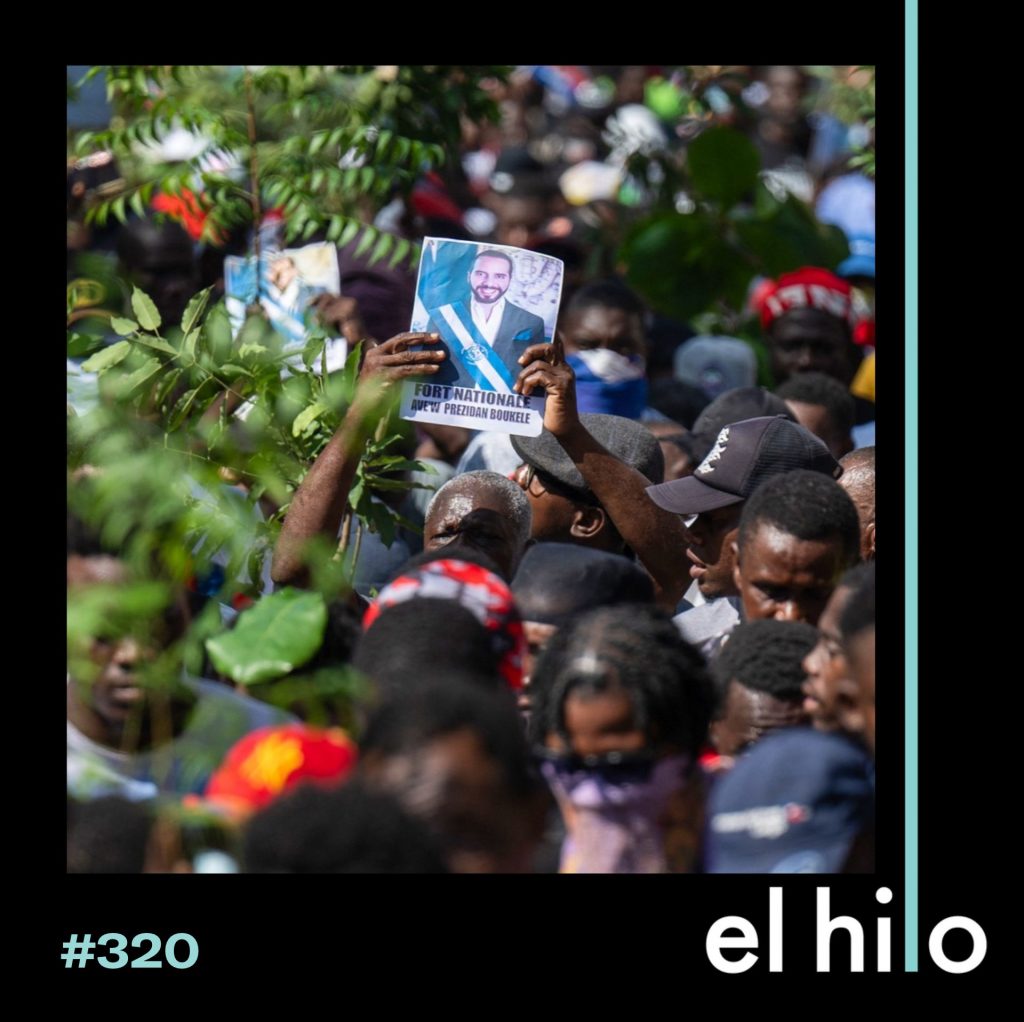

ESCÚCHANOS EN TU DISPOSITIVO MÓVIL