Diego Luna
Ceniza en la boca
Brenda Navarro
Migración
Cine
Película
México
España
Latinoamérica
El actor y director Diego Luna, una de las voces latinoamericanas más visibles de Hollywood, acaba de estrenar Ceniza en la boca, una película centrada en algunas de sus principales obsesiones: la migración y sus efectos, la forma en que la ausencia define la vida de una familia y el choque de necesidades, miedos y deseos que forja nuestra identidad. En este episodio grabado en vivo en Ciudad de México hablamos con Diego Luna sobre el poder político del cine y el problema de la indiferencia; sobre qué significa ser latinoamericano fuera de América Latina y qué se puede aprender de la distancia, de la mirada de los otros y de producir cine en tiempos de intolerancia.
Este episodio fue producido en colaboración con el Ideas Workshop de Open Society Foundations.
Créditos:
-
Producción
Eliezer Budasoff, Jesús Delgadillo -
Edición
Eliezer Budasoff -
Verificación de datos
Bruno Scelza -
Producción digital
Samantha Proaño, Franklin Villavicencio, Diego Corzo -
Diseño de sonido y mezcla
Elías González -
Música
Elías González -
Tema musical
Pauchi Sasaki -
Fotografía
Franklin Villavicencio
Etiquetas:
Transcripciones:
Transcripción:
Silvia Viñas: bienvenidos. Welcome. Soy Silvia Viñas. Trabajo para Radio Ambulante Studios, una casa productora que cuenta historias latinoamericanas hace más de 15 años. Tenemos oyentes en más de 160 países.Esto es un episodio especial de El hilo que estamos grabando en vivo. Para los que no conocen, El hilo es un podcast semanal que profundiza las noticias y los temas más importantes de América Latina. Estamos haciendo este episodio en colaboración con el Ideas Lab del Open Society Foundation. Gracias a ellos por estar aquí y ayudarnos a organizar esto. Los dejo con Eliezer Budasoff y Diego Luna.
Eliezer Budasoff: Buenas noches a todos. Bienvenidos a este episodio en vivo de El hilo desde Ciudad de México. Hace casi una década, unos días antes de que Donald Trump asumiera la presidencia de Estados Unidos por primera vez, una estudiante de California llevó a su padre al cine para ver Rogue One, una historia de Star Wars que tiene como protagonista a Diego Luna. La chica quería que su papá, un jardinero mexicano con un fuerte acento mexicano, pudiera tener la experiencia de ver una película taquillera donde el héroe hablara inglés de la misma forma en que habla él. La chica contó que cuando salieron del cine, su papá estaba emocionado y quería saberlo todo. Quería saber si la película había juntado un montón de dinero, si a la gente le gustaba, si tenía buenas reseñas. Quería saber también por qué Diego Luna no había cambiado su acento. Ella le dijo que lo había escuchado decir en una entrevista que estaba orgulloso de su acento y que no había puesto en discusión la posibilidad de cambiarlo. Hay varias cosas en esta anécdota pequeña, preciosa, que sirven para presentar esta entrevista con el actor, productor y director Diego Luna, una de las figuras más influyentes del cine mexicano en la actualidad y una de las voces latinoamericanas, él no diría latino, más visibles de Hollywood. Diego fue incluido el año pasado en el listado de las cien personas más influyentes de la revista Time, que solo tenía dos mexicanos, la presidenta Claudia Sheinbaum y él , que es reconocido por su trayectoria y su visibilidad global, pero también por su trabajo como promotor de la cultura latinoamericana y su compromiso con los derechos de los inmigrantes. La historia de este héroe con acento mexicano en el universo de Star Wars, que se convirtió después en una serie de Disney Plus, Andor, es el viaje de un migrante. La nueva película que acaba de estrenar Diego como director, Ceniza en la boca, también es la historia de una migración. Pero esto es algo que se puede decir de gran parte del trabajo de Diego Luna en las últimas décadas, que está atravesado Por esta idea. La forma en que la necesidad de mudarse a otro lugar moldea a una persona, define muchos sentidos de su vida y determina lo que alguien está dispuesto a hacer. En los últimos diez años, a medida que los discursos en contra de los inmigrantes se han hecho cada vez más extremos, la voz de Diego Luna contra esa intolerancia se ha hecho más explícita y su trabajo ha buscado nuevas maneras de enfrentarnos a las realidades que no queremos ver. De esa búsqueda, que se ha vuelto más urgente y más dolorosa, más profunda y más sutil, vamos a hablar esta noche. Y también del poder político del cine y el problema de la indiferencia, de la mirada de los otros y de lo que significa producir arte en tiempos de intolerancia. Diego, muchas gracias por acompañarnos. Bienvenido.
Diego Luna: Ey, gracias. Gracias. Me da mucho gusto estar aquí, me da mucho gusto estar haciendo, este ejercicio, además con público, que, además no es cualquier público, entiendo. Y me emociona lo que de aquí pueda pasar. y me emocionó lo que dijiste, lo que leíste. Me tienes que pasar esas hojitas.
Eliezer: Te voy a pasar, te voy a pasar. Diego, acabas de estrenar tu quinta película como director, ¿no? “Ceniza en la boca”, que está basada en un libro de la escritora mexicana Brenda Navarro de 2022. Claro, y no imagino una coyuntura más precisa para que el público la vea, ¿no? Te quería pedir para empezar si podías contar brevemente de qué se trata la historia, porque muchos todavía no han podido ver la película, pero con un contexto particular, ¿no? Que nos cuentes también cómo llegaste a esta historia y en qué momento pasas como de leer la novela a decir: “Tengo que hacer que la gente la vea en una pantalla grande. Necesito transmitir a otros lo que esta historia me hace ver y sentir a mí”.
Diego: Sí, gracias. es un las películas son procesos largos, ¿no? Alguno diría que, de hecho, siempre son un proceso de vida, ¿no? Nunca puedes, hacer la misma película porque la vida te pasa. Y esta película llega en mi vida cuando tengo, una familia, un núcleo familiar particular que me define. Tengo, pues un padre que se dedicó toda su vida al teatro y que murió hace unos años. Mi madre, que también se dedicó al teatro y que murió hace muchos años más, cuando yo tenía, apenas dos años. y hoy soy padre, hoy tengo un hijo de dieciocho, una hija de dieciséis. y hoy puedo contar esta historia, que tardó, pues eso, cuatro años en ir madurando, en ir encontrando su forma. Viene de, o nace la provocación de esta película es un, un libro de Brenda Navarro. Brenda Navarro, una escritora mexicana que yo conocía ya su trabajo y que un muy buen amigo, además coescritor de esta película, editor del libro, puso en mis manos, Diego Rabasa. y leí la novela y, y, y me atravesó emocionalmente, me dejó tocado. Una lectura que me confrontó con mi paternidad, pero con mi infancia, con la relación con mi padre y hoy con su ausencia, con mi madre y su ausencia, la migración de mi madre. Un México, además, no me había detenido a observar, una comunidad militar en este país. Pero bueno, primero me atravesó como lector, ¿no? y como pasa con los buenos libros, me acompañó y se metió en mis sueños y se volvió parte de mi vida, porque me enseñó o me puso a ver desde una perspectiva distinta, ese contexto con el que yo interactuaba. Y poco a poco la idea de hacer una película fue creciendo en mí. A mi amigo, le dije: “Tú me la pusiste en las manos para hacer una película, ¿verdad?”. y me dijo que no, pero que la hiciéramos. Y nos sentamos a empezar a pensar cómo hacer una película con este libro. A mí me parece muy injusto, con los libros en general, pero sobre todo con los buenos libros, tratar de hacer su versión cinematográfica. Me parece incluso una empresa imposible, ¿no? intentar hacer una versión cinematográfica de este libro seguro un fracaso, estrepitoso. Porque un libro, establece una conexión con el lector que el cine no puede establecer, e invita al lector a participar, a poner el pulso de la lectura, a vestir o, iluminar con las experiencias y con las imágenes propias eso que un autor, detona en quien lee, ¿no? Y además es un libro complejo que brinca en el tiempo y que sobre todo tiene cantidad de capas imposibles de incluir en una película. Lo que sí había en ese libro para mí era una provocación para hacer una película que ya tenía que ver conmigo. Y, estaba en, un pedazo de la anécdota, en un personaje en particular, en Lucila. Lucila la llamamos nosotros para la película. una niña que ve a su madre irse. No les estoy echando a perder la película. de hecho, de ojalá la vayan a ver. Esta niña ve a su madre irse a los trece, catorce años, y ella se queda además con su hermano pequeño, ¿no?
Eliezer: Que se llama Diego.
Diego: Que se llama Diego. Ese sí se llama Diego en la novela, no crean que yo se lo puse. De hecho, me, me costaba trabajo en el proceso nombrarlo, ¿no? Pero bueno, la deja con su hermanito menor, ¿no? Y ella ve a su madre irse y en esa huida ella se queda atrás. Y se queda atrás de alguna forma con la responsabilidad de maternar a su hermano, ¿no? Ella crece y se cuenta la vida a raíz de un abandono, ¿no? Ella se explica su vida a raíz de ese abandono materno. La figura del padre está perdida, está ausente y decide, eso, darle el abrazo a su hermano que ella no tuvo. Y la película no le otra vez, no les eché a perder nada. Esto es los primeros tres minutos. Después se va cuando ella alcanza a su madre, ¿no? Y alcanza a su madre y la confronta. y en esa confrontación chocan estas dos narrativas. Una hija que se explica su, su infancia y su adolescencia, a eso, a raíz de este abandono, y una madre que explica esa huida como un sacrificio. Y esa anécdota me permitía contar una historia de migración, una historia que hablara de esos desgarros familiares, de esas, fracturas familiares que vienen implícitas con cualquier historia de migración, ¿no? Los que se van y los que se quedan. Pero además me daba la oportunidad de fantasear sobre mis propias ausencias con esta historia, ¿no? Y hablar sobre la ausencia de mi madre en mi vida a través de este personaje. Entonces fue que ahí decidí hacer esta película. Uno empieza haciendo películas No sé, quizá eso, eh, hace distinto el trabajo que hacemos, ¿no? la investigación periodística quizá empieza al revés, ¿no? Eempieza del fenómeno y se va a lo específico, al individuo, a la historia personal, íntima. En mi caso es al revés. Empezamos de una historia íntima de una hija que ve a su madre irse para poder entonces hablar de migración, para poder entonces hablar de un país que expulsa, para poder entonces hablar de quienes reciben, para poder entonces hablar de los huecos y las ausencias y los duelos que la migración trae consigo, ¿no? Y pues así nació nos pasamos un montón de tiempo básicamente pensando qué película no hacer, ¿ Y que llega la lucidez, la claridad después de un proceso arduo de cuestionamiento siempre en lo colectivo, que es lo lindo del cine que no se hace a solas, que no es una carrera de cien metros donde vas, , tú contra el mundo. Es un ejercicio de comunidad pues eso, en, en equipo, encontrando esta película. Y la terminamos de encontrar hace poco que la terminamos, ¿no? Y, y de hecho la terminamos de encontrar hace poco que la mostramos, porque es hasta que hay un receptor, hasta que hay una reacción, hasta que alguien la toma y la hace suya, que terminas de entender qué hiciste, ¿no? Y bueno, ese ha sido el viaje. Así nació la conexión. Otra vez gracias a la generosidad de Brenda Navarro, que es el origen y la génesis de esto.
Eliezer: Hay, hay una decisión narrativa en la película que, que me parece impresionante. Y esta noche tenemos a muchos colegas que trabajan contando historias de no ficción y pueden entender como la dimensión de ese desafío, ¿no? El libro es en esencia el monólogo interior de la protagonista, ¿no? Es una fuerza discursiva que nos permite ver el mundo exterior que le ha dado forma, ¿no? La película no usa jamás una voz en off. De hecho, en cierta forma hace como el proceso inverso, ¿no? Nos lleva a través del mundo exterior, vemos el mundo desde afuera, el mundo en el que se mueve la protagonista, teje la historia como con detalles y escenas que nos empujan como a construir a nosotros su mundo interior con nuestras propias emociones, ¿no? La película consigue una cercanía similar a la que consigue la novela, pero a partir de lo que no dice. Y me gustaría saber cómo llegaron a tomar esa decisión narrativa.
Diego: Empiezo por decir que a mí hay muy pocas películas que tengan voz en off que me gusten, ¿ O sea, Ese generalmente se hace mal, ¿no? Yo trabajé en una como actor que creo que lo hace de forma magistral, que es la de Alfonso Cuarón y tu mamá también. Esa voz en off que va contextualizando, que va en su propia vía. Pero a mí en general cuando entra una voz que me va a explicar lo que estoy viendo, lo que debería sentir, siento que me habla de una pobreza discursiva, ¿no? Yo quería dejar de lado la experiencia de la lectura. Hacer una película que pudiera vivir independientemente del libro, ¿no? Claro, quien ha leído el libro y ve la película vive una experiencia. Quien no ha leído el libro y ve la película vive otra y a lo mejor luego se acerca al libro. Para mí era importante que esta historia no solo respondiera a la necesidad de quienes se mueven, pero que hablara sobre quienes reciben. Para mí el ejercicio de esta película y hablar de migración es cuestionar quiénes somos cuando recibimos, ¿no? Creo que cuando recibimos mostramos nuestra naturaleza, mostramos nuestra esencia, para bien y para mal, vamos. Y la gran pregunta que yo quería que esta película hiciera es: bueno, ¿quién eres cuando recibes? ¿Quién eres cuando estás frente al otro? Y entonces, lo que hace la película es invitarte a ponerte en los zapatos del otro, a vivir esa experiencia. Y es una película que vive en los silencios, pone el foco en quien escucha, ¿no? Eso para mí es un ejercicio al que el cine te puede invitar, ¿no? a entender un contexto, a entender una situación sin necesidad de que te la expliquen, ¿no? Eso sí hace el cine, te pone ahí, hace vivir como si estuvieras asomándote en esa ventana que representa la pantalla a la vida de alguien más con total impunidad, además, porque puedes hasta comer palomitas mientras lo estás haciendo, ¿no? Que, esa suena obsceno, ¿no? Pero sí, te asomas y estás comiéndote tus palomitas y puedes estar pensando en tu vida y tratar de buscar la conexión con el otro a tu ritmo debería ser, ¿no? El cine que a mí me gusta ver como público es el que me permite ser yo en esa experiencia y además hacerla mía. También creo que, hay una paciencia que hemos perdido como sociedad a la que esta película desea invitarte, ¿no? Hemos perdido la capacidad de observar con paciencia, ¿no? Da esta sensación de que queremos los datos, queremos la información, queremos la inmediatez, nos asusta la profundidad y de repente el cine que, que te exige una pausa a mí me gusta cuando te reta y te recuerda. Que eres capaz de entender hasta lo que no conoces, ¿no? El cine es una invitación a eso, a una experiencia indagatoria, ¿no? Pero para eso tienes que ser paciente, ¿no? Y la película apela a eso. También, la verdad es que Qué– bueno, ustedes son ununa audiencia muy silenciosa, ¿eh? Eso sí debo decirlo. Pero, pero sí es cierto que en el mundo que vivimos ya no experimentamos el silencio. Y el cine nos puede ayudar también a recordarnos qué lindo era el mundo antes, ¿no?
Eliezer: Y tietienes esta Cosa Yo que ya estoy viejito también, tiene que ver con eso. Tienes esta cosa que dices también en alguna entrevista, te he escuchado decir eso sobre la serie Andor, de la que fuiste productor ejecutivo, ¿no? Que a mí me encanta porque me parece un gran principio para el periodismo también y es: decidimos no subestimar a la audiencia.
Diego: Mira,la frase de no subestimar a la audiencia, de reconocer, pero sobre todo de celebrar la inteligencia y la complejidad de quien está recibiendo la historia que estás contando, es tener respeto por uno mismo. Yo hago esto porque soy público. Yo hago esto porque como público el cine me regaló algo y de repente viendo cine es que me contagiaron las ganas de hacerlo, ¿no? Cuando hago cine pienso en el público que me representa, en ese público que cuando yo salgo al encuentro, cuando estoy en la calle, estoy en comunidad, es con el público, con esa gente, parte de mi comunidad con la que me retroalimento, ¿no? Entonces, si tú haces una película pensando en ti como el que está del otro lado, difícilmente, harías algo complaciente, facilón, ¿no?
Eliezer: Usa tu propia sensibilidad como
Diego: audiencia. Sí, no puedes apelar a otra perspectiva. No puedes decir voy a hacer una película para ella o voy a hacer una película para ella, ¿no? Quién sabe si les va a gustar a ellas dos. Pero si ellas comparten los intereses que yo tengo, entonces van a conectar de forma profunda. Y como no estamos solos y el cine nos recuerda además que no estamos solos porque es un fenómeno que solo puede suceder en comunidad, vamos, lo que hacemos en las plataformas y con aparatos y en nuestra casa y en la intimidad, eso es otro, es otra experiencia. La experiencia del cine pasa en comunidad. El cine nos recuerda o, o nos ayuda a combatir la soledad del día a día, ¿no? Entonces eso, pues cuando hago una película estoy pensando en, en ese público que a mí me representa. Para mí lo más interesante es la película que ve el público, no la que hice. Y eso es lo bonito, además, de poder estar presente mientras tu película pasa, dialogarla con la gente salir al encuentro, ¿no? Porque es más interesante para mí escuchar lo que tú tengas que decir de la película que lo que puedo
Eliezer: decir yo, ¿no? Tengo igual una pregunta más amplia relacionada con esto, porque yo creo que ese silencio y esa dinámica en la película funciona tan bien que uno sale como muy cargado de emociones. Uno completa ese vacío que deja la película con emociones propias, pero con emociones propias relacionadas con lo que uno está viendo. Y lo que uno está viendo te hace encabronar. Y en esta época es un gran problema encontrar la forma de contar temas como el racismo, el desprecio hacia los inmigrantes, la injusticia, sin entregarse a la rabia. Es muy difícil moldear con paciencia unas emociones tan intensas como las que te genera mirar de cerca ciertas partes de la realidad, digamos, ¿no? Y no caer en el maniqueísmo, en la acusación, en querer prenderle fuego a todo. Y a la misma vez, uno siente que tiene que jalar de la camisa al que está del otro lado para interpelar, para romper la indiferencia. ¿Cómo lidias con eso durante cuatro años estuvieron haciendo la película, durante cuatro años de filmación? Porque es como en el periodismo, como tú acabas de decir, para conmover a otros, uno se tiene que conmover a uno mismo primero, pero tienes que volver a visitar una y otra vez esas emociones intensas.
Diego: Sí con esta película me tocó llorar mucho, me tocó, también sentir que estaba hablando solo. les cuento un poco el contexto. La hicimos en total independencia, ¿no? Lo cual pues suena muy bonito, pero la independencia en el cine viene con pocos recursos, con poco tiempo y con una sensación a veces de soledad, ¿no? De decir: “Ay, cabrón, nanadie se suma, nadie sueña con ver esta película proyectada en los cines como los que la estamos haciendo”. No tenemos ese acompañamiento pero la independencia también viene con libertad, ¿no? Para hablar de estos temas hay que hacerlo con libertad, para hablar de estos temas hay que hacerlo con honestidad y con una conexión otra vez que sea profundamente personal. Porque puede ser que al final te quedes solo, puede ser , como dice, el buen Guillermo del Toro que el destino de una película, el destino natural de una película es que no se haga, ¿no? Eso es lo que normalmente pasa. Y poder llegar al final y decir: “Sí, terminamos una película y la vamos a entregar y la vamos a mostrar”, pues es un viaje de mucha fe, ¿no? y largo, como dices Ahora también pasa una cosa que cuando puedes conectar emocionalmente, cuando una historia te conmueve y te sigue conmoviendo y te sigue pareciendo importante y la cuestionas y te regresas y te vuelve a pasar, entonces hay una certeza. Cuando te das cuenta que volteas y tu equipo sigue ahí, cuando te das cuenta que cada vez se suma más gente a aportar, más gente que cree, más gente que tiene algo que decir, más gente que cuestiona, dices: bueno, vamos en el camino correcto, ¿no? Y entonces hay que apelar a esa paciencia. Pero la rabia no se quita, ¿no? aprendes a vivir con ella, ¿no? Aprendes a acomodarla, dosificarla, Pero el comentario que nosotros estamos haciendo con esta película parte de una rabia también que tiene que ver con lo personal otra vez, con las decisiones que yo he tomado. Esta película habla de la indiferencia, ¿no? La indiferencia de quienes reciben, la indiferencia de quienes todos los días conviven con gente que está en un lugar que les recuerda que no es de ahí la, la, la indiferencia de quienes estamos ante, ante historias como las de Lucila y no reparamos en lo que representa dejar todo atrás. Pero esa indiferencia, tiene que ver con la mía también. O sea, si el comentario no es transformador, si el comentario no tiene que ver también con eso que te da pena reconocer, con eso que te da miedo ver en el espejo, pues entonces es una reflexión que fácilmente su motor va a ser el prejuicio será una reflexión maniqueísta, será, este, una, una reflexión sensacionalista, estará llena de, de, de eso, de, de un espíritu o de una agenda que nada tiene que ver con, con la, pues con la transformación, ¿no? Con, con la oportunidad de que de verdad oofrezcamos una experiencia que haga que el que la ve, el que la mira, salga de ahí distinto y distinto para, para sumarse a ser parte de algo, ¿no? De una solución en el mejor de los casos.
Eliezer: Una pausa y volvemos.
Eliezer: Estamos de vuelta en El hilo.
Eliezer: Te quería preguntar algo relacionado justamente con, con tu mirada que se aplica, digamos, a, a esta película, ¿no? Pero tu madre murió en un accidente cuando tenías dos años, ¿no? Hace poco leí una entrevista donde decías esto: “El tema de la ausencia materna es algo que ha estado en mis pensamientos cada día de mi vida”. Ceniza en la boca también está marcada por la ausencia de una madre que se va de México a España dejando a la protagonista a cargo de su hermano menor, que además se llama Diego. Y me preguntaba si crees que la ausencia materna, además de heredarte esta búsqueda por dar sentido a ese vacío, te otorga también una visión particular, ¿no? En cierta forma, y más cuando eres niño, es como habitar un mundo que en apariencia es igual al de los demás, pero es bien distinto al que habitan los demás, ¿no? Y eso a veces genera como una sensibilidad a gestos o actitudes, a detalles del mundo que pueden pasar imperceptibles para otra gente, pero que tú los ves.
Diego: Sí, pues sin duda. La, la ausencia materna en mi caso ya hoy te puedo decir que me ayuda a entender y a explicarme la vida, ¿no? Este, y que me ha hecho también o, o puedo, puedo responsabilizarla, digamos, de, de, de, de haber estado a la deriva. Es pes parte de las dos cosas. Hohoy, hoy las certezas que tengo las tengo por porque he vivido con esta ausencia mi vida entera, siempre tengo un trabajo increíble que me permite, este, pasar menos tiempo en el diván y, y, y en terapias y hacer algo con lo que me pasa, ¿no? Yo no hay historia a la que me acerque en la que no encuentre rápidamente el cuadro familiar y la relación con las ausencias. Y no importa qué película me traigas a la mesa, yo te acabaré diciendo: trata de una ausencia materna, claro”. Eh, este, qué, qué brillante forma de ponerlo, casi no se nota, ¿no? Y, y Claro, conforme me va pasando la vida, conforme me voy encontrando con todas esas muestras, esas huellas, ¿no?, que dejó mi madre, esas expresiones de amor que de repente se presentan en mi vida y que tienen que ver con lo que ella sembró y nada de lo que yo haya hecho. Yvoy explicándome, eso a quien no tengo, a raíz de quien se aparece en mi vida. Pues sí, me hace ver todo desde una perspectiva que es la mía, ¿no? es curioso, porque la película que acabamos de hacer, la película de “Ceniza en la boca”, habla sobre los cuidados, ¿no? Esta mujer joven que ve a su madre irse, que se dedica a cuidar a su hermano, después también le toca en la vida cuidar adultos mayores y cuidar niños, ¿no? Esta paradoja de esta mujer que crece sin, sin esos cuidados, sin ese abrazo le tiene que dar respuestas a su hermano y además de darle esas respuestas a su hermano respuestas que ella no tiene, porque son preguntas que no tuvo a quién hacerle ofrece su tiempo y su trabajo este, su labor, vamos, se convierte su labor profesional en, en, en cuidar niños de, de, de, de otras mujeres y cuidar adultos mayores Y, y pues eso, a mí me hizo pensar esta historia, bueno, quién cuida a quien te cuida, ¿no? Porque la primera pregunta es fácil, ¿no? ¿Quién cuida a nuestros hijos? Bueno, sí, pero ¿quién cuidó a nuestros hijos? ¿Quién cuidó a quien cuida a nuestros hijos? ¿Cuáles son esos referentes de cuidado de quien me cuidó? Ese es algo que solo te pones a pensar si no tienes mamá , ¿no? Como decir, yo llevo cuatro años pensando: esa mujer que estuvo en mi vida esos años, claro, yo fui a su casa y vi ese núcleo familiar al que pertenecía, quién la habrá cuidado y quién cuidó a quién la cuidó. Y, y de repente empiezas a, a tratar de hilar esa cadena, ¿no? Para conocer a alguien y, y empiezas a pensar en, en, en, pues eso, en todo lo que no tienes, ¿no? Y luego puedo hacer cosas con eso. La película también, les voy a contar una cosa que ya pasa como a la mitad, pero este… Pero bueno, ¿quién no va al cine ya medio sabiendo qué va a pasar? Hoy en día se perdió la sorpresa en el cine, ¿no? La gente va al cine incluso ya sabiendo si le va a gustar o no, ya tomaron una decisión. pero bueno, la película confronta el reclamo de la hija, con la narrativa de la madre, ¿no? Es la escena más fuerte de la película, yo creo. Y es una conversación entre una hija que está tratando de explicarle a su madre lo que significó vivir sin ella, ¿no? Lo que significó vivir con su ausencia Y es una, es una conversación con la que yo he fantaseado toda mi vida, ¿no? La he soñado, la he pensado. Bueno, ya hice una película pensando en eso. Bueno, ¿cómo sería esa conversación, no? Una conversación en la que yo hablo con mi madre de lo que significó no tenerla y, y qué diría ella. Y en fin mi trabajo me deja hacer esas cosas, lo cual es maravilloso, porque tú me preguntas cómo, cómo, cómo de alguna forma define mi perspectiva esta ausencia. Y te digo, define todo en mi vida, define todo. Y la y mi relación con, con, con todas y con todos los personajes que han sido importantes o que serán ¿no? Y además me, me he aprendido eso, a, a reír, a también a llorar, a, a, a, a burlar de mí mismo, ¿no? Que también eso, eso trae esta profesión, este, más la de actor que la de director, pero, pero también la de director. Y, y es curioso porque entonces ya después también empiezo a pensar en lo que significan las ausencias para los demás, ¿no? Lo que significa la aus mi, mi ausencia materna para la gente que amó a mi madre, ¿no? Yo mi, mi madre migró de Inglaterra a México muy joven. Venía, este, a, a México a, a, a, creo que a, a escaparse de su familia, de su núcleo familiar, pero sobre todo a descubrir un lugar, este, que con el que ella había fantaseado, ¿no? Gracias a la literatura. Y llegó a México y pasó años aquí, hizo teatro y pintó y sembró muchas relaciones, ¿no? Em Y es curioso. Por ejemplo, yo hice una obra de teatro en
Eliezer: Una en homenaje a esa, ¿no?
Diego: Hice una obra en homenaje a mi mamá, no, pero hice una obra de teatro que no tenía nada que ver con mi mamá
Eliezer: Claro.
Diego: Según yo. Y fui a un, un lugar que se llama San Luis Potosí, que es donde mi madre llegó, este, en este país y llegó a, a San Luis Potosí y yo fui ahí a presentar una obra. Y cuando salí de la función, había fuera del teatro formadas, pues te diría que como veinticinco mujeres mayores. Yo tenía como veintitrés, veinticuatro años y dije: “Qué raro”. Qué raro que esta puesta le habló tan específico a, a veinticinco mujeres mayores. Son las únicas que están aquí afuera para hablar. Ya sabes, yo, yo hice así como que dije: “Ay, no traigo pluma, pues serán fotos, ¿qué nos tomaremos?”. Y no, era eran todas las mujeres a las que mi madre les había enseñado a pintar. Cuando llegó joven y que de pronto cuando vieron que iba con una obra de teatro y se enteraron quién era, estaban ahí presentes, ¿no? Y lo que esa función representó para ellas, para mí, pues es solo te pasa si, si te pasa lo que me pasó, ¿me entiendes? Y para mí esa noche y lo que esas mujeres significaron y lo que me contaron y cómo cambió mi, mi perspectiva de quién era mi madre, fue maravilloso. Me acompañó por 10 años, ¿no? Y ahí empecé a fantasear con esa madre que me contaron ellas, ¿no? Que, que probablemente tampoco era mi madre, ¿no? Era la, la mujer que ellas conocieron cuando necesitaban Claro …el escape de la pintura y llegó una inglesa y, y les dijo que ella les podía enseñar, ¿no? La vida está llena de esos encuentros, mi vida está llena de esos encuentros y, y tiene todo que ver con eso que pasó, ¿no?
Eliezer: A mí hay una cosa que me parece Digamos, es deliberado porque es también la historia del libro “Ceniza en la boca”, pero es una migración hacia España. Hace casi 10 años venimos discutiendo en este continente sobre la migración a través de la mirada marcada, digamos, por un gobierno muy intolerante y racista en Estados Unidos. Pero lo que pone en escena tu, tu película es un racismo mucho más sutil y cotidiano y menos declamativo, ¿no? Porque España es el lugar al que migran donde se habla el mismo idioma. Pero eso, sin embargo, no significa una mejor comprensión.
Diego Luna: Definitivamente, la idea y esto me lo regaló el libro, ¿no? Este, de hablar de la migración en este país, un país donde además, este, nos atraviesa y nos podemos entender o een todas las posiciones que la migración tiene, ¿no? Een este país s hahay mmillones de historias de, de gente que fue expulsada de sus territorios, que se movieron para buscar lo que no tenían, este, para encontrar las oportunidades que no tenían, pero y, y por ende también somos el país de los que se quedan, ¿no? De estas sinfín de historias hemos visto y escuchado y leído sobre quienes se quedan y, y ven irse a sus seres queridos. Somos también un país, este, por donde pasan los migrantes que también muestra otra cara, este, bueno, una hermosa, pero también, este, múltiples eso, versiones abominables, dedeleznables de nosotros, ¿no? Rasgos de la sociedad que avergüenzan profundamente por Y, y somos también, este, un país receptor, ¿no? Un país además que está centralizado de una forma tremenda. Todo pasa aquí en la ciudad y que hace que la, la propia gente de, de, del país tenga que dejar de dejar su lugar de origen para moverse al centro. En fin, hemos hablado y reflexionado sobre la migración en el cine en múltiples ocasiones, pero esta era una provocación para hablar de, de una migración que, que no, que no hemos pensado ni, ni, ni discutido, ni dialogado mucho, que es esa que, que escoge Europa y que en estos, como dices, en estos diez años, deja tú la deja tú primero la, la, la política de Donald Trump y, y el discurso de odio normalizado ya en, en varias regiones, sobre todo las fronterizas de Estados Unidos. Pero la violencia que representa cruzar México para quien migra, ¿no? Ponerse ahí este, es algo que, que el migrante hoy se piensa dos veces, ¿no? Y luego para llegar a, a, al norte, para llegar a, a, a ese, a ese territorio hostil para quien, quien llega además, este, pues con la generosidad con la que llega quien está dispuesto a replantearse la vida, ¿no? Es un, es un, un tema que, que además, este, pues hoy gracias, eso sí, al mucho al trabajo de ustedes los migrantes saben lo que van a lo que van a llegar, ¿no? Esa persecución brutal que hoy vive la, la comunidad latina, ese discurso violento, esa ignorancia profunda, que además hoy parece que hay un, un sentido de orgullo, ¿no? De, de portarla con orgullo, de salir, este, a presumirla. Pues España y Europa se han vuelto una, una opción, ¿no? España, la puerta de Europa y una migración segura. Oía o leía, ya no sé, este, qué pena, ¿no? Ya de que digamos lo que es casi lo mismo. Este, pero bueno, estamos haciendo un pódcast, que Está bien, sí. Esta es la bonita versión de escuchar. Pues un, un, un coyote cuesta tres mil, un boleto a España cuesta mil quinientos, ¿no? Y, y pues eso, la en, en una proyección de Ceniza en la boca, ahora que estábamos en, en Madrid, cuando la, la estrenamos allá Se paró alguien a, a decirnos que de la pandemia para acá el número de, de, de, de, de personas registradas de México en España había subido de veinte mil a ochenta mil. Es decir, los números están creciendo exponencialmente, y entonces es interesante porque pasa lo que dices, pareciera que hay una brecha, que te brincas, que te libras, que es la del idioma, pero entonces encuentras esas otras, muestras, esas otras capas de rechazo, de violencia, que además están veladas en lo cotidiano, y normalizadas, ¿no? Que no son además esespecíficas de España, ¿no? No, claro. Está pasando a nivel global. Yo quiero digo, porque siempre que, que hablo de esto me gusta decir: aaaquí lo que, lo que lo que mostró de nosotros como sociedad el paso de las caravanas migrantes Fue avergonzante, ¿no? En un país como el nuestro, que creerías que hemos sido deberíamos haber sido capaces de crear una sensibilidad, este, profunda por los que se ponen ahí los que ponen el cuerpo, los que se arrojan, este, ¿no? Se arrojan a esa experiencia de, de, de, de moverse y dejar todo atrás. Pues cuántas historias no, no son cercanas a nosotros. Aquí mismo vimos unas muestras brutales de, de, de de, de, de, de miedo, ignorancia, xenofobia, este, resentimiento. En fin, es esto es este es el reto a nivel global, ¿no? La migración es el gran reto. Y por eso otra vez hacer una película que trate sobre ese el eslabón de esta cadena en el que porque claro que hay que atender las causas por las que la gente migra, claro que hay que atender las causas que expulsan a la gente de su territorio, pero hay un eslabón de esta cadena que tiene que ver con recibir. Y en ese participamos todos. Y ahí es donde hay un, como, hay mucho, mucho que preguntarnos, ¿no? ¿Estamos listos para recibir? ¿Estamos prepara? Porque la única certeza que tenemos es que cada vez se va a mover más gente, ¿no? Cada vez será más gente la que tenga que, que buscarse la vida en otro lado y por ende, cada vez seremos más los que recibimos. ¿Quién estamos listos para eso? ¿Quiénes queremos ser en esa experiencia? ¿Estamos dispuestos, además, este, a, a lo que merece no, la altura que exige, ¿no? Este, de nosotros? Aahí está algo que, que deberíamos, este, poner entre nuestras prioridades, este, urgentes, ¿no?
Eliezer: Bueno, eeso queda bastante claro también en la película, ¿no? Que en un momento, digo, ellos se reencuentran con su madre, tienen papeles, la madre trabaja para llevarlos con papeles y Y aun así eso no implica que vayan a ser aceptados, ¿no? Eso no implica, no implica nada
Diego: Es que tendemos a reducir el, el fenómeno como buscan trabajo, llegan, lo encuentran, ¿no? Pero no esta mujer que está migrando lo que, lo que quiere es, uno, pertenecer, ¿no? Quiere vivir, quiere reír, quiere salir a bailar, perrear toda la noche con sus amigas, quiere, este, cometer un error y poder volver a intentarlo, quiere rerespirar, ¿me entiendes? Quiere ser, quiere conseguir su autonomía y tendemos eso a, a dar por hecho, este, que eso que tenemos viene con, con, con solo ser, ¿no? Y Nos cuesta, mucho trabajo ponernos en los zapatos de quienes despiertan todos los días en un lugar que les recuerda que no son de ahí. Porque si pudiéramos ponernos en sus zapatos, si fuéramos capaces de escuchar esas historias, de vivir con la curiosidad y sobre todo satisfacer la curiosidad de saber qué le pasa al otro, yo creo que esas muestras de incomodidad que genera el que llegue alguien nuevo se transformarían en, en empatía, en respeto, en generosidad, ¿no?
Eliezer: Sí. Me encanta cómo la película traduce eso también. A partir de pequeños gestos, ¿no? Por un lado también lo de el racismo no es necesariamente un evento escandaloso, sino son un montón de situaciones cotidianas. Y es alguien que trabaja cuidando el hijo de una señora en España y la señora que deja controlada la comida que tiene para que la chica que cuida a su hijo no coma de más, ¿no? Ahora, también la película tiene una parte de reivindicación como pequeñas grietas de luz que muestran que en realidad la felicidad para ellas también depende de gestos pequeños.
Diego: Sí, y, y, y hay muestras de, de, de, de empatía y de, bueno, eso que nos tiene a nosotros hablando de este tema, ¿no? Yo me puedo reconocer en esos gestos ignorantes, en esos gestos, claro, y tengo mucho que trabajar, pero también estamos aquí hablando del tema y la película busca decir de hecho, de, de, de esas personas es que ya se las voy a echar a perder todas. No,
Eliezer: la van a tener que ir a ver.
Diego: Bueno, igual la vo la van a ver otra vez, ¿no? A pesar de que ya se les haya contado. ¿Alguien ha leído el libro aquí? ¿Sí? Una, dos, oí tres. Bueno, entonces a ti no te echo a perder nada. La, la, la verdad es que hay s hay algunas historias, sobre todo la de una mujer mayor, de quien esperarías que menos dé la vuelta, que menos cambie, que menos tenga esa, esa, ese impulso de, de decir: “Voy a darle el abrazo a quien me abraza, este, a pesar de que tengo miedo y lo reconozco”, ¿no? Yo, yo no, no podría hacer una película que no tiene esos rasgos de esperanza, que no tiene esas, como le dices tan bonito, esas grietas de luz, ¿no? por las que pasa ese rayito que te recuerda que también está el otro lado, que también hay otras historias. También hay referentes, ¿no? a mí, y, y, y lo digo aquí porque, este, sé que es lo que nos congrega, pero a mí el, el, el periodismo, por ejemplo me da esa, esa sensación de, de, de que no todo está perdido, ¿no? Cuando veo que todavía hay gente que se pone ahí para acercarme esa historia que, que puede llegar a despertar una, una, sí, una reflexión en mí que, que, que me acerque a eso que me da miedo o a eso que desconozco. Y, y eso, pues el trabajo de, de muchas y de muchos periodistas es esa luz, es esa grieta, ¿no? Que se que sigan contándonos esas historias. En el cine lo hacemos de otra forma, pero, pero hoy, si bien yo voy a seguir haciendo películas, este, si, si con algo no podría, no po si, si con algo no podría convivir es, es, es con la Es con la ausencia este, de esa valentía, ¿no? Que representa hoy el periodismo. Yo hago lo que hago por, por porque hahay, hay gente que todavía se pone ahí a, a decir no solo: “Esto está pasando”, sino: “Esto tendría que parar”, ¿no? Y da la sensación de que el periodismo está hoy Este, pues echándose al hombro la múltiples responsabilidades que no necesariamente le corresponden, ¿no?
Eliezer: A mí me parece como esto parece como una devolución de, de flores, ¿no? Pero creo que es es la única persona famosa que he escuchado hablar bien del periodismo en años, digamos. Eeeh. Sí. Te digo, estuve mirando muchas, muchas entrevistas que te, que te han hecho para, para preparar esta entrevista. Y de hecho copié una cita porque me emocioné cuando te escuché decirla. Tú dices, esto dices textualmente en un programa de acá de la televisión mexicana que se llama “Lémelo”, digamos que consiste en, en elegir fragmentos de lecturas, digamos, ¿no? Que dices: “A mí el periodismo es algo que me parece que tenemos que celebrar. Es una herramienta indispensable para conocernos, para entendernos. Y el periodismo que profundiza, que te exige también un tiempo de reflexión, es indispensable, ¿no? Hoy todo vive en la inmediatez, en la frase rápida, en el juicio certero. Me parece importante hablar del periodismo literario en general. Es a través de muchas lecturas que te terminan cayendo los veintes, te hacen transformar la forma en la que miras la, la realidad”. Eeeh, no tenía ninguna utilidad para ninguna pregunta de esto. Simplemente copié la cita para dejarla ahí, ¿no?
Diego, nos quedan unos minutos, como unos siete minutos de, de preguntas para poder darle lugar al, al público que, que haga preguntas si tienen. Y no quiero que, que me queden afuera un par de preguntas que tengo sobre la película, que están vinculadas también a, a tu propia biografía, ¿no? Uuna cosa que, que me emociona, que te he escuchado decir en entrevistas, pero que está muy presente en “Ceniza en la boca”, es como estos elementos de los que está hecho el hogar de un migrante, ¿no? Recuerdo haber visto una entrevista tuya hace como diez años, que hablabas de como el amor por la cocina como una forma de, de construir un hogar, ¿no? Y contabas que una de las cosas que no puedes olvidarte cuando viajas es tu cuchillo de cocina, ¿no? Porque llegar a un lugar y tener tu cuchillo es de alguna forma tener tu hogar, ¿no? Hay una escena en la película cuando Lucila está en, en Ciudad de México. Hay unos segundos en que ella está con un cuchillo enorme, con sus trenzas cocinando y por unos minutos, digamos, hay una especie de, de reconciliación, de sensación de hogar que pronto destrozas.
Diego: Sí.
Eliezer: Y entonces…
Diego: Pero me da gusto. Oye, es increíble. Fíjate cómo, este, me parece muy interesante que hayas visto una escena de la película que te recuerde una cita de hace diez años. Y además que es te voy a decir, digo, esto ya casi me haces chillar, porque Lo pensé cuando estábamos ahí. Dije a mí, a mí la cosa que me hace sentir más, más lejos de, de, de ese lugar, no solo al que pertenezco, sino al que quiero pertenecer, es, es tomar, totomar, no sé, una zanahoria y que no corte, ¿no? Y, y en ese momento siento que he echado a perder mi vida, que estoy en el lugar incorrecto. Y, y me recuerda a eso, me recuerda qué lejos estoy y qué carajos estoy haciendo aquí, ¿no? No es levantarme temprano para ir a filmar, no es que hable en un idioma que no entiendo, no es que no, es que el pinche cuchillo no funcione. Y viajar con el cuchillo pues soluciona esa parte, ¿no? Pero después sales y además pasa todo lo otro que te recuerda que no eres de ahí, pero pasa algo con la cocina, pasa algo con, con, con, con el tiempo que lleva preparar eso, que además es, este, eso que es alimento, eso que es, este, indispensable y que es rutina. Y, y la cocina para mí es el espacio en el que rápido Siento que aterrizo, ¿no? Es un lugar común, porque ahí aterrizan, este, todos en la fiesta, ¿no? Siempre acaba en la pinche cocina, pero yo llego a mi casa y el primer lugar al que entro es a la cocina. Es como una, una sensación de que, de, de que de, de ahí parte todo, lo íntimo, lo personal, pero lo colectivo, lo familiar, lo, lo el ritual también, ¿no? El la idea del fogón, ¿no? Que, que es tan, tan bonita de, de, de, este, de que mientras el fogón esté prendido, a, a, ahí crece Hay
Eliezer: comunidad.
Diego: Ahí crece la comunidad, no hay forma de que no. Pero que lo hayas visto en la película, eso sí me conmueve. Creo que es así, así como dijiste de la cita, cabrón. Tú eres el único espectador que ha hecho esa conexión.
Eliezer: Ya. Bueno, estaba preparando esta entrevista. Pero…
Diego: Casi te falta decir me pagan por hacer esto. La verdad es que por gusto no lo hubiera hecho.
Eliezer: No, pero ¿sabes lo que me pasó? Es que yo me estaba preguntando si eso había sido deliberado, porque de pronto Sí,
Diego: totalmente,
Eliezer: sí. Ya. Es que yo me emocioné cuando vi el cuchillo. Yo digo: ¿Qué tanta gente obsesiva acá se dará cuenta de lo que significa el cuchillo en esta escena?
Diego: Totalmente. Es casa. Es casa y ella no cocina así en ningún lugar,
Eliezer: Total, no se la ve cocinar en otro momento, porque hay un momento en que están en comunidad con otra gente de, de América Latina, en que están hablando de comida y no sé qué, pero no está ella cocinando.
Diego: No está ella, pero que no hablamos de eso, porque eso, eso también es la parte de esperanza y es, este, esas redes que se tienden entre los que emigran, entre los que están lejos y esa capacidad que tienen de abrazarse, ¿no? De recibirse, de contenerse. La, la el personaje llega a Barcelona y de pronto vive en un departamento con otras seis mujeres y todas tienen hijos y, y no sabes de quién es cuál, pero todas están ahí para, para, para apoyarse, para ayudarse Yo que digo, eesta no la viste ahí, pero pero para mí es, es, es como un mensaje hacia América Latina, ¿no? ¿Por qué carajos estamos tan fragmentados? ¿Por qué nos cuesta tanto trabajo, este, que nuestras historias viajen? Yo lo pienso en términos así de lo, de el cine que ponemos allá afuera, lo que cuesta poner una película en las salas y que dure. Y digo: cuánto nos estamos perdiendo no viendo cine argentino chileno, colombiano, peruano. No puede ser que vivamos así. Como si esas fronteras nos definieran. Tenemos ese regalo de poder cruzar frontera tras frontera y seguir ar hablando el mismo idioma, una cercanía que, que pareparece que queremos ignorar, ¿no? Pero vas a lugares como ese, ese, esa ciudad, Barcelona, donde hay tantos tantos que migraron de Latinoamérica y ves esa capacidad de hacerse uno, de, de, de, de engrana de hacer un engranaje que les contenga, ¿no?
Eliezer: De que los hijos de uno son los hijos de todos Sí. La comida de uno son la comida de todos. Sí, eso es digamos que es uno de los pocos momentos también de, de reivindicación en la, en la película, ¿no? Sí. Y a la vez también el… de que los dramas que tienen, que son dramas pequeños cotidianos, que pueden ser horribles para gente de ahí mismo, se sobrellevan de otra manera con una comunidad latinoamericana, porque todo el mundo está acostumbrado a la tragedia y a la precariedad.
Diego: Total.
Eliezer: Una última pausa y volvemos.
Eliezer: Estamos de vuelta en El hilo.
Eliezer: Diego, para cerrar, antes de darle preguntas al público, tú sabes que la gente que hace periodismo en audio una de las cosas que más busca, cuando produce una historia con ambición, embargada de la necesidad de contar, es algo que le llaman como drive away moments, ¿no? El momento en el que tienes que hacer tu carro a un costado para no dejar de escuchar o en el que no te puedes bajar de tu coche para no dejar de escuchar una historia que estás escuchando, ¿no?
Diego: Mira qué bonito.
Eliezer: Que habla de lo memorable. Y quería preguntarte cuál sería ese, el equivalente de estos momentos para alguien que dirige una película de cine. ¿Cuál es tu aspiración?
Diego: Sí. Mira qué buena pregunta, porque nunca además nunca lo había pensado. Me pasa mucho en el teatro que de repente veo a alguien entregarse así como, como pasa en el teatro, porque pasa en vivo, porque pasa para ti como espectador, lo está es un regalo que te está da te está haciendo. Me voy con esa sensación de que tengo algo valiosísimo que me conecta además con una persona, porque es una cosa viva, y no paro de pensar cómo hacer para que mi vida me acerque a esa persona, ¿no? El cómo hacer que mi vida me, me, me, me permita colaborar con alguien así. También me pasa nonosotros en el bueno, voy a hablar más bien de mi experiencia, porque habrán otros que opinen que, este, que soy un irresponsable. Pero a mí me gusta mucho estar en un set, creer que sé qué quiero, creer que que además sé cómo conseguirlo y que la articulación de, de ese trabajo en equipo me llevara ahí y de repente que pase un accidente frente a mí, que me haga replanteármelo todo y que, y que me quite el control, ¿no? Para luego recuperarlo, pero con, con la conciencia de que hay un camino mejor, hay una oportunidad que yo no veía, ¿no? Esta, esta cosa que para mí ser actor, pues eso lo trae de forma implícita. Tú estás siempre en relación a con quien estás trabajando y, y si trabajas dependes del estímulo del otro, ¿no? Pero yo, yo siento que de ese, dedel accidente es que nace la oportunidad de hacer algo realmente importante, ¿no? De, de, de sublimar una idea que no, este, que, que, que sin que se salgan las cosas de control no sucedería Ya verán la película, pero me pasó muchas veces con esta actriz Ana Díaz, una, una actriz excepcional que yo sabía que podía ser perfecto el personaje. De repente me di cuenta que por momentos, entendía mejor al personaje que yo, y no solo eso, sino que estaba dispuesta a arrebatármelo y llevárseloy mostrarme algo que yo no creía posible, que no entendía factible. creo que,en el cine, como es un, un proceso de colaboración, lo más hermoso es la sorpresa y la capacidad de sorprenderte, es la que creo que como director te puede acompañar a hacer películas, realmente especiales, ¿no? Me pasó cuando ccuando hizo el casting ella. La primera vez que hizo una prueba con estaba yo dirigiéndola, lo que estaba viendo de repente excedía mis expectativas en todos sentidos. Me tenía llorando a mí, ella estaba llorando ahí y, y todavía no estábamos haciendo una película, ¿no? En fin, en mi trabajo me pasan mucho. ¿Cómo se llaman esos momentos?
Eliezer: Drive away moments. Pero hay, hay algo parecido también a lo que dices en el periodismo, que es lo mejor que te puede pasar cuando sales a reportear y es que la realidad te sacuda y te cambie la idea que tú tienes sobre la realidad, ¿no? Tú partes con un plan, Pero lo mejor que te puede pasar es que la realidad te diga que estás equivocado.
Diego: Pues eso dicen que también de, de, de los documentales, ¿no? Si tú sales a hacer un documental y regresas con el documental que, que pensabas, nno es un documental, ¿no? El documental te tiene que transformar en el proceso, ¿no? Porque está sucediendo y te tiene que suceder para que le acabes de entender qué es lo que estás contando, ¿no?
Eliezer:Tenemos 10 minutos, máximo 15, para unas dos o tres preguntas. Hay un micrófono dando vueltas. Si alguien quiere hacer una pregunta, por favor, que levante la mano. Les pedimos que sean breves. Estamos grabando, y queremos aprovechar, el tiempo máximo antes de terminar.
Laura: Hola, buenas noches. Soy Laura.
Eliezer: Hola, Laura.
Laura: Quisiera preguntar más bien como una opinión muy general del panorama del cine. Como pensando en e es que lo tengo muy presente, pero como en otras décadas, como 70, 80, parecería que había como más compromiso con mostrar ideas más contestatarias. Pensando, por ejemplo, en películas como de Ken Russell, “Los demonios” o “Amén” de CostaGavras. Igual me estoy contestando yo sola la pregunta, porque siento que ahora la industria del cine va más por otro como en general los productos culturales como que son eso, ¿no? Se están convirtiendo en productos, cosas que uno consume y se entretiene y ya, ¿no? Para ti, ¿qué, qué hace falta nen, en este conglomerado en la gente que produce estas cosas, ¿hace falta pasión, compromiso, se acabaron los ideales o ganó el dinero? No sé.
Diego: Es que fíjate que estoy en profundo desacuerdo contigo. Lo que sí es cierto es que hay una maquinaria que, que pareciera estar sepultando a todas esas voces, pero esas voces están ahí, nada más hay que salir al encuentro. No sabes lo que cuesta, por ejemplo, que la gente vaya al cine. Muchísimo, muchísimo. Y no sabes lo que cuesta que la gente vaya al cine a ver algo que no, no sabe qué es algo que no conoce, ¿no? Tiene que ver con, con también creo con, con la forma de consumo hoy. Tiene que ver con lo estimulado que estás gracias a venir acompañado de tu aparato todo el día y por ende con ese, eeesa posibilidad también de, de, de escaparte, ¿no? De escaparte de vivir lo que te toca, lo que tienes enfrente. Yo te diría, por ejemplo, hablando de, específicamente de México, que creo que, este, en, en nuestro país, en los últimos 10 años, el, el, el desarrollo y la diversificación de voces haciendo documentales ha sido brutal. Y hay una cantidad de, de, de, de películas que ver que no había hace 20, 30 años. También siento que hay un, un, un cine que no está llegando al público, este, de forma masiva, pero que está ahí, está presente. ¿Tú vives aquí?
Laura: Sí.
Diego: Yo creo que, si te mudas más cerquita de la Cineteca, por ejemplo y vas todos los días, verás que hay un cine chingonsísimo y salas llenas. Lo que pasa es que eso no está pasando en las salas comerciales en las plataformas pareciera que hay, una nata que cubre lo que está abajo y porque llegan títulos que vale mucho la pena ver, pero quedan sepultados ahí, ¿no? creo que tiene que ver con la cantidad de ruido que nos cuesta trabajo atender a los llamados esenciales ininteresantes que están ahí. Y creo que nos toca encontrar la forma de eso, de, de tender puentes de comunicación que nos hagan estar conectados entre, entre, con el, entre el público y, y, y quienes están contando esas historias. Pero lo mismo pasa en el periodismo, ¿no? Tú te puedes pasar la vida creyendo que, que, que, que estás, este, informado y además dedicarle muchísimo tiempo y, y no llegar al no pasar de la superficie, vamos, ¿no?
Eliezer: No, y hay algo similar a lo que tú dices, que es como está en crisis un modelo de negocio del periodismo, pero nunca como antes esta época ha sido tan prodigiosa. En la calidad y la profundidad del periodismo que se hace.
Diego: Sí Espero tener razón y que no tengas razón tú, porque todavía nos queda mucho tiempo de ser público.
Eliezer: Bueno, dos preguntas más. Ella
Madeleine: Soy una persona exiliada política por la dictadura de Nicaragua, ehm, y para mí, como persona exiliada, pero también como migrante, me encuentro con un mundo y, bueno, también en, en México, con narrativas revictimizantes sobre quiénes somos las personas que migramos, quiénes somos las personas refugiadas. Y de repente, no solo en el periodismo, sino también en lo que se produce en el cine, en los medios, se reproducen estereotipos y se reproducen estigmas. Cuando te acercás a una película como esta, que no es documental, pero parte de un libro, ¿cuál es el cuidado ético al retratar realidades y temas sociales como este que y, y en el contexto político y social que vivimos ahora?
Diego: Me encanta la pregunta porque, primero tener conciencia de lo que acabas de decir, o sea , ¿no? Yo te diría que , que yo conté la historia de una hija que vio por la ventana irse a su mamá y no le dio tiempo de preguntar por qué. Y esa hija ocho años después, porque su mamá finalmente la invita Moverse con ella se lo pregunta. Yo así empecé. No, no empecé pensando en, en nada más que en la experiencia de una niña que va a ir a través de esta película buscando la respuesta de, de esa pregunta: ¿por qué te fuiste, mamá? ¿No? Tratar de encontrar por qué esa pregunta para mí es importante y, y ponerme ahí, ¿no? Poner la, la, la piel, la propia en esa experiencia. De para mí de eso se trata la película. Y creo que sí es bien importante qué te tiene hablando de un tema, qué te tiene contando una historia. Y si logras encontrar ese vínculo personal, entonces creo que estarás a salvo, ¿no? en general, porque no, no hay manera de que, de, de que el viaje de este personaje no me represente y, por ende, puedo, puedo, este… Me encantaría que veas la película, porque es bien difícil hablar así de porque además vas a decir: “Qué mamón este güey que dice que hizo una muy buena película”. Pues no, pues eso lo tienes que decidir tú. Pero lo que sí te puedo decir es que para mí era importante, este, mantener una distancia, para mí era importante, despojar a la película de todos los prejuicios que podrían acompañar esto. Este, para mí la, la película existe y vive en los matices y, y sobre todo, este, yo estoy contando la historia de una madre y una hija. Todo lo demás es contexto y es importante, este, y salimos al encuentro de ese contexto. No, no, no estamos, este, tratando de en ningún momento De interpretar nada, ¿no? Sino ahí sí hay un no es un documental como bien dices, pero, pero no salimos a, a recrear una realidad, salimos a encontrarla y, y a dejar que eso terminara de, de ser nuestra guía en el proceso de escritura, porque seguíamos escribiendo mientras filmábamos, ¿no? No sé, pero luego a lo mejor tú la puedes ver y, y opinas lo contrario. Lo que te diría es que si escribes en @lacorrientedelgolfo y me dices tu opinión, lo voy a leer. Vel a ver y a ver qué opinas. Este, espero, espero hayamos, este, logrado no ser esa película, ¿no?
Eliezer: Nos queda margen para una pregunta más
Fernanda: Hola, Diego. Por acá. Qué tal? Por acá. Mucho gusto. Sí. Hola, mucho gusto. Soy Fernanda. Yo tengo una pregunta sobre el cine puede ser una experiencia muy individual a veces, pero también muy colectiva. Y en ese sentido, ya hablaste un poco de lo difícil que es distribuir una película. Me gustaría saber si tomaste alguna decisión deliberada al momento de distribuirla para hacer comunidad en torno a esta película y en torno a este tema. Es como el cine, ¿de qué manera hace comunidad?
Diego: Yo digo que el cine, mientras exista el cine, mientras exista, El cine como, este, como ese punto de encuentro con el que yo crecí, como esa herramienta con la que yo crecí, a mí, a mí me da esperanza poder ser parte de algo que, este Que cuestione y que invite, este, a, a, a mi comunidad a participar. Es decir, el cine es un espacio el cine, no las películas. El cine es un espacio que vive de la curiosidad. Tú entras porque tienes la curiosidad de de escuchar una historia que no conoces y en el mejor de los casos, de establecer una conexión personal, íntima, con esa historia. Y esa curiosidad te ha te, te hace compartir la experiencia con otros que comparten la curiosidad que tú tienes. Por ende, te recuerda que eres parte de algo más grande, ¿no? Si eso nos acompañara afuera, puta, ya estaríamos en otro lado. Si eso nos acompañara afuera si, si, si dejáramos que esa curiosidad nos llevara por la vida y, y tuviéramos ese interés, además de encontrar una conexión personal con todas las historias que no conoces, no, no habrían la mitad de los desacuerdos, este, la, la polarización que vivimos hoy no estaría pasando, habría la necesidad que ve que, que vendría de la mano con vivir, en, en encontrar los matices, en, en encontrar esos, esos puntos de encuentro, en, en encontrar, este, pues sí, eso, eso, eso que te hace parte, te digo, de algo más grande, ¿no? El cine es una invitación a eso. Entonces, Para mí cuando dices que el cine es una experiencia muy personal, sí es personal, pero, pero en el mejor sentido, porque te recuerda el, el, el poder de lo colectivo, ¿no? Y, y creo que, este Creo que pasa algo también indispensable hoy en día en el cine. Tiene esa capacidad de, de romper este, esta, este hielo, este, ¿no? Esta sensación de que ya nada nos conmueve, de que ya nada nos toca. Hay un tenemos una capacidad de interactuar con el horror Pasar, este, por ahí inadvertidos, ¿no? Este, eel cine de pronto te pone a chillar de una forma así como que, que de rep que bueno, pues será muy lindo si puedes llorar así en casa, pero si lloras así en comunidad, de repente dices: ay, cabrón, si somos capaces de esto, ¿cómo somos, este, cómo no somos sensibles a este tema, a este otro? En fin, ay una sé que he dicho indiferencia como unas doscientas cincuenta veces esta noche, pero me parece que ahí está la clave, ¿no? Ahí hay algo, que empobrece brutalmente de ¿no? Esta cosa de no sentir por el otro, de no afectarnos por el otro. Y el cine es una invitación exactamente a lo contrario, ¿no? El cine te invita a sentir por el otro, a es más, nosotros te estamos haciendo como que se siente, ¿no? Y las te, te invita a vivir de forma mucho más profunda que incluso los que hicimos la película, la historia que estás escuchando, ¿no? O la historia que estás atendiendo. Y saberte con esa capacidad, saberte con la capacidad de sentir por el otro, pues debe ser, este, algo que te debe hacer sentir útil, este, valiente hoy en día, ¿no? Y muy orgulloso.
Eliezer: Hay otra cita que anoté sin saber si iba a tener algún tipo de utilidad.
Diego: Ajá.
Eliezer: No sabía que iba a servir para cerrar, digamos, ¿no? Pero es una cita de Franz Kafka sobre la literatura y dice: “Un libro debe ser el hacha que rompa el mar helado dentro de nosotros”.Que acabas de mencionar el hielo.
Diego Luna, muchísimas gracias por hacerte un tiempo para conversar con nosotros esta noche. Muchas gracias a ustedes para estar ahí.
Diego: Muchas gracias.
Eliezer: Vayan a ver la película, todavía está en cartelera.
Diego Luna: Gracias, ¿eh? Qué lindo tener este intercambio y gracias a ti y felicidades por lo que hacen. Gracias. Felicidades a El hilo, felicidades a, a quienes, este, se preocupan porque nos enteremos y, y además lo hacen así con esa elocuencia. Qué, qué bonito. Me voy a llevar esos papeles,
Eliezer: Te lo voy a pasar. Muchas gracias. Gracias, Diego.
Diego: Gracias. Oye, sí me los quiero llevar, no es broma. No. Y además aquí está toda la entrevista que no me hiciste, ¿no? Ajá. Me puedo ir en el auto así, siguiendo la entrevista. Oye, esto se sigue amplificando.
Eliezer: Este episodio fue producido por mí con ayuda de Natalia Ramírez y Jesús Delgadillo. Lo hicimos en colaboración con el Ideas Workshop de Open Society Foundations. Bruno Scelza hizo la verificación de datos. El diseño de sonido y la música son de Elías González.
El equipo de producción de El hilo está formado también por Daniela Cruzat, Samantha Proaño y Franklin Villavicencio, con el arte y diseño de Diego Corzo. El resto del equipo incluye a Natalia Ramírez, Paola Alean, Camilo Jiménez Santofimio, Elsa Liliana Ulloa, Silvia Viñas y Daniel Alarcón. Carolina Guerrero es la CEO de Radio Ambulante Studios. Nuestro tema musical lo compuso Pauchi Sasaki.
El hilo es un podcast de Radio Ambulante Studios. Si valoras el periodismo independiente y riguroso, te pedimos que te unas a nuestras membresías. América Latina es una región compleja y nuestro periodismo necesita de oyentes como tú. Visita elhilo.audio/donar y ayúdanos con una donación.
Si quieres profundizar sobre el episodio de hoy, suscríbete a nuestro boletín de correo entrando a elhilo.audio/boletin. Lo enviamos cada viernes.
También puedes seguirnos en nuestras redes sociales. Estamos en Instagram, X, BlueSky, Facebook y Threads. Nos encuentras como @elhilopodcast. Déjanos allí tus comentarios y etiquétanos cuando compartas los episodios.
Gracias por escuchar.
Transcript:
Silvia Viñas: Bienvenidos. Welcome. I’m Silvia Viñas. I work for Radio Ambulante Studios, a production company that has been telling Latin American stories for more than 15 years. We have listeners in more than 160 countries. This is a special episode of El hilo that we’re recording live. For those who don’t know it, El hilo is a weekly podcast that takes a deep look at the most important news and issues in Latin America. We’re making this episode in collaboration with the Ideas Lab at Open Society Foundations. Thank you to them for being here and for helping us put this together. I’ll leave you with Eliezer Budasoff and Diego Luna.
Eliezer Budasoff: Good evening, everyone. Welcome to this live episode of El hilo from Mexico City. Almost a decade ago, a few days before Donald Trump took office as president of the United States for the first time, a student in California took her father to the movies to see Rogue One, a Star Wars story starring Diego Luna. She wanted her dad, a Mexican gardener with a strong Mexican accent, to have the experience of watching a blockbuster where the hero spoke English the same way he does. She said that when they left the theater, her dad was thrilled and wanted to know everything. He wanted to know if the movie had made a lot of money, if people liked it, if it had good reviews. He also wanted to know why Diego Luna hadn’t changed his accent. She told him she’d heard him say in an interview that he was proud of his accent and that changing it had never been up for discussion. There are several things in this small, beautiful anecdote that help introduce this interview with actor, producer, and director Diego Luna, one of the most influential figures in Mexican cinema today and one of the most visible Latin American voices in Hollywood—he wouldn’t say Latino. Last year, Diego was included in Time magazine’s list of the 100 most influential people, which had only two Mexicans: President Claudia Sheinbaum and him. He is recognized for his career and his global visibility, but also for his work promoting Latin American culture and his commitment to immigrants’ rights. The story of this hero with a Mexican accent in the Star Wars universe, which later became a Disney+ series, Andor, is the journey of a migrant. Diego’s new film as a director, Ashes, which just premiered, is also a story of migration. But this is something you could say about much of Diego Luna’s work over the last few decades, which is shot through with this idea: the way the need to move somewhere else shapes a person, defines so much of their life, and determines what they’re willing to do. Over the last ten years, as anti-immigrant rhetoric has become more and more extreme, Diego Luna’s voice against that intolerance has become more explicit, and his work has sought new ways of making us face the realities we don’t want to see. That search, which has become more urgent and more painful, deeper and more subtle, is what we’re going to talk about tonight. And also about the political power of cinema and the problem of indifference, about how we look at others, and about what it means to make art in times of intolerance. Diego, thank you so much for joining us. Welcome.
Diego Luna: Hey, thank you. Thank you. I’m very happy to be here, very happy to be doing this exercise, and with an audience, too—and not just any audience, I understand. I’m excited about whatever might happen here. And what you said, what you read, moved me. You have to give me those pages.
Eliezer: I’ll give them to you, I’ll give them to you. Diego, you just released your fifth film as a director, right? Ashes, which is based on a 2022 book by Mexican writer Brenda Navarro. And I can’t imagine a more fitting moment for audiences to see it. To start, I wanted to ask if you could briefly tell us what the story is about, since many people haven’t been able to see the film yet, but with some context: tell us how you came to this story, and at what point you went from reading the novel to saying, “I have to make people see this on the big screen. I need to convey to others what this story makes me see and feel.”
Diego: Yes, thank you. Films are long processes, right? Some would say that, in fact, they’re always a life process. You can never make the same film, because life happens to you. And this film came into my life at a point when I have a family, a particular family unit that defines me. My father dedicated his whole life to theater and died a few years ago. My mother, who also dedicated herself to theater, died many years earlier, when I was barely two years old. And today I’m a father—I have an 18-year-old son and a 16-year-old daughter. And today I can tell this story, which took four years to mature, to find its form. The spark for this film is a book by Brenda Navarro, a Mexican writer whose work I already knew. A very good friend of mine, Diego Rabasa—the book’s editor and also a co-writer of this film—put it in my hands. And I read the novel, and it went right through me emotionally; it left me shaken. It was a reading that confronted me with my fatherhood, but also with my childhood, with my relationship with my father and now with his absence, with my mother and her absence, with my mother’s migration. And with Mexico I hadn’t stopped to look at: a migrant community in this country. But first, it went through me as a reader, right? And as happens with good books, it stayed with me, it got into my dreams and became part of my life, because it taught me—or it made me look—from a different perspective at a context I was interacting with. And little by little, the idea of making a film grew in me. I said to my friend, “You put it in my hands so I’d make a film, didn’t you?” And he said no, but that we should make it. And we sat down to start thinking about how to make a film out of this book. I think it’s very unfair to books in general, but especially to good books, to try to make a film version of them. I even think it’s an impossible undertaking. Trying to make a film version of this book would surely be a spectacular failure. Because a book establishes a connection with the reader that film can’t, and it invites the reader to participate, to set the pace of the reading, to dress or illuminate, with their own experiences and images, whatever an author sparks in the person reading, right? And besides, it’s a complex book that jumps around in time and, above all, has a number of layers that would be impossible to include in a film. What that book did have for me was a provocation to make a film that had to do with me. And it was in one piece of the story, in one particular character: Lucila. That’s what we call her in the film. A girl who watches her mother leave. I’m not spoiling the movie for you—in fact, I hope you go see it. This girl watches her mother leave when she’s 13 or 14, and she’s also left with her little brother, right?
Eliezer: Whose name is Diego.
Diego: Whose name is Diego. He really is called Diego in the novel—don’t think I named him that. In fact, I had a hard time saying his name during the process. But anyway, she’s left with her little brother. She watches her mother leave, and in that escape, she’s left behind. And in a way, she’s left behind with the responsibility of mothering her brother. She grows up and tells herself the story of her life through that abandonment. She explains her life through her mother’s abandonment. The father figure is lost, absent, and she decides to give her brother the embrace she never had. And the film—again, I haven’t spoiled anything, this is the first three minutes—then goes on to when she catches up with her mother. She catches up with her mother and confronts her. And in that confrontation, these two narratives collide: a daughter who explains her childhood and adolescence through this abandonment, and a mother who explains that escape as a sacrifice. That plot allowed me to tell a story about migration, a story about the family ruptures, the family fractures, that come with any migration story, right? Those who leave and those who stay. But it also gave me the chance to fantasize about my own absences through this story, and to talk about my mother’s absence in my life through this character. That’s when I decided to make this film. I don’t know, maybe this is what makes our work different. Journalistic investigation maybe starts the other way around: it starts with the phenomenon and moves to the specific, to the individual, to the personal, intimate story. In my case, it’s the reverse. We start with the intimate story of a daughter who watches her mother leave, so that we can then talk about migration, about a country that expels people, about those who receive them, about the gaps and the absences and the grief that migration brings with it. And that’s how it was born. We spent a lot of time basically thinking about what film not to make. And then lucidity, clarity, arrives after a hard process of questioning, always collectively—that’s the beautiful thing about film, that you don’t make it alone. It’s not a 100-meter dash where it’s you against the world. It’s an exercise in community, as a team, finding this film. And we only really found it recently, when we finished it. Actually, we only truly found it when we showed it, because it’s only when there’s a receiver, when there’s a reaction, when someone takes it and makes it their own, that you finally understand what you made. So that’s been the journey. That’s how the connection was born. Again, thanks to the generosity of Brenda Navarro, who is the origin and genesis of all this.
Eliezer: There’s a narrative decision in the film that I find impressive. And tonight we have many colleagues here who tell nonfiction stories and can understand the scale of that challenge. The book is essentially the protagonist’s interior monologue. Its narrative force lets us see the outside world that has shaped her. The film never uses a voiceover. In fact, in a way, it does the opposite: it takes us through the outside world. We see the world from the outside, the world the protagonist moves through. It weaves the story with details and scenes that push us to build her inner world ourselves, with our own emotions. The film achieves a closeness similar to the novel’s, but through what it doesn’t say. And I’d like to know how you came to make that narrative decision.
Diego: I’ll start by saying that there are very few films with voiceovers that I like. It’s generally done badly. I worked as an actor on one that I think does it masterfully, which is Alfonso Cuarón’s Y tu mamá también. That voiceover that keeps providing context, that runs on its own track. But in general, when a voice comes in to explain what I’m seeing, what I should feel, I feel like it speaks to a poverty of storytelling. I wanted to set aside the experience of reading. To make a film that could live independently of the book. Of course, someone who has read the book and sees the film has one experience. Someone who hasn’t read the book and sees the film has another, and maybe later they’ll pick up the book. For me, it was important that this story not only respond to the needs of those who move, but also talk about those who receive them. For me, the exercise of this film, of talking about migration, is to question who we are when we receive others. I think when we receive, we show our nature, we show our essence, for better and for worse. And the big question I wanted this film to ask is: Well, who are you when you receive it? Who are you when you’re face-to-face with the other? So what the film does is invite you to put yourself in someone else’s shoes, to live that experience. It’s a film that lives in the silences; it puts the focus on the one who listens. For me, that’s an exercise film can invite you into: understanding a context, understanding a situation without anyone having to explain it to you. That’s what film does—it puts you there. It makes you live as if you were peeking through that window, the screen, into someone else’s life, with total impunity, too, because you can even eat popcorn while you’re doing it. That sounds obscene, right? But yes, you’re peeking in, eating your popcorn, and you can be thinking about your own life and looking for the connection with the other at your own pace—that’s how it should be. The kind of film I like to watch as an audience member is the kind that lets me be myself in that experience and make it my own. I also think there’s a patience we’ve lost as a society, and this film wants to invite you back to it. We’ve lost the ability to observe patiently. There’s this feeling that we want the data, we want the information, we want immediacy; depth scares us. And suddenly there’s a film that demands a pause from you. I like it when it challenges you and reminds you that you’re capable of understanding even what you don’t know. Film is an invitation to that, to an experience of inquiry. But for that, you have to be patient. And the film appeals to that. Also, the truth is—well, you’re a very quiet audience, huh? I have to say that. But it’s true that in the world we live in, we no longer experience silence. And film can also help remind us how lovely the world used to be.
Eliezer: And you have this thing—I’m getting old too, it has to do with that. You have this thing you’ve also said in some interview; I’ve heard you say it about the series Andor, which you executive produced. I love it, because I think it’s a great principle for journalism too: We decided not to underestimate the audience.
Diego: Look, the idea of not underestimating the audience—of recognizing, but above all celebrating, the intelligence and complexity of whoever is receiving the story you’re telling—is about having respect for yourself. I do this because I’m an audience member. I do this because, as an audience member, film gave me something, and it was watching films that made me catch the urge to make them. When I make films, I think about the audience that represents me, the audience I meet when I go out, when I’m on the street, when I’m in community. It’s the audience, those people, part of my community, who give me feedback. So if you make a film thinking of yourself as the person on the other side, you’d hardly make something complacent or lazy.
Eliezer: You use your own sensibility as an audience.
Diego: Yes. You can’t appeal to another perspective. You can’t say, I’m going to make a film for her, or I’m going to make a film for her. Who knows if the two of them will like it? But if they share my interests, then they’ll connect deeply. And we’re not alone—film reminds us we’re not alone, because it’s a phenomenon that can only happen in community. What we do on streaming platforms, on devices, at home, in private, is something else, a different experience. The film experience happens in the community. Film reminds us, or helps us fight, the loneliness of everyday life. So when I make a film, I’m thinking about the audience that represents me. For me, the most interesting thing is the film the audience sees, not the one I made. And that’s the beautiful thing about being able to be present while your film is screening, to discuss it with people, to go out and meet them. Because it’s more interesting for me to hear what you have to say about the film than what I can say, right?
Eliezer: I have a broader question related to this, because I think that silence and that dynamic work so well in the film that you walk out very charged with emotion. You fill the void the film leaves with your own emotions, but your own emotions in relation to what you’re seeing. And what you’re seeing makes you furious. And these days it’s a big problem to find a way to tell stories about racism, contempt for immigrants, injustice, without surrendering to rage. It’s very hard to shape, with patience, emotions as intense as the ones you get from looking closely at certain parts of reality, without falling into black-and-white thinking, into accusation, into wanting to set everything on fire. And at the same time, you feel you have to tug at the shirt of the person on the other side, to challenge them, to break through the indifference. How did you deal with that during the four years you spent making the film, the four years of filming? Because it’s like in journalism: as you just said, to move others, you have to be moved yourself first, but you have to revisit those intense emotions over and over again.
Diego: Yes, with this film I cried a lot. I also felt like I was talking to myself. Let me give you a bit of context. We made it completely independently. That sounds very nice, but independence in film comes with few resources, little time, and sometimes a feeling of loneliness. Of saying, “Damn, nobody’s joining in, nobody dreams of seeing this film projected in theaters the way those of us making it do.” We don’t have that support, but independence also comes with freedom. To talk about these issues, you have to do it freely; to talk about these issues, you have to do it honestly and, again, with a connection that’s deeply personal. Because you might end up alone. It might be, as the great Guillermo del Toro says, that the destiny of a film—the natural destiny of a film—is not to get made. That’s what usually happens. And to make it to the end and say, “Yes, we finished a film, and we’re going to deliver it and show it,” well, that’s a journey of a lot of faith. And a long one, as you say. But something else happens, too: when you can connect emotionally, when a story moves you and keeps moving you and keeps seeming important, and you question it and go back to it and it happens to you again, then there’s a certainty. When you realize that you turn around and your team is still there, when you realize that more and more people are joining in to contribute—more people who believe, more people who have something to say, more people who question—you say: OK, we’re on the right path. And so you have to call on that patience. But the rage doesn’t go away. You learn to live with it. You learn to make room for it, to dose it. But the commentary we’re making with this film also comes from a rage that has to do, again, with the personal, with decisions I’ve made. This film is about indifference. The indifference of those who receive; the indifference of those who live every day alongside people who are in a place that reminds them they don’t belong there; the indifference of those of us who come across stories like Lucila’s and don’t stop to think about what it means to leave everything behind. But that indifference has to do with mine, too. I mean, if the commentary isn’t transformative, if the commentary doesn’t also deal with what you’re ashamed to admit, with what you’re afraid to see in the mirror, then it’s a reflection whose engine will easily be prejudiced. It’ll be a black-and-white reflection, a sensationalist reflection; it’ll be full of a spirit or an agenda that has nothing to do with transformation. With the chance to truly offer an experience that makes whoever sees it, whoever watches it, walk out different—and different in a way that makes them want to be part of something. Part of a solution, in the best case.
Eliezer: We’ll take a break and be right back.
Eliezer: We’re back on El hilo.
Eliezer: I wanted to ask you something related precisely to your way of seeing, which applies to this film. Your mother died in an accident when you were two. I recently read an interview where you said this: “The theme of maternal absence is something that has been in my thoughts every day of my life.” Ashes is also marked by the absence of a mother who leaves Mexico for Spain, leaving the protagonist in charge of her younger brother, who is also named Diego. And I wondered whether you think that maternal absence, besides passing on to you this search to make sense of that void, also gives you a particular way of seeing. In a way, and especially when you’re a child, it’s like inhabiting a world that looks the same as everyone else’s, but is very different from the one everyone else inhabits. And sometimes that creates a sensitivity to gestures or attitudes, to details of the world that may go unnoticed by other people, but that you see.
Diego: Yes, no doubt. Today I can tell you that, in my case, my mother’s absence helps me understand and explain life to myself. And I can also blame it for having been adrift. It’s part of both things. The certainties I have today, I have because I’ve lived with this absence my whole life. And I’ve always had an incredible job that lets me spend less time on the couch, in therapy, and do something with what happens to me. There’s no story I come close to where I don’t quickly find the family portrait and the relationship with absences. And it doesn’t matter what film you bring to the table, I’ll end up telling you, “It’s about a mother’s absence, of course.” What a brilliant way to put it—you can hardly tell, right? And of course, as life goes on, as I keep coming across all those signs, those traces my mother left, those expressions of love that suddenly show up in my life and that have to do with what she planted and nothing to do with anything I’ve done—I keep explaining to myself the person I don’t have through the people who show up in my life. So yes, it makes me see everything from a perspective that’s my own. It’s curious, because the film we just made, Ashes, is about care. This young woman who watches her mother leave, who devotes herself to taking care of her brother, later in life also ends up caring for elderly people and caring for children. There’s this paradox: a woman who grows up without that care, without that embrace, has to give her brother answers—answers she doesn’t have, because they’re questions she had no one to ask—and she offers her time and her work. Her profession is caring for other women’s children and caring for elderly people. And that story made me think: well, who takes care of the people who take care of you? Because the first question is easy: Who takes care of our children? OK, sure, but who took care of our children? Who took care of the person who takes care of our children? What were the models of care for the person who cared for me? That’s something you only start to think about if you don’t have a mom. For four years I’ve been thinking about the woman who was in my life during those years. Of course, I went to her house and saw the family she belonged to—who must have taken care of her, and who took care of the person who took care of her? And suddenly you start trying to trace that chain, to get to know someone, and you start thinking about everything you don’t have. And then I can do things with that. In the film, too—I’m going to tell you something that happens around the middle, but… well, who goes to the movies these days without half knowing what’s going to happen? The element of surprise in cinema is gone. People even go to the movies already knowing whether they’re going to like it or not; they’ve already made up their minds. But anyway, the film confronts the daughter’s grievance with the mother’s narrative. It’s the most powerful scene in the film, I think. It’s a conversation in which a daughter is trying to explain to her mother what it meant to live without her, and what it meant to live with her absence. And it’s a conversation I’ve fantasized about my whole life. I’ve dreamed about it, I’ve thought about it. Well, I’ve now made a film thinking about it. What would that conversation be like? A conversation in which I talk with my mother about what it meant not to have her, and what would she say? Anyway, my work lets me do those things, which is wonderful, because you’re asking me how this absence somehow defines my perspective. And I’m telling you: it defines everything in my life. Everything. And my relationship with all the people who have been important, or who will be. And I’ve also learned to laugh, and to cry, and to make fun of myself. That comes with this profession, too—more with acting than directing, but with directing as well. And it’s curious, because then I also start thinking about what absences mean for other people. What my mother’s absence means for the people who loved her. My mother migrated from England to Mexico very young. I think she came to Mexico to escape her family, but above all to discover a place she had fantasized about, thanks to literature. She came to Mexico and spent years here; she did theater, she painted, and she planted a lot of relationships. And it’s curious. For example, I did a play in—
Eliezer: One in homage to her, right?
Diego: A play in homage to my mom? No. I did a play that had nothing to do with my mom—
Eliezer: Right.
Diego: Or so I thought. And I went to a place called San Luis Potosí, which is where my mother first arrived in this country. She arrived in San Luis Potosí, and I went there to put on a play. And when I came out after the show, lined up outside the theater there were, I’d say, about 25 older women. I was 23 or 24, and I thought, “That’s strange.” How strange that this production spoke so specifically to 25 older women. They’re the only ones out here waiting to talk. You know, I was like, “Oh, I don’t have a pen, so I guess it’ll be photos—shall we take some?” And no—they were all women my mother had taught to paint. When she arrived as a young woman. And when they found out I was coming with a play and learned who I was, they were there. And what that show meant for them, for me—that only happens to you if what happened to me happens to you, you know? And for me, that night, what those women meant and what they told me and how it changed my perspective on who my mother was, was wonderful. It stayed with me for 10 years. And that’s when I started fantasizing about the mother they told me about. Who probably wasn’t my mother either, right? She was the woman they knew when they needed—
Eliezer: Of course.
Diego: —the escape of painting, and an Englishwoman arrived and told them she could teach them. Life is full of those encounters—my life is full of those encounters—and it all has to do with what happened.
Eliezer: There’s something that strikes me—it’s deliberate, I’d say, because it’s also the story in the book—but it’s a migration to Spain. For almost 10 years, on this continent, we’ve been discussing migration through a lens shaped by a very intolerant and racist government in the United States. But what your film puts on screen is a much more subtle, everyday, less declarative racism. Because Spain is the place they migrate to where people speak the same language. And yet that doesn’t mean they’re better understood.
Diego Luna: Definitely. And the book gave me this: the idea of talking about migration in this country, a country that migration runs through, where we can understand all the positions migration involves. In this country there are millions of stories of people who were expelled from their land, who moved to look for what they didn’t have, to find the opportunities they didn’t have. And so we’re also the country of those who stay. We’ve seen and heard and read endless stories about those who stay and watch their loved ones leave. We’re also a country migrants pass through, which shows another face of us—a beautiful one, but also many abominable, despicable versions of ourselves. Traits of our society that are deeply shameful. And we’re also a receiving country. A country that is tremendously centralized, too: everything happens here in the city, which forces people from the rest of the country to leave their place of origin and move to the center. Anyway, we’ve talked and reflected about migration in film many times, but this was a provocation to talk about a migration we haven’t thought about, discussed, or talked about much, which is the one that chooses Europe. And in these ten years, as you say—never mind Donald Trump’s policies and the hate speech that’s now normalized in several regions, especially the U.S. border regions—there’s the violence that crossing Mexico represents for those who migrate. Putting yourself there is something migrants today think twice about. And then getting to the north, to that territory that’s hostile to anyone who arrives with the generosity of someone willing to start their life over. Today, thanks in large part to your work, migrants know what they’re going to face. That brutal persecution the Latino community is living through today, that violent rhetoric, that profound ignorance—which today seems to come with a sense of pride, of wearing it proudly, of going out and showing it off. So Spain and Europe have become an option. Spain, the gateway to Europe, and a safe migration. I heard it or read it—I don’t remember which, how embarrassing. Well, it’s almost the same thing. But anyway, we’re making a podcast, so—fine, yes. This is the nice version, the one you listen to. A coyote costs three thousand, a ticket to Spain costs fifteen hundred. And at a screening of Ashes when we were in Madrid recently, when we premiered it there, someone stood up to tell us that since the pandemic, the number of registered Mexicans in Spain had gone up from twenty thousand to eighty thousand. In other words, the numbers are growing exponentially. And so it’s interesting, because what you’re describing happens: it seems like there’s a gap you jump over, that you get past, which is language. But then you find those other signs, those other layers of rejection, of violence, which are also veiled in everyday life, and normalized. And they’re not specific to Spain, either.
Eliezer: No, of course.
Diego: It’s happening globally. I want to say—because whenever I talk about this I like to say it—here, what the migrant caravans passing through revealed about us as a society was shameful. In a country like ours, you’d think we would have been able—should have been able—to develop a deep sensitivity toward those who put themselves on the line, who put their bodies on the line, who throw themselves into that experience of moving and leaving everything behind. How many of those stories are close to us? Right here, we saw brutal displays of fear, ignorance, xenophobia, resentment. Anyway, this is the global challenge. Migration is the great challenge. And that’s why, again, it made sense to make a film about that link in the chain—because of course we have to address the causes of why people migrate, of course we have to address the causes that drive people from their land, but there’s a link in this chain that has to do with receiving. And we all take part in that one. And that’s where there’s a lot, a lot to ask ourselves. Are we ready to receive? Are we prepared? Because the only certainty we have is that more and more people are going to move. More and more people will have to seek a living somewhere else, and so more and more of us will be the ones receiving. Who among us is ready for that? Who do we want to be in that experience? And are we willing to rise to what it deserves, to what it demands of us? That’s something we should put among our urgent priorities.
Eliezer: Well, that’s pretty clear in the film, too. At one point, they reunite with their mother, they have papers—the mother works to bring them over with papers—and even so, that doesn’t mean they’ll be accepted. It doesn’t mean anything.
Diego: We tend to reduce the phenomenon to: they look for work, they arrive, they find it. But no—what this woman who’s migrating wants is, one, to belong. She wants to live, she wants to laugh, she wants to go out dancing, to dance reggaeton all night with her friends. She wants to make a mistake and be able to try again. She wants to breathe, you know? She wants to be, she wants to gain her autonomy. And we tend to take for granted that what we have comes just from being. It’s very hard for us to put ourselves in the shoes of people who wake up every day in a place that reminds them they don’t belong there. Because if we could put ourselves in their shoes, if we were able to listen to those stories, to live with curiosity and, above all, satisfy the curiosity of knowing what’s happening to the other person, I think the discomfort that someone new arriving creates would turn into empathy, respect, generosity.
Eliezer: Yes. I love how the film conveys that, too, through small gestures. On one hand, there’s the idea that racism isn’t necessarily a scandalous event, but a lot of everyday situations. There’s someone who works taking care of a woman’s son in Spain, and the woman keeps tabs on the food so that the girl who takes care of her son doesn’t eat too much. But the film also has a side of vindication, like small cracks of light that show that, actually, happiness for them also depends on small gestures.
Diego: Yes, and there are signs of empathy, and of—well, the thing that has us here talking about this. I can recognize myself in those ignorant gestures—of course, and I have a lot to work on—but we’re also here talking about it, and the film tries to say, in fact, about those people—well, now I’m going to spoil them all for you. No—
Eliezer: You’ll have to go see it.
Diego: Well, you’ll go see it again anyway, even if it’s already been told to you. Has anyone here read the book? Yes? One, two—I heard three. Well, then I’m not spoiling anything for you. The truth is that there are some stories, especially that of an older woman—the one you’d least expect to turn around, to change, to have that impulse to say, “I’m going to embrace the person who embraces me, even though I’m afraid and I admit it.” I couldn’t make a film that didn’t have those touches of hope, those—as you put it so beautifully—cracks of light that let in that little ray reminding you that there’s another side, too, that there are other stories. There are also role models. For me—and I’m saying it here because I know it’s what brings us together—journalism, for example, gives me that feeling that not everything is lost. When I see that there are still people who put themselves out there to bring me a story that can spark a reflection in me, that brings me closer to what I’m afraid of or what I don’t know. The work of so many journalists is that light, that crack. That they keep telling us those stories. In film we do it differently, but today, while I’m going to keep making films, if there’s something I couldn’t live with, it’s the absence of that courage that journalism represents today. I do what I do because there are people who still put themselves out there to say not only, “This is happening,” but also, “This has to stop.” And it feels like journalism today is shouldering many responsibilities that aren’t necessarily its own.
Eliezer: This might seem like returning the compliment, but I think you’re the only famous person I’ve heard speak well of journalism in years. Yes. I’ll tell you, I watched many, many interviews you’ve done to prepare for this one. And I actually copied down a quote because I got emotional when I heard you say it. You said this, word for word, on a Mexican TV show called Léemelo, which is about choosing excerpts from things you’ve read: “Journalism is something I think we have to celebrate. It’s an essential tool for knowing ourselves, for understanding ourselves. And journalism that goes deep, that also demands time for reflection from you, is essential. Today everything lives in immediacy, in the quick line, in the sure judgment. I think it’s important to talk about literary journalism in general. It’s through a lot of reading that things finally click for you; it transforms the way you look at reality.” It wasn’t useful for any of my questions. I just copied the quote to leave it there.
Diego, we have a few minutes left—about seven minutes—before we make room for the audience to ask questions, if they have any. And I don’t want to leave out a couple of questions I have about the film that are also tied to your own life. One thing that moves me, which I’ve heard you say in interviews but which is very present in Ashes, is the elements a migrant’s home is made of. I remember seeing an interview with you about ten years ago where you talked about your love of cooking as a way of building a home. And you said one of the things you can’t forget when you travel is your kitchen knife, because arriving somewhere and having your knife is, in a way, having your home. There’s a scene in the film when Lucila is in Mexico City. For a few seconds she’s there in her braids, cooking with an enormous knife, and for a few minutes, let’s say, there’s a kind of reconciliation, a sense of home, which you soon destroy.
Diego: Yes.
Eliezer: And so…
Diego: But I’m glad. Listen, that’s incredible. I find it very interesting that you saw a scene in the film that reminded you of a quote from ten years ago. And I’m going to tell you—this almost makes me cry—because I thought about it when we were there. For me, the thing that makes me feel farthest from the place—not just the one I belong to, but the one I want to belong to—is picking up, I don’t know, a carrot, and the knife won’t cut. In that moment I feel like I’ve ruined my life, like I’m in the wrong place. It reminds me how far away I am and what the hell I’m doing here. It’s not getting up early to go shoot, it’s not speaking a language I don’t understand—it’s that the damn knife doesn’t work. And traveling with the knife solves that part. But then you go outside, and everything else happens that reminds you that you’re not from there. But something happens with cooking, with the time it takes to prepare something that’s nourishment, that’s essential, that’s routine. For me, the kitchen is the place where I quickly feel I’ve landed. It’s a cliché, because at a party everyone lands there—it always ends up in the damn kitchen. But I get home and the first place I go is the kitchen. It’s a feeling that everything starts there: the intimate, the personal, but also the collective, the family, the ritual. The idea of the hearth, which is so beautiful—that as long as the fire is lit, that’s where it grows. There’s—
Eliezer: Community.
Diego: That’s where community grows; there’s no way it doesn’t. But that you saw it in the film—that really moves me. I think, just like you said about the quote, man, you’re the only viewer who’s made that connection.
Eliezer: Yeah. Well, I was preparing for this interview. But…
Diego: You almost said, “I’m paid to do this. Honestly, I wouldn’t have done it for fun.”
Eliezer: No, but you know what happened? I was wondering whether that was deliberate, because suddenly—
Diego: Yes, totally.
Eliezer: Right. I got emotional when I saw the knife. I thought: How many obsessive people here will realize what the knife means in this scene?
Diego: Totally. It’s home. It’s home, and she doesn’t cook like that anywhere else.
Eliezer: Exactly, you don’t see her cook at any other point, because there’s a moment when they’re in community with other people from Latin America, when they’re talking about food and so on, but she’s not the one cooking.
Diego: She isn’t—but let’s not talk about that. Because that’s also the hopeful part: those networks that form among people who emigrate, among people who are far from home, and that ability they have to embrace each other, to receive each other, to hold each other up. The character arrives in Barcelona and suddenly lives in an apartment with six other women, and they all have kids, and you don’t know whose is whose, but they’re all there to support each other, to help each other. And I’d say—you didn’t catch this one, but for me it’s like a message to Latin America. Why the hell are we so fragmented? Why is it so hard for our stories to travel? I think about it in terms of the films we put out there, how hard it is to get a film into theaters and keep it there. And I think: how much we’re missing by not watching Argentine, Chilean, Colombian, Peruvian films. We can’t live like this, as if those borders defined us. We have this gift of being able to cross border after border and keep speaking the same language—a closeness we seem to want to ignore. But you go to places like that city, Barcelona, where so many people from Latin America have migrated, and you see that ability to become one, to form a network that holds them together.
Eliezer: Where one person’s kids are everyone’s kids. One person’s food is everyone’s food. Yes, that’s one of the few moments of vindication in the film, too. And at the same time, the dramas they have—small, everyday dramas that might be horrible for people from there—are handled differently in a Latin American community, because everyone is used to tragedy and precarity.
Diego: Totally.
Eliezer: One last break and we’ll be right back.
Eliezer: We’re back on El hilo.
Eliezer: Diego, to close, before we take questions from the audience: you know that one of the things people who make audio journalism look for most, when they produce an ambitious story driven by the need to tell it, is what they call “driveway moments.” The moment when you have to pull your car over so you don’t stop listening, or when you can’t get out of your car because you don’t want to stop listening to the story you’re hearing.
Diego: How lovely.
Eliezer: It speaks to what’s memorable. And I wanted to ask you what the equivalent of those moments would be for someone who directs a film. What do you aspire to?
Diego: Yes. What a good question, because I’d never thought about it. It happens to me a lot in theater: suddenly I see someone give themselves completely, the way it happens in theater, because it’s live, because it’s happening for you as a spectator—it’s a gift they’re giving you. I leave with the feeling that I have something incredibly valuable that also connects me with a person, because it’s a living thing, and I can’t stop thinking about how to make my life bring me closer to that person. How to make my life allow me to work with someone like that. It also happens to me—well, I’ll speak about my own experience, because there will be others who think I’m irresponsible. But I really like being on set, believing I know what I want, believing I also know how to get it, and that coordinating that teamwork will get me there—and then suddenly an accident happens in front of me that makes me rethink everything and takes control away from me. Only to get it back later, but with the awareness that there’s a better path, an opportunity I wasn’t seeing. Being an actor brings that implicitly. You’re always in relation to whoever you’re working with, and if you work, you depend on the other person’s stimulus. But I feel that it’s from the accident that the opportunity to do something truly important is born—to sublimate an idea, which wouldn’t happen unless things got out of control. You’ll see the film, but it happened to me many times with this actress, Anna Díaz, an exceptional actress whom I knew could be perfect for the character. Suddenly I realized that at times she understood the character better than I did. And not only that: she was willing to snatch it away from me, take it with her, and show me something I didn’t think was possible, that I didn’t think was feasible. I think in film, since it’s a collaborative process, the most beautiful thing is surprise. And the ability to be surprised is what I think, as a director, can help you make truly special films. It happened when she auditioned. The first time she auditioned and I was directing her, what I was seeing suddenly exceeded my expectations in every way. She had me crying; she was crying there, and we weren’t even making a film yet. Anyway, it happens to me a lot in my work. What are those moments called?
Eliezer: Driveway moments. But there’s something similar to what you’re saying in journalism, too, which is the best thing that can happen to you when you go out reporting: that reality shakes you and changes the idea you had about reality. You set out with a plan, but the best thing that can happen is for reality to tell you you’re wrong.
Diego: They say that about documentaries, too. If you go out to make a documentary and come back with the documentary you had in mind, it’s not a documentary. The documentary has to transform you in the process, because it’s happening, and it has to happen to you for you to fully understand what you’re telling.
Eliezer: We have 10 minutes, 15 at most, for two or three questions. There’s a microphone going around. If anyone would like to ask a question, please raise your hand. We ask that you keep it brief. We’re recording, and we want to make the most of the time before we wrap up.
Laura: Hi, good evening. I’m Laura.
Eliezer: Hi, Laura.
Laura: I’d like to ask more for a very general opinion about the film landscape. I’m thinking—it’s very much on my mind—that in other decades, like the ’70s and ’80s, there seemed to be more commitment to showing more rebellious, defiant ideas. I’m thinking, for example, of films like Ken Russell’s The Devils, or Costa-Gavras’s Amen. Maybe I’m answering my own question, because I feel that now the film industry is going in another direction—cultural products in general are becoming just that: products, things you consume, get entertained by, and that’s it. For you, what’s missing in this conglomerate, among the people who produce these things? Is it a lack of passion, of commitment? Are ideals over, or did money win? I don’t know.
Diego: Well, I deeply disagree with you. What is true is that there’s a machine that seems to be burying all those voices, but those voices are there—you just have to go out and find them. You have no idea how hard it is, for example, to get people to go to the movies. Very, very hard. And you have no idea how hard it is to get people to go to the movies to see something they don’t know, something unfamiliar. I think it also has to do with how we consume things today. It has to do with how overstimulated you are from carrying your device around all day, and therefore with that possibility of escaping—of escaping from living what’s in front of you. I’d tell you, for example, speaking specifically about Mexico, that in our country, over the last 10 years, the growth and diversification of voices making documentaries has been tremendous. There’s a wealth of films to watch that didn’t exist 20 or 30 years ago. I also feel there’s a cinema that isn’t reaching audiences on a massive scale, but it’s there, it’s present. Do you live here?
Laura: Yes.
Diego: I think if you move a little closer to the Cineteca, for example, and go every day, you’ll see there’s some fucking great cinema and full theaters. The thing is, that’s not happening in commercial theaters. On streaming platforms, it’s as if there’s a top layer covering what’s underneath: titles that are very much worth watching arrive, but they get buried there. I think it has to do with the amount of noise; it’s hard for us to pay attention to the essential, interesting calls that are out there. And I think it’s up to us to find a way to build bridges of communication that keep the audience connected with the people telling those stories. But the same thing happens in journalism. You can spend your life believing you’re informed, and even devote a lot of time to it, and never get past the surface.
Eliezer: No, and there’s something similar to what you’re saying: journalism’s business model is in crisis, but no era has ever been as prolific as this one in the quality and depth of the journalism being made.
Diego: Yes. I hope I’m right and you’re not, because we still have a lot of time left as audiences.
Eliezer: OK, two more questions. Over there.
Madeleine: I’m a political exile from the dictatorship in Nicaragua. And for me, as an exile but also as a migrant, I encounter a world—and here in Mexico, too—with revictimizing narratives about who we are, the people who migrate, who we are, the people who are refugees. And not only in journalism, but also in what gets produced in film and in the media, stereotypes and stigmas are reproduced. When you approach a film like this one, which isn’t a documentary but is based on a book, what is the ethical care in portraying realities and social issues like this one, in the political and social context we’re living in now?
Diego: I love the question, because the first thing is to be aware of what you just said. I’d tell you that I told the story of a daughter who watched her mom leave through the window and didn’t have time to ask why. And eight years later, when her mom finally invites her to move with her, that daughter asks her. That’s how I started. I didn’t start thinking about anything other than the experience of a girl who, over the course of this film, is going to search for the answer to that question: Why did you leave, Mom? Trying to find why that question matters to me, and putting myself there—putting my own skin into that experience. For me, that’s what the film is about. And I think it’s very important to know what has you talking about a subject, what has you telling a story. And if you manage to find that personal connection, then I think you’ll be safe, in general. Because there’s no way this character’s journey doesn’t represent me, and so I can… I’d love for you to see the film, because it’s very hard to talk about it like this—you’re going to say, “What a pretentious guy, saying he made a really good film.” Well, no, you have to decide that. But what I can tell you is that it was important to me to keep a distance; it was important to me to strip the film of all the prejudices that could come with this. For me, the film exists and lives in the nuances, and above all, I’m telling the story of a mother and a daughter. Everything else is context, and it’s important, and we went out to find that context. At no point were we trying to interpret anything. It’s not a documentary, as you rightly say, but we didn’t set out to recreate a reality; we set out to find it, and to let that become our guide in the writing process, because we kept writing while we were filming. I don’t know, maybe you’ll see it later and think the opposite. What I’d say is that if you write to @lacorrientedelgolfo and tell me your opinion, I’ll read it. Go see it and see what you think. I hope we managed not to be that film.
Eliezer: We have time for one more question.
Fernanda: Hi, Diego. Over here. How are you? Over here. Nice to meet you. Yes. Hi, nice to meet you. I’m Fernanda. My question is about how film can sometimes be a very individual experience, but also a very collective one. And in that sense, you already talked a bit about how hard it is to distribute a film. I’d like to know whether you made any deliberate decision when distributing it to build community around this film and around this issue. Basically, how does film build community?
Diego: I’d say that as long as cinema exists—cinema as the meeting point I grew up with, as the tool I grew up with—it gives me hope to be part of something that questions and invites my community to participate. I mean, cinema is a space—cinema, not films. Cinema is a space that lives on curiosity. You go in because you’re curious to hear a story you don’t know and, in the best case, to make a personal, intimate connection with that story. And that curiosity makes you share the experience with others who share your curiosity. So it reminds you that you’re part of something bigger. If that came with us when we walked out, damn, we’d be somewhere else by now. If that came with us outside—if we let that curiosity guide us through life, and we had that interest in finding a personal connection with all the stories we don’t know—we wouldn’t have half the disagreements. The polarization we’re living through today wouldn’t be happening. Living that way would bring with it the need to find the nuances, to find those meeting points—to find, well, that thing that makes you part, as I said, of something bigger. Cinema is an invitation to that. So when you say film is a very personal experience—yes, it’s personal, but in the best sense, because it reminds you of the power of the collective. And I think something else essential happens in cinema today. It has the ability to break the ice—this feeling that nothing moves us anymore, that nothing touches us. We have this capacity to come across horror and pass by without noticing. And suddenly cinema has you crying in a way that—well, it would be lovely if you could cry like that at home, but if you cry like that in community, you suddenly say: Damn, if we’re capable of this, how are we not moved by this issue, or that one? Anyway, I know I’ve said “indifference” about two hundred and fifty times tonight, but I think that’s the key. There’s something there that brutally impoverishes us. This business of not feeling for the other, of not being affected by the other. And cinema is an invitation to exactly the opposite. Cinema invites you to feel for the other—what’s more, we’re showing you what it feels like. It invites you to live the story you’re hearing, the story you’re watching, much more deeply than even those of us who made the film. And knowing you have that capacity, knowing you have the capacity to feel for others, should make you feel useful, brave these days. And very proud.
Eliezer: There’s another quote I wrote down without knowing whether it would be of any use.
Diego: Uh-huh.
Eliezer: I didn’t know it would work as a way to close. But it’s a quote from Franz Kafka about literature, and it goes: “A book must be the axe for the frozen sea within us.” And you just mentioned the ice.
Diego Luna, thank you so much for taking the time to talk with us tonight. And thank you all for being here.
Diego: Thank you very much.
Eliezer: Go see the film—it’s still in theaters.
Diego Luna: Thank you, really. How lovely to have this exchange, and thank you, and congratulations on what you do. Thank you. Congratulations to El hilo, congratulations to the people who care about keeping us informed, and who do it so eloquently. How lovely. I’m going to take those papers—
Eliezer: I’ll give them to you. Thank you so much. Thank you, Diego.
Diego: Thank you. Hey, I really do want to take them—I’m not kidding. No. And besides, here’s the whole interview you didn’t do with me, right? Uh-huh. I can ride home in the car following along with the interview. Hey, this is still being amplified.
Eliezer: This episode was produced by me with help from Natalia Ramírez and Jesús Delgadillo. We made it in collaboration with the Ideas Workshop at Open Society Foundations. Bruno Scelza did the fact-checking. Sound design and music are by Elías González.
The El hilo production team also includes Daniela Cruzat, Samantha Proaño, and Franklin Villavicencio, with art and design by Diego Corzo. The rest of the team includes Natalia Ramírez, Paola Alean, Camilo Jiménez Santofimio, Elsa Liliana Ulloa, Silvia Viñas, and Daniel Alarcón. Carolina Guerrero is the CEO of Radio Ambulante Studios. Our theme music was composed by Pauchi Sasaki.
El hilo is a podcast from Radio Ambulante Studios. If you value independent, rigorous journalism, we ask you to join our membership program. Latin America is a complex region, and our journalism needs listeners like you. Visit elhilo.audio/donar and support us with a donation.
If you want to dig deeper into today’s episode, subscribe to our newsletter at elhilo.audio/boletin. We send it out every Friday.
You can also follow us on social media. We’re on Instagram, X, Bluesky, Facebook, and Threads. You can find us at @elhilopodcast. Leave us your comments there, and tag us when you share the episodes.
Thanks for listening.
Contenido relacionado
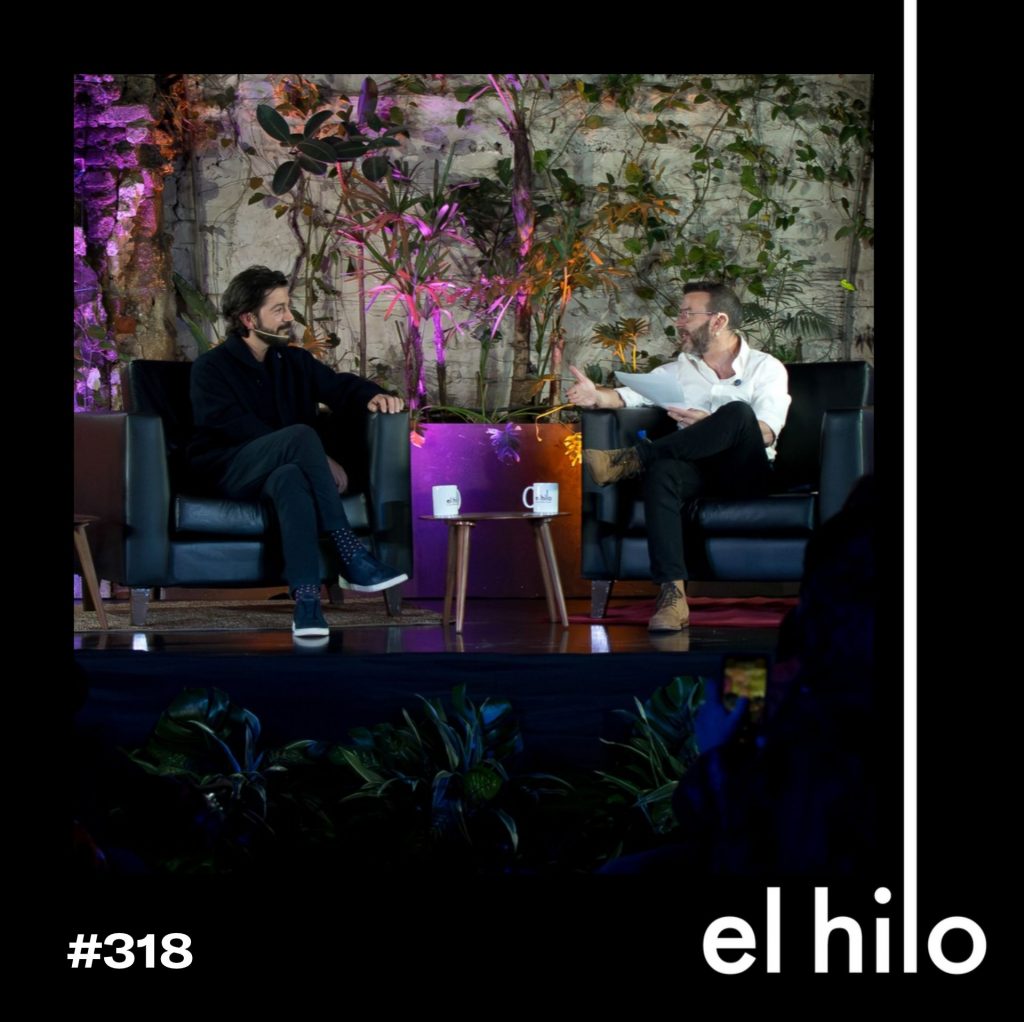

ESCÚCHANOS EN TU DISPOSITIVO MÓVIL