Donald Trump
Midterms
Elecciones
Congreso
Senado
Cámara de representantes
Estados Unidos
Migración
Costo de vida
Economía
Inteligencia artificial
Data centers
Votantes
Demócratas
Republicanos
Donald Trump lleva gobernando casi dos años con mayoría republicana en el Congreso, pero las elecciones de medio mandato pueden cambiar ese escenario. Las encuestas anticipan una victoria para los demócratas, y la pregunta es hasta qué punto eso podría limitar realmente la agenda del gobierno. Aunque hay algo más difícil de anticipar: cómo va a reaccionar Trump frente a un resultado que amenaza su poder. El presidente ha dicho que estas elecciones ni siquiera deberían celebrarse, ha buscado cambiar las reglas del proceso y ha difundido sospechas sobre el sistema electoral durante meses. Sobre esa incertidumbre hablamos con la periodista y autora estadounidense Paola Ramos, conductora del podcast The Moment y especialista en política, migración y comunidades latinas. En este episodio, Paola nos ayuda a entender cómo llega Estados Unidos a esta votación, qué impacto han tenido factores como las deportaciones masivas y el costo de vida, y qué riesgos implican estas elecciones para el futuro del sistema democrático en el país.
Créditos:
-
Producción
Daniela Cruzat, Laura Rojas Aponte, Miguel Santiago Colón, Lisa Cerda -
Edición
Eliezer Budasoff -
Verificación de datos
Bruno Scelza -
Producción digital
Samantha Proaño, Franklin Villavicencio, Diego Corzo -
Diseño de sonido y mezcla
Elías González -
Música
Elías González -
Tema musical
Pauchi Sasaki -
Fotografía
Getty Images / Brendan Smialowski
Etiquetas:
Transcripciones:
Transcripción:
Eliezer Budasoff: Bienvenidos a El hilo, un podcast de Radio Ambulante Studios. Soy Eliezer Budasoff.
Audio de archivo, Donald Trump [en inglés]: Esta es la batalla final. Con ustedes de mi lado, vamos a demoler el Estado profundo.
Eliezer: “Esta es la batalla final”. Eso dice Donald Trump en una publicidad que lanzó la Casa Blanca hace algunas semanas, que fue pagada con fondos públicos. En el anuncio, Trump promete que van a echar “a los comunistas, a los marxistas, a los fascistas”, y que van a liberar al país para siempre de esos y otros villanos.
No es raro que el presidente de Estados Unidos use un lenguaje tan radical para apelar a sus votantes, o que plantee una situación donde está en juego su poder como una amenaza existencial; pero esa mirada apocalíptica aparece como un fantasma detrás de muchas preguntas sobre lo que puede pasar con las elecciones de medio mandato, y no solo tiene que ver con los resultados.
El 3 de noviembre, los estadounidenses votan para renovar por completo la Cámara de Representantes y una tercera parte de los escaños del Senado, y la tendencia histórica es que el gobierno de turno pierda lugares en el Congreso en esta instancia. El tamaño de esa caída depende mucho de la popularidad del presidente, y las cosas no pintan bien para Trump, que tiene la imagen por el suelo. Desde hace meses difunde sospechas sobre las elecciones, ha dicho que ni siquiera deberían hacerse y ha tratado de cambiar las reglas para incidir en los resultados. Las encuestas dicen que los republicanos van a perder el Poder Legislativo, y nadie está muy seguro de cómo piensa actuar el gobierno.
De esa incertidumbre hablamos en este episodio con la periodista y escritora estadounidense Paola Ramos. Paola tiene una gran experiencia cubriendo política, migración, comunidades latinas y actualidad estadounidense para distintos medios, y tenemos la suerte de poder analizar con ella la situación en la que llega el país a esta votación, el impacto que están teniendo factores como las deportaciones masivas y el costo de vida, y hasta qué punto las elecciones intermedias puedan realmente limitar o profundizar el poder y la agenda del gobierno de Trump.
Es 9 de octubre de 2026. Una pausa y volvemos.
Eliezer: Estamos de vuelta en El hilo.
Eliezer: Paola, tú has cubierto política en Estados Unidos durante años y conoces también cómo funcionan por dentro algunas dinámicas electorales, ¿no? O sea, pasaste de trabajar en la campaña de reelección de Barack Obama y la oficina de Joe Biden cuando era vicepresidente, a reportar para Telemundo, Vice News y más adelante, claro, MSNBC y el podcast The Moment. En tu trabajo como periodista siempre buscas capturar el pulso de los estadounidenses y eso supone poder mostrar sus contradicciones y cuestionar también los estereotipos que tenemos sobre los votantes. Y nos gustaría justo empezar por ahí. Estamos a un mes, a menos de un mes, de las elecciones de medio término. ¿Qué tipo de sentimientos predominan hoy en los votantes cuando hablas con ellos? ¿Cómo estás viendo el ánimo de la sociedad estadounidense?
Paola Ramos: Bueno, pues mencionas contradicciones y creo que es justamente lo que se siguen viviendo. De hecho, te cuento una anécdota. Acabo de aterrizar hace un par de horas de Texas. Estaba en la frontera. Y en la frontera estaba visitando a estas iglesias evangélicas que formaron parte de esa gran coalición de Donald Trump en el 2024, ¿no? O sea, Donald Trump gana a nivel nacional por el voto evangélico, pero también debido al voto latino y particularmente en la frontera, donde si te acuerdas, Trump gana 14 de los 18 condados que quedan a un par de millas de la frontera. Gana gracias, en gran parte, a ese voto evangélico, que es enorme en la frontera. Pero hablando de estas contradicciones, cuando hablas con esta comunidad, ves la manera en la cual están sufriendo, ¿no? Porque por una parte tienes a estos líderes religiosos que se han convertido de una manera curiosa, no solamente en pastores, pero de repente también son líderes de la comunidad. O sea, cuando hay redadas en la frontera, son los pastores los que les están dando comida a las familias que llevan literalmente semanas, algunas personas meses, sin salir de sus casas. La audiencia puede pensar que esa persona que te estoy describiendo, si no sabes quién es, es una persona que va a votar por el Partido Demócrata, precisamente porque están viviendo en lo que es esta tormenta de deportaciones masivas de Trump. Pero lo interesante es que cuando empiezas a hablar con la comunidad y con esos pastores que te estoy describiendo, empiezas a entender este conflicto moral que tienen, ¿no? Donde, por una parte, siguen valorando estos valores tradicionales que les hicieron votar por Donald Trump. Son cristianos, están en contra del aborto, todo lo que es el tema LGBTQ o el tema trans no lo pueden apoyar, pero sienten un conflicto interno moral muy presente. Entonces, yo creo que esos conflictos siguen existiendo, no solamente en la frontera, pero a través del país. Pero yo creo que la realidad de estas redadas de ICE, del daño económico que ha dado lugar en estas comunidades por estas redadas es tan grande, la realidad de no tener el dinero suficiente para poder ir a comprar las cosas. Yo creo que esa realidad, sobrepasa estos valores culturales.
Eliezer: Ese impacto económico va más allá de las personas que son detenidas. Un estudio de la Universidad de Pensilvania analizó más de cinco mil redadas de ICE y encontró que, en los negocios cercanos, el flujo de personas y el gasto en esos locales disminuyó cada semana después de los operativos. Los autores calculan que, si el efecto se proyecta a todo el país, podría traducirse en una reducción del gasto de entre tres mil y 14 mil millones de dólares. Y hay algo más: es un efecto que no desaparece con el tiempo. De hecho, el estudio encuentra que las caídas se mantienen y son mayores mientras más cerca está un negocio del lugar donde pasó la redada.
Paola: Así que creo que tradicionalmente, el partido que no está en el poder suele ganar, ¿no? O sea, eso estadísticamente es lo que suele pasar. Pero creo que cuando empiezas a combinar todas estas cosas, creo que sí se empieza a notar un apetito para el cambio, ¿no? Que incluso a las personas más conservadoras, evangélicas, el hecho de que ellas están considerando poder votar por un demócrata, eso yo creo que te dice mucho.
Eliezer: Un montón.
Paola: Sí.
Eliezer: Has mencionado varias cosas sobre las que te queremos preguntar, pero algo sobre lo que no tenía preguntas y me sorprende un montón, y es que todavía tenga igual algún peso la batalla cultural, ¿no? O sea, porque el tema el tema del aborto, que estuvo tan presente en la primera elección de Trump, un poco menos en la segunda. Bueno, la batalla cultural sí, pero uno siente como que ya había desaparecido un poco del mapa
Paola: No. No, lo curioso es… Mira, en el momento en el que aterricé en Texas, o sea, en el momento en el que aterrizo en la ciudad de McAllen, que está en la frontera, que está justamente enfrente de Reynosa, cuando vuelvo a abrir el teléfono, empiezo a ver en mi Instagram, en TikTok, todo tipo de ataques en contra de James Talarico o en contra de los candidatos demócratas.
Eliezer: James Talarico es uno de los demócratas que quiere llegar al Senado por Texas. Tiene 37 años y antes de entrar en política fue profesor de escuela pública. Hoy es una de las voces demócratas más progresistas del estado. Además es presbiteriano y estudia para ser pastor. Y, como él, otros candidatos demócratas están recibiendo ataques de los republicanos, que los presentan como parte de una izquierda radical.
Paola: Se enfocan únicamente en el mensaje trans. Y el mensaje en inglés es, te lo digo en inglés, dicen: “They are for they/them, we are for you”.
Audio de archivo, reportera: James Talarico apoya a los radicales. Votó para permitir que sus impuestos paguen cirugías de cambio de género en niños, James Talarico está con ellos, no con nosotros.
Paola: Ese es el mensaje. O sea, los demócratas son…
Eliezer: Por los pronombres.
Paola: Por los pronombres. Y ese es el mensaje, que es bastante brillante, ¿no? They are for they/them, we are for you. Y ellos están contando en algo que les funcionó muy bien en el 2024. Y eso es que de alguna manera la transfobia puede despertar un tipo de pánico moral, ¿no? Y que esa transfobia les va a recordar a estos votantes que votaron por ellos en el 2024, que les va a recordar a un país que está cambiando demasiado rápido, ¿no? Que les va a recordar a todas las razones por las cuales ellos se están sintiendo incómodos frente a este cambio. Hace tres años, dos años, funcionó muy bien, pero es lo que te contaba, ahora, ¿no?,que la gente no puede pensar en eso, sino que está pensando: ¿cómo ceno? ¿cómo como? ¿Qué hago si no puedo salir de mi casa en dos meses? Entonces, ellos están contando que esas guerras culturales al final va a ser, tal vez, lo único que les puede ayudar a ganar
Eliezer: Mira, eso nos puede servir para avanzar en un panorama general. Porque claro, Texas, también, es un estado tan único, digamos, ¿no? Para el mapa electoral de Estados Unidos. Y estas elecciones forman parte de la discusión pública desde hace meses y hay un montón de narrativas cruzadas sobre ellas. Pero hay dos ideas que persisten: que las encuestas son malas para los republicanos en general, por distintos tipos de motivos que podemos conversar ahora, y que Donald Trump está dispuesto a casi cualquier cosa para no perder. Ya ha intentado limitar los votos por correo, impulsó el rediseño de los mapas electorales. Ahora recién anunció que va a viajar diariamente para hacer campaña hasta la fecha de votación. Y una de sus últimas acciones en esta carrera fue esto, que fue hace dos semanas, que fue prometer que le iba a dar 5.000 dólares a cada votante si los republicanos ganaban la Cámara de Representantes y el Senado.
Paola: Sí.
Eliezer: Algo que no solamente es escandaloso, sino que además parece desesperado. Y nos gustaría saber, desde tu punto de vista, ¿qué es lo que está apoyando hoy una persona que vota al Partido Republicano? Porque lo que les ofrecen no parece un proyecto partidario o ni siquiera una promesa de gestión. ¿Cuál crees que es la visión de Estados Unidos que lleva hoy a las personas a apoyar al gobierno de Trump?
Paola: Pues yo creo que sencillamente es el miedo al cambio. El debate que este país ha tenido desde que fue fundado, o sea, el debate moral sigue siendo el mismo que tuvimos hace 30 años, hace 100 años, que tuvimos durante la guerra civil de este país. Y eso es simplemente si somos un país blanco y cristiano, al cual se debe de defender o si somos, como se dice en los libros, como proyectamos y somos al final un país de inmigrantes, un país diverso. Yo creo que a lo largo de los últimos más de cien años, creo que has tenido distintos partidos políticos que han intentado resolver esa pregunta y que han luchado por distintas versiones de esa balanza. Entonces, yo creo que lo que estamos viendo ahora mismo, es una administración de Donald Trump, que cuando ellos dicen que van a prometer las deportaciones masivas más grandes de la historia de Estados Unidos, es precisamente para, de alguna manera, parar el avance natural de este país. Ellos odian la idea de que en el 2050 este país va a ser mayoría/minoría.
Eliezer: Según proyecciones de la Oficina del Censo de Estados Unidos, el país va a ser cada vez más diverso. La población blanca no hispana, que en 2022 representaba casi el 59% de los habitantes, va a bajar a un 45% para 2060. Es decir, para mediados de este siglo, ningún grupo racial o étnico va a ser mayoría por sí solo.
Paola: Odian la idea de que aquí en Nueva York, te estoy hablando donde tenemos un alcalde que es musulmán. Odian la idea que en Michigan puede ser que igual un senador musulmán tal vez pueda ganar el Senado. Igual que en Texas, te hablé de James Talarico, esta idea de que un cristiano pueda estar a favor del aborto o que un cristiano, como es James Talarico, pueda estar a favor de la comunidad trans, eso les parece, como ellos dicen, so weird, ¿no? Entonces, las personas que yo conozco que siguen apoyando a Donald Trump son personas que realmente les da temor esa imagen de un Estados Unidos que está cambiando. Y que quieren volver a sentirse cómodos en su país. Acuérdate que Donald Trump en 2016 gana, no necesariamente por la ansiedad económica que tenían los votantes, sino que gana por la ansiedad cultural que tenían los votantes, ¿no? Porque la gente, después de un Barack Obama, cuando vieron que se podía, que era posible tener un presidente afroamericano en la Casa Blanca, yo creo que eso creó mucho rechazo y yo creo que lo que estamos viendo ahora sigue siendo parte de ese rechazo. Luego, la otra parte es un porcentaje mínimo, pero que sigue existiendo y eso es, estos nacionalistas cristianos que piensan ─y me lo han dicho a mí muchos─ que él es parte de una intervención divina de Dios, ¿no? Que una vez que le intentaron matar en el verano, antes de las elecciones presidenciales, que ese momento se convirtió, para muchos cristianos, en una señal de Dios.
Audio de archivo, reportera: Tras escucharse aparentes disparos, Donald Trump fue sacado por agentes del Servicio Secreto de un meeting de campaña en Pensilvania, al noreste de Estados Unidos.
Audio de archivo, reportera: Ahí lo tienen. El expresidente Trump levantando la mano con un puño arriba. Dijo tres veces la palabra fight, peleen, y después la gente coreando detrás: USA, USA.
Paola: Entonces, esa lealtad ciega es muy peligrosa, porque independientemente de cómo está sufriendo el pueblo americano, independientemente de las encuestas en las que Donald Trump está hundido, incluso un Fox News te lo admite. Esa lealtad ciega te puede llevar a hacer muchas cosas. Te puede llevar a invadir el Capitolio un 6 de enero o te puede llevar a hacer algo similar si los republicanos no ganan en estas elecciones de medio término.
Eliezer: Una pausa y volvemos.
Eliezer: Estamos de vuelta en El hilo.
Eliezer: Paola, antes de entrar en más detalles sobre los escenarios posibles y lo que pueden significar, nos gustaría que nos ayudes a tener claro, un poco, el panorama actual. Sabemos que, que hay más de 500 cargos que van a ser elegidos en estas elecciones, pero casi toda la atención está puesta en qué partido va a mantener la mayoría en las cámaras. ¿Nos puedes contar cómo ha estado compuesto el poder legislativo durante estos primeros dos años del gobierno de Trump? Es decir, ¿cómo es actualmente la relación de fuerza en las cámaras?
Paola: Sí, o sea, a ver, Donald Trump dice que a ellos le dieron un mandato. En el 2024, los republicanos ganan el Congreso, ganan el Senado, Donald Trump gana el voto popular y además tienen una Corte Suprema conservadora. Entonces, para ellos eso fue un mensaje enorme que ellos recibieron, que podían hacer cualquier cosa. Ahora, la manera en la cual lo hemos visto reflejado en la realidad, yo creo que el ejemplo más claro que se tiene es el Congreso que pasó una legislación que le dio más de 70 mil millones de dólares al departamento de Homeland Security, ¿no? A ICE. Y fue tanto dinero que si Donald Trump pierde y que si los republicanos pierden en las próximas semanas, no va a importar. Porque precisamente pasaron y les dieron tanto dinero, otorgaron tanto dinero a los agentes de ICE, teniendo en cuenta que era muy posible que ellos iban a perder estas elecciones de medio término. Por otra parte, también vemos, por ejemplo, el ejemplo de un Congreso que entiende que es su poder limitar cuándo o no Estados Unidos entra en guerras. Y que jamás utilizó ese poder para limitar las acciones de Donald Trump cuando invadió Venezuela o, por ejemplo, cuando se fueron a Irán y el Congreso no hizo absolutamente nada. Pero vamos, que él ha podido abusar del poder mucho más fácilmente porque tienen esta, como dicen los americanos, this trifecta.
Eliezer: O sea que los republicanos controlan la Casa Blanca y tienen mayoría, tanto en el Senado como en la Cámara de Representantes. Ha sido así en estos dos primeros años de su segundo mandato presidencial. Y eso le ha permitido a Trump avanzar con mayor facilidad en su agenda, aunque la mayoría republicana en la Cámara de Representantes ha sido muy estrecha. Trump incluso ha conseguido aprobar algunas leyes con apoyo demócrata. Por ejemplo, una ley que obliga a detener a inmigrantes indocumentados cuando son arrestados o acusados de delitos como robo, hurto o allanamiento de morada.
Eliezer: Hay una pregunta que parece inevitable para los que vemos estas elecciones desde afuera, y es: ¿para qué necesita el gobierno de Trump esas mayorías los dos años que quedan de su gobierno? Porque parece claro, justamente, que a esta administración no le preocupa la división de poderes y ha tomado un montón de decisiones importantes que se supone que debían pasar por el Congreso: la guerra contra Irán, los aranceles, la operación en Venezuela, el desmantelamiento de agencias aprobadas por ley. Entonces, ¿qué cosa le falta hacer a esta administración para la cual necesita las mayorías?
Paola: Es muy buena pregunta. Tal vez la respuesta es no mucho, ¿no? O sea, si te acuerdas el primer día en el que Donald Trump entra en la Casa Blanca, ¿qué hace? Implementa 40 acciones ejecutivas, 40.
Eliezer: Eso es como un decreto de necesidad y urgencia, lo que le llamamos en América Latina gobernar por decreto, ¿no?
Paola: Exactamente, es eso. Ahora, lo que se vio después es que es un presidente que abusa de ese poder ejecutivo, pero que a la vez gobierna con ese poder ejecutivo. A la vez hemos visto muy bien y hemos entendido que la línea de ataque principal en contra de Donald Trump y este abuso del poder al final, han sido las cortes y los jueces. Pero ellos gobiernan de una manera muy específica, ¿no? Si las personas bloquean sus acciones ejecutivas, ellos han encontrado distintas maneras en la cual poder evadir y un poco de como darle la vuelta. Vimos a la Corte Suprema bloquear la obsesión de Donald Trump que él tenía con acabar con la ciudadanía de nacimiento. Ahora, cuando eso fue bloqueado, ¿qué hizo Donald Trump? Intentan implementar regulaciones para que sea lo más difícil posible para los inmigrantes ─incluidas las personas que vienen aquí con visas─, para que ellos no puedan acceder a los servicios más básicos de este país. Cuando le bloquean algunas de sus políticas que tienen que ver con la inmigración, ¿qué hace Donald Trump? Dice: “Bueno, pues entonces les voy a deportar a un tercer país”.
Eliezer: Paola, tú has dicho que para vos, el test de un partido demócrata que está en condiciones de ganar es hasta qué punto logra articular posiciones propias más allá de limitarse a estar en contra de Trump. ¿Ves a los demócratas preparados para eso en estas elecciones? ¿Han logrado construir una agenda que pueda seducir a una mayoría, al menos en lugares clave?
Paola: Creo que tienen un mensaje populista que está funcionando, ¿no? Y es uno muy sencillo, y eso es: nosotros estamos en contra de esos millonarios. Nosotros, que somos los candidatos en desventaja o como se dice en inglés, the underdogs, ¿no? Nosotros somos los que estamos luchando para cambiar el status quo y creemos en la libertad y la igualdad de todo el mundo. Ahora, creo que donde tal vez empieza a haber algunos problemas es que, yo no veo un tipo de claridad moral, ¿no? Por ejemplo, un James Talarico es alguien que hace cuatro años, cinco años, incluso como cristiano, defendía muy abiertamente a la comunidad transgénero. Él solo, ¿no? Él bloqueó muchas legislaciones republicanas que le ponían límites a la comunidad. Pero recientemente, en septiembre, viste a un James Talarico en la cadena de Fox News rechazando a sus propios votos. Creando una distancia entre su mensaje y la comunidad trans, diciendo que si fuese mañana, que él votaría en contra de los medicamentos que ayudan a las familias trans, a las comunidades trans a cambiar, ¿no? A transicionar. Entonces, yo creo que ese es, un poco, el problema al cual se enfrentan los demócratas, más allá de estos temas culturales, estamos hablando de una comunidad latina inmigrante que lleva 20 años esperando a que los demócratas pasen una reforma migratoria. Ya casi nunca les oyes hablar de este tema. Entonces, yo creo que hay muchos votantes que sí quieren entender exactamente qué es lo que apoyan y qué es lo que no apoyan. Y yo diría que eso es precisamente una de las razones por la cual a Donald Trump le fue muy bien, porque tú sabes exactamente quién es él, tú sabes qué es, a quién favorece y a quién no favorece. Sí creo que, que les falta un poco de eso a los demócratas. Y a la vez, creo que por eso se puede decir que el partido demócrata socialista ha encontrado una oportunidad recientemente, ¿no? Porque ve esa frustración, entiende esa frustración, porque no tienen miedo en general a defender a muchas de las personas que durante años se han sentido, de alguna manera, abandonadas por un partido demócrata que a lo mejor le da miedo decir la cosa, ¿no? Le da miedo mencionar estas palabras, estas comunidades.
Eliezer: Nos gustaría que nos ayudes a mirar algunos asuntos centrales que han posicionado a los votantes desde las últimas elecciones, para saber cuánta relevancia siguen teniendo actualmente y cómo ha cambiado, ¿no?, el contexto en el que se vota. Uno, justamente, es la migración, fue uno de los temas centrales que ayudaron a Trump a ganar en 2024, incluso entre votantes latinos que se consideraban parte de la base demócrata. Pero también, ya llevamos dos años, hemos visto su plan en acción. La promesa de deportar a los migrantes con antecedentes o a los malos, por decirlo de una forma genérica, se ha convertido prácticamente en una cacería general, ¿no?
Paola: De hecho…
Eliezer: Las redadas, las capturas en los pasillos.
Paola: Te paro ahí porque yo creo que nosotros, de alguna manera, nos convencimos de que Donald Trump dijo que solamente iba a ir a por los malos. Pero yo, si te soy sincera , yo no me acuerdo que él dijo eso. Yo lo único que recuerdo es lo que él dijo claramente, y eso es que van a deportar a todo el mundo que puedan deportar. Pero yo creo que los votantes, particularmente los votantes latinos, como que se convencieron de que solamente iban a ir a por los criminales, ¿sabes?
Eliezer: Absolutamente. Y creo que de hecho es la versión que también tenemos en América Latina, ¿no? Porque es la forma de los latinos de justificar también a aquellos que votaron a Trump en Estados Unidos, ¿no? Pero claro, han capturado a la gente que quería hacerlo bien, en los pasillos de las cortes. Han detenido a más de medio millón de personas. Hay casos que han despertado una reacción importante, ¿no? Como a principios de año, del niño Liam Conejo Ramos. Y por otro lado, y eso atañe a los ciudadanos estadounidenses, el tema migratorio es como que se ha vuelto una excusa para armar y desplegar a ICE como una fuerza policial paralela, que no solo se usa contra migrantes, sino también contra ciudadanos que se oponen a los planes de este gobierno, ¿no? Ahí tienes los asesinatos de Renée Good y Alex Pretti en Minneapolis, que son tal vez el ejemplo más claro. Entonces, quería preguntarte si tú crees que lo que ha pasado con la migración puede haber cambiado la mirada de algunos votantes que apoyaron a Trump de manera significativa. Pienso específicamente en esto que, que mencionabas, ¿no? En los latinos que lo votaron creyendo que no iban a ir contra ellos, que iban a ir solamente contra los malos, pero también en los ciudadanos que han visto que sus compatriotas recibían disparos a la luz del día. ¿Crees que ha cambiado algo?
Paola: Creo que lo acabas de decir. Hay dos cosas. Lo primero es ese más de 40% de los latinos que votan por Trump. Las encuestas que se hacían antes de las elecciones del noviembre del 2024 encontraban que cuando tú le preguntabas a ese votante latino a quién se refiere Donald Trump cuando dice que va a deportar a deportar a esas personas, la mayoría de los latinos no pensaban que Donald Trump se estaba refiriendo a ellos. O sea, la mayoría de los latinos pensaban que Trump, como tú lo dices, estaba solamente hablando de deportar a esos criminales, ¿no? Entonces, yo creo que por una parte, muchos latinos, incluidos latinos, o sea, ciudadanos americanos, por primera vez en sus vidas se están sintiendo incómodos en su propio país. Tal vez no es que les van a deportar a ellos, pero tal vez están viviendo el racismo de otra manera. Están viendo que un policía les puede parar en un coche. Están viendo que de repente, por primera vez, conocen a un primo o una tía que ha tenido un tipo de contacto directo con ICE. Entonces, yo pienso en Miami, donde yo crecí, ¿no? En Miami tienes una comunidad cubana, conservadora, bastante grande. El cubano, en general, nunca ha tenido que pensar en la migración. Y por primera vez en sus vidas estás viendo que en Miami, que está lleno de inmigrantes, que está lleno de gente que votó por Trump, Miami es una de las ciudades que tiene los índices más altos de redadas del país. Entonces, ya no puedes vivir en una burbuja y creo que el efecto ahí es mucho más profundo de la inmigración. El efecto es que Trump te está haciendo sentir como un extranjero en tu propio país y eso no es bueno. Ahora, otra cosa es que esos votantes lo reconozcan abiertamente, y que puedan, de alguna manera, entender sus propias decisiones, que eso es otro proceso, ¿no? Luego, el otro elemento que mencionas es, los otros americanos. Yo creo que… Yo siempre pienso en el 2018, cuando todo el país escucha esos llantos de los bebés que separaron en la frontera.
Audio de archivo, reportero: Se ha hecho viral este audio difundido por la organización no gubernamental ProPublica, en el que se escucha lo que se vive puertas adentro de un centro de detención, donde se encuentran algunos de los más de dos mil niños que han sido separados de sus padres en los últimos días, tras ingresar ilegalmente a territorio estadounidense. ¿De dónde son ustedes? De Honduras. ¿Y tú? Guatemala.
Paola: Todo el mundo lo sintió, ¿no? La mamá en Ohio, blanca, que había votado por Trump, lo sintió de la misma manera que la abuela de Arizona. O sea, todo el mundo estaba frustrado con ese sonido y esa imagen, pero luego se olvidaron y luego volvieron a votar por Donald Trump. Entonces, creo que ahora la diferencia es que la inmigración ya no es un tema distante. Ya no es una cosa que ves en la tele, ya no es una cosa que tiene que ver con la frontera o que tiene que ver con los inmigrantes. Yo creo que ahora los americanos, todos, que jamás han tenido que pensar en esto, se han expuesto a su realidad porque lo están viendo en sus ventanas, lo están viendo en sus calles, están viendo, o sea, lo están viviendo. Y yo creo que esa imagen también es incómoda para ellos. No quieren ver a los policías y a los agentes de ICE en sus calles todos los días. Y siempre pienso en un estado como Maine, que es un estado muy blanco, y donde por primera vez en la vida yo he visto a la gente organizarse, hacer manifestaciones, protestar, en ciudades donde la mayoría de las personas son blancas. Y es, pues eso, yo creo que por primera vez se han expuesto a esa realidad. Ahora, y siempre lo digo, lo que pase en noviembre no necesariamente es una indicación de lo que va a pasar en el 2028. O sea, yo creo que incluso muchos de los elementos que llevaron a Donald Trump a la victoria siguen estando presentes. Y ahora me callo, pero algo que me parece muy interesante es que yo he hablado con muchos votantes trumpistas, latinos, que de alguna manera se arrepienten de ese voto. Pero cuando tú empiezas a preguntarles: “Bueno, entonces, ¿qué quieres, no? ¿Qué significa la legalización para ti?” Ahí es ya donde empiezas a entender que es mucho más complicado, ¿no? Que no necesariamente quieren la legalización para todo el mundo, sino que a lo mejor lo quieren para el mexicano, pero no para el venezolano, ¿no? Lo quiero para la persona que lleva aquí 12 años, 20 años, pero no para el otro. Entonces, estos elementos siguen presentes
Eliezer: Claro. Cuando empezamos la conversación decías algo muy específico, que tiene que ver con la migración, pero incluso que puede afectar a la gente que está a favor de las deportaciones, que está a favor de cómo lo está haciendo el gobierno con estas políticas, y es si ha tenido un impacto considerable la política migratoria de este gobierno en términos económicos, ¿no? Me refiero a informaciones que han salido sobre la escasez de trabajadores de la construcción o el descenso del turismo, incluso durante el mundial, la disminución de estudiantes internacionales. Pienso en un reportaje de NPR que estimaba que en Chicago, el comercio perdió cerca de 1.200 millones por el miedo y el aislamiento, consecuencia de las redadas migratorias. Entonces, o sea, el consumo simplemente ha bajado. Además del tratamiento cruel e inhumano, ¿no? Las políticas migratorias, además del tema ético y moral, ¿has visto un impacto relevante en la economía asociado a eso?
Paola: Ahora que vengo de Texas, pasé un día con personas que tienen negocios de construcción, que forman parte de la red de construcción de Texas. La mayoría de ellos votaron por Donald Trump. Precisamente por el mensaje económico que tenía el presidente. Ahora, lo que yo vi, fue algo muy sencillo. Eso es que la mayoría de las construcciones de casas están paralizadas. De hecho, tú, si manejas por el valle del Río Grande, uno lo nota rápidamente, que hay muchas casas que están medio construidas. Lo otro que notas inmediatamente es que no hay nadie trabajando. Nadie está trabajando en la construcción. O sea, ves casas no solamente, sin terminar, pero no ves a los trabajadores. Entonces, lo que a mí me explicaron es que antes solían tardar cinco meses en acabar las construcciones y en acabar casas. Ahora les está tomando el doble. Lo que me han dicho a mí es que están perdiendo a los trabajadores constantemente y eso significa, obviamente, que las casas luego también están subiendo el precio. Además, el material que necesitan para construir las casas ahora les cuesta el doble debido a los aranceles. Así que el impacto económico lo están viviendo todos los días
Eliezer: Ya. Bueno, porque digamos, esto toca otro de los temas que se repite en las encuestas, ¿no?, que es el aumento en el costo de vida. Y la capacidad para llegar a fin de mes de la gente. No es algo nuevo. Me acuerdo claramente que en la campaña presidencial llegó a convertirse en un tema el precio de un cartón de huevo.
Paola: Sí.
Eliezer: Pero en 2026, con la guerra contra Irán, la promesa de este gobierno de reducir el costo de vida parece más lejana que antes todavía. El precio de la gasolina sigue subiendo y uno supone que eso tiene algún costo político para los republicanos. ¿Crees que este tema puede mover la aguja, que sigue siendo central para los ciudadanos? ¿O te parece que igual, aunque la situación mejore, eso no es suficiente para que una cantidad importante de gente pueda cambiar su voto? O sea, también, tal vez la pregunta sería: ¿la gente asocia el costo de vida con la gestión del gobierno de Trump? Por un lado. Y por otro, ¿la campaña demócrata ha sabido capitalizar ese descontento?
Paola: Sí, de hecho, diría que si el demócrata gana va a ser por esto. O sea, olvídate de todo lo que hemos hablado, va a ser por esto. Yo creo que al final, y yo también lo estoy viendo, al final, si la gente vota por Donald Trump, por las promesas de deportaciones masivas, pero en todas las campañas, ya sea de Trump, de Obama, de Bush, siempre, y da igual si eres un latino, si eres afroamericano, si eres blanco, el tema que te consume, el tema en el que te levantas y te duermes pensando es el tema económico. Es cómo le voy a dar de comer a mi familia, cuánto cuesta la escuela de mi niño, cómo está el desempleo. Y eso siempre, siempre ha sido así. Y sí creo que lo que Trump prometió, más que nada, lo que él capitalizó fue esa ansiedad económica que la gente sentía en el 2024 con estos números de inflación, que obviamente, afectaron muchísimo a Joe Biden. Pero creo que hay otra cosa también. La percepción que tiene la gente de Donald Trump está cambiando. Y eso sí creo que también le está ayudando a los demócratas. Es decir, yo me acuerdo de tener conversaciones con votantes que cuando yo les preguntaba: “Entonces, ¿por qué te cae bien Donald Trump? O sea, ¿qué es lo que te gusta de Donald Trump?” No te podían nombrar nada que él haya hecho directamente. No te pueden decir: “Bueno, porque él ha mejorado mi vida”. Pero sí me decían: “Es que él es uno de los nuestros, él es como yo”. O sea, Donald Trump es un tío de calle, me decían en Miami. Me decían: “He’s, he’s from the streets, he’s one of us”. Lo escuché en Miami, lo escuché en el Bronx. O sea, hay esta percepción, no me preguntes por qué, pero había una percepción de que Trump era un tío de la calle, ¿no? “He’s just one of the guys”. Y eso ha cambiado. O sea, esa imagen de Trump ya ha cambiado. Entonces, la idea de que Donald Trump es un millonario que ha ganado más de dos mil millones de dólares en los primeros 11 meses de su vuelta a la Casa Blanca, mientras el resto del país está sufriendo. Esa percepción, esa imagen…
Eliezer: Eso ha colado finalmente.
Paola: Yo creo que sí está penetrando en la consciencia. Yo creo que sí.
Eliezer: Sí, porque aparte, digamos, hay un punto que creo que demuestra claramente la diferencia enorme que hay entre Donald Trump y la gente de la calle, que es este que está ganando también atención en todo el mundo, ¿no? Y tiene que ver con el avance de la inteligencia artificial y los recursos que necesita la tecnología para operar. Porque acá entran, obviamente, los famosos data centers, que han sido controversiales en las comunidades en las que se ubican. Existen unos tres mil data centers, por ahora, en Estados Unidos y hay planes para construir muchos más en comunidades rurales dentro del país. Muchos candidatos, tanto republicanos como demócratas, tienen que vincularse y confrontar, digamos, la construcción de estos centros. Y es evidente que para el voto local esto es un asunto importante, pero me pregunto si a nivel nacional también está movilizando a los votantes. ¿Ves que este tema puede tener un peso en las elecciones o tal vez para el 2028?
Paola: Yo creo que a lo mejor para el 2028. Yo creo que ahora, como que todo el mundo está un poco… A todo el mundo le interesa el tema y a todo el mundo le da miedo el tema en teoría, pero lo que las encuestas también enseñan es que no es un tema principal. Pero a la vez, yo creo que lo que sí es interesante es que hay una percepción de que, lo voy a decir así, de que estamos jodidos, ¿no?
Eliezer: Sí, sí, sí, sí,
Paola: De que de aquí a 20 años puede ser o no que vayamos a existir. Tal vez es una cosa muy dramática, una idea de que la inteligencia artificial es algo que nos, o sea, que es una batalla que no podemos ganar. Pero lo interesante de estos data centers que mencionas es que es lo único tangible que tiene el votante, ¿no? Que es lo único que el votante se está dando cuenta que eso sí es una batalla que puede ganar. O sea, que a lo mejor no entiende muy bien cómo controlar el mundo de la tecnología ni Silicon Valley, pero cuando es algo físico y tangible, ahí sí pueden hacer algo. Entonces, yo creo que esa es la dinámica que veo.
Eliezer: Y te lo preguntaba también porque siento, tal vez no en todos los sectores, pero que la imagen de Donald Trump apoyando de manera indiscriminada el avance de la IA y a estos millonarios.
Paola: Y sin regulaciones.
Eliezer: Claro, que publicitan de hecho sus productos, porque publicitan sus productos diciendo: “La IA les va a quitar el trabajo a todos en un año”, porque están hablándole a sus inversores, no están hablándole a sus consumidores. Y entonces, si Donald Trump dice: “No, no, no, vamos adelante con eso”, yo he sentido también un poco que es como: “Ah, este tipo no es uno de los nuestros”.
Paola: Totalmente, totalmente. Y de hecho, lo interesante es cuando, por ejemplo, piensas en un Steve Bannon, o sea, un Steve Bannon que es uno de los aliados principales de Donald Trump, una de las cosas que él tiene en común con un Bernie Sanders es que los dos ven que los dos tienen el mismo enemigo en común, que son los ─como ellos llaman─ los techno bros, ¿no? Los tech bros.
Eliezer: Una última pausa y volvemos.
Eliezer: Estamos de vuelta en El hilo.
Eliezer: Si el Partido Demócrata alcanza la mayoría en las dos cámaras, como anticipan muchas encuestas, y suponiendo un escenario normal de recambio, ¿no? La pregunta es: ¿cuánto realmente puede equilibrar el ejercicio de poder que la oposición tenga mayoría en el Congreso y en el Senado? Justo por esto que hablábamos antes. El presidente ha buscado formas de desarticular o directamente ha pasado por encima de los mecanismos de control, ha manipulado a la justicia. Y tampoco es que hemos visto una oposición muy activa en el poder legislativo, ¿no? ¿Qué sería distinto en este caso? ¿Qué crees que podría ser distinto? ¿Qué podrían hacer realmente los demócratas si ganan?
Paola: Bueno, más que nada intentar restringir un poco el poder, paralizar algunas de estas legislaciones. Por ejemplo, si es que ganan los demócratas el Congreso, no se podría haber pasado el tipo de legislación que se vio a favor de los aranceles o a favor, del departamento de Homeland Security. O sea que sería un Trump un poquito más limitado. Pero creo que la oportunidad que les da más que nada a los demócratas, es una oportunidad de poder inspirar por fin al votante, ¿no? De por lo menos empezar a proponer ideas que a lo mejor en ese momento no tienen ningún tipo de alcance, ¿no? O ningún tipo de posibilidad de avanzar. Pero creo que lo que necesitan desesperadamente es inspirar a un partido y a una base que está completamente desilusionada. Y yo creo que es lo que vas a empezar a ver, ¿no? Candidatos nuevos, voces nuevas, ideas nuevas. O sea, las conversaciones que están teniendo los congresistas son mucho más avanzadas. O sea, están hablando de cosas que hace tres años eran consideradas completamente radicales. Entonces, yo creo que ahí es donde está la conversación.
Eliezer: Una de esas conversaciones es qué hacer con ICE. Hay demócratas que ya están discutiendo la posibilidad de abolir la agencia y reemplazarla, y otros que quieren reconstruirla desde cero. También están volviendo ideas como Medicare para Todos, un sistema de salud público para los estadounidenses, o propuestas para subir los impuestos a los más ricos y poner límites al precio de los alquileres. No todos los demócratas están de acuerdo con estas ideas, pero cada vez hay más candidatos dispuestos a ponerlas sobre la mesa.
Eliezer: Recién te estaba haciendo esta pregunta, Paola, diciendo en un escenario normal, ¿no? Pero sabemos que este gobierno ha desplazado mucho la normalidad de la política de Estados Unidos, ¿no? Trump todavía no acepta haber perdido las elecciones contra Biden en 2020. Alentó el ataque al Capitolio del 6 de enero, indultó a la mayoría de sus participantes y desde hace meses viene sembrando sospechas sobre este proceso electoral. ¿Tú crees que los resultados van a ser aceptados si no le son favorables? O habría que dividir esta pregunta en dos para que sea precisa, ¿no? Una parte es esta, si va a aceptar los resultados. Pero la más importante en términos objetivos es otra cuestión, y es: ¿tú crees que las instituciones del país son lo suficientemente sólidas todavía como para resistir un intento de alterar los resultados en caso de que no le sean favorables? ¿O sientes que estamos ante un escenario desconocido?
Paola: Yo sigo teniendo confianza en las instituciones y eso que soy una persona bastante cínica ya y pesimista en estas alturas de mi vida. Pero sí sigo teniendo algún tipo de confianza, porque lo vi, lo vi en un momento durante la insurrección en el Capitolio, ¿no? Vi la manera en la cual esos días después, esas semanas después, tanto los demócratas como los republicanos se unieron. Pero luego también vimos todos lo fácil en lo que esa unión se deshace. Así que a lo mejor mi respuesta es: no lo sé. Pero lo que sí sé es que Trump lleva ya mucho tiempo justificando que su victoria es inevitable. O sea, que ellos no pueden perder y que si pierden es debido a una cosa. Y eso es debido a que los inmigrantes están votando de manera ilegal en las elecciones. Y eso es una mentira que ellos llevan planteando y planteando durante por lo menos el último año y durante, o sea, las últimas tres semanas no paran de hablar de eso. O sea, la primera mentira, ¿no? The first big lie. Ellos ya empezaron a convencer al electorado y lo hicieron de una manera que funcionó. O sea, la mayoría de los republicanos hoy siguen pensando que Donald Trump ganó esas elecciones del 2020.
Eliezer: A esta idea de que Trump ganó las elecciones de 2020 y que se las robaron con fraude se le conoce como la “Big Lie”. Según una encuesta de Reuters e Ipsos de abril de este año, más del 60% de los republicanos todavía cree que Trump perdió esas elecciones por fraude o irregularidades.
Paola: Entonces, estamos hablando de una mentira nueva y ahora la nueva mentira es que el inmigrante está votando de manera ilegal, que se está, de alguna manera, involucrando con las mentiras antiguas. Entonces, eso es a mí lo que me da miedo, que ya ha creado una narrativa que le va a ayudar a él, que ya también han dicho que puede ser una posibilidad que manden a los agentes de ICE, cuando les han preguntado si se puede saber con certeza que no van a mandar a los agentes, nunca nos han dado una respuesta.
Eliezer: Ya. O sea, nunca han dicho que no.
Paola: Nunca nos han dicho que sí o que no. Y a la vez, pensando en un estado como Texas, sabemos que los republicanos, tanto en Texas como en la Florida, por ejemplo, han estado trabajando maneras que pueden limitar el voto del ciudadano, para que sea aún más difícil que la gente salga a votar. Entonces, mira, sí creo que van a ganar los demócratas, porque las encuestas lo enseñan, porque se ve el entusiasmo, más que nada porque Trump se está hundiendo en las encuestas, su popularidad. Pero a la vez, tal vez temo que no, temo que no tengo respuesta, ¿sabes?
Eliezer: O sea, la respuesta es que estamos ante un escenario desconocido, que era lo que… Porque igual me sorprende que lo primero que empezaste a decir era: “Yo creo que las instituciones todavía”, ¿no? Porque yo pienso que con, con tus raíces latinas, digamos, serías como más escéptica, ¿no? De eso. Yo me acuerdo incluso hablando del ataque del 6 de enero al Capitolio, ¿no? Cuando de hecho lo primero que salió a decir Joe Biden fue: “Nosotros no somos esto”. Y es como: “No, señores, en América Latina sabemos que también Estados Unidos es eso”.
Paola: Es verdad.
Eliezer: Entonces, como hay una idea de la excepcionalidad que uno dice: Bueno, tú crees que eres excepcional porque nunca te has tenido que enfrentar a determinadas situaciones.
Paola: Es verdad. Es verdad. Vale, ahora, ahora cambio de opinión. Me has convencido. Me has convencido.
Eliezer: Prefiero que andes con esperanza por ahí. Paola, muchísimas gracias por hacerte un tiempo para conversar con nosotros.
Paola: No, siempre, siempre. Lo aprecio mucho y nada, a ver qué pasa. Lo bonito es que al final son más preguntas que respuestas claras, ¿no? Y que creo que al final eso es un reflejo de dónde estamos como país.
Eliezer: Totalmente, totalmente. Gracias
Paola: No, a ti.
Laura Rojas Aponte: Este episodio fue producido por mí, Laura Rojas Aponte, junto con Daniela Cruzat, Miguel Santiago Colón y Lisa Cerda. Lo editó Eliezer. Bruno Scelza hizo la verificación de datos. El diseño de sonido y la música son de Elías González. La edición audiovisual, de Mauricio Salazar.
El equipo de producción de El hilo está formado también por Jesús Delgadillo, Samantha Proaño y Franklin Villavicencio, con el arte y diseño de Diego Corzo. El resto del equipo incluye a Natalia Ramírez, Paola Alean, Camilo Jiménez Santofimio, Elsa Liliana Ulloa, Silvia Viñas y Daniel Alarcón. Carolina Guerrero es la CEO de Radio Ambulante Studios. Nuestro tema musical lo compuso Pauchi Sasaki.
El hilo es un podcast de Radio Ambulante Studios. Si valoras el periodismo independiente y riguroso, te pedimos que te unas a nuestras membresías. América Latina es una región compleja y nuestro periodismo necesita de oyentes como tú. Visita elhilo.audio/donar y ayúdanos hoy.
Si quieres profundizar sobre el episodio de hoy, suscríbete a nuestro boletín de correo entrando a elhilo.audio/boletin. Lo enviamos cada viernes.
También puedes seguirnos en nuestras redes sociales. Estamos en Instagram, X, BlueSky, Facebook y Threads. Nos encuentras como @elhilopodcast. Déjanos allí tus comentarios y etiquétanos cuando compartas los episodios.
Gracias por escuchar.
Transcript:
Eliezer Budasoff: Welcome to El hilo, a podcast from Radio Ambulante Studios. I’m Eliezer Budasoff.
Archival audio, Donald Trump: This is the final battle. With you at my side, we will demolish the deep state.
Eliezer: “This is the final battle.” That’s what Donald Trump says in an ad the White House released a few weeks ago, paid for with public funds. In the ad, Trump promises to cast out “the communists, the Marxists, the fascists,” and to rid the country of those and other villains forever.
It’s not unusual for the president of the United States to use such radical language to appeal to his voters, or to frame any situation in which his power is at stake as an existential threat. But that apocalyptic outlook hovers like a ghost behind many of the questions about what could happen in the midterm elections—and it’s not just about the results.
On November 3, Americans will vote to elect the entire House of Representatives and a third of the Senate, and historically, the party in power tends to lose seats in Congress in the midterms. How many seats it loses depends a lot on the president’s popularity, and things aren’t looking good for Trump, whose approval ratings have hit rock bottom. For months, he’s been sowing doubts about the elections. He has said they shouldn’t even be held, and he has tried to change the rules to influence the results. The polls say Republicans are going to lose control of Congress, and no one is quite sure how the administration plans to respond.
That uncertainty is what we discuss in this episode with American journalist and writer Paola Ramos. Paola has extensive experience covering politics, immigration, Latino communities, and current affairs in the United States for a range of outlets, and we’re lucky to be able to analyze with her the state the country is in heading into this vote, the impact of factors like mass deportations and the cost of living, and the extent to which the midterms could truly limit—or deepen—the power and the agenda of the Trump administration.
It’s October 9, 2026. We’ll take a quick break and be right back.
Eliezer: We’re back with El hilo.
Eliezer: Paola, you’ve covered politics in the United States for years, and you also know how some electoral dynamics work from the inside, right? I mean, you went from working on Barack Obama’s reelection campaign and in Joe Biden’s office when he was vice president to reporting for Telemundo, Vice News, and later, of course, MSNBC and the podcast The Moment. In your work as a journalist, you always try to capture the pulse of Americans, and that means showing their contradictions and also challenging the stereotypes we have about voters. And that’s exactly where we’d like to start. We’re a month—less than a month—away from the midterm elections. What feelings are most common among voters today when you talk to them? How do you see the mood in American society?
Paola Ramos: Well, you mention contradictions, and I think that’s exactly what people are still living with. In fact, let me tell you a story. I landed from Texas just a couple of hours ago. I was at the border. And at the border, I was visiting these evangelical churches that were part of Donald Trump’s big coalition in 2024, right? I mean, Donald Trump won nationally because of the evangelical vote, but also because of the Latino vote, particularly along the border, where, if you remember, Trump won 14 of the 18 counties that sit just a few miles from the border. He won thanks, in large part, to that evangelical vote, which is huge along the border. But speaking of these contradictions, when you talk to this community, you see how much they’re suffering, right? Because on one hand, you have these religious leaders who, curiously, have become not just pastors, but suddenly community leaders too. I mean, when there are raids at the border, it’s the pastors who are bringing food to families who have literally gone weeks—some people months—without leaving their homes. The audience might think that the person I’m describing, if you don’t know who they are, is someone who’s going to vote for the Democratic Party, precisely because they’re living through this storm of Trump’s mass deportations. But what’s interesting is that when you start talking to the community and to those pastors I’m describing, you start to understand the moral conflict they’re facing, right? Because, on one hand, they still cherish the traditional values that made them vote for Donald Trump. They’re Christians, they’re against abortion, they can’t support anything LGBTQ or anything trans, but they feel a very real internal moral conflict. So I think those conflicts still exist, not just at the border, but across the country. But I think the reality of these ICE raids, of the economic damage these raids have caused in these communities, is so great—the reality of not having enough money to go buy things. I think that reality outweighs these cultural values.
Eliezer: That economic impact goes beyond the people who are detained. A University of Pennsylvania study analyzed more than five thousand ICE raids and found that foot traffic and spending at nearby businesses dropped every week after the operations. The authors estimate that, if the effect is projected nationwide, it could translate into a drop in spending of between 3 and 14 billion dollars. And there’s more: it’s an effect that doesn’t fade over time. In fact, the study finds that the declines persist, and that they’re larger the closer a business is to where the raid took place.
Paola: So I think traditionally, the party that’s out of power usually wins, right? I mean, statistically, that’s what usually happens. But I think when you start putting all these things together, you do start to notice an appetite for change, right? The fact that even the most conservative, evangelical people are considering voting for a Democrat—I think that tells you a lot.
Eliezer: A whole lot.
Paola: Yeah.
Eliezer: You’ve mentioned several things we want to ask you about, but there’s something I didn’t have questions about that really surprises me, which is that the culture war still carries some weight, right? Because the issue of abortion was so present in Trump’s first election, a little less in the second. Well, the culture war, yes, but you kind of feel like it had already faded off the map a bit.
Paola: No. No, the funny thing is… Look, the moment I landed in Texas—I mean, the moment I landed in the city of McAllen, which is on the border, right across from Reynosa—when I turned my phone back on, I started seeing on my Instagram, on TikTok, all kinds of attacks against James Talarico, or against Democratic candidates.
Eliezer: James Talarico is one of the Democrats running for the Senate in Texas. He’s 37, and before going into politics, he was a public school teacher. Today, he’s one of the most progressive Democratic voices in the state. He’s also Presbyterian and is studying to become a pastor. And, like him, other Democratic candidates are being attacked by Republicans, who paint them as part of a radical left.
Paola: They focus solely on the trans message. And the message they use is: “They are for they/them, we are for you.”
Archival audio, reporter: James Talarico supports the radicals. He voted to let your tax dollars pay for sex-change surgeries on children. James Talarico is with them, not with us.
Paola: That’s the message. I mean, the Democrats are…
Eliezer: For pronouns.
Paola: For pronouns. And that’s the message, which is pretty brilliant, right? They are for they/them, we are for you. And they’re counting on something that worked really well for them in 2024. Which is that, somehow, transphobia can stir up a kind of moral panic, right? And that this transphobia is going to remind the voters who voted for them in 2024—it’s going to remind them of a country that’s changing too fast, right? That it’s going to remind them of all the reasons why they feel uncomfortable with this change. Three years ago, two years ago, it worked really well, but like I was telling you, now, right? People can’t think about that. Instead, they’re thinking: How am I going to put dinner on the table? How am I going to eat? What do I do if I can’t leave my house for two months? So they’re counting on those culture wars being, in the end, maybe the only thing that can help them win.
Eliezer: Look, that can help us move on to the bigger picture. Because, of course, Texas is also such a unique state, let’s say, right? On the U.S. electoral map. And these elections have been part of the public conversation for months, and there are a lot of competing narratives about them. But two ideas persist: that the polls look bad for Republicans in general, for a variety of reasons we can talk about now, and that Donald Trump is willing to do almost anything not to lose. He’s already tried to restrict mail-in voting, and he’s pushed to redraw electoral maps. He just announced that he’s going to travel every day to campaign until Election Day. And one of his latest moves in this race was this, two weeks ago: promising to give $5,000 to every voter if Republicans won the House and the Senate.
Paola: Yes.
Eliezer: Something that’s not only outrageous, but also seems desperate. And we’d like to know, from your point of view, what does a person who votes Republican support today? Because what they’re being offered doesn’t seem like a party platform, or even a promise of good governance. What vision of the United States do you think leads people to support the Trump administration today?
Paola: Well, I think it’s simply fear of change. The debate this country has had since it was founded—I mean, the moral debate—is still the same one we had 30 years ago, 100 years ago, that we had during this country’s Civil War. And it’s simply whether we’re a white, Christian country that must be defended, or whether we are, as the history books say, as we project ourselves, ultimately a country of immigrants, a diverse country. I think that over the last hundred-plus years, you’ve had different political parties that have tried to answer that question and have fought for different versions of that balance. So I think what we’re seeing right now is a Donald Trump administration that promises the largest mass deportations in U.S. history precisely to somehow stop the natural course of this country. They hate the idea that by 2050 this country is going to be majority-minority.
Eliezer: According to U.S. Census Bureau projections, the country will become increasingly diverse. The non-Hispanic white population, which made up almost 59% of the population in 2022, will drop to 45% by 2060. In other words, by the middle of this century, no single racial or ethnic group will be a majority on its own.
Paola: They hate the idea that here in New York—where I’m talking to you from—we have a mayor who is Muslim. They hate the idea that in Michigan, a Muslim candidate might actually win a Senate seat. Same in Texas—I told you about James Talarico—this idea that a Christian can be pro-choice, or that a Christian like James Talarico can support the trans community, to them that seems, as they say, so weird, right? So the people I know who still support Donald Trump are people who are genuinely afraid of that image of a changing United States. And who want to feel comfortable in their own country again. Remember that Donald Trump won in 2016 not necessarily because of the economic anxiety voters had, but because of the cultural anxiety voters had, right? Because after Barack Obama, when people saw that it was possible to have an African American president in the White House, I think that created a lot of backlash, and I think what we’re seeing now is still part of that backlash. Then, the other part is a tiny percentage, but it still exists, and that’s the Christian nationalists who believe—and many of them have told me this—that he’s part of a divine intervention by God, right? That when someone tried to kill him that summer, before the presidential election, that moment became, for many Christians, a sign from God.
Archival audio, reporter: After what appeared to be gunshots, Donald Trump was rushed off the stage by Secret Service agents at a campaign rally in Pennsylvania, in the northeastern United States.
Archival audio, reporter: There he is. Former President Trump raising his hand, his fist in the air. He said the word “fight” three times, and then the crowd behind him chanting: USA, USA.
Paola: So that blind loyalty is very dangerous, because regardless of how much the American people are suffering, regardless of the polls in which Donald Trump is sinking—even Fox News admits it—that blind loyalty can lead you to do a lot of things. It can lead you to storm the Capitol on January 6, or it can lead you to do something similar if Republicans don’t win these midterm elections.
Eliezer: We’ll take a quick break and be right back.
Eliezer: We’re back with El hilo.
Eliezer: Paola, before we get into more detail about the possible scenarios and what they could mean, we’d like you to help us get a clearer picture of where things stand right now. We know that more than 500 offices are up for election, but almost all the attention is on which party will hold the majority in Congress. Can you tell us what Congress has looked like during these first two years of the Trump administration? That is, what’s the current balance of power in the House and the Senate?
Paola: Yes, I mean, let’s see, Donald Trump says they were given a mandate. In 2024, Republicans won the House, they won the Senate, Donald Trump won the popular vote, and on top of that, they have a conservative Supreme Court. So for them, that was a huge message: that they could do anything. Now, the way we’ve seen that reflected in reality—I think the clearest example is that Congress passed legislation that gave more than 70 billion dollars to the Department of Homeland Security, right? To ICE. And it was so much money that if Donald Trump loses, if Republicans lose in the coming weeks, it won’t matter. They passed it precisely so they could give so much money—hand so much money—to ICE agents, knowing it was very possible they would lose these midterm elections. On the other hand, we also see, for example, a Congress that understands it has the power to decide whether or not the United States goes to war. And it never used that power to limit Donald Trump’s actions when he invaded Venezuela or, for example, when they went into Iran, and Congress did absolutely nothing. But basically, he’s been able to abuse power much more easily because they have what Americans call the trifecta.
Eliezer: In other words, Republicans control the White House and have a majority in both the Senate and the House of Representatives. That’s been the case during these first two years of his second term. And that has made it easier for Trump to advance his agenda, although the Republican majority in the House has been very narrow. Trump has even managed to pass some laws with Democratic support. For example, a law that requires the detention of undocumented immigrants when they’re arrested or charged with crimes like theft, shoplifting, or burglary.
Eliezer: There’s a question that seems unavoidable for those of us watching these elections from the outside, and it’s this: why does the Trump administration need those majorities for the two years it has left? Because it seems clear that this administration isn’t concerned about the separation of powers, and it has made a lot of major decisions that were supposed to go through Congress: the war with Iran, the tariffs, the operation in Venezuela, the dismantling of agencies created by law. So what does this administration still have left to do that it needs those majorities for?
Paola: That’s a really good question. Maybe the answer is not much, right? I mean, if you remember, on Donald Trump’s first day back in the White House, what did he do? He signed 40 executive actions. Forty.
Eliezer: That’s like an emergency decree—what we in Latin America call ruling by decree, right?
Paola: Exactly, that’s it. Now, what we saw afterward is a president who abuses that executive power, but who also governs through that executive power. At the same time, we’ve seen very clearly, and come to understand, that the main line of defense against Donald Trump and this abuse of power has ultimately been the courts and the judges. But they govern in a very specific way, right? When their executive actions get blocked, they’ve found different ways to evade those rulings and sort of get around them. We saw the Supreme Court block Donald Trump’s obsession with ending birthright citizenship. Now, when that was blocked, what did Donald Trump do? They tried to implement regulations to make it as hard as possible for immigrants—including people who come here on visas—to access the most basic services in this country. When some of his immigration policies get blocked, what does Donald Trump do? He says: “Well, then I’ll deport them to a third country.”
Eliezer: Paola, you’ve said that, for you, the test of a Democratic Party that’s in a position to win is how well it can articulate its own positions, beyond simply being against Trump. Do you see Democrats ready for that in these elections? Have they managed to build an agenda that can win over a majority, at least in key places?
Paola: I think they have a populist message that’s working, right? And it’s a very simple one: we’re against those billionaires. We, the candidates at a disadvantage—the underdogs, right?—we’re the ones fighting to change the status quo, and we believe in freedom and equality for everyone. Now, where I think some problems may start to arise is that I don’t see a kind of moral clarity, right? For example, James Talarico is someone who, four or five years ago, even as a Christian, openly defended the transgender community. All on his own, right? He blocked a lot of Republican legislation that put limits on the community. But recently, in September, you saw James Talarico on Fox News walking back his own votes. Distancing his message from the trans community, saying that if the vote were tomorrow, he would vote against the medications that help trans families, trans communities to change, right? To transition. So I think that’s, in part, the problem Democrats are facing. Beyond these cultural issues, we’re talking about an immigrant Latino community that has been waiting 20 years for Democrats to pass immigration reform. You almost never hear them talk about this issue anymore. So I think there are a lot of voters who really want to understand exactly what they support and what they don’t. And I’d say that’s precisely one of the reasons Donald Trump did so well, because you know exactly who he is, you know what he is, who he favors and who he doesn’t. I do think Democrats are missing a bit of that. And at the same time, I think that’s why you could say the Democratic Socialists have found an opportunity recently, right? Because they see that frustration, they understand that frustration, because in general they’re not afraid to stand up for many of the people who, for years, have felt somehow abandoned by a Democratic Party that is perhaps afraid to call things what they are, right? Afraid to say these words, to name these communities.
Eliezer: We’d like you to help us look at some of the central issues that have shaped voters’ positions since the last election, to understand how relevant they still are today and how the context in which people are voting has changed, right? One, precisely, is immigration. It was one of the central issues that helped Trump win in 2024, even among Latino voters who considered themselves part of the Democratic base. But it’s also been two years now, and we’ve seen his plan in action. The promise to deport migrants with criminal records—or “the bad guys,” to put it generically—has practically turned into an all-out manhunt, right?
Paola: Actually…
Eliezer: The raids, the arrests in courthouse hallways.
Paola: Let me stop you there, because I think that, somehow, we convinced ourselves that Donald Trump said he was only going to go after the bad guys. But honestly, I don’t remember him saying that. The only thing I remember is what he said clearly, which is that they were going to deport everyone they could deport. But I think voters, particularly Latino voters, kind of convinced themselves that they were only going to go after criminals, you know?
Eliezer: Absolutely. And I think that’s actually the version we have in Latin America too, right? Because it’s also how Latin Americans justify the Latinos who voted for Trump in the United States, right? But of course, they’ve arrested people who were trying to do things the right way, in courthouse hallways. They’ve detained more than half a million people. There are cases that have sparked a major reaction, right? Like the case of the young boy Liam Conejo Ramos earlier this year. And on the other hand—and this concerns U.S. citizens—immigration has kind of become an excuse to arm and deploy ICE as a parallel police force that’s used not only against migrants, but also against citizens who oppose this administration’s plans, right? There are the killings of Renée Good and Alex Pretti in Minneapolis, which are perhaps the clearest example. So I wanted to ask you whether you think what has happened with immigration may have significantly changed the views of some voters who supported Trump. I’m thinking specifically of what you were mentioning, right? Of the Latinos who voted for him believing they wouldn’t go after them, that they would only go after the bad guys, but also of the citizens who have seen their fellow Americans get shot in broad daylight. Do you think anything has changed?
Paola: I think you just said it. There are two things. The first has to do with the more than 40% of Latinos who voted for Trump. Polls conducted before the November 2024 election found that when you asked those Latino voters who Donald Trump was referring to when he said he was going to deport those people, most Latinos didn’t think Donald Trump was referring to them. I mean, most Latinos thought Trump, like you said, was only talking about deporting those criminals, right? So I think, on one hand, a lot of Latinos, including Latinos who are, I mean, American citizens, feel uncomfortable in their own country for the first time in their lives. Maybe it’s not that they’re going to be deported, but maybe they’re experiencing racism in a different way. They’re seeing that a cop can pull them over. They’re seeing that suddenly, for the first time, they know a cousin or an aunt who has had some kind of direct contact with ICE. So I think about Miami, where I grew up, right? In Miami you have a pretty large, conservative Cuban community. Cubans, in general, have never had to think about immigration. And for the first time in their lives, they’re seeing that Miami, which is full of immigrants, full of people who voted for Trump, is one of the cities with the highest rates of raids in the country. So you can’t live in a bubble anymore, and I think the effect there goes much deeper than immigration. The effect is that Trump is making you feel like a foreigner in your own country, and that’s not good. Now, whether those voters openly acknowledge it, and whether they can somehow come to terms with their own decisions—that’s a whole other process, right? Then, the other element you mention is the other Americans. I think… I always think about 2018, when the whole country heard the cries of the babies who were separated at the border.
Archival audio, reporter: This audio released by the nonprofit ProPublica has gone viral. In it, you can hear what goes on behind closed doors at a detention center holding some of the more than two thousand children who have been separated from their parents in recent days after entering U.S. territory illegally. Where are you from? Honduras. And you? Guatemala.
Paola: Everyone felt it, right? The white mom in Ohio who had voted for Trump felt it the same way as the grandmother in Arizona. I mean, everyone was upset by that sound and that image, but then they forgot, and then they voted for Donald Trump again. So I think the difference now is that immigration is no longer a distant issue. It’s no longer something you see on TV, it’s no longer something that only has to do with the border or with immigrants. I think now Americans—all of them—who have never had to think about this have been exposed to its reality, because they’re seeing it outside their windows, they’re seeing it on their streets, they’re seeing—I mean, they’re living it. And I think that image is uncomfortable for them too. They don’t want to see police and ICE agents on their streets every day. And I always think about a state like Maine, which is a very white state, and where, for the first time ever, I’ve seen people organize, hold demonstrations, protest, in towns where most people are white. And it’s, well, that—I think for the first time they’ve been exposed to that reality. Now, and I always say this, what happens in November isn’t necessarily an indication of what’s going to happen in 2028. I mean, I think many of the factors that led Donald Trump to victory are still there. And I’ll stop talking now, but something I find really interesting is that I’ve talked to a lot of Latino Trump voters who, in some way, regret that vote. But when you start asking them: “Well, then, what do you want? What does legalization mean to you?” That’s when you start to understand that it’s much more complicated, right? That they don’t necessarily want legalization for everyone; maybe they want it for the Mexican, but not for the Venezuelan, right? “I want it for the person who’s been here 12 years, 20 years, but not for the other one.” So these factors are still there.
Eliezer: Right. When we started the conversation, you said something very specific that has to do with immigration, but that could even affect people who are in favor of deportations, who approve of how the administration is handling these policies, and that’s whether this administration’s immigration policy has had a significant economic impact, right? I’m referring to reports that have come out about shortages of construction workers, or the drop in tourism, even during the World Cup, the decline in international students. I’m thinking of an NPR report that estimated that in Chicago, businesses lost about 1.2 billion dollars because of the fear and isolation caused by immigration raids. So, I mean, consumer spending has simply gone down. Beyond the cruel and inhumane treatment, right? Beyond the ethical and moral issue, have you seen a significant impact on the economy tied to these immigration policies?
Paola: I’m just coming back from Texas, where I spent a day with people who own construction businesses, who are part of the Texas construction network. Most of them voted for Donald Trump. Precisely because of the president’s economic message. Now, what I saw was something very simple. It’s that most home construction is at a standstill. In fact, if you drive through the Rio Grande Valley, you notice it right away: there are a lot of half-built houses. The other thing you notice immediately is that no one is working. No one is working construction. I mean, you don’t just see unfinished houses—you don’t see any workers. So what they explained to me is that it used to take them five months to finish construction, to finish houses. Now it’s taking them twice as long. What they’ve told me is that they’re constantly losing workers, and that obviously means home prices are going up too. On top of that, the materials they need to build the houses now cost them twice as much because of the tariffs. So they’re feeling the economic impact every single day.
Eliezer: Yeah. Well, because, let’s say, this touches on another issue that keeps coming up in the polls, right? Which is the rising cost of living. And people’s ability to make ends meet. It’s nothing new. I clearly remember that, during the presidential campaign, the price of a carton of eggs became an issue.
Paola: Yes.
Eliezer: But in 2026, with the war with Iran, this administration’s promise to lower the cost of living seems even more distant than before. Gas prices keep going up, and you’d assume that has some political cost for Republicans. Do you think this issue can move the needle, that it’s still central for people? Or do you think that, even if the situation improves, that’s not enough for a significant number of people to change their vote? I mean, maybe the question would also be: Do people associate the cost of living with the Trump administration’s performance? That’s one thing. And the other: Has the Democratic campaign managed to capitalize on that discontent?
Paola: Yes, in fact, I’d say that if the Democrats win, it’ll be because of this. I mean, forget everything we’ve talked about—it’ll be because of this. I think that in the end, and I’m seeing this too, in the end, even if people voted for Donald Trump because of the promise of mass deportations, in every campaign—whether it’s Trump’s, Obama’s, Bush’s, always—and it doesn’t matter if you’re Latino, if you’re African American, if you’re white, the issue that consumes you, the issue you wake up and go to sleep thinking about, is the economy. It’s: How am I going to feed my family? How much does my kid’s school cost? How’s unemployment? And that has always, always been the case. And I do think that what Trump promised—more than anything, what he capitalized on—was the economic anxiety people felt in 2024 with those inflation numbers, which obviously hurt Joe Biden a lot. But I think there’s something else too. People’s perception of Donald Trump is changing. And I do think that’s also helping the Democrats. I mean, I remember having conversations with voters, and when I asked them: “So why do you like Donald Trump? I mean, what is it you like about Donald Trump?” they couldn’t name a single thing he had done directly. They couldn’t tell you: “Well, because he’s made my life better.” But they would tell me: “He’s one of us, he’s like me.” I mean, they’d say Donald Trump is a guy from the streets. In Miami they’d tell me: “He’s, he’s from the streets, he’s one of us.” I heard it in Miami, I heard it in the Bronx. I mean, there’s this perception—don’t ask me why—but there was a perception that Trump was a regular guy from the streets, right? “He’s just one of the guys.” And that has changed. I mean, that image of Trump has changed. So the idea that Donald Trump is a billionaire who has made more than two billion dollars in the first 11 months since returning to the White House, while the rest of the country is suffering. That perception, that image…
Eliezer: It’s finally sinking in.
Paola: I think it is seeping into people’s consciousness. I think so.
Eliezer: Yeah, because besides that, let’s say, there’s one issue that I think clearly shows the huge gap between Donald Trump and ordinary people, and it’s one that’s also getting attention around the world, right? It has to do with the advance of artificial intelligence and the resources the technology needs to operate. Because this is where, obviously, the famous data centers come in, which have been controversial in the communities where they’re located. There are currently about three thousand data centers in the United States, and there are plans to build many more in rural communities across the country. Many candidates, both Republicans and Democrats, have had to take a stand on, and confront, the construction of these centers. And it’s clear that this is an important issue for local voters, but I wonder if it’s also mobilizing voters nationally. Do you think this issue could carry weight in these elections, or maybe in 2028?
Paola: I think maybe in 2028. I think right now, everyone is kind of… Everyone is interested in the issue, and everyone is afraid of the issue in theory, but what the polls also show is that it’s not a top issue. But at the same time, I think what is interesting is that there’s a perception that—I’m going to put it this way—that we’re screwed, right?
Eliezer: Yeah, yeah, yeah, yeah.
Paola: That 20 years from now, we may or may not exist. Maybe it’s very dramatic, this idea that artificial intelligence is something that—I mean, that it’s a battle we can’t win. But what’s interesting about these data centers you mention is that they’re the only tangible thing voters have, right? It’s the only thing where voters are realizing that this is a battle they can win. I mean, maybe they don’t really understand how to rein in the world of technology or Silicon Valley, but when it’s something physical and tangible, that’s where they can do something. So I think that’s the dynamic I’m seeing.
Eliezer: And I was also asking you because I feel—maybe not in every sector—that the image of Donald Trump indiscriminately backing the advance of AI and these billionaires…
Paola: And without regulations.
Eliezer: Right, billionaires who actually advertise their products by saying: “AI is going to take everyone’s job within a year,” because they’re talking to their investors, not to their consumers. And so, if Donald Trump says: “No, no, no, full speed ahead with that,” I’ve also sensed a bit that it’s like: “Ah, this guy isn’t one of us.”
Paola: Totally, totally. And in fact, what’s interesting is when, for example, you think about someone like Steve Bannon—I mean, Steve Bannon, who is one of Donald Trump’s main allies—one of the things he has in common with someone like Bernie Sanders is that they both see the same common enemy: what they call the techno bros, right? The tech bros.
Eliezer: One last break, and we’ll be right back.
Eliezer: We’re back with El hilo.
Eliezer: If the Democratic Party wins a majority in both chambers, as many polls predict, and assuming a normal transition scenario, right? The question is: how much can an opposition majority in the House and the Senate really check the administration’s power? Precisely because of what we were talking about earlier. The president has looked for ways to dismantle, or has outright bypassed, the checks on his power; he has manipulated the justice system. And it’s not as if we’ve seen a very active opposition in Congress, right? What would be different in this case? What do you think could be different? What could Democrats actually do if they win?
Paola: Well, more than anything, try to restrain power a bit, stall some of this legislation. For example, if Democrats had controlled Congress, the kind of legislation we saw in favor of tariffs or in favor of the Department of Homeland Security couldn’t have passed. So it would be a slightly more limited Trump. But I think the opportunity it gives Democrats, more than anything, is an opportunity to finally inspire voters, right? To at least start proposing ideas that, at that point, maybe have no real reach, right? Or no chance of moving forward. But I think what they desperately need is to inspire a party and a base that are completely disillusioned. And I think that’s what you’re going to start to see, right? New candidates, new voices, new ideas. I mean, the conversations members of Congress are having are much more advanced. I mean, they’re talking about things that three years ago were considered completely radical. So I think that’s where the conversation is.
Eliezer: One of those conversations is what to do about ICE. Some Democrats are already discussing the possibility of abolishing the agency and replacing it, and others want to rebuild it from scratch. Ideas like Medicare for All—a public health care system for Americans—are also making a comeback, along with proposals to raise taxes on the wealthiest and to cap rents. Not all Democrats agree with these ideas, but more and more candidates are willing to put them on the table.
Eliezer: I was just asking you this question, Paola, assuming a normal scenario, right? But we know this administration has shifted a lot of what’s normal in U.S. politics, right? Trump still doesn’t accept that he lost the 2020 election to Biden. He encouraged the January 6 attack on the Capitol, pardoned most of the people who took part in it, and for months now he’s been sowing doubts about this election. Do you think the results will be accepted if they don’t go his way? Or maybe we’d have to split this question in two to be precise, right? One part is this: whether he’s going to accept the results. But the more important one, in objective terms, is a different question, and it’s this: Do you think the country’s institutions are still strong enough to withstand an attempt to alter the results if they don’t go his way? Or do you feel we’re in uncharted territory?
Paola: I still have confidence in the institutions, and that’s coming from someone who’s pretty cynical and pessimistic at this point in my life. But I do still have some kind of confidence, because I saw it—I saw it at one point during the insurrection at the Capitol, right? I saw how, in the days after, in the weeks after, both Democrats and Republicans came together. But then we all also saw how easily that unity falls apart. So maybe my answer is: I don’t know. But what I do know is that Trump has spent a long time now arguing that his victory is inevitable. I mean, that they can’t lose, and that if they lose, it’s because of one thing. And that’s because immigrants are voting illegally in the elections. And that’s a lie they’ve been pushing over and over for at least the last year, and, I mean, for the last three weeks they haven’t stopped talking about it. I mean, the first lie, right? The first big lie. They had already started convincing the electorate, and they did it in a way that worked. I mean, most Republicans today still think Donald Trump won the 2020 election.
Eliezer: This idea that Trump won the 2020 election and that it was stolen from him through fraud is known as the “Big Lie.” According to a Reuters/Ipsos poll from April of this year, more than 60% of Republicans still believe Trump lost that election because of fraud or irregularities.
Paola: So we’re talking about a new lie, and now the new lie is that immigrants are voting illegally, which is somehow getting tangled up with the old lies. So that’s what scares me: that he’s already created a narrative that’s going to help him. They’ve also already said it’s a possibility that they’ll send ICE agents, and when they’ve been asked whether we can know for certain that they won’t send the agents, they’ve never given us an answer.
Eliezer: Right. I mean, they’ve never said no.
Paola: They’ve never told us yes or no. And at the same time, thinking about a state like Texas, we know that Republicans, both in Texas and in Florida, for example, have been working on ways to restrict citizens’ votes, to make it even harder for people to turn out to vote. So, look, I do think Democrats are going to win, because the polls show it, because you can see the enthusiasm, and more than anything because Trump is sinking in the polls—his popularity is. But at the same time, maybe I’m afraid… I’m afraid I don’t have an answer, you know?
Eliezer: So the answer is that we’re in uncharted territory, which was what… Because I’m still surprised that the first thing you started to say was: “I think the institutions still…” right? Because I’d think that with your Latin American roots, let’s say, you’d be a bit more skeptical, right? Of that. I even remember—speaking of the January 6 attack on the Capitol, right?—that the first thing Joe Biden came out and said was: “This is not who we are.” And it’s like: “No, folks, in Latin America we know the United States is that too.”
Paola: That’s true.
Eliezer: So, there’s this idea of exceptionalism, where you say: Well, you think you’re exceptional because you’ve never had to face certain situations.
Paola: That’s true. That’s true. Okay, now, now I’m changing my mind. You’ve convinced me. You’ve convinced me.
Eliezer: I’d rather you go around feeling hopeful. Paola, thank you so much for taking the time to talk with us.
Paola: Of course, anytime, anytime. I really appreciate it, and, well, let’s see what happens. The nice thing is that in the end there are more questions than clear answers, right? And I think that, in the end, that’s a reflection of where we are as a country.
Eliezer: Totally, totally. Thank you.
Paola: No, thank you.
Laura Rojas Aponte: This episode was produced by me, Laura Rojas Aponte, along with Daniela Cruzat, Miguel Santiago Colón, and Lisa Cerda. It was edited by Eliezer. Bruno Scelza did the fact-checking. Sound design and music are by Elías González. Audiovisual editing is by Mauricio Salazar.
The El hilo production team also includes Jesús Delgadillo, Samantha Proaño, and Franklin Villavicencio, with art and design by Diego Corzo. The rest of the team includes Natalia Ramírez, Paola Alean, Camilo Jiménez Santofimio, Elsa Liliana Ulloa, Silvia Viñas, and Daniel Alarcón. Carolina Guerrero is the CEO of Radio Ambulante Studios. Our theme music was composed by Pauchi Sasaki.
El hilo is a podcast from Radio Ambulante Studios. If you value independent, rigorous journalism, please join our membership program. Latin America is a complex region, and our journalism needs listeners like you. Visit elhilo.audio/donar and help us today.
If you want to dig deeper into today’s episode, subscribe to our newsletter at elhilo.audio/boletin. We send it out every Friday.
You can also follow us on social media. We’re on Instagram, X, Bluesky, Facebook, and Threads. You can find us at @elhilopodcast. Leave us your comments there and tag us when you share episodes.
Thanks for listening.
Contenido relacionado
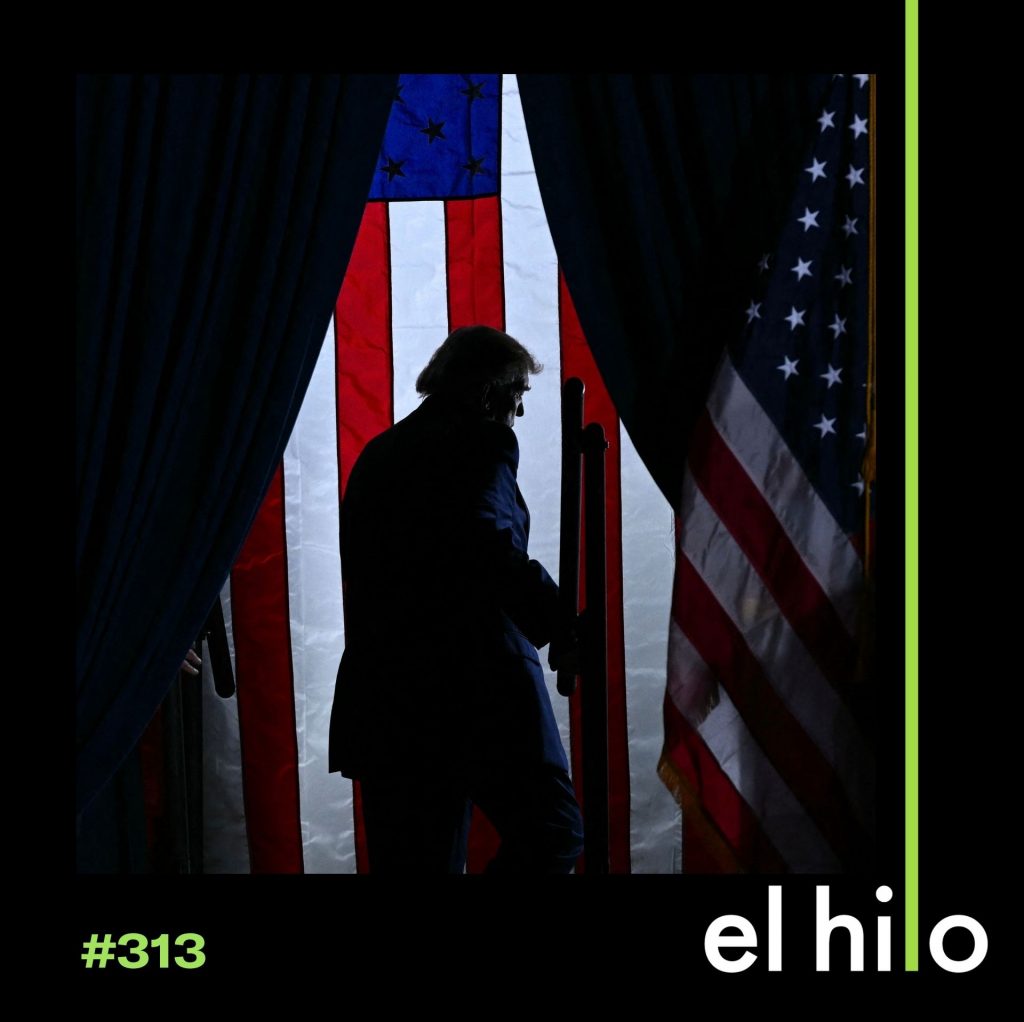

ESCÚCHANOS EN TU DISPOSITIVO MÓVIL