FIFA
México
Comunidad
Mundial
Copa del Mundo
Torneo
Fútbol
Maradona
Indio Solari
Estados Unidos
Canadá
ICE
Trump
Selección
Argentina
El Mundial más grande y caro de la historia llegó en medio de restricciones migratorias, tensiones diplomáticas y un espectáculo cada vez más controlado por intereses comerciales. Y, sin embargo, como hemos visto en la última semana, millones de personas siguen organizando sus días —y sus ilusiones y expectativas— alrededor de un partido de fútbol. Esta semana hablamos con el escritor mexicano Juan Villoro, uno de los grandes cronistas del fútbol en español, que lleva décadas explorando una pregunta que este Mundial vuelve urgente: qué es lo que todavía resiste dentro del fútbol cuando todo a su alrededor parece empujarlo a convertirse en un producto más.
Créditos:
-
Producción
Jesús Delgadillo -
Edición
Daniela Cruzat, Silvia Viñas -
Verificación de datos
Bruno Scelza -
Producción digital
Samantha Proaño, Franklin Villavicencio, Diego Corzo -
Diseño de sonido y mezcla
Elías González -
Música
Elías González, Rémy Lozano -
Tema musical
Pauchi Sasaki -
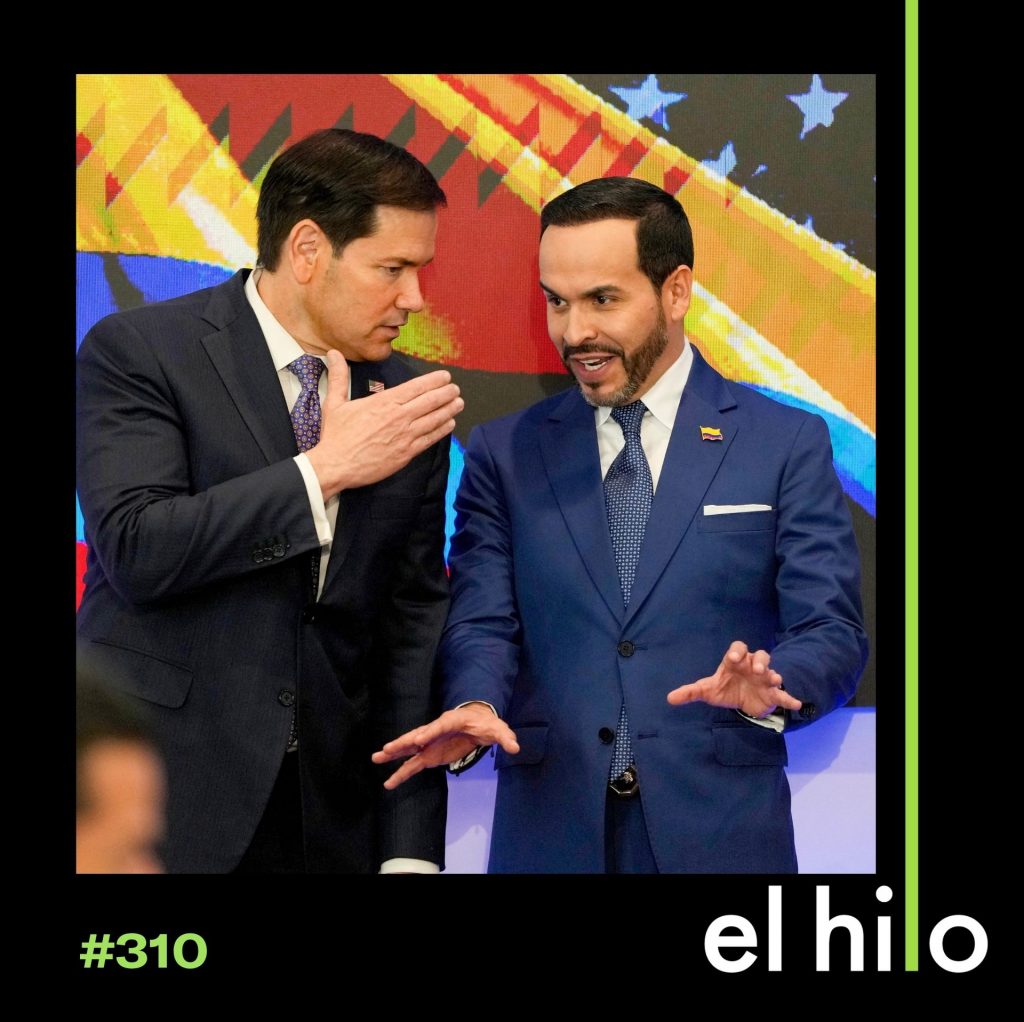
Fotografía
Getty Images / Johnnie Izquierdo
Etiquetas:
Transcripciones:
Transcripción:
Eliezer Budasoff: Hola. Estamos a mitad de camino de nuestra campaña de Deambulantes, y quiero contarles un poco más sobre nuestro programa de membresías.
Los Deambulantes son la comunidad de oyentes que sostiene el trabajo que hacemos: investigar, producir y verificar cada semana para ofrecer contexto, miradas e información rigurosa sobre una realidad cada vez más compleja y fragmentada. Somos una organización sin fines de lucro y cerca de una tercera parte de nuestra operación es posible gracias a nuestros oyentes.
Cuando alguien se une a Deambulantes no está pagando por acceder a un contenido: está eligiendo sostener el periodismo independiente. Y esa diferencia es importante.
Así que, si valoras lo que hacemos y tienes la posibilidad, ayúdanos a seguir cubriendo América Latina. Entra a elhilo.audio/donar y danos una mano. Muchas gracias. Aquí el episodio.
Silvia Viñas: Bienvenidos a El hilo, un podcast de Radio Ambulante Studios. Soy Silvia Viñas. Eliezer Budasoff está de vacaciones, así que me pidió presentar el episodio de esta semana.
Archivo de audio, Lila Downs: Bienvenido al Mundial de fútbol.
Archivo de audio, Comentarista: ¡Gol de Raúl, gol!
Archivo de audio, Comentarista: ¡Gol japonés, con sangre guerrera, sin rendirse!
Silvia: El Mundial comenzó como casi todos: entre victorias improbables, derrotas inesperadas, empates insoportables y aficionados convencidos de que todavía existe un último minuto capaz de cambiarlo todo.
Archivo de audio, Youtuber: Ha perdido Ecuador frente a Costa de Marfil
Archivo de audio, Comentarista: USA 4, Paraguay 1
Archivo de audio, Comentarista: ¡Es gol de Curazao, gran sorpresa en la Copa del Mundo!
Silvia: Pero también empezó en circunstancias particulares. El torneo más grande y más caro de la historia se juega en medio de restricciones migratorias y tensiones diplomáticas. Equipos que han enfrentado dificultades para viajar, hinchas que no pueden cruzar fronteras, jugadores y periodistas que han denunciado discriminación y un espectáculo cada vez más controlado por intereses comerciales.
La semana pasada hablamos de lo que el fútbol revela sobre nuestras sociedades. Esta semana queremos explorar una pregunta distinta: qué es lo que todavía resiste dentro del fútbol cuando todo a su alrededor parece empujarlo a convertirse en un producto más.
Porque mientras el fútbol se vuelve más grande, más global y más lucrativo, también parece alejarse de las personas que le dieron sentido desde el principio. Y sin embargo, el fútbol ha sobrevivido a guerras, dictaduras, crisis profundas, y por supuesto, a la FIFA.
Así que nos preguntamos: ¿Qué sigue resistiendo dentro del fútbol? ¿Qué cosas no han logrado controlar los dueños del espectáculo? ¿Y qué nos dice esa persistencia sobre nosotros mismos?
Para contestar estas preguntas, Eliezer entrevistó al escritor y periodista mexicano Juan Villoro. Uno de los grandes cronistas del fútbol en español, que ha usado sus historias para hablar de cosas que van mucho más allá del deporte: la política, la memoria, la comunidad, la derrota y la esperanza. Con Eliezer conversaron sobre el Mundial, sobre el negocio detrás del espectáculo y sobre las cosas que, a pesar de todo, el fútbol todavía no ha perdido.
Es 19 de junio de 2026.
Eliezer Budasoff: Juan, el fútbol ha sido una de las grandes pasiones de tu vida. Hace poco te escuché decir en una entrevista que otra de las grandes pasiones que has tenido y que por momentos llegó a superar al fútbol fue el rock, pero que perdió fuerza social. Y que a partir de los dosmiles se convirtió, para ti, en una forma de la nostalgia. Me gustaría empezar preguntándote si no temes que este Mundial en particular, con la forma en que fue organizado, represente justo un momento bisagra en el que el fútbol empiece a convertirse en un símbolo de lo que fue, en una forma de la nostalgia, ¿no? Si crees que es posible que le suceda lo mismo que le ha sucedido al rock y si hay que defenderlo como fenómeno cultural.
Juan Villoro: El caso del rock es especial porque en los años 60 se convirtió no solamente en un producto musical, sino en una forma de vida. Hubo modos específicamente juveniles de comportarse, de amarse, de vestirse, de comer, de viajar, de convivir. Entonces, la juventud dejó de ser una categoría biológica y se convirtió en una categoría cultural. Si nosotros vemos las vanguardias de otros tiempos anteriores al rock, por ejemplo, los surrealistas, todos se vestían como sus padres, eran rebeldes, pero usaban corbata, etcétera. El rock cambia todo esto y fue para mí muy interesante entender que la música representaba un evangelio de siete notas que pretendía transformar la realidad, al menos desde un punto de vista cultural. Algunos pensaron que incluso vendría una arcadia de paz y amor, en fin, hubo esta utopía totalmente ingenua e irrealizable. Y luego el rock se fue diluyendo en este aspecto rebelde y de un comportamiento social alterno y se convirtió en lo que también era: un gran negocio y un producto musical muy interesante. Pero perdió esta fuerza transformadora en lo social. El fútbol nunca ha tenido esa contracultura tan fuerte, pero yo creo que lo que estamos viviendo hoy en día sí es un parteaguas. Sí es un cambio muy sustantivo que no sé hacia dónde va, por supuesto. Por un lado, me entusiasma que tanta gente odia a la FIFA.
Archivo de audio, Marion Reimers, Grupo Fórmula: Yo creo que, el querer fiscalizar absolutamente todas las áreas de ingreso para las arcas de la FIFA y sus socios comerciales es un error en cuanto al sentimiento popular.
Archivo de audio, Entrevistado, RTVE: Cada vez se está convirtiendo en mayor negocio, ¿no? Y está cada vez alejándose más del pueblo.
Archivo de audio, Eduardo Ruano, Aristegui Noticias: Y bueno, lo triste es esto, que llegue un organismo internacional y diga “a mí las leyes mexicanas me las paso por el arco del triunfo y aquí hacemos lo que nosotros queremos”.
Juan: Es decir, hay realmente un consenso de la malignidad de la FIFA. Desde el punto de vista ético, Adolf Hitler tenía la ventaja de que sabíamos perfectamente dónde quedaba el mal absoluto. Infantino y la FIFA hoy en día representan lo peor del fútbol. El problema no está en la cancha, está en los palcos y especialmente con la participación de la FIFA. Entonces, ya hay tal consenso en contra, que esto a mí me entusiasma. No sabemos a dónde va a llegar y qué consecuencias puede tener. Pero fíjate que me parece muy interesante la actitud que tienen ahora los comentaristas que son sólidamente deportivos. Es decir, los que normalmente te hablan con entusiasmo de los resultados, las alineaciones, la táctica de los equipos. Hoy en día estaba escuchando una tertulia y todos con un nivel crítico que yo no les escuchaba hace unos meses. Ha permeado realmente una postura disidente respecto a la FIFA, eso me parece positivo. Ahora bien, ¿hacia dónde vamos? Participé en un encuentro en el Instituto de Investigaciones Jurídicas, con abogados, que están tratando de encontrar marcos legales para solucionar la inmensa corrupción que tiene el fútbol nacional e internacional y para plantear alternativas ante lo que estamos viviendo. Es decir, hay una movilización que me parece interesante. El fútbol como fenómeno popular en este Mundial dejó de existir. La gente va a estar fuera de los estadios. Lo que será popular será las pantallas gigantes donde la gente se reúna y las muchas tertulias, discusiones, encuentros en cantinas y restaurantes o donde sea. Pero en los estadios habrá un grupo de privilegiados y por supuesto, periodistas, entre los que me cuento, que verán los partidos en vivo. Eso es algo que ha cambiado. Pero el gusto por el fútbol sigue vivo y no sabemos si esta ruptura posible entre el público y los grandes jerarcas del fútbol llevará a otra cosa o nos resignaremos a ser meros consumidores. Así como la FIFA quiere que los jugadores se conviertan exclusivamente en esclavos bien pagados, también quiere que nosotros, a través de la apatía y del espectáculo que nos proporcionan, nos convirtamos meramente en consumidores de un producto y no en partícipes de un espectáculo. Está por verse. Pero a mí, lo que por el momento me entusiasma, es el descontento generalizado.
Eliezer: A mí me emocionó escucharte hablar de rock y después del fútbol, porque justo estos días, pasó en Argentina, acaba de morir el Indio Solari, que era uno de los rockeros más populares del país y que en la mitología popular para mucha gente formaba parte de una santísima trinidad con Maradona y con Charly García o con Juan Domingo Perón. Pero digamos, lo que generó fue cientos de miles de personas en la calle, conmovidas, celebrando juntas la experiencia compartida del amor hacia este artista.
Archivo de audio, Reportera, Telefe: Y aquí estamos sobre Avenida de Mayo, y el Indio lo volvió a hacer: reunió otra vez a una multitud. Banderas flameando, hasta fuegos artificiales en el cielo y el repertorio que suena en cada rincón.
Eliezer: Y pasó algo muy loco, que fue que de pronto el gobierno se quedó completamente descolocado frente a esto. Es un fenómeno que no comprendían y que no supieron conducir. No supieron ni siquiera abrir un espacio oficial para velarlo, digamos. Porque claro, fueron cientos de miles de personas y entonces, lo que sucede en estas situaciones y yo solamente lo he podido ver también después de un partido de fútbol, después de la muerte de Maradona, pero también la primera noche del terremoto del 2017 acá en Ciudad de México. Quería preguntarte al respecto de esto, ¿por qué crees que es mucho más fácil sostener en el tiempo la ficción de que estamos solos, todos contra todos? Y es más difícil sostener algo que tú dices también en los textos, ¿no? De cómo, por ejemplo, la celebración de un gol es una unión colectiva, en un momento. ¿Por qué crees que es tan difícil sostener eso?
Juan: La muerte de Maradona fue muy especial porque unió a hinchadas que rara vez se abrazan, ¿no? Pensemos en la dificultad que hubo para celebrar la final de la Copa Libertadores entre Boca Juniors y River Plate, que tuvieron que jugar en Madrid para que las hinchadas estuvieran en el mismo estadio. Y después de la muerte de Maradona pudimos ver a gente con la camiseta de Boca y con la camiseta de River abrazándose mientras lloraban. Es decir, este duelo hermanó a la gente en Argentina de una manera muy especial. Y lo mismo, como bien dices, ocurrió aquí con el terremoto. Tuvimos una actitud solidaria, maravillosa, que rebasó, por supuesto, las iniciativas del gobierno y en ese momento la sociedad recupera un rostro pleno que no suele tener habitualmente. Hubo personas, por ejemplo, que no conocían distintas partes de la ciudad y fueron ahí a socorrer. La Ciudad de México es tan grande que procuras circular en zonas más o menos restringidas. Y de repente te encontrabas lejos de tu casa tratando de socorrer a los demás. Yo escribí una letanía que se llamaba El puño en alto, que trataba de dar cuenta del gesto fundamental de esas jornadas, que fue el que hacían los brigadistas cuando alguien pensaba que podía intuirse que una persona estaba viva entre los escombros. Entonces levantaba el puño para que todos guardaran silencio y se pudiera oír la voz o el ruido del más necesitado. Ese gesto extraordinario, que salvó muchas vida debería, por supuesto, perpetuarse. Es decir, deberíamos ser siempre capaces de oír al menos fuerte, al que más necesidad tiene. Esto es difícil, porque vivimos en una sociedad que evidentemente fomenta la supervivencia de cada uno en lo individual. Las sociedades modernas se caracterizan por eso, porque, el problema tuyo no necesariamente es el problema de los demás. Las reglas que deberían ser compartidas por todos se violan. Cada quien trata de aprovechar la picardía para poder hacer un trámite más rápido que el otro, etcétera. Pero en cambio, la comunidad es fuerte, es una comunidad que no siempre se explicita, o sea, no tiene una visibilidad muy grande. Necesitas entender que formas parte de un pequeño círculo. Esa comunidad que suele estar latente, aflora de manera colectiva y más amplia en situaciones de desastre. Pero esto también tiene consecuencias curiosas, por ejemplo, en el deporte. El deporte, que depende tanto del triunfalismo, de destacar en lo individual, aunque se practique un deporte colectivo. Porque en el fútbol no solamente se trata de que des un pase al otro, sino de que tomes una iniciativa loca para hacer lo que nadie esperaba y anotes el gol, de cargarte el equipo al hombro, como se suele decir. Entonces, este tipo de actitudes, de desmarcarse a través de la búsqueda del éxito no son muy favorecidas por una sociedad tan hondamente comunitaria como la nuestra, porque el que destaca, se separa de la tribu. El que destaca es hasta cierto punto, un apóstata. Yo lo he visto muchas veces con amigos, compañeros. Alguien tiene un logro excepcional y entonces tú le dices “Oye, pues qué milagro que todavía me saludas, ¿no? Ya te, te fuiste. ¿Qué se siente visitar a los pobres?” Decimos. Porque él regresa triunfante ante un mundo que no es de triunfadores. Entonces, en cambio, el que fracasa es readmitido fácilmente, porque se asimila sin problemas a lo que ya era antes. Hablando en términos futbolísticos, en México te compromete más anotar un penalti que fallarlo, porque si lo anotas haces lo inesperado. Normalmente fallamos nosotros en las definiciones de penaltis. Cuando anotamos, entonces quiere decir que tú eres excepcional, quiere decir que fuiste capaz de hacer eso, a ver si a la siguiente lo logras y tienes ya un peso encima muy grande. En cambio, si lo fallas, te asimilas nuevamente a la mayoría que normalmente fallaría el penalti. Entonces, tenemos por un lado esta situación comunitaria que fomenta una unidad, que nos protege, que es solidaria en los momentos de crisis, pero que también retiene ciertas energías para que lo que pudiera separarse en exceso de la comunidad no suceda. Es decir, el logro individual puede ser una afrenta.
Eliezer: Claro, a mí me parece fascinante esto que dices, porque es como la facilidad de sentir comunidad en el fracaso, pero la dificultad o la distancia para compartir la alegría del triunfo. Es como la inversión, también, de esta frase de que el éxito tiene muchos padres y el fracaso es huérfano. Una de las cosas que a mí me parece clave de tus textos y ensayos sobre fútbol es que lo que haces es devolver un poco la fuerza política y cultural que tiene el deporte, ¿no? Pero a la vez, también recuperas el peso que tienen nuestras circunstancias y nuestras decisiones individuales para los demás, ¿no? Que también me parece que es otra de las ideas que intenta borrar este espíritu de época. Eso, me preguntaba, ¿es producto de una decisión deliberada? Lo de devolverle la historia a los mitos, lo de enfocar la mirada en la fuerza social del deporte y de sus protagonistas, ¿o es más bien aquello que siempre te ha interpelado del fútbol? El resultado como una sensibilidad, o una trayectoria personal.
Juan: Yo creo que es muy peligroso, cuando tú escribes, hacerlo de manera programática. Es decir, yo creo que no, no le conviene a ningún autor, escriba en el género que escriba pensar voy a plasmar grandes ideas en el texto. Yo creo que eso tiene que salir naturalmente. Yo he tenido mucho interés en la política. Milité en un partido de izquierda que fracasó, que era el Partido Mexicano de los Trabajadores. He estado bastante cerca de las luchas indígenas de los zapatistas desde el ‘94, cuando se levantaron en armas. Pertenezco a un colectivo de apoyo a estos grupos. Como periodista, pues he tratado de dar constancia de situaciones sociales que me lastiman, pero no entro en la página en blanco con un programa deliberadamente político. Pero inevitablemente, por los intereses que también tengo, esto se filtra, esto se cuela. Cuando yo veo una figura como la de Carlos Caszely, jugador chileno que se niega a darle la mano a Pinochet, un gesto que puede costarle la vida. Me parece que ahí tenemos nosotros un emblema de dignidad difícil de imitar. Y posteriormente él participa en el plebiscito contra Pinochet, que es decisivo y hace propaganda junto a su madre, que había sido torturada por la dictadura. Eso yo no lo puedo dejar a un lado, porque no a todo mundo le interesa la vida política que también existe a través del fútbol. En la situación de un niño como Luka Modric, un niño de la guerra.
Archivo de audio, Radio con vos: Él nació el 9 de septiembre de 1985 en un lugar llamado Modriši. En ese pueblo vivió solo seis años, hasta que la guerra de los Balcanes estalló con toda su furia y las fuerzas serbias entraron a sangre y fuego.
Juan: Que en la pobreza vio morir a su abuelo durante la guerra, que era además muy pequeño físicamente, no le atribuían ningún tipo de futuro como jugador y que sin embargo acabó siendo uno de los principales mediocampistas de todos los tiempos. Entonces, este tipo de circunstancias a mí me parecen interesantes, porque te explica mucho mejor al jugador el contexto social que lo hizo posible. Y no puedo dejar eso a un lado. Yo, por ejemplo, el equipo que apoyo en México es el Necaxa y claro, yo estoy orgulloso de cosas un tanto absurdas, porque no me tocaron a mí, pero me da gusto que así haya sido en el pasado. Era el equipo de los electricistas, del sindicato de Electricistas. Necaxa es una presa que alimenta de luz a la Ciudad de México, era un equipo muy combativo y que jugaba por el puro placer de hacerlo. Cuando empieza el profesionalismo en México, ellos se niegan a cobrar, entonces era un equipo que jugaba gratis y era el equipo que le llamaban “de los 11 hermanos” por la forma en que se entendían. Un equipo muy comunitario que luego fue, por ejemplo, muy apoyado por la comunidad judía en México, porque no tenían campo propio y entrenaban en el Centro Deportivo Israelita. Entonces, la comunidad judía los arropó. Entonces es un equipo que ha sido, digamos, extravagante respecto a la Liga, pero conocer esta historia creo que le da un relieve que no tiene para todos los aficionados, pero que al menos lo tiene para mí. Hoy en día es un equipo que juega en Aguascalientes, una ciudad muy lejana a la que no se puede ir y volver el mismo día, a no ser que lo hagas en avión. En fin, es un equipo que ha sufrido mucho, pero tiene estas resonancias, ¿no? El hecho de que el Corinthians en Brasil haya salido al campo con una camiseta que decía “Democracia” durante la dictadura militar, es un gesto que me parece que honra a los futbolistas. Normalmente se piensa que son todos ellos personas sin ningún tipo de conciencia, más allá del dinero que van a ganar o la modelo que van a conquistar. Muchos son así, pero hay también otras formas de ver el fútbol, ¿no? Entonces, esto me ha interesado mucho. Y también, por supuesto, soy heredero ─porque no soy el único en pensar de esta manera─ de personas extraordinarias que me precedieron, como Osvaldo Soriano en Argentina, Eduardo Galeano en Uruguay, el Negro Fontanarrosa en Rosario.
Eliezer: A mí me gusta también tu mirada desde la epopeya individual dentro del fútbol. Hay un texto de Balón Dividido, que cada vez que lo leo me emociona y lo utilizo también, a veces, en clases, para mostrar cómo uno puede, de alguna manera, conmover a alguien con una historia sobre un deporte que no necesariamente te interesa, que es la historia de Martín Palermo. Si no me equivoco, se llama Los optimistas fracasan mejor. Sí, eso es. Dónde cuentas esta cosa que me parece increíble, de su récord de errar tres penales en un partido de la Copa América entre Argentina y Colombia. Y ahí dices algo que a mí me parece maravilloso y es cómo él, varios años después, como siete años después, le pasa el peor momento suyo, personal. Y es que fallece un hijo después de un nacimiento prematuro. Dos días después se aparece en el vestuario de su equipo, que estaba por jugar un partido que no era fundamental contra Banfield, y él dice que quiere jugar. Y lo ponen en la cancha y hace dos goles, y al segundo gol él cae y rompe en llanto. Ahí usas esta frase que a mí me gusta mucho, que es: “Necesitaba el único espacio de resurrección que conoce un futbolista, que era el campo de juego”. Y pensaba, mientras leía y preparaba alguna de estas preguntas, si no crees que es también una metáfora de lo que nos pasa a muchos latinoamericanos con los mundiales, ¿no? Que la cancha de fútbol es uno de los pocos espacios de resurrección que nos quedan, al menos en términos internacionales.
Juan: Has tocado muchos temas, todos muy interesantes. El caso de Palermo es único. Nunca fue un jugador muy dotado. Numerosos críticos decían que era un tronco, como decimos aquí en México, o un jugador sin habilidad. Y sin embargo logró proezas extrañisimas, como que le rebotara el balón en la cara a 30 metros de la portería y de manera casi involuntaria anotó ese gol de cabeza. O alguien que se fracturó de alegría, porque estaba celebrando un gol en España cuando jugó allá y una valla publicitaria le cayó encima y le quebró la pierna. Y luego estos tres penaltis errados. Yo creo que errar un penalti es perfectamente normal. Insistir en tirar el siguiente penalti es un acto de valentía, pero haber fallado dos penaltis y querer tirar un tercero es una locura inaudita. Y además errar ese penal, perfeccionando tu fracaso de una manera tan exagerada, ¿no? Que solamente puedes aplaudir tanto desastre, porque se necesita una entereza muy especial para afrontar eso. Y efectivamente, lo que tú dices, esa superación que él tuvo después de la muerte de su hijo recién nacido, de poder jugar y hacerlo bien. Y yo creo que los goles tienen vida privada y eso es muy interesante en la crónica. ¿Qué hay en juego para un futbolista? ¿Por qué nunca ha podido anotarle a un equipo? ¿Por qué ese día que tenía todo para triunfar, jugó pésimo y por qué en el momento más inesperado se superó? Hay historias personales que están detrás de los jugadores, ¿no? La peor jugada que hizo David Beckham en su vida fue cuando pateó al Cholo Simeone. Y debemos decir que el Cholo, digamos, agrandó la falta con cierta teatralidad, digna de la calle Corrientes. Lo reconoció después el Cholo. Pero Beckham hizo una tontería en pleno Mundial y resulta que él salió a la cancha después de que su su novia, que estaba de gira en Oceanía o no sé exactamente dónde, le habló y le dijo que estaba embarazada, no tenían planes de casarse y entonces él salió como un hombre perdido al campo. Estaba pensando en que su vida no tenía brújula y bueno, cometió ese error, pero hay una correlación directa entre la vida interior del futbolista que solemos pensar que es inexistente, ¿no? Y sin embargo, existe. Incluso Messi tiene vida interior, ¿no? Lo cual sorprende. A mí eso me interesa mucho. Y otro tema que tocaste es las grandes individualidades del fútbol. Y ahí, por ejemplo, me interesan ciertas paradojas que se producen en la cancha. Por ejemplo, la de Diego Armando Maradona. Ciertamente fue el mejor jugador de su tiempo. En ese momento nadie podía competir con él en calidad, en virtuosismo, en las cosas que podía hacer. Y sin embargo, creo que uno de sus mayores logros es netamente colectivo. O sea, nunca un jugador que estuvo en el campo con Diego jugó mejor que cuando estuvo con él. Es decir, Diego convenció a todo aquel que estaba en su equipo de que era mucho mejor de lo que en principio pensaba que era. Esta capacidad de generar un engaño productivo en sus compañeros fue extraordinaria. Por eso fue tan notable lo que logró en un equipo pequeño como el Nápoles, que llevaba 57 años sin ganar el Scudetto o con la selección de Bilardo, que no era la mejor que ha tenido Argentina y que él impulsó con una entrega muy difícil de comprender. Por ejemplo, aquí en México, en el ‘86, vino en el grupo de los argentinos Bochini, famoso jugador de Independiente. Era ya una leyenda, no tenía mucho fútbol en sus botines porque sus mejores tiempos ya habían pasado, pero servía para brindar experiencia, para hacer grupo, como se dice, y jugó unos cuantos minutos del Mundial. Cuando él entra a la cancha, Maradona lo busca, le pasa la pelota y le dice “Tenga, maestro”. Esa humildad del mejor de todos ante el recién llegado, que solo iba a jugar unos minutos, es lo que define a Diego, porque naturalmente Bochini se sintió como un dios en la cancha y así hizo sentir a todo mundo. Entonces, mencionabas una cosa significativa: el fútbol es individual, sí, pero la individualidad bien entendida sirve para el conjunto, que fue lo que siempre logró hacer alguien como Diego. Y ahí también me parece que es importante recordar la más famosa de sus frases: “La pelota no se mancha”. Porque alude a otra cosa que también comentabas, que es la cancha como espacio alterno. Es decir, esa utopía que todavía es posible durante 90 minutos y donde las cosas ocurren de otro modo. Yo creo que eso, ni siquiera la FIFA lo ha podido destruir. Podemos decir que el fútbol tiene anticuerpos contra las amenazas políticas y económicas que tratan de destruirlo, al menos por ahora. El Mundial de Qatar parecía ser el peor de la historia, un país sin tradición futbolística, que viola los derechos humanos, donde murieron trabajadores construyendo estadios, que tiene temperaturas tan altas que se tenía que jugar con aire acondicionado en los estadios. Una locura. Todo eso muy criticable. Pero en cuanto empezó a rodar la pelota fue uno de los mejores mundiales de la historia. Entonces, esa capacidad de sustraerse del mundo habitual es extraordinaria. Cuando tú ves a Messi jugar no piensas que ha sido un evasor de impuestos en España o que acaba de estar con Trump en una gala, que hizo promoción para el Mundial de Saudi Arabia. Entonces, bueno, todas esas cosas se olvidan cuando lo ves jugar, esa es otra dimensión.
Silvia: Una breve pausa y volvemos.
Silvia: Estamos de vuelta en El hilo.
Eliezer: Cuando le dije a mi esposa “mañana voy a entrevistar a Juan Villoro”, me preguntó ¿Juan Villoro cree que México puede ser campeón del mundo?
Juan: Eso es imposible. Yo creo en los milagros, pero no en ese. No, no, para nada.
Eliezer: Me acordé de eso en este momento, porque tú hablas en tu libro también de esto, que de alguna manera retoma como, Churubusco, ¿no? Lo de que los mexicanos aprendieron que heroísmo es una derrota digna.
Juan: En México tenemos nosotros un gusto por, por por las pérdidas. Muchas de las batallas que tenemos son batallas perdidas. Tenemos un monumento a los Niños héroes que fueron los que murieron cuando la invasión norteamericana que nos costó el 55% de nuestro territorio en el siglo XIX. Algunas frases célebres, por ejemplo la del general Anaya, que tuvo la Batalla de Churubusco muy cerca de donde estamos tú y yo en este momento. Llegaron los americanos y le pidieron las municiones. Le dijeron ¿dónde está el parque? Y él dijo “Si tuviéramos parque no estarían ustedes aquí”. Una frase digna de alguien que ha perdido. Entonces nosotros, digamos, somos derrotados, pero con frases célebres. Y eso ha sido tradicionalmente una manera de lamernos las heridas, ¿no? De decir: Hubo algo heroico en nuestra derrota, ¿no? Cuando se dice que una ciudad en México es tres o cuatro o cinco veces heroica, es que fue cinco veces bombardeada, cinco veces tomada, ¿no? Etcétera.
Eliezer: Pensaba en esto justamente del aprendizaje de la derrota, que también me parece algo que está en juego en este texto que a mí me gusta tanto de Palermo, ¿no? Como de alguna manera las historias que también nos alcanzan y nos conmueven no suelen ser siempre la de los triunfadores perfectos, ¿no?
Juan: No, por supuesto. Pienso, por ejemplo, en América Latina, en la gran selección de Colombia, que hizo no muy buen papel en el Mundial de 1994. Era una selección y perdón que te lo recuerde, que le había ganado 5-0 a Argentina a domicilio durante la eliminatoria.
Eliezer: Les dieron días feriados por ese partido, ¿no?
Juan: Una manita. Entonces, era una selección extraordinaria, pero que era una selección también muy latinoamericana, en la medida en que los triunfos que quería lograr eran no necesariamente los habituales. Por ejemplo, el portero René Higuita, que salía de su área con un nivel de riesgo exagerado o hacía el alacrán para despejar una pelota que podía entrar a su cabaña con los dos pies, convirtiendo los pies en una especie de aguijón, ¿no? Entonces, estas acrobacias inútiles, pero que son muy celebradas por la afición latinoamericana. O el Pibe Valderrama, un jugador talentosísimo, que se negaba no digamos a correr, sino siquiera caminar, ¿no? Es decir, jugaba quieto, pero lo hacía muy bien. Entonces era un equipo que lo que quería era ganar a su manera y no lo consiguió, ¿no? No lo consiguió. Y posteriormente, Escobar, que cometió un autogol, fue asesinado al regresar a Colombia, lo cual fue una tragedia.
Archivo de audio, presentador, Noticias UNO: Otra vez Colombia se llena de vergüenza. Andrés Escobar, jugador de la selección Colombia, fue cobardemente asesinado en Medellín.
Juan: Solemos admirar mucho a este tipo de héroes a veces trágicos, que se sustraen a la norma, pero que no necesariamente son los que ganan trofeos, ¿no? Eso es algo muy, muy típico de nosotros, porque de alguna manera estamos tan acostumbrados a la derrota que eso nos importa menos que el consentido de la afición pierda. Lo que queremos es que lo haga con una elegancia o una picardía especiales.
Eliezer: Juan, has dicho que el fútbol, pero en general no el modo en que las personas llevan adelante su afición te ha permitido conocer mucho más de la gente que a veces la gente revela sobre sí misma.
Juan: Sí, mira, Ortega y Gasset decía que el deporte permite darse vacaciones de civilización. Una persona que tú conoces en la oficina y que es un funcionario correcto y probablemente aburrido, de repente te lo encuentras en el estadio con la cara pintada, diciendo locuras y te empieza a hablar de sus alineaciones favoritas de hace 20 o 30 años con una memoria de elefante. Entonces, es una persona transfigurada, ¿no? Y las emociones que pones en juego en la tribuna, pues son emociones que tocan fibras muy primarias que difícilmente ves tú en en la gente hoy en día. Yo creo que una de las grandes herencias de Maradona fue la valentía de llorar en público. Ha sido una de las figuras mediáticas que más veces rompió en llanto. Y no es casual que la gente, cuando él murió, hiciera exactamente lo mismo. Hay ahí una transgresión sentimental muy importante, sobre todo en una cultura latinoamericana muy machista, en donde se nos ha inculcado que los hombres no lloran, ¿no? Los hombres se contienen, los hombres no sacan su emoción, ¿no? Y esta capacidad volcánica de mostrar emociones que está en el fútbol y que, y que Diego, por supuesto, ponía en práctica todo el tiempo, me parece que es algo muy positivo. Yo he conocido pulsiones de la gente viendo partidos con ellos, que probablemente si yo fuera el psicoanalista de esas mismas personas, me habría tardado mucho más en averiguar qué es lo que tienen dentro. Pero el fútbol te saca todo esto.
Silvia: Hacemos una última pausa y volvemos.
Silvia: Estamos de vuelta en El hilo.
Eliezer: Antes de venir yo estaba jugando con esta hipótesis de… Estamos hablando de un Mundial que ha sido organizado de una manera tan simbólica para esta época, ¿no? Solamente puedes abarcarlo si lo ves por televisión o en tu casa, no te puedes ir de un país a otro. Es caro, es un espectáculo para las élites, es disperso, fragmentario. Y pensaba, si no de una manera deliberada, pero, el organizarlo de esta manera no sería como un último intento de quitarle al fútbol lo que tiene de su conexión, convertirlo por completo en una realidad paralela. Quitarle su conexión con la vida, quitarle la conexión con aquello que tiene ruptura, digamos, el fútbol.
Juan: Sí, este Mundial está hecho con una lógica de videojuego, ¿no? Lo dices muy bien, es fragmentario, participas, pero del otro lado de la pantalla. Y eres un consumidor de imágenes. Entonces, evidentemente se trata de controlar el negocio separándolo del mayor peligro que hay, que es la gente. Pero veremos si esto es posible. Habrá muchas manifestaciones en México durante el Mundial. Hay situaciones que pueden ser críticas, como la participación de Irán en Estados Unidos, que se ha tenido que refugiar en la ciudad de Tijuana, en México, lo cual me parece estupendo que México le dé hospedaje a esta selección, que por otra parte es una selección criticable por la forma en que excluye a ciertos jugadores por razones políticas, etcétera. Nada es perfecto en este mundo. Habrá que ver también la reacción de quienes han sostenido el fútbol durante tanto tiempo en Estados Unidos, donde era un deporte secreto, que son los latinos, los hispanos, ¿no? ¿ICE y la patrulla migratoria e irrumpirá en las inmediaciones de los estadios deteniendo personas? ¿Se atreverá a ir la gente en esas condiciones a los estadios? Es decir, esta realidad alterna manufacturada por la FIFA se puede topar con algo terrible, que es la realidad de tercera dimensión que todavía existe.
Eliezer: Te has definido como un optimista del desastre y dices que la esperanza es una obligación, no una emoción. Me gustaría para cerrar, si puedes comentar sobre esta idea y dónde pones hoy esta obligación de esperar.
Juan: Yo creo que una de las obligaciones críticas que tenemos ante el mundo es detectar, por supuesto, lo que está mal, y podríamos decir que todo conspira para que nosotros realmente suframos y nos sintamos muy mal. Pero una capacidad disidente que podemos tener es la de no hacerle caso a las señas de la realidad. Aceptar que las cosas están mal, criticar lo que está mal, pero tener un deseo de transformación que también puede estar en nosotros.
Gramsci, el gran pensador italiano, decía: “Pesimismo de la inteligencia, optimismo de la voluntad”. Sabes que las cosas están mal, pero no te importa. Sigues adelante y luchas por aquello que no es el infierno, que no es el horror y que es la belleza, que es el juego, que es el amor, que es la ilusión, que es el sueño. Ahora, ¿qué motivación necesitas para esto? Para mí lo más importante es lo siguiente: no se necesita ninguna motivación. Es una obligación ética estar esperanzado, o sea, porque sí voy a esperar a tener motivos para pensar que las cosas mejorarán, pues probablemente me voy a quedar esperando sentado y bebiendo tequila sin recibir nunca un motivo, ¿no? No se necesitan motivos para la esperanza, hay que tenerla contra todo pronóstico. Yo creo que eso es lo que ha logrado que muchas personas, contra todo pronóstico, hagan cosas que parecían imposibles, y yo creo que eso es lo que todavía nos queda de remanente humano en tiempos de la inteligencia artificial. A diferencia de las máquinas, nosotros nos podemos engañar a nosotros mismos. Podemos pensar que somos superiores a lo que verdaderamente somos.
Eliezer: Juan, muchísimas gracias por hacerte unos minutos para hablar con nosotros.
Juan: Gracias a ti, como siempre.
Silvia: Desde que Eliezer hizo esta entrevista, varios de los temas que plantea Juan Villoro han cobrado fuerza. En Los Ángeles, las autoridades han insistido en que no habrá fiscalización migratoria en los estadios, pero el tema ha desatado protestas, llamados a boicot y campañas de organizaciones civiles. La selección de Irán se instaló en Tijuana y tiene que cruzar la frontera para cada partido, en medio de problemas de visados y restricciones de viaje. Y el reclamo de las madres buscadoras en los estadios ha empezado a generar repercusiones: en Monterrey, los aficionados de Suecia se acercaron a escucharlas y terminaron abrazándose con ellas.
Jesus Delgadillo: Este episodio fue producido por mí, Jesús Delgadillo. Lo editaron Silvia y Daniela Cruzat. Bruno Scelza hizo la verificación de datos. El diseño de sonido es de Elías González y la música es de él y Rémy Lozano, con música adicional de Andrés Azpiri.
El equipo de producción de El hilo está formado también por Samantha Proaño y Franklin Villavicencio, con el arte y diseño de Diego Corzo. El resto del equipo incluye a Natalia Ramírez, Paola Alean, Camilo Jiménez Santofimio, Elsa Liliana Ulloa, Silvia Viñas y Daniel Alarcón. Carolina Guerrero es la CEO de Radio Ambulante Studios. Nuestro tema musical lo compuso Pauchi Sasaki.
El hilo es un podcast de Radio Ambulante Studios. Si valoras el periodismo independiente y riguroso, te pedimos que te unas a nuestras membresías. América Latina es una región compleja y nuestro periodismo necesita de oyentes como tú. Visita elhilo.audio/donar y ayúdanos con una donación.
Si quieres profundizar sobre el episodio de hoy, suscríbete a nuestro boletín de correo entrando a elhilo.audio/boletin. Lo enviamos cada viernes.
También puedes seguirnos en nuestras redes sociales. Estamos en Instagram, X, BlueSky, Facebook y Threads. Nos encuentras como @elhilopodcast. Déjanos allí tus comentarios y etiquétanos cuando compartas los episodios.
Gracias por escuchar.
Transcript:
The following English translation was generated with the assistance of artificial intelligence and has been reviewed and edited by our team for accuracy and clarity.
Eliezer Budasoff: Hello. We’re halfway through our Deambulantes campaign, and I’d like to tell you a little more about our membership program.
Deambulantes is the listener community that sustains the work we do: researching, producing, and fact-checking every week to provide context, perspective, and rigorous information about an ever more complex and fragmented reality. We are a nonprofit organization, and nearly a third of our operation is made possible by our listeners.
When someone joins Deambulantes, they are not paying to access content: they are choosing to sustain independent journalism. And that difference matters.
So if you value what we do and you’re able to, help us keep covering Latin America. Go to elhilo.audio/donate and lend us a hand. Thank you so much. Here’s the episode.
Silvia Viñas: Welcome to El hilo, a podcast from Radio Ambulante Studios. I’m Silvia Viñas. Eliezer Budasoff is on vacation, so he asked me to introduce this week’s episode.
Audio clip, Lila Downs: Welcome to the FIFA World Cup.
Audio clip, Commentator: Goal by Raúl, goal!
Audio clip, Commentator: A Japanese goal, with a warrior spirit, never giving up!
Silvia: The World Cup began like almost every other: with improbable victories, unexpected defeats, unbearable draws, and fans convinced that there is still a final minute capable of changing everything.
Audio clip, YouTuber: Ecuador has lost to Ivory Coast
Audio clip, Commentator: USA 4, Paraguay 1
Audio clip, Commentator: It’s a goal by Curaçao, a huge surprise at the World Cup!
Silvia: But it also began under particular circumstances. The largest and most expensive tournament in history is being played amid immigration restrictions and diplomatic tensions—with teams facing difficulties traveling, fans unable to cross borders, players and journalists reporting discrimination, and a spectacle increasingly controlled by commercial interests.
Last week we talked about what soccer reveals about our societies. This week we want to explore a different question: what still endures within soccer when everything around it seems to be pushing it toward becoming just another product.
Because as soccer grows bigger, more global, and more lucrative, it also seems to drift further from the people who gave it meaning in the first place. And yet, soccer has survived wars, dictatorships, deep crises, and, of course, FIFA.
So we ask ourselves: What still holds out inside soccer? What have the owners of the spectacle failed to control? And what does that persistence tell us about ourselves?
To answer these questions, Eliezer interviewed Mexican writer and journalist Juan Villoro. One of the great soccer chroniclers writing in Spanish, who has used his stories to talk about things that go far beyond sport: politics, memory, community, defeat, and hope. He and Eliezer talked about the World Cup, the business behind the spectacle, and the things that, despite everything, soccer has still not lost.
It is June 19, 2026.
Eliezer Budasoff: Juan, soccer has been one of the great passions of your life. I recently heard you say in an interview that another of your great passions—one that at times even rivaled soccer—was rock music, but that it lost its social force. And that from the 2000s on it became, for you, a form of nostalgia. I’d like to start by asking whether you fear that this World Cup in particular, given the way it was organized, represents a turning point at which soccer might begin to become a symbol of what it once was—a form of nostalgia. Do you think the same thing could happen to it that happened to rock, and is it worth defending as a cultural phenomenon?
Juan Villoro: The case of rock is special because in the 1960s it became not just a musical product but a way of life. There were specifically youthful ways of behaving, of loving, of dressing, of eating, of traveling, of living together. Youth stopped being a biological category and became a cultural one. If we look at the avant-garde movements that came before rock—the Surrealists, for instance—they all dressed like their parents. They were rebels, but they wore ties, and so on. Rock changed all of that, and it was very interesting for me to understand that the music represented a seven-note gospel that aspired to transform reality, at least from a cultural standpoint. Some people even thought a utopia of peace and love was on its way—there was this completely naive and unattainable dream. And then rock gradually shed its rebellious dimension, its quality of being an alternative social behavior, and became what it also always was: a big business and a very interesting musical product. But it lost that socially transformative force. Soccer has never had that kind of countercultural power, but I do believe that what we are living through today is a genuine turning point. It is a very significant shift, and I have no idea where it is headed, of course. On one hand, it heartens me that so many people hate FIFA.
Audio clip, Marion Reimers, Grupo Fórmula: I think that wanting to audit absolutely every revenue stream for FIFA’s coffers and those of its commercial partners is a mistake when it comes to public sentiment.
Audio clip, Interviewee, RTVE: It’s becoming more and more of a business, right? And it’s moving further and further away from the people.
Audio clip, Eduardo Ruano, Aristegui Noticias: And the sad thing is this: that an international body comes along and says “I don’t give a damn about Mexican law and here we do whatever we want.”
Juan: In other words, there is now a genuine consensus about FIFA’s malignancy. From an ethical standpoint, Adolf Hitler had the advantage of leaving no doubt about where absolute evil resided. Infantino and FIFA today represent the worst of soccer. The problem is not on the field—it is in the executive suites, and especially in FIFA’s involvement. There is already such widespread consensus against them that it heartens me. We don’t know where it will lead or what consequences it might have. But what I find very interesting is the attitude of commentators who are solidly sports-minded—the ones who normally talk enthusiastically about results, lineups, and team tactics. The other day I was listening to a roundtable discussion and everyone was at a level of critical engagement I hadn’t heard from them a few months ago. A dissident stance toward FIFA has genuinely permeated the conversation, and I find that positive. Now, where are we headed? I took part in a gathering at the Legal Research Institute with lawyers who are trying to find legal frameworks to address the enormous corruption in both domestic and international soccer, and to propose alternatives to what we are living through. There is a mobilization underway that I find encouraging. Soccer as a popular phenomenon at this World Cup has ceased to exist. People will be outside the stadiums. What will be popular will be giant screens where people gather, and the many discussions, debates, and encounters in bars, restaurants, or wherever. But inside the stadiums there will be a privileged group—and journalists, myself included—who will watch the matches live. That is something that has changed. But the love of soccer is still alive, and we don’t know whether this possible rupture between the public and the great soccer hierarchs will lead somewhere else, or whether we’ll simply resign ourselves to being mere consumers. Just as FIFA wants players to become exclusively well-paid slaves, it also wants us—through the apathy and spectacle it provides—to become merely consumers of a product rather than participants in a spectacle. That remains to be seen. But what heartens me right now is the widespread discontent.
Eliezer: I was moved hearing you talk about rock and then about soccer, because something happened in Argentina just these past few days: Indio Solari died. He was one of the most popular rock musicians in the country, and in popular mythology he was, for many people, part of a holy trinity alongside Maradona and Charly García—or sometimes Perón. But in any case, what his death produced was hundreds of thousands of people in the streets, deeply moved, celebrating together the shared experience of love for this artist.
Audio host, Reporter, Telefe: And here we are on Avenida de Mayo, and the Indio has done it again: once more he has gathered a multitude. Flags waving, fireworks lighting up the sky, and his music playing from every corner.
Eliezer: And something very strange happened: the government was suddenly caught completely off guard by it all. It was a phenomenon they didn’t understand and didn’t know how to manage. They didn’t even manage to open an official space for people to pay their respects. Because of course, there were hundreds of thousands of people—and what happens in situations like that, which I’ve only been able to witness after soccer matches, after Maradona’s death, and on the first night of the 2017 earthquake here in Mexico City. I wanted to ask you about this: why do you think it is so much easier to sustain over time the fiction that we are alone, everyone against everyone? And it is harder to sustain what you also write about in your texts—how, for example, the celebration of a goal is a moment of collective unity. Why do you think that is so difficult to sustain?
Juan: Maradona’s death was very special because it brought together rival fans who rarely embrace one another. Think of the difficulty there had been in organizing the Copa Libertadores final between Boca Juniors and River Plate—they had to play it in Madrid just to have both sets of fans in the same stadium. And after Maradona’s death, we saw people in Boca jerseys and people in River jerseys embracing each other as they wept. That mourning united people in Argentina in a very special way. And the same thing, as you rightly say, happened here with the earthquake. We had a wonderful spirit of solidarity that far surpassed, of course, any government initiative, and in that moment society recovered a full face that it doesn’t usually show. There were people, for example, who had never been to certain parts of the city and went there to help. Mexico City is so large that you tend to circulate in more or less limited areas. And suddenly you found yourself far from home trying to help others. I wrote a litany called El puño en alto, which tried to capture the defining gesture of those days—the one the rescue workers used when someone thought they sensed a person might be alive beneath the rubble. They would raise a fist so that everyone would fall silent and the voice or sound of whoever was most in need could be heard. That extraordinary gesture, which saved many lives, should, of course, be perpetuated. We should always be capable of hearing the one who speaks most quietly, the one in greatest need. This is difficult, because we live in a society that clearly fosters individual survival. Modern societies are characterized by that: your problem is not necessarily anyone else’s problem. Rules that should be shared by everyone are broken. Everyone tries to use a little cunning to get through some bureaucratic process faster than the next person, and so on. But the community, on the other hand, is strong—it is a community that does not always make itself explicit; it doesn’t have great visibility. You need to understand that you are part of a small circle. That community, which usually lies dormant, surfaces collectively and on a wider scale in moments of disaster. But this also has curious consequences—in sports, for example. Sports depend so much on triumphalism, on standing out individually, even when the sport is a collective one. Because in soccer it’s not just about passing to a teammate—it’s about making a crazy move to do what no one expected and scoring the goal, about carrying the team on your back, as people say. So this kind of attitude—standing out by pursuing success—is not greatly favored by a society as deeply communal as ours, because whoever stands out separates themselves from the tribe. Whoever stands out is, to some extent, an apostate. I’ve seen this many times with friends and colleagues. Someone achieves something exceptional, and you say to them: “Hey, it’s a miracle you still say hello to me, right? You’ve left us behind. What’s it like visiting the poor folks?” We say that. Because they return triumphant to a world that is not one of winners. And in contrast, whoever fails is easily readmitted, because they assimilate without difficulty back into what they already were. In soccer terms, in Mexico it’s more of a burden to score a penalty than to miss one, because if you score it you’ve done the unexpected. Normally we fail in penalty shootouts. When we score, it means you’re exceptional—it means you were capable of doing that—and now there’s enormous pressure on you to do it again. But if you miss, you blend back in with the majority who would normally miss the penalty. So on one hand we have this communal situation that fosters unity, protects us, and stands in solidarity during moments of crisis, but also holds back certain energies so that anything that might separate itself too far from the community does not happen. In other words, individual achievement can be an affront.
Eliezer: Exactly. I find what you’re saying fascinating, because it’s like the ease of feeling community in failure, but the difficulty or distance when it comes to sharing the joy of triumph. It’s almost the inverse of the saying that success has many fathers and failure is an orphan. One of the things that strikes me as key in your texts and essays on soccer is that what you do is restore some of the political and cultural force that sport carries. But at the same time, you also recover the weight that our circumstances and individual decisions carry for others—which also seems to me like another of the ideas that the spirit of the age is trying to erase. I was wondering: is that the result of a deliberate decision? The effort to give history back to myths, to focus the gaze on the social force of sport and its protagonists—or is it more simply what has always compelled you about soccer? The outcome of a sensibility, or a personal trajectory?
Juan: I think it is very dangerous, when you write, to do so programmatically. No author, regardless of what genre they write in, benefits from thinking: I’m going to convey great ideas in this text. I believe that has to emerge naturally. I have had a deep interest in politics. I was a member of a left-wing party that failed—the Partido Mexicano de los Trabajadores. I have been closely connected to the Zapatistas’ indigenous struggles since ‘94, when they took up arms. I belong to a support collective for these groups. As a journalist, I have tried to document social situations that trouble me, but I don’t sit down at a blank page with a deliberately political agenda. Inevitably, though, because of the interests I carry, it seeps through, it makes its way in. When I see a figure like Carlos Caszely, the Chilean player who refuses to shake Pinochet’s hand—a gesture that could cost him his life—I feel we have an emblem of dignity that is hard to emulate. And afterward he participates in the plebiscite against Pinochet, which is decisive, and makes a campaign alongside his mother, who had been tortured by the dictatorship. I cannot set that aside, because not everyone is interested in the political life that also exists within soccer. Or in the situation of someone like Luka Modric—a child of war.
Audio clip, Radio con vos: He was born on September 9, 1985, in a place called Modriši. He lived in that village for only six years, until the Balkan War erupted with full fury and Serbian forces moved in with fire and blood.
Juan: Who, in poverty, watched his grandfather die during the war, who was also very small physically—no one attributed any future to him as a player—and who nevertheless ended up becoming one of the greatest midfielders of all time. These kinds of circumstances interest me because the social context that made a player possible explains the player far better than anything else. And I cannot set that aside. My team in Mexico, for example, is Necaxa, and I take pride in things that are somewhat absurd, because they didn’t happen to me—but I’m glad they happened in the past. It was the electricians’ team, the Electricians’ Union team. Necaxa is a dam that supplies electricity to Mexico City. It was a very combative team that played for the pure love of it. When professionalism began in Mexico, they refused to accept payment—it was a team that played for free—and they were called “the team of eleven brothers” for the way they understood each other. A deeply communal team that was also, at one point, strongly supported by the Jewish community in Mexico, because they had no home ground and trained at the Centro Deportivo Israelita. So the Jewish community embraced them. It has been a team that has been, let’s say, unconventional with respect to the league, but knowing this history gives it a significance that not every fan appreciates, but that I at least do. Nowadays it’s a team that plays in Aguascalientes, a very distant city that you can’t get to and back from in a single day unless you fly. In short, it’s a team that has suffered a great deal, but it carries these resonances. The fact that Corinthians in Brazil took the field wearing a jersey that said “Democracy” during the military dictatorship is a gesture that I feel honors soccer players. People generally think they are all individuals without any kind of conscience, beyond the money they will earn or the model they will win over. Many are like that, but there are also other ways of relating to soccer. This has interested me a great deal. And I am also, of course, an heir—because I’m not the only one who thinks this way—to extraordinary people who came before me, like Osvaldo Soriano in Argentina, Eduardo Galeano in Uruguay, and el Negro Fontanarrosa in Rosario.
Eliezer: I also love your perspective on the individual epic within soccer. There’s a piece in Balón Dividido, that moves me every time I read it, and that I also sometimes use in classes to show how you can, in a way, move someone with a story about a sport they don’t necessarily care about—the story of Martín Palermo. If I’m not mistaken, it’s called Los optimistas fracasan mejor. Yes, that’s it. In it you tell this incredible story of his record of missing three penalties in one match at the Copa América between Argentina and Colombia. And you say something there that I find wonderful: how he, several years later—about seven years later—goes through the worst personal moment of his life. His son dies after a premature birth. Two days later he shows up in the locker room of his team, who were about to play a non-essential match against Banfield, and says he wants to play. They put him on the field and he scores two goals, and after the second goal he falls to the ground and breaks down in tears. You use this phrase that I love: “He needed the only space of resurrection a soccer player knows, which was the field of play.” I was thinking, as I was reading and preparing some of these questions, whether you believe it might also be a metaphor for what happens to many of us Latin Americans at World Cups—that the soccer field is one of the few spaces of resurrection we have left, at least in international terms.
Juan: You have touched on many topics, all of them very interesting. Palermo’s case is unique. He was never a particularly gifted player. Many critics said he was a lump—as we say here in Mexico—a player without skill. And yet he pulled off some extraordinary feats, like having the ball bounce off his face thirty meters from goal and almost involuntarily heading it in. Or breaking a bone out of sheer joy while celebrating a goal in Spain, when an advertising billboard fell on him and fractured his leg. And then there were those three missed penalties. I think missing a penalty is perfectly normal. Insisting on taking the next one is an act of courage, but having missed two penalties and wanting to take a third is an unheard-of madness. And then missing that one too, perfecting your failure in such an exaggerated way—you can only stand and applaud such a catastrophe, because it takes a very special resilience to face that. And indeed, what you mentioned—the way he overcame himself after the death of his newborn son, managing to play and to play well. I believe goals have a private life, and that is what makes chronicle writing so interesting. What is at stake for a soccer player? Why has he never managed to score against a particular team? Why on the day when everything was in his favor did he play terribly, and why did he surpass himself at the most unexpected moment? There are personal stories behind the players. The worst thing David Beckham ever did on a field was when he kicked Cholo Simeone. And we should say that the Cholo, shall we say, exaggerated the foul with a certain theatricality worthy of Calle Corrientes. The Cholo later admitted it himself. But Beckham did something foolish in the middle of a World Cup match, and it turns out he had taken the field after his girlfriend—who was on tour in Oceania, or somewhere, I’m not exactly sure—had called to tell him she was pregnant. They had no plans to get married, and he walked out onto the field like a lost man. He was thinking that his life had no compass, and so he made that mistake. But there is a direct correlation between the inner life of a soccer player—which we tend to assume is nonexistent—and what happens on the field. And yet it exists. Even Messi has an inner life, which is surprising. That interests me greatly. Another topic you touched on is the great individual talents in soccer, and there I’m drawn to certain paradoxes that play out on the field. Take Diego Armando Maradona. He was certainly the best player of his time. At that moment no one could compete with him in quality, in virtuosity, in the things he could do. And yet I believe one of his greatest achievements was purely collective. No player who was on the field with Diego ever played better than when he was with him. Diego convinced everyone on his team that they were far better than they had ever thought themselves to be. That capacity for generating a productive illusion in his teammates was extraordinary. That is why what he accomplished at a small club like Napoli—which had gone 57 years without winning the Scudetto—was so remarkable, as was what he did with Bilardo’s national team, which was not the best Argentina has ever had, and which he lifted through a commitment that is hard to fathom. Here in Mexico, for example, at the 1986 World Cup, Bochini was part of the Argentine group—the famous Independiente player. He was already a legend, but he didn’t have much game left in his boots because his best years had passed; he was there to provide experience, to help build the group, as they say, and he played a few minutes of the tournament. When he came onto the field, Maradona looked for him, passed him the ball, and said: “There you go, maestro.” That humility from the greatest of all toward the newcomer who was only going to play a few minutes—that is what defines Diego, because naturally Bochini felt like a god on the field, and that is how Diego made everyone feel. So, as you mentioned, something significant: soccer is individual, yes, but individuality properly understood serves the collective—which is what Diego always managed to accomplish. And I also think it’s important to remember his most famous phrase: “The ball is never dirty.” Because it alludes to something else you were also talking about—the field as an alternate space. That utopia that is still possible for ninety minutes, where things happen differently. I believe that not even FIFA has been able to destroy that. We can say that soccer has antibodies against the political and economic threats that seek to destroy it, at least for now. The Qatar World Cup seemed destined to be the worst in history—a country with no soccer tradition, one that violates human rights, where workers died building stadiums, where temperatures are so high that the matches had to be played in air-conditioned stadiums. Madness. All of that is deeply criticizable. But the moment the ball started rolling, it became one of the best World Cups in history. So that capacity to escape from the ordinary world is extraordinary. When you watch Messi play, you don’t think about the fact that he’s been a tax evader in Spain, or that he just appeared with Trump at a gala, or that he promoted the Saudi Arabia World Cup. All of those things are forgotten when you watch him play—that’s another dimension entirely.
Silvia: A short break and we’ll be right back.
Silvia: We’re back on El hilo.
Eliezer: When I told my wife “tomorrow I’m going to interview Juan Villoro,” she asked me: Does Juan Villoro think Mexico can be world champion?
Juan: That is impossible. I believe in miracles, but not that one. No, no, not at all.
Eliezer: That came to mind just now, because you also talk about this in your book—something that ties back to Churubusco. The idea that Mexicans learned that heroism is a dignified defeat.
Juan: In Mexico we have a taste for losses. Many of our battles are lost battles. We have a monument to the Niños Héroes, the young cadets who died during the American invasion that cost us 55% of our territory in the nineteenth century. There are famous lines, like the one from General Anaya at the Battle of Churubusco, very close to where you and I are sitting right now. The Americans arrived and demanded his ammunition. They asked him where his supplies were. And he said: “If we had any supplies, you would not be here.” A line worthy of someone who has lost. So we, let us say, are defeated, but with memorable phrases. And that has traditionally been a way of licking our wounds—of saying: there was something heroic in our defeat. When a city in Mexico is called three or four or five times heroic, it means it was bombed five times, taken five times. And so on.
Eliezer: I was thinking about this idea of learning from defeat, which also seems to me to be something at stake in that piece about Palermo that I love so much—how, in a way, the stories that reach us and move us are not always the stories of perfect winners.
Juan: No, of course not. I think, for instance, of the great Colombian national team, which had a poor showing at the 1994 World Cup. And forgive me for reminding you—it was a team that had beaten Argentina 5-0 away during qualifying.
Eliezer: They gave the country a holiday for that match, didn’t they?
Juan: A five-goal gift. So it was an extraordinary team, but also a very Latin American team, in the sense that the victories it sought were not necessarily the conventional ones. For example, the goalkeeper René Higuita, who would leave his penalty area with an exaggerated level of risk, or do the scorpion kick to clear a ball that could have gone in his goal—turning his feet into a kind of stinger. They were useless acrobatics, and yet so celebrated by Latin American fans. Or the Pibe Valderrama—a supremely talented player who refused not just to run, but even to walk, really. He played standing still, but he did it brilliantly. So it was a team that wanted to win on its own terms, and it didn’t manage to. It didn’t. And afterward, Escobar, who scored an own goal, was murdered upon returning to Colombia, which was a tragedy.
Audio clip, anchor, Noticias UNO: Colombia is filled with shame once again. Andrés Escobar, a player for the Colombian national team, was murdered in cold blood in Medellín.
Juan: We tend to deeply admire this kind of hero—sometimes tragic, who breaks with the norm, but who is not necessarily the one who wins trophies. That is something very, very typical of us, because in some way we are so accustomed to defeat that it matters less to us that the crowd’s favorite loses. What we want is for him to lose with a special kind of elegance or cleverness.
Eliezer: Juan, you’ve said that soccer—but really the way people carry out their fandom—has allowed you to learn far more about people than they often reveal about themselves.
Juan: Yes, look—Ortega y Gasset said that sport allows you to take a vacation from civilization. Someone you know from the office—a proper, probably dull bureaucrat—and then you run into him at the stadium with his face painted, shouting crazy things, and he starts talking to you about his favorite lineups from twenty or thirty years ago with an elephant’s memory. He’s a transfigured person. And the emotions you put into play in the stands are emotions that touch very primal fibers that you rarely see in people day to day. I think one of Maradona’s great legacies was the courage to cry in public. He was one of the public figures who broke down in tears most often. And it’s no coincidence that when he died, people did exactly the same thing. There’s a very important sentimental transgression there, especially in a Latin American culture that is very macho—where we’ve been instilled with the idea that men don’t cry. Men hold it in, men don’t show their emotions. And this volcanic capacity for displaying emotions that exists in soccer, and that Diego, of course, put into practice all the time—that seems to me something very positive. I have come to know impulses in people by watching matches with them that, if I had been the psychoanalyst of those same people, would have taken me much longer to discover. But soccer draws all of that out.
Silvia: We’ll take one last break and be right back.
Silvia: We’re back on El hilo.
Eliezer: Before coming here I was toying with this hypothesis: we’re talking about a World Cup that has been organized in such a symbolically pointed way for this era. You can only take it in if you watch it on television or at home; you can’t travel from one country to another. It’s expensive, it’s a spectacle for elites, it’s dispersed, fragmented. And I was wondering—not necessarily deliberately—whether organizing it this way might be a last attempt to strip soccer of what gives it its connection, to turn it entirely into a parallel reality. To sever its connection to life, to sever its connection with whatever makes soccer capable of breaking things open.
Juan: Yes, this World Cup has been built with the logic of a video game. You put it very well—it’s fragmented; you participate, but from the other side of the screen. And you’re a consumer of images. So it’s clearly about controlling the business by separating it from the greatest danger there is, which is the people. But we’ll see whether this is possible. There will be many protests in Mexico during the World Cup. There are situations that could become critical—like Iran’s participation in the United States. The Iranian team has had to take refuge in the city of Tijuana, in Mexico, which I think is wonderful, that Mexico is hosting this team—even though it is a team that is criticised for the way it excludes certain players for political reasons, and so on. Nothing in this world is perfect. We will also have to watch the reaction of those who have sustained soccer for so long in the United States, where it was a kind of secret sport—the Latinos, the Hispanics. Will ICE and the Border Patrol move in around the stadiums, detaining people? Will people dare to go to the stadiums under those conditions? In other words, this manufactured alternate reality that FIFA has built could run up against something terrible, which is the three-dimensional reality that still exists.
Eliezer: You’ve described yourself as an optimist of disaster, and you say that hope is an obligation, not an emotion. To close, I’d love it if you could comment on this idea and where you locate this obligation to hope today.
Juan: I believe one of the critical obligations we have toward the world is to identify, of course, what is wrong—and we could say that everything conspires to make us truly suffer and feel terrible. But a dissident capacity we can cultivate is the ability to ignore the signals of reality. To accept that things are bad, to criticize what is bad, but to hold within us a desire for transformation.
Gramsci, the great Italian thinker, said: “Pessimism of the intellect, optimism of the will.” You know that things are bad, but you press on regardless. You keep going and you fight for what is not hell, what is not horror—for beauty, for play, for love, for hope, for dreams. Now, what motivation do you need for this? For me the most important thing is this: you need no motivation at all. It is an ethical obligation to be hopeful, because if I wait until I have reasons to think things will improve, I will probably spend my life sitting and drinking tequila without ever receiving a reason. You don’t need reasons to hope—you have to have it against all odds. I believe that is what has led many people, against all odds, to do things that seemed impossible. And I believe that is what remains distinctly human about us in the age of artificial intelligence. Unlike machines, we are capable of deceiving ourselves. We can believe we are greater than we truly are.
Eliezer: Juan, thank you so much for making time to speak with us.
Juan: Thank you, as always.
Silvia: Since Eliezer conducted this interview, several of the themes Juan Villoro raises have grown in force. In Los Angeles, authorities have insisted there will be no immigration enforcement at the stadiums, but the issue has sparked protests, calls for boycotts, and campaigns by civil organizations. The Iranian national team has settled in Tijuana and must cross the border for each match, amid visa problems and travel restrictions. And the appeals of the mothers searching for the disappeared at the stadiums have begun to make waves: in Monterrey, Swedish fans came up to listen to them and ended up embracing them.
Jesús Delgadillo: This episode was produced by me, Jesús Delgadillo. It was edited by Silvia and Daniela Cruzat. Bruno Scelza did the fact-checking. Sound design is by Elías González, and the music is by him and Rémy Lozano, with additional music by Andrés Azpiri.
El hilo’s production team also includes Samantha Proaño and Franklin Villavicencio, with art and design by Diego Corzo. The rest of the team includes Natalia Ramírez, Paola Alean, Camilo Jiménez Santofimio, Elsa Liliana Ulloa, Silvia Viñas, and Daniel Alarcón. Carolina Guerrero is CEO of Radio Ambulante Studios. Our theme music was composed by Pauchi Sasaki.
El hilo is a podcast from Radio Ambulante Studios. If you value independent, rigorous journalism, we ask you to join our membership program. Latin America is a complex region, and our journalism needs listeners like you. Visit elhilo.audio/donate and help us with a donation.
If you’d like to go deeper on today’s episode, subscribe to our email newsletter at elhilo.audio/newsletter. We send it every Friday.
You can also follow us on social media. We’re on Instagram, X, BlueSky, Facebook, and Threads. Find us as @elhilopodcast. Leave us your comments there and tag us when you share episodes.
Thank you for listening.
Contenido relacionado


ESCÚCHANOS EN TU DISPOSITIVO MÓVIL