PISA
Educación
Aprendizaje
Lectura
Lenguaje
Escritura
Inteligencia Artificial
Tecnología
Neurociencia
Pereza cognitiva
Los resultados de PISA 2025 confirmaron una tendencia que lleva años en desarrollo: millones de estudiantes latinoamericanos llegan a la adolescencia sin dominar habilidades básicas de matemáticas y comprensión lectora. No se trata solo de un problema regional: muchos de los países más avanzados han caído, sobre todo en los puntajes de lectura. Tenemos una crisis global de aprendizajes básicos en un momento en que las pantallas, los algoritmos y la inteligencia artificial están cambiando nuestra relación con el conocimiento. En este episodio hablamos con el neurocientífico uruguayo Juan Carlos Valle para entender cómo aprende a leer nuestro cerebro, qué ocurre cuando esas bases no se consolidan y cuál es el impacto real de la tecnología en una época en la que las personas están delegando sus procesos cognitivos en una máquina.
Créditos:
-
Producción
Jesús Delgadillo -
Edición
Eliezer Budasoff, Daniela Cruzat -
Verificación de datos
Bruno Scelza -
Producción digital
Samantha Proaño, Franklin Villavicencio, Diego Corzo -
Diseño de sonido y mezcla
Elías González -
Música
Elías González -
Tema musical
Pauchi Sasaki -
Fotografía
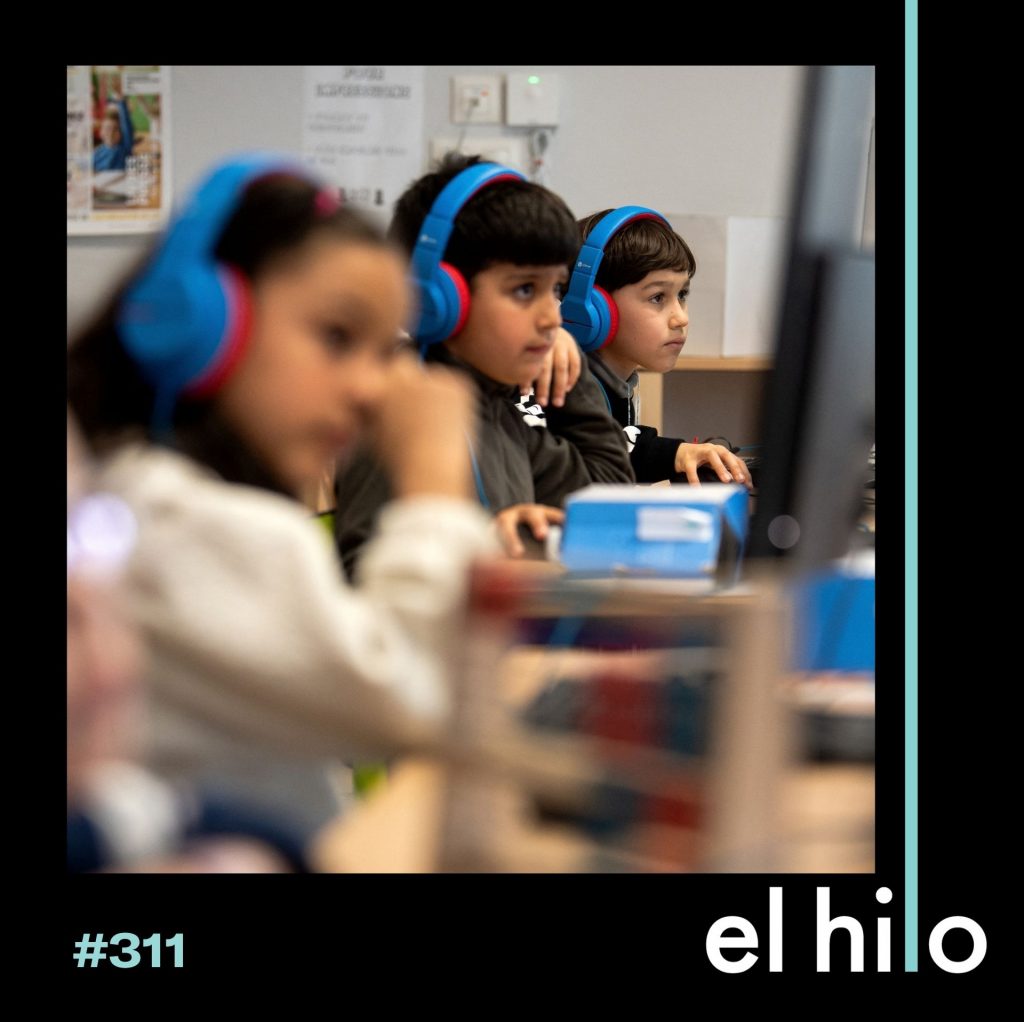
Getty Images / Matthieu Rondel
Etiquetas:
Transcripciones:
Transcripción:
Eliezer Budasoff: Bienvenidos a El hilo, un podcast de Radio Ambulante Studios. Soy Eliezer Budasoff.
Archivo de audio, La Silla Vacía: La foto global de las pruebas PISA es desoladora.
Archivo de audio, DW Español: El estudio evaluó a 760 mil estudiantes de 15 años en 91 países.
Archivo de audio, France 24 Español: A nivel global, el puntaje en Matemáticas, Ciencias y Comprensión lectora llegó a su punto más bajo desde el inicio de este sistema de medición internacional en el año 2000.
Archivo de audio, Aristegui Noticias: Sigue habiendo malas noticias para México en materia educativa.
Archivo de audio, 24 Horas: Los resultados mostraron una disminución significativa del desempeño de los estudiantes chilenos respecto a la edición del 2022.
Archivo de audio, La Silla Vacía: Siete de cada 10 jóvenes colombianos no alcanzan las competencias básicas en matemáticas.
Archivo de audio, RTVE Noticias: Cuanto más largo es el texto más aumenta el número de respuestas incorrectas.
Archivo de audio, Aire de Santa Fe: A los chicos les cortaron las piernas si no les enseñan a leer. Es decir, la lectura es lo que desarrolla nuestro cerebro. Se está atentando contra el desarrollo de los cerebros y es algo que tendrían que investigar.
Eliezer: Cada tres años, una prueba preparada por expertos evalúa cómo están aprendiendo los estudiantes a nivel internacional. Los resultados de la última edición no parecen haber sorprendido mucho a nadie, y menos a quienes conocen de cerca la situación educativa. El secretario general de la Internacional de la Educación, que agrupa a sindicatos docentes de todo el mundo, hizo una síntesis bastante precisa de la situación: mientras la escasez global de maestros sigue sin atenderse, la inteligencia artificial es impulsada como una solución mágica y el peligro es que los chicos terminan delegando su aprendizaje y su capacidad de pensar en un bot.
Las pruebas PISA de 2025 vienen a confirmar una serie de problemas que ya se conocen, que llevan años en desarrollo y que tardan años en resolverse, en un momento en que la IA amenaza con llevarse todo por delante. Tenemos una crisis en las formas elementales en las que construimos conocimiento, y al mismo tiempo tenemos que lidiar con una tecnología que afecta el vínculo que tenemos con el conocimiento: para qué sirve, para qué lo queremos, qué se supone que tiene que hacer.
Por eso quisimos hablar con el investigador uruguayo Juan Carlos Valle, neurocientífico y doctor en Ciencias Biológicas, que dirige el área de Desarrollo del Lenguaje en el Centro Interdisciplinario en Cognición para la Enseñanza y el Aprendizaje. Juan Carlos ha dedicado parte de su carrera a entender cómo aprendemos a leer y qué áreas del cerebro intervienen en este proceso. Su trabajo se mueve justamente en la intersección entre nuestras capacidades cognitivas y la lectura, la habilidad que ha sufrido la caída más grave en las pruebas PISA. En este episodio, conversamos con él para entender qué sucede cuando las bases de esa capacidad no se consolidan, y por qué es tan necesaria en la época de la inteligencia artificial.
Es 25 de septiembre de 2026.
Eliezer: Juan Carlos, los resultados de las pruebas PISA 2025 han desatado un montón de reacciones inmediatas y viscerales para un programa que nos da una especie de instantánea de algo que viene desarrollándose desde hace años. O sea, una prueba que se hace a adolescentes de 15 años, que entraron al sistema escolar hace más o menos una década. Y queremos partir de lo que más sobresale en esta radiografía, para después entender cómo se llegó hasta acá. En las últimas pruebas PISA, el área que más cayó en el mundo fue la lectura. El promedio en los exámenes de lectura cayó 28 puntos entre 2015 y 2025, algo que representa ─para este índice─ cerca de un año y medio de aprendizaje. La pregunta es: ¿esto quiere decir, primero, que los chicos que hicieron estas pruebas necesitan un año y medio más de educación para estar al nivel que estaban los adolescentes de su edad hace una década, cuando ellos estaban ingresando en el sistema escolar? Y tal vez algo más básico, y es: ¿qué significa que un chico, después de 10 años de escolaridad, no alcance el nivel esperado de comprensión lectora? ¿Qué es lo que deberían saber bien a esta altura?
Juan Carlos Valle: Las pruebas PISA como dijiste, es una radiografía, pero es una radiografía de una sombra, y cualquier medida, y sobre todo en estos temas educativos, cognitivos, son reflejos de un proceso que asumimos más complejo, ¿no? Voy a medir comprensión. Bueno, comprensión es una cosa realmente compleja, ¿no? Porque si yo te doy un texto de mecánica cuántica, te pones a leer, ¿podrás tener comprensión? Yo hice una prueba en unas charlas que he dado por acá, de cosas de neurociencia, y tenía algunas preguntas que eran fáciles y otras que no eran tan fáciles y donde te das cuenta que hay mucho que depende del conocimiento que tenés de lo que estás hablando. Claro, PISA se supone que hace preguntas de conocimiento general, pero te das cuenta que ahí hay muchos valores de lo que esperamos que la gente sepa, ¿no? Es decir, estamos asumiendo que lo que estamos midiendo es lo que se supone que la gente tiene que saber. Y lo otro que hay que mirar es la trayectoria de países, también es interesante. En Europa, algunos países cayeron estrepitosamente, España, ponele. Pero otros como Inglaterra no cayeron, que ellos lo celebran como que ganaron, pero en el fondo es que no cayeron. Y entonces ahí ves que hay muchas fuerzas jugando, ¿no? Entonces, ¿qué nos dice esto? Bueno, lo que nosotros, adultos, o los técnicos de PISA definen como lo que tiene que saber un joven no lo está logrando hacer. ¿A qué se debe eso? Y bueno, la discusión es esa. Creo que hubo una bajada que se explicaba por la pandemia y decían bueno, después de la pandemia esto va a mejorar. Y ahora es el primer punto que decimos: bueno, esto, salvo que la pandemia haya afectado a estos jóvenes en la primaria, ya parece más difícil de decir que esto se debe a la pandemia. La causalidad acá es compleja. Tenés muchas cosas que están jugando al mismo tiempo en un mundo muy complejo y cambiante. Entonces, hay que ir con pies de plomo y yo creo que hay que analizar cada uno de los casos para poder decir algo y tener alguna hipótesis que te permita tomar medidas. Medidas que el PISA las va a saber dentro de 10 años, ¿no? El efecto. Si vos decís, ahora hay que enseñar todo con papel y lápiz, saquen toda la tecnología. Bueno, en 10 años vemos, porque sobre todo, por ejemplo, en lectura, vos empezás a enseñarles en la mayor parte del mundo cuando tienen seis años, por ahí, en primer grado. Entonces, si cambias algo ahí, vas a tener que esperar nueve años para ver cómo impactó eso en PISA. No es sencilla la cosa.
Eliezer: Me gusta mucho este ejemplo que vos das de, ¿qué es comprensión lectora? Porque si yo te doy a vos un texto de mecánica cuántica, vos sabés leer bien, pero no entendés nada del contenido, ¿no? Y nos gustaría ir al punto de partida de este proceso, justamente por eso, porque hablar de que una persona sabe leer o incluso de que alguien lee bien tiene un montón de matices. Y tú explicas que hay una distinción importante entre aprender la lengua de uno y aprender a leer, que el lenguaje oral se adquiere por inmersión, mientras que la lectura es una herramienta cultural que necesita una enseñanza explícita. ¿Puedes explicarnos un poco esta diferencia? ¿Qué tiene que ocurrir en el cerebro de un niño para que aprenda a leer?
Juan Carlos: Eso es algo que en la neurociencia cognitiva y la psicología cognitiva es bastante poco controversial, ¿no? Estamos bastante de acuerdo en que, primero, si vos mirás en la historia de la humanidad, ponele, 200, 300 mil años, vas a buscar cualquier reporte antropológico, vas a ver que cualquier cultura humana, por recóndita que sea, tiene una lengua compleja, suficientemente compleja como para que requiera un tiempo entenderla. Y te diría más, hasta hace poco no teníamos ninguna máquina que pudiera hacer nada parecido. Ahora tenemos los modelos de lenguaje, está la inteligencia artificial, pero son de hace muy, muy poco. Ese era un problema para la inteligencia artificial de los más difíciles que había. Y sin embargo, un niño, en cualquier cultura de esas, adquiría su lengua sin problemas. Y con una gran variabilidad en lo que instruimos. Nosotros no le enseñamos a los niños cómo hablar. Les hablamos, con ciertas formas, digamos, una prosodia particular, lo que se llama el parentés, la forma de hablarle a los niños, pero ni siquiera eso es universal. Hay culturas que no le hablan así a los niños y los niños aún aprenden.
Eliezer: El parentés es ese registro particular que usamos los adultos para hablar con los bebés casi sin darnos cuenta: con frases más cortas, una entonación más marcada y muchas repeticiones. No es simplemente “hablar como bebé”. Esa manera de hablar ayuda a que los niños distingan palabras, reconozcan patrones y empiecen a entender cómo funciona el idioma mucho antes de poder hablar.
Juan Carlos: Entonces, la adquisición del lenguaje es algo que es característico de los humanos. En cambio, pensá la escritura. La escritura es un invento de hace cinco o seis mil años, mucho menos tiempo, y que después se fue difundiendo y hasta hace muy poco era patrimonio de muy poca gente. La idea de alfabetizar a todo el mundo no era una idea común. Podías encontrarte con un libro o con una carta y si no te habían enseñado, no ibas a leer. Entonces, ahí hay una distinción importante. La escritura es una invención, una tecnología que se inventó para transcribir lo que hablamos y dejarlo guardado en algún lugar. Entonces, esa tecnología requiere, para manejarla, como cualquier cosa, una enseñanza. Si querés aprender a manejar ─acá es mucho con cambios─ primero tenés que aprender y automatizar esos cambios para poder después enfocarte en manejar, en lo importante que es llevar el auto, saber frenar, acelerar, en fin, todas esas cosas. O pensá en tocar un instrumento musical. Imaginate, vas a la primera clase de guitarra y te dice: “Bueno, dale, tocá”. Y vos ves gente tocando y va a ser muy difícil que aprendas a tocar la guitarra. Sí, siempre va a haber algún caso particular de un niño muy enfocado que logró hacerlo, pero la mayoría de la gente precisa que le digan un poquito cómo son las notas, cómo se hace un acorde, en fin, algunas cosas, aunque sea básicas, para seguir haciendo lo otro que es autoaprender. Es cierto que la mayor parte de lo que aprendés cuando aprendés a leer lo terminás autoaprendiendo. Ahora dejame explicar, porque me hablaste del cerebro y quiero bajar un poco hasta el cerebro. Vos tenés que hacer que tu sistema visual procese lenguaje, de alguna manera. Lenguaje que está codificado en unas rayitas que ponemos en un papel. Nos parece automático, pero no es tan trivial. Y eso requiere que nuestro sistema visual, primero, aprenda a reconocer letras o partes de letras y con eso reconocer letras y parte de palabra o palabras. Y eso es una especie de concatenación de descubrimientos que hace nuestro sistema visual. Bueno, precisás, primero, entonces, aprender a reconocer que estas liñitas que estás escribiendo son ciertos caracteres y eso tenés que ligarlo, esas letras, tenés que ligarlo a los sonidos de la lengua. Nuestro sistema de escritura es un sistema alfabético, o sea, las letras se corresponden a sonidos.
Eliezer: Ese proceso de vincular cada letra con su sonido se llama decodificación y es el primer paso para aprender a leer. Con el tiempo y la práctica, esta habilidad se automatiza y los niños pasan de leer letra por letra a reconocer palabras completas de un solo vistazo. Es esa fluidez la que permite pasar de la mera lectura a la comprensión.
Juan Carlos: Estás ahí liberando los recursos cognitivos, la memoria de trabajo particular, para atender al significado del texto. De la misma manera que liberás tus recursos cognitivos de pensar en los cambios del auto y te concentrás en manejar y no pisar a nadie y en ir a donde te querés ir. Y eso ocurre en el cerebro de distintas maneras. Cuando un niño empieza a aprender a escribir, empiezan ciertas áreas, que se especializan en reconocer caras y algunos objetos complejos. Entonces, en general, en el hemisferio izquierdo, para todo el mundo empieza a activarse una zona que empieza a ser cada vez más específica para reconocer información textual: letras, combinaciones de letras, palabras, al punto que algunos autores le llaman el área de la forma visual de las palabras. Entonces, esa es un área que cuando se desarrolla decís: bueno, la persona ya está leyendo o por lo menos está decodificando y quizás en camino a esa automatización. Y eso es el punto de comienzo, porque vos podés leer, está bien, pero todavía no llegaste al significado, ¿no? PISA evalúa comprensión, que tiene que ver con, dado este texto que te estoy diciendo, poder responder ciertas preguntas sobre lo que dice el texto, lo que implica el texto, lo que quiso hacer el autor. Conocer el significado de palabras y los conceptos que la sustentan, ¿no? Las palabras no están en el aire. Denotan conceptos que tenemos en nuestra cabeza. Vos aprendés palabras a partir de la lectura. Fijate lo perverso del asunto que es, que cuanto más leés, más palabras adquirís y cuantas más palabras sabés, más cosas podés leer. Entonces, hay una retroalimentación positiva que hace que si vos leés, podés leer más y del lado negativo, que si no leés, cada vez en comparación vas a leer menos. Entonces, a eso le llaman el efecto Mateo, por el evangelio de Mateo, que decía: “Al que tenga más se le dará más y al que tenga menos se le dará menos en el reino de los cielos”. El efecto Mateo. Tenés que entrar en la maquinita de la lectura para entrar en ese ciclo de realimentación positiva, que es cada vez leer más. Y leer, como se dice en el mundo educativo, leer para aprender. Antes aprendés a leer y ahora lees para aprender.
Eliezer: Una pausa y volvemos.
Eliezer: Estamos de vuelta en El hilo.
Eliezer: Más allá de todo lo que ha cambiado en el mundo y en las condiciones en las que se hace hoy la escolarización, uno tiene esta idea de que las escuelas son instituciones a las que les cuesta adaptarse a las transformaciones sociales, ¿no? Que siempre van un poco por detrás. Pero también, yo me preguntaba si más allá de las diversas corrientes y teorías sobre la mejor forma de enseñar a leer, si existe alguna especie de método o paradigma hegemónico en determinada época sobre cómo se debe enseñar a leer, basado en algún tipo o en algunos tipos de consensos científicos, ¿no? Por ejemplo, me estaba acordando recién, cuando estabas hablando, que hace un tiempo alguien me explicaba que los problemas de ortografía, de puntuación, que vemos hace algunos años tiene que ver con la forma en que se les enseña a leer ahora a los chicos. Alguien me decía: “Vos tenés que entender que mi hija no está aprendiendo a leer de la misma forma en que nosotros aprendimos a leer”, ¿no? ¿Esto es así?
Juan Carlos: Tan es así que, en Estados Unidos se habla de las reading wars, las guerras de la lectura.
Eliezer: Las reading wars son la larga discusión sobre cómo enseñar a leer en los primeros grados: cuánto énfasis poner en los sonidos y las letras —lo que se conoce como enfoque fónico—, y cuánto en el contexto y el significado, o en la interacción con el entorno.
Juan Carlos: Y tienen larga data ya. Y tienen mucha gente herida en el medio. en América Latina creo que le llamaban la querella de los métodos. Lo que pasa es que ahora hemos llegado como a una especie de… No se puede hablar de eso. Entonces ¿Qué pasa? Estaban los métodos clásicos, es decir, te enseñan las letras y era mucho machaque. Y bueno, si no te aprendes esto y como memorístico… Pero esos métodos tenían sus virtudes, porque enseñaban las correspondencias, enseñaban la conciencia fonológica, que es unir estas cosas para acceder al sonido. Claro, era una cosa autoritaria, repetitiva, etcétera. Pero entonces, después, hubo una especie de movida hacia el otro lado, un poco culpa de la psicología también, la psicología experimental de la que me siento responsable, que es que cuando empezaron a ver cómo la gente leía, los adultos, vieron que no ibas letra por letra, ibas saltando, tus ojos iban saltando. Entonces, se dieron cuenta que vos leías palabras enteras. Entonces hubo todo un movimiento, sobre todo en Estados Unidos, de: no enseñemos letra por letra, enseñemos la palabra entera. Pero eso ya en los años 50, 60, empezó a hacer agua. La gente… hay un libro que se llamaba ¿Por qué no puede leer Johnny? Why Johnny Can’t Read?, que es muy famoso, que dice: están enseñando mal, porque están tratando que el niño aprenda las palabras enteras. Por otro lado, viene una onda, que es la ola constructivista, asociada a Piaget.
Eliezer: Jean Piaget fue un psicólogo suizo que estudió cómo los niños desarrollan el pensamiento y aprenden. Sus ideas tuvieron una enorme influencia en la educación, y en este caso en particular, su teoría de cómo los niños construyen el conocimiento al interactuar con el mundo.
Juan Carlos: Piaget era un genio, pero claro, tuvo muchas cosas que no estaban bien. Y acá el problema no es solo de Piaget, ni del constructivismo. Creo que a veces, la psicología del aprendizaje y la neurociencia del aprendizaje, mezcla lo que es desarrollo cognitivo con lo que es el aprendizaje de estas cosas. Un poco como si fuera mezclar adquisición del lenguaje con aprendizaje de la lectura. Están muy relacionados, pero no son lo mismo. Y algunos educadores de esa rama dicen: “No, no, pero está leyendo a través mío”. No, no, no está leyendo, vos le estás leyendo. Entonces, tiraron el bebé con el agua, digamos, y entonces dejaron que, se supone que el niño va a aprender como si fuera el lenguaje, a adquirir la lectura. Y entonces, algunos lo hacen porque en sus casas les enseñan, porque están muy motivados y hacen las preguntas correctas, y después hay un sector que no. Ya estás en tercer o cuarto grado y la lectura es una cosa molesta de la escuela, que no te interesa para nada y que no forma parte de tu vida, que es un obstáculo en tu vida más que algo que te aporta, ¿no? Entonces, hay algo de esa enseñanza inicial en donde se desproveyó de las aulas a la enseñanza explícita de cómo es el código, que creo que eso es lo que hay un consenso científico, que tiene que ser así, y entonces eso genera un problema. Entrás a los seis años al sistema educativo y a los 15 te dicen que te evalúan. Bueno, ahí tenés unos nueve años, unos 10 años, que todo puede haber causado que subas o bajes en esto, ¿no? Pero no es la política de ahora. Por ejemplo, en 2015, o 2018, Finlandia estaba muy arriba y ahora no está tan arriba. Ahora, ¿la política que estaba haciendo Finlandia en 2015 es la que era la buena? ¿O era la que habían hecho 10 años antes? Entonces, ahí hay muchas, tendencias a tratar de decir: bueno, acá pasó esto, hagamos esto pero la causalidad acá es compleja.
Eliezer: Los resultados de las pruebas PISA pueden ser leídos de formas bien distintas según el contexto. En algunos casos, por ejemplo, la caída del puntaje se ha relacionado con un mayor acceso al sistema educativo. Cuando un país consigue que entren o se mantengan en la escuela chicos que antes quedaban afuera —casi siempre de familias con menos recursos—, el promedio en las pruebas puede bajar aunque el sistema esté mejorando. De todos modos, es fácil entender por qué los resultados en lectura se toman como una profecía autocumplida: la idea de que asistimos a una especie de fin de la cultura letrada se repite seguido en esta época, y se alimenta de varios indicios.
Algunos meses atrás, la revista The Atlantic publicó un largo reportaje titulado “El fin de la lectura ha llegado”, donde la autora cuenta, entre otras cosas, que las oraciones de los libros superventas que salen hoy en la lista del New York Times son tres veces más cortas que en los superventas de hace un siglo; cuenta que la cantidad de estadounidenses que leen por placer bajó del 28% al 16% en menos de una década; que la caída afecta también a los grupos que más leían, como las mujeres y los universitarios; que hay estudiantes de Harvard que consideran la lectura como una forma innecesariamente difícil de obtener información.
Para Juan Carlos, el problema tiene un enfoque más práctico y anterior: la gente debería tener la experiencia de leer por placer, pero primero hay que asegurar una base que lo haga posible.
Juan Carlos: Hay mucha discusión sobre la lectura por placer. A mí me parece que esperar que todo el mundo tenga placer en la lectura no es una cosa razonable. Sí lo que tiene que tener es habilidad para hacerlo. Y eso quiere decir trabajar y usarlo para aprender. Digo esto del placer porque a alguna gente le gusta más jugar al fútbol, a otra gente le gusta más, yo qué sé, cocinar. Cuando empezamos a hablar de que hay que tratar de que todo el mundo tenga placer con esto, yo entiendo lo que quieren decir. Está bueno, a mí me da placer leer, y es divertido y es interesante, es una forma de pausar, de salirte de toda la locura del mundo, de meterte en otro mundo. Estaría bueno que la gente pudiera experimentar eso alguna vez y saber que existe y poder usarlo. Entonces, yo no creo que vayan a desaparecer los libros. Me parece que vamos a llegar a una especie de equilibrio en donde la gente va a tener algunas cosas que va a tener que seguir leyendo en libros. Y creo que eso es importante que pase en la enseñanza. Se supone que el ambiente controlado que tenemos son las aulas. Bueno, hagamos que en las aulas los niños y los jóvenes tengan que leer o tengan que pausar un rato su uso de los celulares. Yo no digo que tengan que tener el celular. Me parece que eso también es parte de lo que los adultos tenemos que tener como responsabilidad. También es importante que esos adultos estén atendiendo la clase y no mirando el celular, que también pasa. Entonces, hay que rediseñar una cultura si nos parece valorable saber algo, ¿no? Porque está la otra del tecno optimismo e inteligencia artificial, yo creo que la tecnología no hay que sacarla de todos lados, hay que usarla mejor. Y te hablo desde Uruguay, que además somos el lugar donde se hizo el Plan Ceibal, que tenemos one laptop per child.
Eliezer: El Plan Ceibal comenzó en 2007 entregando una computadora a cada niño. Pero hoy es más que eso: desarrolla plataformas, programas y herramientas para integrar la tecnología a la educación.
Juan Carlos: Ahora nadie quiere reconocerlo, pero todos teníamos el tecno optimismo de que le damos una laptop a los niños, entran a Internet y ya aprenden todo, y es mentira.
Eliezer: Los celulares, las pantallas, ahora la inteligencia artificial, cuando salen los resultados de PISA se convierten inmediatamente en los grandes sospechosos, ¿no? Cuando hablamos del deterioro educativo. Pero, por un lado, ¿qué sabemos realmente sobre su efecto en el aprendizaje y qué cosas son simplemente como que estamos suponiendo, que son inferencias? ¿Qué perdemos de vista cuando la tecnología se convierte en la explicación más fácil?
Juan Carlos: Yo creo que lo que perdemos de vista es el uso social de la tecnología. Es decir, el Ceibal que te decía acá de Uruguay se reconvirtió, tiene plataformas, hace un montón de cosas y yo creo que muchas de esas son muy buenas, en el sentido que vos podés usarlas en una clase. Y me parece que ahí está un poco el asunto, que es: ¿qué estamos haciendo y para qué? Yo creo que lo que cambió un poco, y es capaz que la tecnología lo empeoró o lo empeora si es mal usada, es cuál es nuestro vínculo con el conocimiento, para qué lo queremos, qué es lo que queremos hacer, qué se supone que tiene que hacer un ser humano para vivir una vida plena. Bueno, capaz que el conocimiento en sí mismo es un factor de una vida plena. Entonces, capaz que lo que hicimos, y ahí juegan todos los culpables, las reformas educativas que te digo, el tecno optimismo, las tecnologías, es descentrarle, sacarle la importancia a que la gente aprenda cosas y aprenda conocimiento y aprenda por la mera razón de ser humano, aprenda ciertas cosas. En la Facultad donde yo trabajo, hay clases de laboratorio y hay también clases teóricas, magistrales. Después de la pandemia, mucha de la gente no viene a las clases magistrales, eligen no venir. ¿Qué están haciendo? ¿Están estudiando en su casa con ChatGPT? ¿Eso les sirve? Creo que tenemos que estudiar un poco nuestras interacciones con estos medios para hacer algo mejor. También se habla de la pereza cognitiva. Y eso es una cosa que también tenemos que ver cómo zafamos de eso. Nuestro cuerpo no está pensado para estar sentado en un sillón todo el tiempo. Te vuelve fofo, gordo, tenés problemas cardíacos, Es decir, así como tenemos gimnasios, tenemos que tener gimnasios mentales, en algún sentido. Aprender también es una forma de gimnasia mental y hay que buscarle la manera para, sin dramatismo, usar la tecnología. Yo uso ChatGPT y Claude, todo eso, de muchas maneras, y estoy contento de que existan. Me preocupa que sean solo unas pocas empresas en el mundo que los tengan. Me preocupa el futuro del trabajo, de la economía, el medio ambiente, qué va a ser la vida de las personas. Pero no estoy en contra, me fascina, además, la tecnología, hasta por un punto de vista cerebral, porque nacieron imitando el cerebro y en algún sentido, se parecen y, en otro sentido, no. Entonces, ese mundo de que la ingeniería esté logrando tener cosas parecidas a lo que hace nuestro cerebro, me parece fascinante en sí mismo. Entonces, a ver, yo soy muy pro inteligencia artificial, sí, hay que tener cuidado y hay que saber cómo moverse y tenemos un montón de problemas que tenemos que resolver. Bajar la llave, no creo que sea mucho la solución.
Eliezer: Vos estabas hablando recién de la pereza cognitiva, ¿no? La tendencia a delegar en la inteligencia artificial lo que podríamos procesar nosotros mismos. Y entonces, dos preguntas vinculadas con esto, pero es como: ¿qué pasa cuando usamos la inteligencia artificial para evitar ese esfuerzo? ¿Qué tipo de músculo en nuestro proceso cognitivo estamos dejando de utilizar? Y ¿cómo se puede distinguir entre estas dos acciones? Entre apoyarnos en una herramienta para aprender y utilizarla para no tener que aprender.
Juan Carlos: Antes era lo busco en Encarta, después fue lo busco en Google, lo busco en Wikipedia y ahora le pregunto a ChatGPT o a Claude. Les pregunto y ¿para qué voy a saber cualquier cosa si ya está ahí? Bueno, para que tu cabeza se setee de una manera distinta si vos sabés cosas. Y además sabés qué preguntar, cómo preguntar y para verificar. La crisis que tenemos de credibilidad o de falsas noticias, ¿A qué se debe? Bueno, el pensamiento crítico es fundamental, pero también implica tener cierto conocimiento, porque vos el pensamiento crítico lo ejercés cuando podés contrastar con algo. Si a vos te dicen, bueno, no sé, pasó tal cosa y si vos no sabés nada, bueno, capaz que podés creer. Todos creemos en algo, un poquito todos delegamos en el resto de la sociedad, en los especialistas, en algún sentido, ciertas cosas no entendemos. Todos creemos, todos decimos: “Bueno, me dijo fulano que si hacés esto, no sé, te dura más la comida en la heladera”, por decir una cosa así. Sí, supongo que está bien, lo vi en un reel de Instagram. Supongo que está bien. Parece razonable de acuerdo a lo que yo sé y mi experiencia. Hay mucho de eso. Para juzgar y tener un cierto criterio implica tener una base de conocimiento muy compleja. Y eso mirá que te lo estoy diciendo así como en cualitativo, una cosa es algo que vos no sabés y otra cosa es algo que vos sabés. Si vos sabés hacer algo y lo delegás parcialmente, eso no es tan grave. Podría pasar que si lo seguís delegando toda la vida, te olvides, ¿no? Es decir, el conocimiento es lo que está en la memoria, o sea, nuestros sistemas de memoria. Y la memoria tiene esa cosa que empieza a olvidar, ¿no? Y que las cosas que no se usan, se olvidan. Entonces, más vale que lo que no querés olvidar lo vuelvas a usar, porque si no te lo vas a olvidar. Por ejemplo, yo programo y muchas cosas le pido que programe a ChatGPT o Claude. A veces trato de escribir mis programas solo, porque si no te olvidás de cosas que después te dan cierta fluidez. Entiendo, igual, todavía conservo la capacidad de poder leer el programa que me da y ver si está bien o está mal. Y ahí entra también la pereza cognitiva de no verificar, ¿no? Decir: “Bueno, ya lo hizo, debe estar bien, dale que es tarde”. Bueno, eso es un poco riesgoso, sobre todo si uno va a delegar, pero tiene que no delegar el control. Y en ese sentido también vas reforzando las memorias que vos no querés. Si vos no sabés delegar algo y no tratas de aprender… Y esa es, para mí, la parte delicada, cómo aprendés que lo que está haciendo es, cómo lo hizo. Entonces, podrías usarlo para aprender o podrías decir: “Bueno, listo, hizo el programa, se mueve el robot y yo no tengo ni idea de lo que pasó ahí”. Ahí no aprendiste nada, delegaste eso, no va a estar en tu memoria, tus conceptos no van a ser mejores, tus habilidades tampoco. Esa es una parte en donde vos no aprendiste nada y a veces tenés la ilusión de que aprendiste. Entonces, ese es un caso particular de pereza. Y el otro es el de delegar completamente todo, incluso delegar el control. Yo creo que la forma es: está bien, delegale tareas, pero revisalas como si fueras un revisor crítico, como si fuera, no sé, un estudiante que te da un trabajo y vos tenés que corregirlo. Bueno, corregilo, porque eso te mantiene en el loop, te mantiene activo. No perdés la memoria. En general, la memoria de lo motor más básico no lo perdés. Nadie se olvida de andar en bicicleta, dicen. Pero los conceptos se te pueden ir volviendo más difíciles de acceder.
Eliezer: Recién acabas de decir algo que nos interesa particularmente de tu experiencia, porque uno de los puntos de partida de tu trabajo como científico tiene que ver con cómo aprenden y generalizan reglas las redes neuronales, ¿no? y modelos probabilísticos. Yo sé que esto implica sintetizar procesos muy complejos, pero yo no sé si podrías explicarnos de una manera más o menos sencilla cuál es la diferencia en la forma en que construimos sentido las personas y la forma en que lo construyen los modelos de lenguaje de inteligencia artificial.
Juan Carlos: Capaz que es más fácil, ver cuál es la similitud, porque las diferencias son muchas. O sea, energéticamente pensá las diferencias, si querés. Vamos a empezar ahí. Vos tenés una cabeza. Acá había una película que se llamaba 25 watts, que se supone que es lo que consume tu cerebro, de energía. Comparalo con un un data center para correr una IA. Ni que hablar. Tu cerebro hace lo que estas cosas necesitan muchos más datos y mucha más energía de una manera mucho más sencilla. Quizás porque está precableada para hacerlo de ciertas maneras. O sea, hay una forma de adquirir conocimiento humano y en muchos sentidos lo que hace la IA es distinto. De la IA, yo qué sé, en un modelo de lenguaje, vos básicamente le podés dar un volumen enorme, una pregunta enorme, le podés dar un documento entero de ntrada, y eso ingresa a esa mega red neuronal y se procesa un poco en paralelo y te va generando una palabra o un pedacito de palabra a la vez. No funciona así como hacemos nosotros. Aunque hay aspectos de las redes que son parecidos. Por ejemplo, todos dependen mucho del conocimiento. Nosotros dependemos mucho del conocimiento, como yo te decía. Mucho más las redes neuronales artificiales. Y ahora, últimamente hay una, yo te diría una industria científica, dedicada a encontrar en qué se parece la activación de nuestro cerebro y la activación de una red neuronal. Hay muchos trabajos que muestran que redes neuronales, estos modelos de lenguaje haciendo lo mismo que nosotros, se pueden alinear con nuestro cerebro. Digamos, a partir del modelo puedo predecir la actividad del cerebro un poquito, ¿no? No es que… Tan bien a partir de un cerebro a otro, ¿no? Esa es una cosa interesante. ¿Es igual? No. Entonces, yo te diría que hay unas pocas similitudes, un poco porque las redes neuronales nacen intentando emular para modelizar el cerebro. Lo crucial que tienen es que la información se guarda distribuida en muchas conexiones, en miles y millones de conexiones. Y eso sí parece ser la forma en que nuestro cerebro guarda información. También es cierto que tenemos, como por ejemplo, esa tendencia predictiva, como que nuestro cerebro está todo el tiempo tratando de predecir y lo que no pudo predecir le llama la atención y te permite aprender. Y así también funcionan las redes. Hay algunas cosas muy genéricas en las que hay parecidos, pero nosotros hacemos mucho más eficiente que ellos, en un sentido. Claro, ellos, ellos, viste, ya los personifico. Pero ellos pueden copiarse, pueden estar en muchos lugares a la vez, pueden tener acceso a toda la información. Entonces, en ese sentido terminan siendo más performantes, porque son un ejército en realidad, si lo pensás. Pero bueno, yo creo que todavía hay unas cuantas diferencias que nos hacen, nosotros nos movemos en un mundo, tenemos una sensibilidad y bueno, y además tenemos un sistema de nuestra cognición que es la conciencia. Incluso ahora se discute: bueno, ¿estos bichos son conscientes? Y yo creo que no. Creo que sí tienen información, guardan o utilizan información que nuestro cerebro consciente usa para hacer algunas tareas. Y quizás eso sea una pista de por qué nosotros terminamos desarrollando la conciencia.
Eliezer: Una última pausa y volvemos.
Eliezer: Estamos de vuelta en El hilo.
Eliezer: Yo sé que no forma parte necesariamente de tu formación, tu trabajo como científico, pero quería conocer tu opinión. Hay algo que uno tiene la impresión de que no entendemos, de los modelos de inteligencia artificial o si tiene que ver, la forma en que nos relacionamos con ella, con aquello que nuestro cerebro está entrenado a atribuir a lo que usa lenguaje, no? Vos recién decías “ellos”, ¿no? Uno tiende inmediatamente a personificar. Ya hay, obviamente, un montón de casos graves de gente que desarrolla determinado apego con los modelos de inteligencia artificial. Y es: ¿por qué sucede esto? O sea, no estamos acostumbrados a que otro tipo de especie, no sé ni siquiera cómo decir, digamos, ¿no? Pero que alguien utiliza el lenguaje con esta habilidad con la que la utilizamos nosotros. ¿Hay algo ahí que hace como una ilusión óptica?
Juan Carlos: Sí, es una ilusión, por eso la discusión de conciencia me parece que no es muy serio creer que estos bichos tengan conciencia, por decirlo así, pero es muy fácil atribuírsela. Mirá, y gente como Geoffrey Hinton, que le dieron el Nobel en el 2024 por su desarrollo que llevaron a la inteligencia artificial. En las últimas entrevistas dice que para él es consciente, si no recuerdo mal.
Eliezer: Hinton es un informático y psicólogo cognitivo conocido como “el padrino de la IA” por su trabajo en redes neuronales artificiales, la base de los modelos actuales. En 2025, le preguntaron en una entrevista en una radio británica si creía que la conciencia ya había llegado a la IA y dijo “yes, I do”.
Juan Carlos: O Richard Dawkins, el biólogo, que dice que tuvo una conversación con Claude y que eligió llamarla Claudia.
Eliezer: En mayo de este año, el biólogo evolutivo Richard Dawkins, un divulgador científico conocido mundialmente, publicó un ensayo después de pasar unos tres días conversando intensamente con el modelo de Anthropic. Dijo que la sutileza en las respuestas del chatbot le causó una sensación subjetiva tan humana que no podía descartar que hubiera consciencia detrás.
Juan Carlos: A mí me parece que son… Un poco esas cosas, son un poco, no sé, propagandísticas o formas de hablar. Los casos que vos relatás, de gente incluso que las has llevado al suicidio, aparentemente, digamos, que hay juicios de por medio, esos son más complejos. Y no sé cómo decirte, es muy fácil empatizar, ¿no? Es todo nuestra cognición social funcionando, asumiendo que ahí hay una persona como vos o como yo. Es como que estás hablando con una persona, y usás toda la emocionalidad asociada a trabajar, a hablar con otras personas. Todas las máximas de la pragmática, de la conversación social, de todo eso está metido. Yo no le digo ahora, no le agradezco, pero me cuesta. Tengo ganas de agradecerle, porque tenés ese tipo de reacciones, porque es natural, porque te sale de tu propia psiquis.
Eliezer: Volviendo un poco ya para ir cerrando, volviendo un poco a lo que empezábamos a conversar al principio. Si vos tuvieses que recomendar alguna base, alguna enseñanza a la cual aferrarse en esta época. Si vos decís: “Bueno, esta cosa tenemos que aprender sí o sí”. ¿Qué es lo que tú dirías que es esencial?
Juan Carlos: Es una pregunta interesante. Cuando me la estabas haciendo pensaba en la lectura en sí misma, ¿no? Aprender a leer, lo básico. Puedo estar equivocado, ¿no? Pero me parece que la lectura tiene esa posibilidad de, con muy poco, si vos sabés hacer eso, si tenés la capacidad de ir leyendo de manera incremental, me parece que ahí tenés un montón de herramientas que podés tener. Me parece que esa es una. Yo te diría eso y cierta forma de pensamiento, más que cuantitativo, como más lógico. Hace mucho tiempo que yo estaba medio: “Bueno, no es necesario un conocimiento nuclear. Todo el mundo puede saber cosas distintas”. Ahora creo de vuelta que hay que tener un conocimiento nuclear, que está bueno que la cultura de una sociedad se transmita con las mutaciones que sabemos que generan el cambio, como nos enseñó Darwin. O sea, no para reproducir exactamente la sociedad, sino para… Hay algunos aspectos de nuestra cultura que tienen que transmitirse. Y son, capaz es reducido, pero tiene que haber algunas con habilidades y algunas cosas que saber. Eso es lo que yo pienso.
Eliezer: Juan Carlos Valle, muchísimas gracias por hacerte un tiempo para hablar con nosotros
Juan Carlos: No, gracias a ustedes.
Jesús Delgadillo: Este episodio fue producido por mí, Jesús Delgadillo. Lo editaron Eliezer y Daniela Cruzat. Bruno Scelza hizo la verificación de datos. El diseño de sonido y la música son de Elías González.
El equipo de producción de El hilo está formado también por Samantha Proaño y Franklin Villavicencio, con el arte y diseño de Diego Corzo. El resto del equipo incluye a Natalia Ramírez, Paola Alean, Camilo Jiménez Santofimio, Elsa Liliana Ulloa, Silvia Viñas y Daniel Alarcón. Carolina Guerrero es la CEO de Radio Ambulante Studios. Nuestro tema musical lo compuso Pauchi Sasaki.
El hilo es un podcast de Radio Ambulante Studios. Si valoras el periodismo independiente y riguroso, te pedimos que te unas a nuestras membresías. América Latina es una región compleja y nuestro periodismo necesita de oyentes como tú. Visita elhilo.audio/donar y ayúdanos con una donación.
Si quieres profundizar sobre el episodio de hoy, suscríbete a nuestro boletín de correo entrando a elhilo.audio/boletin. Lo enviamos cada viernes.
También puedes seguirnos en nuestras redes sociales. Estamos en Instagram, X, BlueSky, Facebook y Threads. Nos encuentras como @elhilopodcast. Déjanos allí tus comentarios y etiquétanos cuando compartas los episodios.
Gracias por escuchar.
Transcript:
The following English translation was generated with the assistance of artificial intelligence and has been reviewed and edited by our team for accuracy and clarity.
Eliezer Budasoff: Welcome to El hilo, a podcast from Radio Ambulante Studios. I’m Eliezer Budasoff.
Archival audio, La Silla Vacía: The global picture from the PISA tests is bleak.
Archival audio, DW Español: The study assessed 760,000 15-year-old students in 91 countries.
Archival audio, France 24 Español: Globally, scores in math, science, and reading comprehension hit their lowest point since this international assessment began in 2000.
Archival audio, Aristegui Noticias: The bad news on education keeps coming for Mexico.
Archival audio, 24 Horas: The results showed a significant drop in Chilean students’ performance compared to the 2022 edition.
Archival audio, La Silla Vacía: Seven out of 10 young Colombians don’t reach basic proficiency in math.
Archival audio, RTVE Noticias: The longer the text, the more incorrect answers there are.
Archival audio, Aire de Santa Fe: If they don’t teach kids to read, they’ve cut their legs out from under them. I mean, reading is what develops our brains. This is an attack on the development of their brains, and it’s something that should be investigated.
Eliezer: Every three years, a test designed by experts assesses how students around the world are learning. The results of the latest edition don’t seem to have surprised anyone much, least of all those who know the state of education up close. The general secretary of Education International, which brings together teachers’ unions from around the world, summed up the situation quite precisely: while the global teacher shortage remains unaddressed, artificial intelligence is being pushed as a magic solution, and the danger is that kids end up handing over their learning, and their ability to think, to a bot.
The 2025 PISA results confirm a series of problems we already knew about—problems that have been developing for years and that take years to solve—at a moment when AI threatens to sweep everything away. We have a crisis in the most basic ways we build knowledge, and at the same time we have to deal with a technology that is changing our relationship with knowledge: what it’s for, why we want it, what it’s supposed to do.
That’s why we wanted to talk with the Uruguayan researcher Juan Carlos Valle, a neuroscientist with a PhD in biological sciences who heads the Language Development area at the Interdisciplinary Center for Cognition in Teaching and Learning. Juan Carlos has devoted part of his career to understanding how we learn to read and which areas of the brain are involved in that process. His work sits precisely at the intersection between our cognitive abilities and reading, the skill that saw the steepest drop on the PISA tests. In this episode, we talk with him to understand what happens when the foundations of that ability aren’t solidified, and why it’s so necessary in the age of artificial intelligence.
It’s September 25, 2026.
Eliezer: Juan Carlos, the results of the 2025 PISA tests have set off a wave of immediate, visceral reactions to a program that gives us a kind of snapshot of something that’s been developing for years. I mean, it’s a test given to 15-year-olds who entered the school system roughly a decade ago. And we want to start with what stands out most in this X-ray, so we can then understand how we got here. On the latest PISA tests, the area that fell the most worldwide was reading. The average reading score dropped 28 points between 2015 and 2025, which represents—by this index’s measure—about a year and a half of learning. So the question is: does this mean, first of all, that the kids who took these tests need an extra year and a half of schooling to reach the level that teenagers their age were at a decade ago, when they themselves were entering the school system? And maybe something more basic: what does it mean for a kid, after 10 years of schooling, not to reach the expected level of reading comprehension? What should they know well by this point?
Juan Carlos Valle: The PISA tests, like you said, are an X-ray, but they’re an X-ray of a shadow. And any measurement, especially on these educational and cognitive issues, is a reflection of a process that we assume is more complex, right? I’m going to measure comprehension. Well, comprehension is a really complex thing, right? Because if I give you a text on quantum mechanics and you start reading, will you be able to comprehend it? I tried an experiment in some talks I’ve given around here, on neuroscience topics, and I had some questions that were easy and others that weren’t so easy, and you realize that a lot depends on how much you know about what you’re reading. Of course, PISA is supposed to ask general-knowledge questions, but you realize there are a lot of values embedded there about what we expect people to know, right? In other words, we’re assuming that what we’re measuring is what people are supposed to know. The other thing worth looking at is the trajectory of individual countries, which is also interesting. In Europe, some countries fell dramatically—Spain, for example. But others, like England, didn’t fall, and they celebrate it as if they’d won, but really it’s just that they didn’t fall. So you can see there are a lot of forces at play, right? So what does this tell us? Well, that young people aren’t managing to achieve what we adults—or the PISA experts—define as what they should know. Why is that? Well, that’s the debate. I think there was a drop that was explained by the pandemic, and people said, OK, after the pandemic this will improve. And now we’re at the first point where we say: well, unless the pandemic affected these kids in primary school, it’s getting harder to argue that this is because of the pandemic. Causality here is complex. You have a lot of things at play at the same time in a very complex, changing world. So you have to tread very carefully, and I think you have to analyze each case to be able to say anything and to have some hypothesis that allows you to take action. Action whose effect PISA will only register 10 years from now, right? If you say, now everything has to be taught with pencil and paper, get rid of all the technology—well, we’ll see in 10 years. Because, for example, in reading especially, in most of the world you start teaching kids when they’re about six, in first grade. So if you change something there, you’ll have to wait nine years to see how it impacted PISA. It’s not a simple thing.
Eliezer: I really like the example you give about what reading comprehension is. Because if I give you a text on quantum mechanics, you know how to read well, but you don’t understand any of the content, right? And we’d like to go back to the starting point of this process, precisely for that reason, because saying that a person knows how to read, or even that someone reads well, involves a lot of nuance. And you explain that there’s an important distinction between learning your own language and learning to read: that spoken language is acquired through immersion, while reading is a cultural tool that requires explicit teaching. Can you explain this difference a bit? What has to happen in a child’s brain for them to learn to read?
Juan Carlos: That’s something that’s fairly uncontroversial in cognitive neuroscience and cognitive psychology, right? We largely agree that, first of all, if you look at human history—say, 200,000 or 300,000 years—and you look at any anthropological record, you’ll see that every human culture, no matter how remote, has a complex language, complex enough that it takes time to understand it. And I’d go further: until recently we didn’t have any machine that could do anything like it. Now we have language models, there’s artificial intelligence, but those are very, very recent. That was one of the hardest problems in artificial intelligence. And yet a child in any one of those cultures acquired their language without any problem. And with huge variability in how we instruct them. We don’t teach children how to speak. We talk to them in certain ways—with a particular prosody, let’s say, what’s called parentese, the way we talk to children—but not even that is universal. There are cultures that don’t talk to children that way, and the children still learn.
Eliezer: Parentese is that particular register we adults use to talk to babies almost without realizing it: shorter sentences, more pronounced intonation, and lots of repetition. It’s not simply “baby talk.” That way of speaking helps children tell words apart, recognize patterns, and begin to understand how language works long before they can speak.
Juan Carlos: So language acquisition is something characteristic of humans. Now think about writing, by contrast. Writing is an invention from five or six thousand years ago—much more recent—that gradually spread, and until very recently it belonged to very few people. The idea of teaching everyone to read and write wasn’t a common one. You could come across a book or a letter, and if no one had taught you, you weren’t going to read it. So there’s an important distinction there. Writing is an invention, a technology created to transcribe what we say and store it somewhere. So that technology, like anything else, requires teaching in order to master it. If you want to learn to drive—here it’s mostly stick shift—first you have to learn and automate the gear changes so you can then focus on driving, on what matters, which is handling the car, knowing how to brake, accelerate, all those things. Or think about playing a musical instrument. Imagine you go to your first guitar lesson and the teacher says: “OK, go ahead, play.” You watch people playing, and it’s going to be very hard for you to learn the guitar. Sure, there’s always the exceptional case of a very focused kid who manages to do it, but most people need to be shown a little about how the notes work, how to make a chord—some things, even basic ones—so they can then go on to the other part, which is teaching themselves. It’s true that most of what you learn when you learn to read, you end up teaching yourself. Now let me explain, because you asked me about the brain and I want to get down to the brain a bit. You have to get your visual system to process language, somehow. Language that’s encoded in little marks we put on paper. It seems automatic to us, but it’s not so trivial. And that requires our visual system, first, to learn to recognize letters or parts of letters, and from there to recognize letters and parts of words, or whole words. And that’s a kind of chain of discoveries our visual system makes. So first you need to learn to recognize that these little lines you’re writing are certain characters, and you have to link those letters to the sounds of the language. Our writing system is alphabetic; that is, letters correspond to sounds.
Eliezer: That process of linking each letter to its sound is called decoding, and it’s the first step in learning to read. With time and practice, this skill becomes automatic, and children go from reading letter by letter to recognizing whole words at a glance. It’s that fluency that makes it possible to move from simply reading to comprehension.
Juan Carlos: At that point you’re freeing up cognitive resources—working memory in particular—to pay attention to the meaning of the text. In the same way that you free up your cognitive resources from thinking about the gear shifts and concentrate on driving, not running anyone over, and getting where you want to go. And that happens in the brain in different ways. When a child starts learning to read, certain areas that specialize in recognizing faces and some complex objects start to get involved. So, in general, in the left hemisphere, in everyone, an area starts to activate that becomes more and more specialized in recognizing textual information: letters, letter combinations, words—to the point that some authors call it the visual word form area. So that’s an area where, once it develops, you say: OK, this person is reading now, or at least decoding, and maybe on the way to that automaticity. And that’s the starting point, because you can read, fine, but you haven’t gotten to meaning yet, right? PISA assesses comprehension, which has to do with, given a text I hand you, being able to answer certain questions about what the text says, what it implies, what the author was trying to do. Knowing the meaning of words and the concepts behind them, right? Words don’t exist in a vacuum. They denote concepts we have in our heads. You learn words through reading. And look at the perverse part of this: the more you read, the more words you acquire, and the more words you know, the more things you can read. So there’s a positive feedback loop: if you read, you can read more—and on the negative side, if you don’t read, you’ll read less and less by comparison. That’s called the Matthew effect, after the Gospel of Matthew, which said: “To the one who has more, more will be given, and to the one who has less, less will be given in the kingdom of heaven.” The Matthew effect. You have to get into the reading machine to enter that positive feedback loop of reading more and more. And reading—as they say in education—reading to learn. First you learn to read, and then you read to learn.
Eliezer: A short break and we’ll be right back.
Eliezer: We’re back with El hilo.
Eliezer: Beyond everything that has changed in the world and in the conditions in which schooling happens today, there’s this idea that schools are institutions that struggle to adapt to social change, right? That they’re always lagging a little behind. But I was also wondering whether, beyond the various schools of thought and theories on the best way to teach reading, there’s some kind of dominant method or paradigm in a given era for how reading should be taught, based on some kind of scientific consensus, right? For example, I was just remembering, while you were talking, that a while ago someone explained to me that the spelling and punctuation problems we’ve been seeing for some years now have to do with the way kids are taught to read today. This person told me: “You have to understand that my daughter isn’t learning to read the same way we learned,” right? Is that true?
Juan Carlos: So much so that in the United States people talk about the reading wars.
Eliezer: The reading wars are the long-running debate over how to teach reading in the early grades: how much emphasis to put on sounds and letters—what’s known as phonics—and how much on context and meaning, or on interaction with one’s surroundings.
Juan Carlos: And they go back a long way. And they’ve left a lot of people wounded along the way. In Latin America, I think they called it la querella de los métodos, the quarrel over methods. The thing is, now we’ve reached a kind of… You can’t talk about it. So what happened? There were the classic methods, meaning they taught you the letters, and it was a lot of drilling. Like, if you don’t learn this… very rote. But those methods had their virtues, because they taught the letter-sound correspondences, they taught phonological awareness, which is putting these things together to get to the sound. Sure, it was authoritarian, repetitive, and so on. But then there was a kind of swing in the other direction, partly the fault of psychology too—experimental psychology, which I feel responsible for—because when researchers started looking at how people read adults, they saw that you didn’t go letter by letter; you skipped around, your eyes jumped. So they concluded that you were reading whole words. And so there was a whole movement, especially in the United States, of: let’s not teach letter by letter, let’s teach the whole word. But by the ’50s and ’60s that was already falling apart. People… There was a book called Why Johnny Can’t Read, which is very famous, that said: they’re teaching it wrong, because they’re trying to get children to learn whole words. Then, on the other hand, along came a new trend, the constructivist wave, associated with Piaget.
Eliezer: Jean Piaget was a Swiss psychologist who studied how children develop thought and learn. His ideas had an enormous influence on education—particularly, in this case, his theory of how children construct knowledge by interacting with the world.
Juan Carlos: Piaget was a genius, but of course, he got a lot of things wrong. And the problem here isn’t just Piaget, or constructivism. I think sometimes the psychology of learning and the neuroscience of learning mix up cognitive development with learning these kinds of things. A bit like mixing up language acquisition with learning to read. They’re closely related, but they’re not the same thing. And some educators from that school say: “No, no, but the child is reading through me.” No, no, the child isn’t reading—you’re reading to them. So they threw the baby out with the bathwater, so to speak, and assumed that children would acquire reading the same way they acquire language. So some kids do learn, because they’re taught at home, because they’re very motivated and ask the right questions, and then there’s a group that doesn’t. By third or fourth grade, reading is an annoying school thing that doesn’t interest you at all and isn’t part of your life—it’s more of an obstacle in your life than something that gives you anything, right? So in that early teaching, classrooms were stripped of explicit instruction in how the code works—which I think is where there is a scientific consensus, that it has to be that way—and that creates a problem. You enter the school system at six, and at 15 they tell you they’re going to test you. Well, that’s nine or 10 years in which all sorts of things could have made you go up or down on this, right? It’s not the current policy. For example, in 2015 or 2018, Finland was near the top, and now it’s not so high. So was the policy Finland had in 2015 the good one? Or was it the one they’d implemented 10 years earlier? So there are a lot of tendencies to try to say: well, this happened here, let’s do this. But causality here is complex.
Eliezer: PISA results can be read in very different ways depending on the context. In some cases, for example, falling scores have been linked to greater access to the education system. When a country manages to bring into school, or keep there, kids who used to be left out—almost always from lower-income families—the average test score can drop even as the system is improving. Still, it’s easy to see why the reading results are taken as a prophecy fulfilled: the idea that we’re witnessing a kind of end of literate culture comes up often these days, and it’s fed by several signs.
A few months ago, The Atlantic published a long feature titled “The End of Reading Is Here,” in which the author reports, among other things, that the sentences in books on today’s New York Times bestseller list are a third as long as those in bestsellers from a century ago; that the share of Americans who read for pleasure fell from 28% to 16% in less than a decade; that the decline also affects the groups that used to read the most, such as women and college graduates; and that there are Harvard students who see reading as an unnecessarily difficult way to get information.
For Juan Carlos, the problem calls for a more practical approach, and it starts earlier: people should have the experience of reading for pleasure, but first there has to be a foundation that makes it possible.
Juan Carlos: There’s a lot of debate about reading for pleasure. To me, expecting everyone to take pleasure in reading isn’t reasonable. What they do need is the ability to do it. And that means working at it and using it to learn. I say this about pleasure because some people prefer playing soccer, others prefer, I don’t know, cooking. When we start talking about trying to make sure everyone takes pleasure in this, I understand what they mean. It’s great—reading gives me pleasure, it’s fun and it’s interesting, it’s a way to pause, to step out of all the craziness of the world and into another world. It would be great if people could experience that at some point, and know it exists, and be able to use it. So I don’t think books are going to disappear. I think we’re going to reach a kind of balance where people will still have to read some things in books. And I think it’s important for that to happen in schools. The classroom is supposed to be the controlled environment we have. Well, let’s make sure that in the classroom, children and teenagers have to read, or have to set their phones aside for a while. I’m not saying they should have their phones. I think that’s also part of what we adults have to take responsibility for. It’s also important that those adults are paying attention to the class and not looking at their phones, which also happens. So we have to redesign a culture, if we think knowing things is valuable, right? Because there’s also the other side, techno-optimism and artificial intelligence. I don’t think technology needs to be removed from everywhere; we need to use it better. And I’m speaking to you from Uruguay, which is also where Plan Ceibal was created—we have One Laptop per Child.
Eliezer: Plan Ceibal began in 2007 by giving a computer to every child. But today it’s much more than that: it develops platforms, programs, and tools to integrate technology into education.
Juan Carlos: Nobody wants to admit it now, but we all had this techno-optimism that we’d give kids a laptop, they’d get on the internet, and they’d learn everything—and that’s just not true.
Eliezer: Cell phones, screens, and now artificial intelligence immediately become the prime suspects when the PISA results come out, right? When we talk about educational decline. But, on the one hand, what do we actually know about their effect on learning, and what are we simply assuming—what are just inferences? What do we lose sight of when technology becomes the easiest explanation?
Juan Carlos: I think what we lose sight of is the social use of technology. I mean, Ceibal, which I was telling you about here in Uruguay, reinvented itself: it has platforms, it does a lot of things, and I think many of them are very good, in the sense that you can use them in a class. And I think that’s kind of the crux of it: what are we doing, and what for? I think what has changed a bit—and maybe technology made it worse, or makes it worse if it’s misused—is our relationship with knowledge: what we want it for, what we want to do, what a human being is supposed to do to live a full life. Well, maybe knowledge itself is part of a full life. So maybe what we did—and all the culprits come into play here: the education reforms I mentioned, techno-optimism, technologies—was to decenter knowledge, to take away the importance of people learning things, gaining knowledge, and learning certain things simply because they’re human. In the university department where I work, there are lab classes and there are also lecture classes. Since the pandemic, a lot of students don’t come to lectures; they choose not to come. What are they doing? Are they studying at home with ChatGPT? Does that work for them? I think we need to study our interactions with these tools a bit in order to do something better. People also talk about cognitive laziness. And that’s another thing we have to figure out how to get out of. Our bodies aren’t designed to sit on a couch all the time. It makes you flabby, overweight, you get heart problems. So just as we have gyms, we need mental gyms, in a sense. Learning is also a kind of mental exercise, and we have to find a way to use technology without being dramatic about it. I use ChatGPT and Claude, all of that, in lots of ways, and I’m glad they exist. It worries me that only a handful of companies in the world own them. I worry about the future of work, the economy, the environment, what people’s lives are going to be like. But I’m not against it. Technology fascinates me, too, even from a brain perspective, because these systems were born imitating the brain, and in some ways they resemble it and in other ways they don’t. So this world in which engineering is managing to build things similar to what our brain does seems fascinating to me in itself. So, look, I’m very pro–artificial intelligence. Yes, we have to be careful, we have to know how to navigate it, and we have a lot of problems to solve. But I don’t think pulling the plug is really the solution.
Eliezer: You were just talking about cognitive laziness, right? The tendency to hand off to artificial intelligence what we could process ourselves. So, two related questions: what happens when we use artificial intelligence to avoid that effort? What kind of muscle in our cognitive process are we no longer using? And how can we tell these two things apart: relying on a tool to learn, and using it so we don’t have to learn?
Juan Carlos: It used to be: I’ll look it up in Encarta. Then it was: I’ll look it up on Google, on Wikipedia. And now I ask ChatGPT or Claude. I ask them, and why should I know anything if it’s already there? Well, because your mind gets wired differently if you know things. And you also know what to ask, how to ask it, and how to check it. This crisis of credibility, of fake news that we’re in—what’s behind it? Well, critical thinking is essential, but it also means having some knowledge, because you exercise critical thinking when you have something to compare against. If someone tells you, I don’t know, that such-and-such happened, and you don’t know anything, well, maybe you’ll believe it. We all believe in something; we all delegate a little to the rest of society, to experts, in some sense—there are certain things we don’t understand. We all believe; we all say: “Well, so-and-so told me that if you do this, I don’t know, your food lasts longer in the fridge,” to give an example. Yes, I guess that’s right, I saw it in an Instagram reel. I guess that’s right. It seems reasonable based on what I know and my experience. There’s a lot of that. Being able to judge and have some discernment requires a very complex knowledge base. And mind you, I’m putting this in qualitative terms: something you don’t know is one thing, and something you do know is another. If you know how to do something and you partially delegate it, that’s not so serious. What could happen is that if you keep delegating it for the rest of your life, you forget it, right? I mean, knowledge is what’s in memory—in our memory systems. And memory has this thing where it starts to forget, right? Things you don’t use, you forget. So you’d better keep using what you don’t want to forget, because otherwise you’ll forget it. For example, I program, and I ask ChatGPT or Claude to write a lot of code for me. Sometimes I try to write my programs myself, because otherwise you forget things that give you a certain fluency later on. Still, I understand it—I still have the ability to read the code it gives me and see whether it’s right or wrong. And that’s also where the cognitive laziness of not checking comes in, right? Saying: “Well, it’s done, it must be fine, come on, it’s late.” That’s a bit risky, especially if you’re going to delegate; you must not delegate control. And in that sense you also keep reinforcing the memories you want to keep. If you don’t know how to delegate something and you don’t try to learn… And that, for me, is the delicate part: how you learn what it’s doing, how it did it. So you could use it to learn, or you could say: “Well, done, it wrote the program, the robot moves, and I have no idea what happened there.” Then you didn’t learn anything; you delegated it, it won’t be in your memory, your concepts won’t be any better, and neither will your skills. That’s a case where you didn’t learn anything, and sometimes you have the illusion that you did. So that’s one particular kind of laziness. And the other is delegating absolutely everything, even control. I think the way to do it is: fine, delegate tasks to it, but review them like a critical reviewer, as if it were, I don’t know, a student handing you an assignment that you have to grade. Well, grade it, because that keeps you in the loop, keeps you active. You don’t lose the memory. In general, you don’t lose the most basic motor memory. Nobody forgets how to ride a bike, as they say. But concepts can gradually become harder to access.
Eliezer: You just said something that particularly interests us given your background, because one of the starting points of your work as a scientist has to do with how neural networks and probabilistic models learn and generalize rules, right? I know this means boiling down very complex processes, but I wonder if you could explain, in a more or less simple way, the difference between the way we humans make meaning and the way AI language models do.
Juan Carlos: Maybe it’s easier to look at the similarities, because the differences are many. I mean, think about the differences in terms of energy, if you like. Let’s start there. You have a head. There was a movie here called 25 Watts, which is supposedly how much energy your brain uses. Compare that to a data center running an AI. There’s no comparison. Your brain does, in a much simpler way, what these things need far more data and far more energy to do. Maybe because it’s prewired to do it in certain ways. So there’s a human way of acquiring knowledge, and in many ways what AI does is different. With AI—I don’t know, with a language model—you can basically give it an enormous volume, an enormous question, you can feed it an entire document as input, and that goes into this massive neural network and gets processed somewhat in parallel, and it generates one word, or one piece of a word, at a time. That’s not how we do it. Although there are aspects of the networks that are similar. For example, they all depend heavily on knowledge. We depend heavily on knowledge, like I was telling you. Artificial neural networks even more so. And now, lately, there’s what I’d call a whole scientific industry devoted to finding where the activation of our brain and the activation of a neural network resemble each other. There’s a lot of work showing that neural networks—these language models doing the same task we do—can be aligned with our brain. That is, from the model I can predict brain activity a little bit, right? Not as well as you can from one brain to another, right? That’s an interesting thing. Is it the same? No. So I’d say there are a few similarities, partly because neural networks were born as an attempt to emulate the brain in order to model it. The crucial thing they have is that information is stored in a distributed way across many connections—thousands and millions of connections. And that does seem to be the way our brain stores information. It’s also true that we have, for example, this predictive tendency: our brain is constantly trying to predict, and whatever it couldn’t predict catches its attention and lets you learn. And that’s also how the networks work. There are some very general things where there are similarities, but we do it much more efficiently than they do, in one sense. Of course—“they,” see, I’m already personifying them. But they can copy themselves, they can be in many places at once, they can have access to all the information. So in that sense they end up performing better, because they’re really an army, if you think about it. But, well, I think there are still quite a few differences that make us… We move through a world, we have sensitivity, and, well, we also have a system within our cognition, which is consciousness. People are even debating now: well, are these critters conscious? And I don’t think so. I do think they have information—they store or use information that our conscious brain uses to perform some tasks. And maybe that’s a clue as to why we ended up developing consciousness.
Eliezer: One last break and we’ll be right back.
Eliezer: We’re back with El hilo.
Eliezer: I know this isn’t necessarily part of your training or your work as a scientist, but I wanted to hear your opinion. There’s something we seem not to understand about artificial intelligence models—or maybe it has to do with the way we relate to them, with what our brains are trained to attribute to anything that uses language, right? You were just saying “they,” right? We immediately tend to personify. There are already, obviously, a lot of serious cases of people who develop a certain attachment to AI models. And the question is: why does this happen? I mean, we’re not used to another kind of species—I don’t even know how to put it, right?—to something else using language with the same skill we do. Is there something there that creates a kind of optical illusion?
Juan Carlos: Yes, it’s an illusion. That’s why, in the debate about consciousness, I don’t think it’s very serious to believe these critters are conscious, so to speak, but it’s very easy to attribute consciousness to them. Look, even people like Geoffrey Hinton, who was awarded the Nobel Prize in 2024 for work that led to artificial intelligence—in his most recent interviews he says that, for him, it is conscious, if I remember correctly.
Eliezer: Hinton is a computer scientist and cognitive psychologist known as “the godfather of AI” for his work on artificial neural networks, the foundation of today’s models. In 2025, a British radio station asked him in an interview whether he believed consciousness had already arrived in AI, and he said, “Yes, I do.”
Juan Carlos: Or Richard Dawkins, the biologist, who says he had a conversation with Claude and chose to call it Claudia.
Eliezer: In May of this year, the evolutionary biologist Richard Dawkins, a world-renowned science communicator, published an essay after spending about three days in intense conversation with Anthropic’s model. He said the subtlety of the chatbot’s responses gave him a subjective sense so human that he couldn’t rule out that there was consciousness behind it.
Juan Carlos: To me they seem… Those things are a bit, I don’t know, propagandistic, or just ways of talking. The cases you mention—of people it has even apparently driven to suicide, with lawsuits involved—those are more complex. And I don’t know how to put it, but it’s very easy to empathize, right? It’s all our social cognition at work, assuming there’s a person there like you or me. It’s as if you’re talking to a person, and you bring in all the emotion associated with working with, talking with other people. All the maxims of pragmatics, of social conversation, all of that is built in. These days I don’t thank it, but it’s hard for me. I feel like thanking it, because you have those kinds of reactions, because it’s natural, because it comes from your own psyche.
Eliezer: Going back, as we wrap up, to what we started talking about at the beginning: if you had to recommend some foundation, some lesson to hold on to in this era—if you said, “OK, this is something we absolutely have to learn”—what would you say is essential?
Juan Carlos: That’s an interesting question. While you were asking it, I was thinking about reading itself, right? Learning to read—the basics. I could be wrong, right? But it seems to me that reading has this potential where, with very little—if you know how to do it, if you have the ability to keep reading in an incremental way—you gain a lot of tools. I think that’s one. I’d say that, and a certain way of thinking—not so much quantitative as logical. For a long time I was kind of like: “Well, you don’t need a core body of knowledge. Everyone can know different things.” Now I think again that there has to be a core body of knowledge, that it’s good for a society’s culture to be passed on, with the mutations that we know generate change, as Darwin taught us. I mean, not to reproduce society exactly, but to… There are some aspects of our culture that need to be passed on. And maybe it’s a small set, but there have to be some skills and some things to know. That’s what I think.
Eliezer: Juan Carlos Valle, thank you so much for taking the time to talk with us.
Juan Carlos: No, thank you.
Jesús Delgadillo: This episode was produced by me, Jesús Delgadillo. It was edited by Eliezer and Daniela Cruzat. Bruno Scelza did the fact-checking. Sound design and music are by Elías González.
The El hilo production team also includes Samantha Proaño and Franklin Villavicencio, with art and design by Diego Corzo. The rest of the team includes Natalia Ramírez, Paola Alean, Camilo Jiménez Santofimio, Elsa Liliana Ulloa, Silvia Viñas, and Daniel Alarcón. Carolina Guerrero is the CEO of Radio Ambulante Studios. Our theme music was composed by Pauchi Sasaki.
El hilo is a podcast from Radio Ambulante Studios. If you value independent, rigorous journalism, we ask you to join our membership program. Latin America is a complex region, and our journalism needs listeners like you. Visit elhilo.audio/donar and support us with a donation.
If you want to dig deeper into today’s episode, subscribe to our newsletter at elhilo.audio/boletin. We send it out every Friday.
You can also follow us on social media. We’re on Instagram, X, Bluesky, Facebook, and Threads. You can find us at @elhilopodcast. Leave us your comments there, and tag us when you share the episodes.
Thank you for listening.
Contenido relacionado

ESCÚCHANOS EN TU DISPOSITIVO MÓVIL