Democracia
Redes sociales
Luna de miel
América Latina
Elecciones
Presidentes
Presidenciales
En América Latina, 18 de las últimas 25 elecciones presidenciales las ganó la oposición. No es un problema exclusivo de los malos gobiernos; es resultado también del entorno en el que hoy se hace política. Vivimos expuestos a un ecosistema digital que premia la fricción y no solo reorganiza cómo nos informamos: moldea las expectativas, acorta nuestra tolerancia y redefine, sin que lo decidamos conscientemente, lo que exigimos de la política y de sus tiempos. En este episodio hablamos con Julián Kanarek, consultor político y autor de Omitir intro, sobre una transformación que va más allá de las campañas y las redes sociales. En un año en que falta definir los próximos gobiernos de Perú, Colombia, Brasil y Haití, queríamos entender hasta qué punto la democracia puede funcionar en un entorno que está atrofiando nuestra capacidad para prestar atención, disentir y convivir con los demás.
Créditos:
-
Producción
Daniela Cruzat -
Edición
Eliezer Budasoff -
Verificación de datos
Bruno Scelza -
Producción digital
Samantha Proaño, Franklin Villavicencio, Diego Corzo -
Diseño de sonido y mezcla
Andrés Azpiri -
Música
Andrés Azpiri, Elías González, Rémy Lozano -
Tema musical
Pauchi Sasaki -
Fotografía
Getty Images / Juan Mabromata
Etiquetas:
Transcripciones:
Transcripción:
Eliezer Budasoff: Bienvenidos a El hilo, un podcast de Radio Ambulante Studios. Soy Eliezer Budasoff. El domingo 12 de abril hubo dos elecciones a más de diez mil kilómetros de distancia, y en principio, ninguna tenía nada que ver con la otra. En América Latina, Perú tuvo la primera vuelta de las elecciones generales y alcanzó un nuevo récord de volatilidad política: la boleta tenía 35 candidatos a presidente, una cifra inédita incluso para un país que ha tenido ocho presidentes en la última década. La suma de los votos en blanco y nulos superó por cientos de miles a la candidata más votada, Keiko Fujimori. Lo único mayoritario fue el rechazo.
Ese domingo, también hubo elecciones en Hungría. El poderoso Viktor Orbán, que gobierna el país desde hace 16 años, que tuvo mayoría parlamentaria en sus cuatro mandatos, que había cooptado el poder judicial, que impuso una agenda conservadora y que tenía el apoyo de Donald Trump, perdió de forma contundente. El político que ganó era miembro de su mismo partido y formó parte de su gobierno hasta hace un par de años, pero se fue y se hizo opositor.
Tal vez no estamos viviendo un auge de las ultraderechas, y lo que hay es un auge de las oposiciones. Lo que hay es una ansiedad por cambiar, por probar cualquier otra cosa, y eso sí es un fenómeno global. Eso plantea en este episodio Julián Kanarek, comunicador y consultor político que ha trabajado en distintas campañas, y lleva años estudiando la forma en que circula y se consume la información en entornos digitales. Y en cómo eso ha transformado la conversación pública.
En su último libro, Omitir intro, Kanarek se detiene en estos mismos hábitos: en cómo usamos las pantallas, cómo elegimos qué mirar y qué dejar pasar. Hoy hablamos con él para entender hasta qué punto la democracia puede funcionar en un entorno que está atrofiando nuestra capacidad para prestar atención, para sostener una idea y para convivir con los demás.
Es 24 de abril de 2026.
Hacemos una pausa y volvemos con la entrevista.
Eliezer: Estamos de vuelta en El hilo.
Eliezer: Julián, hay algo que se repite en distintas democracias en el continente. En América Latina, en la mayoría de las elecciones recientes ganó la oposición. En Estados Unidos hubo tres oficialismos que perdieron de forma consecutiva por primera vez en más de un siglo. Y la explicación fácil es que sus gobiernos son malos o que la economía tambalea o que no conectan con la gente. Pero eso siempre fue algo que formó parte del juego y parece haber cambiado la velocidad con la que se agota nuestra paciencia. Como, las lunas de miel de los presidentes son cada vez más cortas, la tolerancia cae y la presión por resultados inmediatos crece cada vez más. Y para empezar nos gustaría preguntarte, ¿qué está cambiando realmente en el entorno en el que operan los gobiernos para que sostener el poder o un proyecto político a mediano plazo se haya vuelto mucho más difícil?
Julián Kanarek: Principalmente creo que está cambiando la forma en la que forjamos nuestros umbrales de atención, porque son habilidades que nadie nos enseñó a ir generando y que de alguna manera las importamos desde nuestros hábitos sociales y nuestros hábitos de consumo mediático. Hoy en día estamos expuestos varias horas a todo tipo de plataformas sociales, pero también de medios tradicionales y audiovisuales que lo que hacen es modificar las maneras en las que nosotros incorporamos la información.
Todo este tipo de dispositivos tecnológicos que están mediando nuestra relación con el afuera, el afuera del cuerpo, van haciéndonos más intolerantes, más ansiosos, más contestatarios. Y eso hace que, si bien la política ya tenía una forma de vinculación en la cual lo que hace la oposición, naturalmente, es denunciar todo aquello que los oficialismos están haciendo mal, el diseño algorítmico en el que vivimos hoy potencia esta relación negativa para con la política. ‘Y quién es el que está más expuesto dentro de la política? Es quien está ostentando el poder. Entonces, la relación entre la ciudadanía y los gobiernos se va erosionando porque las expectativas no se ven colmadas con lo que se prometió durante la campaña electoral y lo que realmente se puede plasmar en los gobiernos. Y cuando eso sucede, las oposiciones tienen un escenario muy fértil como para poder potenciar aquellos mensajes que lo que hacen es disparar nuestra ansiedad para con el gobierno, pero también seguir debilitando las posibilidades que tiene el gobierno de imponer algunos mensajes. Entonces, somos cada vez más exigentes con los gobiernos, pero no más exigentes solo en términos de cumplimiento de las expectativas, sino en los tiempos de las expectativas. Esto que tú mencionabas, de las lunas de miel, pasaron de ser de 100 días a 15 días. estamos ansiosos. Incluso antes de que alguien asuma.
Eliezer: Hay también ahí una cosa que me parece curiosa y es, por un lado, que se ha eliminado parcialmente de la noción del espacio público la noción de procesos. De que para lograr una cosa tienes que hacer un proceso, que es una ilusión mediada por la tecnología. Pero siento también que hay políticos que no comprenden esto. Pienso específicamente en los momentos críticos de tuiteo, por ejemplo, de Gustavo Petro. Que mucha gente dice algo que a mí me parece bastante preciso y es: le resultaba mucho más seductor ser opositor que gobernar. Y este dispositivo me parece que no es que solamente nos afecta a cómo miramos los votantes, sino que algunos líderes políticos que se han beneficiado también de este sistema de la atención, no entienden exactamente cómo se han beneficiado.
Julián: Claro, porque denunciar lo deficitariamente malo que es el otro, en tanto gobierno, es malo solo porque es otro, no necesariamente porque sea gobierno, es el otro que está haciendo mal las cosas. Desde el punto de vista de la concentración de la atención que es algo que yo investigo en mi libro anterior, que se llama Trascender el reactivo, es muy potente. Porque en realidad es muchísimo más fácil provocar que proponer y por eso los oficialismos están en un problema, porque no pueden seguir provocando.
Incluso esto genera la tentación de algunos oficialismos de seguir denunciando que las cosas que no hacen, es porque le ponen trabas los demás. Entonces, ¿dónde se paran los oficialistas que mejor explotan la capacidad algorítmica de la indignación y la concentración discursiva alrededor de ellos? Son los que siguen diciendo que hay todo un sistema que no me deja hacer los cambios profundos que yo te prometí porque se verían afectados. Entonces, yo no estoy siendo, es cierto, no estoy pudiendo con los cambios que vos me estás pidiendo que los haga inmediatamente. Pero no es mi culpa, y ejemplos de esto: Milei, Trump, Bolsonaro. Hay muchísimos que dicen yo no puedo, pero es porque no me dejan. Y eso lo que hace es trasladar la lógica conversacional de la campaña, que es la denuncia permanente de lo que el otro no los deja hacer o de lo que el otro hace mal, al periodo de gobierno. Y tiene casos paradigmáticos como simbólicamente el hombre con más poder en el mundo, que debe ser el presidente de Estados Unidos, denunciando que el gobierno que él mismo administraba, perpetúa un fraude contra sí mismo. Y eso va en contra de cualquier lógica. Porque si sos tan poderoso como decís, ¿cómo te van a hacer un fraude? Y hay una doble condición. Te hicieron fraude o porque no tenés realmente el poder o porque sos negligente. Pero alguna de las dos no funciona con la lógica discursiva que concentraste y que construiste alrededor de tu narrativa. No sos ni tan poderoso ni tan eficiente.
Eliezer: No quiero dejar de lado, esta mención que haces a Donald Trump, porque mientras investigabas todo esto, hubo una noche que terminó de empujarte a escribir tu libro, Omitir intro, en que estabas en Washington, durante la elección en la que Donald Trump volvió a ganar la presidencia. Y me gustaría ir a ese momento. ¿Qué fue lo que pasó ahí? En el ambiente, en las reacciones, en cómo se procesaba el resultado. ¿Qué te hizo tomar esa decisión? ¿Qué fue lo que terminaste entendiendo esa noche que antes tal vez no habías podido ver?
Julián: Básicamente, entendí que no entendía. Que creí que ese movimiento final de los demócratas, habiendo cambiado de candidata para demostrar que estaban adaptados a estos tiempos y que podían ofrecer electoralmente algo distinto y que concitara la atención de la ciudadanía y que cambiara los niveles de desaprobación por algo de esperanza, podía llegar a generar una movilización que frenara el cambio que veíamos casi como evidente desde el momento en el que atentan contra la vida de Donald Trump.
Audio de archivo, presentadora, Telemundo: El ataque en contra del expresidente Donald Trump fue durante un mitin en Butler, Pennsylvania.
Audio de archivo, reportera, Telemundo: Cuando finalmente se levantó, rodeado por sus guardias, era notable una mancha roja en el costado de su cara.
Audio de archivo, reportero, El Universal: En medio de ellos, Trump levantó y agitó el puño.
Audio de archivo, reportera, Telemundo: (aplausos) Y la multitud estalló en aplausos al verlo ensangrentado levantar un puño desafiante.
Julián: Cuando atentan contra la vida de Donald Trump, todavía el candidato era Biden. Y esa campaña, que fue frenética y hoy recordamos con lejanía, tuvo todas las características de aceleración que hablamos antes cuando hablamos de por qué forjamos nuestros hábitos de manera más ansiosa. Y bueno, también porque los hechos de la realidad se van disparando con una velocidad que nos llevan a no poder comprender ni siquiera lo que está pasando cuando ya cambió. Lo que me pasó es que esto que yo creía que era un fenómeno latinoamericano, de desgaste profundo de los oficialismos, también estaba sucediendo en el mundo. Y sucedió antes de las elecciones en Estados Unidos y después de las elecciones en Estados Unidos. Y sucedió en Perú, que tuvo ahora siete, ocho presidentes en los últimos 10 años, pero también en el Reino Unido, que tuvo seis primeros ministros en los últimos 10 años. Entonces, no tiene que ver con la solidez de las instituciones democráticas, no tiene que ver con el índice de desarrollo de las sociedades donde se da el fenómeno. Tiene que ver con algo más estructural y transversal a toda la humanidad en este momento, que es cómo forjamos estos hábitos de relacionamiento con el otro, el otro en tanto ser humano social con el que converso todos los días o el otro en tanto articulador de un proyecto político que puede tener que defender las ideas que yo quiero para que estén en el gobierno. Y las ideas también son efímeras. Porque una cosa que yo digo en el libro y creo que se aplica a Trump, es ¿estamos ante un auge de la ultraderecha o estamos ante un auge de las oposiciones? Y yo creo vehementemente que estamos ante un auge de las oposiciones. ¿Por qué? Porque el mismo día perdió el oficialismo en Perú nuevamente y en Hungría, donde llevaba 16 años en el poder, perdió uno de los factótums de la ultraderecha alrededor del mundo. Entonces, la gente quiere cambiar. ¿Por qué quiero cambiar? Y cuando digo por qué no es por qué la razón, sino ¿por qué? ¿Por quién? Por qué proyecto, por qué ideas. No importa, el que no haya gobernado y me represente una renovación en la esperanza de que el cambio realmente se dé. No me importa quién es, me importa que cambie quien está administrando el poder para ver si de una vez por todas cumple con lo que promete durante la campaña.
Eliezer: Claro, probemos otro. Ya.
Julián: El que sea.
Eliezer: Una pausa y volvemos.
Eliezer: Estamos de vuelta en El hilo.
Eliezer: Esto que estás comentando al principio, que aumentar el tono del discurso y criticar al oficialismo genera más reacciones, y algorítmicamente los comentarios negativos premian estas reacciones. Ahora, si esos son los incentivos, ¿dónde crees que empieza el problema? ¿Es en las plataformas que están diseñadas así? ¿en los políticos que se adaptan a estas plataformas? ¿en los ciudadanos, en los votantes que los terminan premiando con su atención? ¿Dónde está el origen del problema?
Julián: Creo que el origen es mucho más psicológico, ¿no? Está dentro de todos nosotros. Hay un autor teórico de la comunicación, que se llama Niklas Luhmann, que dice que los medios, históricamente ─esto es el estudio de teoría de medios tradicional─, privilegian la disrupción por sobre la continuidad. O sea que todo aquello que salga de lo habitual termina por atraer mucho más nuestra atención que, que me cuentes lo habitual que sucede en una ciudad. Un accidente de tránsito tiene mucho más noticias que “todos los semáforos de la ciudad están funcionando correctamente”. Esa disrupción atrae nuestra atención y así funciona nuestro sistema cognitivo, y nos vamos vinculando a la realidad que nos rodea en función de lo que atrae nuestra atención, que es la disrupción y no necesariamente la continuidad.
A partir de ahí van avanzando diferentes caminos que creo que explican esto que me preguntas, que es ¿la política tiene parte de la culpa o tiene toda la responsabilidad porque todo el tiempo está precipitando un discurso negativo sobre el oficialismo? ¿Lo tiene la tecnología, que algorítmicamente está diseñada para potenciar aquellas cosas que generan más interacción? Que la interacción la genera todo lo que sea disruptivo y no necesariamente un comentario sobre la necesidad de gobiernos sólidos, que no escuchan necesariamente el grito de Twitter, sino que vengan a gobernar para los cinco años. ¿O la culpa de todo esto, o la responsabilidad la tenemos los ciudadanos que no podemos esperar más allá de 100 días ─digo hoy, pero son 15 días─ en sentirnos satisfechos con lo que nos está dando el Gobierno en funciones? Bueno, yo lo que creo es que es un mix de todo esto. Cada uno de nosotros forja sus expectativas en función de lo que sucede en su entorno social. Los políticos van utilizando las herramientas tecnológicas, adaptándose sin hacer un cuestionamiento crítico de aquello a lo que se están subiendo. Es decir, si esto modifica las formas de hacer la política, ¿yo voy a frenar y ver cómo lo tengo que legislar para preguntarme cuál va a ser la consecuencia ulterior de la utilización repetida de las redes sociales? ¿O me voy a subir a la tendencia y voy a hacer vídeos que los primeros tres segundos traten de atraer la atención? Voy a modificar mis lenguajes que van a parecer un poco impostados, pero voy a atraer la atención de los votantes, por más efímera que sea en el formato que ellos están acostumbrados a consumir contenidos. ¿O es de la tecnología? Que diseña para que nosotros nos quedemos cada vez más tiempo dentro de sus plataformas y así puedan comercializar este tiempo a los anunciantes y sacar cada vez más datos sobre nuestros comportamientos psicosociales y así poder vendernos otros productos que nada tienen que ver con la política y que fueron aprendiendo de nuestros hábitos.
Bueno, creo que es un combo, creo que es un combo donde todos fuimos relegando algo de lo que teníamos que hacernos cargo y siempre funciona muy bien creer que la responsabilidad está fuera de cualquiera de estos tres círculos que yo identifiqué rápidamente. Para mí, hay que tener una mirada totalmente sincera con nosotros mismos de la utilización que hacemos de la tecnología. Y también tenemos que exigirle más a la política para que no solo no se suba a las tendencias de manera superficial, sino que además legisle de una manera en la que podamos prevenir los males que tiene para la democracia el uso prolongado de plataformas, pantallas y redes sociales que ya tenemos comprobado que tiene daños profundos para el crecimiento cognitivo de nuestros jóvenes que están expuestos de manera, te diría que casi total en su día a día, a las pantallas y que ha hecho que una cantidad de países altamente digitalizados hoy se estén preguntando si incluso tienen que tener pantallas dentro de las aulas.
Es todo muy nuevo, sí, pero más nuevo va a ser con la inteligencia artificial. Y estos problemas ya no van a ser los mismos, sino que van a ser más vinculados con la introspección, con aún más ansiedad, con la generación del conocimiento absoluto. ¿Cómo vamos a elegir políticos que queremos que gobiernen nuestros estados de manera eficiente si estamos acostumbrados a que una IA nos dé una respuesta perfecta y en tres segundos?, ¿Cuál va a ser nuestro umbral de tolerancia dentro de dos años, si en realidad estamos acostumbrados a que en tres segundos me responden algo que está adaptado a todo lo que yo ya sé, que es adulador y que además no genera fricción? ¿Cómo vamos a discutir y a disentir si nos vamos acostumbrando a que no hay fricción? Porque hoy tenemos un exceso de fricción y la fricción premia la interacción, entonces vemos solo la fricción, pero eso va a generar en algunos momentos retracción y vamos a estar todo el tiempo teniendo conversaciones sintéticas que van a forjar, también, nuestros hábitos cívicos.
Eliezer: Julián, acá en tu respuesta hay muchos elementos sobre los que nos gustaría preguntarte. Pero durante mucho tiempo los políticos y otras figuras que necesitan de grandes audiencias han estado encantados de recibir atención. Pero solo si esta atención era positiva hacia ellos. En los últimos años parece claro que eso ha dado un giro y uno puede ver lo mucho que se apela a esto que se llama el rage bait para mantener a la gente fijada en una figura, por más que la atención que genere sea a partir de la rabia o el desprecio o el pánico moral. ¿Por qué esto es así? ¿Cuál es el rédito que se saca de la atención negativa?
Julián: Copar la agenda de manera masiva. Copar la agenda una y otra y otra y otra y otra vez para que la acumulación de incentivos comunicacionales que está planteando esta persona, que generalmente es un provocador, porque no solo está utilizando herramientas que sabe cómo funcionan, sino que está subiendo el tono de lo que dice para atraer esa atención. Entonces vamos bajando las barreras de lo políticamente correcto y de lo políticamente esbozable. Había determinadas reglas no escritas de cómo se vinculaba la política con la sociedad, con los otros políticos, diplomáticamente, cómo se habla de un mandatario extranjero y esa manifestación de atomización de la agenda que algunos llaman inundar el área.
Eliezer: También conocida como “inundar la zona”, es una estrategia atribuida a Steve Bannon, que fue asesor clave de Donald Trump durante su primera campaña y su primer gobierno. Se trata de saturar el espacio público con noticias, polémicas y anuncios, todo en simultáneo. La lógica es desorientar a la audiencia y dificultar que la prensa verifique la información a tiempo.
Julián: Es tanta la información que mi criterio moral ya empieza a omitirse a sí mismo, porque en realidad ya está, ya tengo un criterio moral sobre este tipo. Si me indigno, lo que hago es darle aún más atención, todo el sistema político, en vez de ignorar al provocador de turno, lo que hace es indignarse ante el provocador de turno y garantizarle la centralidad mediática que le permita estar hablando todo el tiempo él solo. ¿Por qué? Porque no estamos proponiendo un mundo diferente al mismo tiempo, sino que estamos proponiendo algo en contraposición a esto que está planteando. Y ahí sí voy a la referencia de algunas campañas como la estadounidense que es, mientras Trump todo el tiempo estaba provocando, hablando de todo lo mal que hacían los demócratas, los demócratas hicieron el centro de su campaña la defensa de la democracia y la democracia hoy en día es un valor lo suficientemente abstracto para la ciudadanía como para que no forme parte de una valoración positiva de la conversación. Yo quiero poder comer todos los días, quiero salir a la calle y sentirme seguro. No tiene que ver con el sistema que me lo garantice eso, sino con los resultados a los que la misma democracia me habituó. Entonces vemos que en todo el mundo caen los niveles de aprobación a la democracia y suben los niveles de tolerancia a regímenes autocráticos o regímenes poco democráticos. Con tal de que me garanticen estas cosas que la democracia, hipotéticamente, no me estaría dando. ¿Porque qué hacen estos, personajes? Lo que hacen es poner en tensión la democracia y los resultados. Es como si ambas cosas no pudieran ir en conjunto. Entonces no es solo gobernar, sino que hay que cambiarlo todo, incluso el sistema. El sistema está mal porque no te representa bien porque no encuentra las soluciones. Bueno, en términos de la evolución de la humanidad hay un montón de indicadores que demuestran que la humanidad no está peor que hace 20 o 30 años, sino que está mejor.
Pero eso, nuevamente no es una disrupción, eso no es una novedad y además no lo siente en el cuerpo quien está descontento y en sistemas donde el incentivo para ir a votar tiene que ver con una participación que es voluntaria puede ser la indignación, puede generar cambios completos de escenarios electorales que no se vieron venir, como lo que sucedió en el Brexit. El Brexit fue hace 10 años, pero hace 10 años que sabemos que la apelación a que el sistema no está dando las soluciones necesarias funciona lo suficientemente bien como para llevar gente que no fue a votar, aún cuando demostremos que la campaña estuvo mediada por desinformación, procesos judiciales que lo comprueban. Hoy en día se sigue discutiendo si eso es válido o no es válido y la elección pasó y el Reino Unido está fuera de la Unión Europea. Y cualquiera de las mediciones actuales dicen que la mayoría de los ingleses querrían volver a estar en la Unión Europea. Entonces, hubo un momento de alta manipulación de la información que a lo que iba era a tratar de demostrar que cambiando el sistema se podía cambiar todo. Y los mismos impulsores de ese cambio profundo gobernaron en algún momento de estos 10 años y no pudieron demostrar que el cambio traía las consecuencias que habían prometido durante las campañas.
Eliezer: Si la política tiene que competir todo el tiempo por atención, gobernar empieza a convivir con esta otra exigencia permanente, ¿no? Que es superficial, pero fundamental para la supervivencia política de los líderes. ¿Qué crees que le hace eso a la capacidad de gobernar? ¿Qué tipo de decisiones se vuelven más difíciles en ese entorno?
Julián: Bueno, se vuelve más difícil gobernar pensando en el largo plazo. Porque si los incentivos son a atraer la atención y no a garantizar los resultados, estamos en un problema que creo que es de diseño. Las democracias se ven tensadas porque su diseño está hecho institucionalmente para que, por ejemplo, alguien gobierne cuatro, cinco o seis años. Pero las expectativas de la ciudadanía están puestas en que en los primeros 100 días ─nuevamente, o 15─ me demuestres que empezaste a implementar un cambio. Y la burocracia de los estados no funciona de esa manera. Entonces, ¿quién pierde? Perdemos todos, porque nadie puede gobernar sin un ojo puesto en el manejo de la agenda. El manejo de la agenda se vuelve un tema en sí mismo y parecería que es un tema central y parecería no solo que es un tema central, sino que los presidentes tienen que ser buenos administradores de su personalidad pública para atraer la atención alrededor de ellos mismos y estar incluso gobernando a través de las redes sociales, como es el caso de varios presidentes que tomaron el hábito de echar ministros por Twitter.
Audio de archivo, presentador: Más de 30 despidos gubernamentales, siempre vía Twitter. Nayib Bukele ya impone su estilo de gobierno en El Salvador.
Audio de archivo, presentador: La salida de Pam Bondi del Departamento de Justicia. El presidente Donald Trump la ha despedido con un mensaje que ha subido a su red social Truth Social.
Julián: Bueno, eso es la importación de las lógicas de la comunicación instantánea a la forma de gobierno, pero eso es un hecho de comunicación. ¿Cómo le digo a la ciudadanía que mi ministro ya no va a ser parte de la administración? En realidad, el problema es que se están implantando esas lógicas comunicacionales de inmediatez a las decisiones estructurales de Estados que tienen que sobrevivir a quién está ahí. ¿Cómo es que el diseño, que es más permanente, va a convivir con las formas que son totalmente mutantes todo el tiempo? Entonces, lo que nos tenemos que preguntar es, ¿para qué estamos gobernando? Y lo que se tienen que preguntar quienes están en la presidencia es cómo van a administrar esa tensión permanente entre las expectativas de agenda de los más movilizados digitalmente y las necesidades de gobernar. Y ahí hay una tensión que hay que tenerla muy clara y saber cómo se va a gobernar. Y hay que tener mucha capacidad de temple para poder decir, ante esta exigencia, que parece totalmente inmediata, “nos vamos a mantener con la decisión que teníamos de seguir adelante”. Porque también la ciudadanía se organiza y se dio cuenta de que plasmar un cambio o torcerle el brazo a un gobierno es suficiente con organizarse y salir a las calles. Entonces, aquellas reformas fundacionales, incluso las de los que mejor manejan la agenda, como es el ejemplo de Milei, que cada vez que tuvo una masiva manifestación en las calles, como con la reforma universitaria, no pudo hacer lo que quería hacer porque la ciudadanía entendió que también tenía una capacidad de inserción en la agenda, que no es solo a través del voto cuando nos llaman a votar.
Entonces, administrar el poder ahora implica una atención de la agenda y una respuesta inmediata que no puede ser totalmente aislada de lo que nos está sucediendo, pero que tampoco puede responder todo el tiempo a lo que está sucediendo. Hay que tener todo el tiempo una atención, para mí es… Nosotros trabajamos con gobiernos de todo el continente y si me decís que es lo mejor, y bueno, lo mejor es que vos compres gobernabilidad para poder hacer los cambios estructurales mientras atendés lo coyuntural y en lo coyuntural, cada tanto tenés que hacer guiños a lo que está pidiendo la ciudadanía, porque si no, lo que te termina pasando es que no tenés la legitimidad como para forjar aquellos cambios que requieren del temple de no escuchar a la ciudadanía en algunas de sus movilizaciones más importantes. Porque voy a hacer lo que ustedes me votaron para que haga, pero mientras tanto no los voy a escuchar tanto. Entonces es muy complejo.
Eliezer: En este contexto, ¿qué es lo que crees que han entendido los líderes que sobresalen con este sistema y qué es lo que no entienden los que quedan en en desventaja? Venimos hablando de todos estos factores, de cosas que ya conocemos, de cosas que están estudiadas, pero uno ve que hay figuras que tienen una especie de conocimiento intuitivo de cómo pararse frente a esta lógica. Y estas personas lo entienden antes que otros. Sobresalen antes de que esté sistematizado el conocimiento sobre qué fue lo que hicieron. Y tengo dos ejemplos claros en la cabeza. Uno, tú mencionabas hace un ratito, de los políticos que empezaron a utilizar Twitter o las plataformas sociales para despedir o para gobernar, para despedir a funcionarios o para gobernar. Bukele es un ejemplo claro, digamos, es un gran ejemplo emergente de esta lógica. Incluso algunos defensores de derechos humanos decían “bueno, hay que tener cuidado, porque Bukele a veces viola los derechos humanos para distraer la atención de otros temas”. Viola los derechos humanos, genera una reacción, todo el mundo está discutiendo sobre eso y están operando sobre otro lado. Y otro caso mucho más reciente de este conocimiento intuitivo parece ser el de Mamdani, e nuevo alcalde de Nueva York, que inmediatamente se convirtió como en un trago de aire fresco. Pero uno lo que ve ahí no es una cosa toda pensada y construida, sino alguna especie de conocimiento intuitivo. ¿Cuáles son estas cosas? ¿Qué es lo que se entiende o lo que no se entiende?
Julián: Para empezar, yo creo que lo que tienen intuitivamente es conexión con la conversación de la ciudadanía. Incluso en el caso de Bukele, donde la seguridad es el centro de su relato fundacional, creo que lo que encuentra es una conexión con la principal preocupación de la ciudadanía y ya no diría en El Salvador, en América Latina. Nos ha pasado que vamos a trabajar a algún país de América Latina y cuando lo primero que hacemos es una investigación de base, en una encuesta salga intención de voto hacia Bukele espontánea. ¿Por qué? Porque logra instalar un tipo de mecanismo de vinculación con una preocupación que es la central con la ciudadanía. Y además instala una conversación en la que la explicación de la solución es muy sencilla. Entonces, si la explicación de la solución es sencilla, yo puedo ahora entablar una comunicación mucho más efectiva con la ciudadanía. Eso es lo intuitivo. Lo intuitivo es… Yo creo que la clase política termina teniendo una discusión de élites y no se dan cuenta, y que si uno entra a Twitter y ve las cosas que están discutiendo los sistemas políticos de todos los países y lo cruza directamente con las preocupaciones de la ciudadanía, va a haber una desconexión total.
Y acá vuelvo al ejemplo de la democracia, porque lo traes tú con lo de los derechos humanos, es decir: ¿Necesito democracia si la democracia no me garantiza aquello que me preocupa? ¿Si ni siquiera están hablando de las cosas que más me preocupa? Bueno, ahí hay una intuición que tiene que ver con las temáticas y los modos. El alcalde de Nueva York se sube al metro igual que los neoyorquinos. ¿Cuándo perdimos la capacidad de que la política haga el territorio sin sentir que si va al territorio va a ser vilipendiada, le van a tirar huevos, los van a insultar? Bueno, los políticos se retrajeron del espacio público y la política necesita de espacio público porque es el lugar de conexión real. Porque si todo está mediado por la digitalización y todas las campañas son sintéticas, preestablecidas, no hay contacto entre el elector y el elegido. Entonces, ¿Por qué te voy a votar a vos si no te vi la cara, si ya ni siquiera venís, si cuando venís es para filmar un video de lejos? Y en el mejor de los casos lo hacen durante las campañas y después asumen y el aparato del poder los aleja muchísimo, porque la seguridad, las formas, los protocolos. Entonces creo que es algo muy primario, que es el contacto con las necesidades de la ciudadanía en temática y en formas. Las formas son lo más fácil de volver y recuperar. Es decir, voy a caminar por las calles, voy a discutir con alguien que me diga que no, voy a explicar cuáles son mis posiciones. No le tengo miedo a la fricción cara a cara, que además está comprobado que la fricción cara a cara es muchísimo menor que la fricción digital, porque nadie se anima a decirte en la cara lo que te dicen en las redes. Entonces, ¿por qué no volver ahí? Eso es intuitivo, pero para eso tenés que tener un líder que sea valiente, valiente de ir al encuentro con la ciudadanía, porque la elección es eso. Le estás pidiendo a la ciudadanía que te vote. Bueno, andá a conversar con la ciudadanía, en el territorio.
Eliezer: Hacemos una pausa y volvemos.
Eliezer: Estamos de vuelta en El hilo.
Eliezer: Quería aprovechar que estamos hablando contigo para poner el foco en algo que a mí me parece un ejemplo de manejo intuitivo de la atención, pero también de una ambición de profundidad o de trascendencia que parece, hoy, ajena al mundo político. Que es, el del Pepe Mujica. Vos sos uno de los productores de la película El Pepe, Una vida suprema, que filmó Kusturica. Entiendo que la idea original es tuya también. Y una de las cosas que pensaba mucho cuando murió Mujica, es que tal vez era el último de una tradición de grandes oradores políticos en América Latina que parece haberse acabado con esta época de las plataformas. Yo a veces vuelvo a escuchar el discurso de Mujica ante la ONU, que tiene un montón de de frases que conmueven.
Archivo de audio, José Mujica en la ONU: Civilización contra la libertad que supone tener tiempo para vivir las relaciones humanas. Lo único trascendente: amor, amistad, aventuras, solidaridad, familia.
Eliezer: No logro presenciar eso políticamente en ninguna otra figura, por lo menos de la región. ¿Crees que el ecosistema en el que se hace política actualmente ha hecho intrascendente esta capacidad de ser un gran orador o de decir cosas profundas? O, para ponerlo más directo, ¿Te parece que hemos perdido la capacidad de conmovernos con los grandes discursos o que el problema es que los actuales líderes no tienen grandes cosas para decir o no las necesitan para hacer política?
Julián: Yo creo que no lo hemos perdido, porque si no Mujica no hubiera sido el fenómeno que fue. Porque Mujica comienza su presidencia en 2010 y en 2010 ya estábamos instalados en el centro de la narrativa digital. Incluso ningún presidente de un país del fin del mundo, con 3.3 millones de habitantes hubiera trascendido de la manera que Mujica trascendió si no existiera esta lógica de atención digital, que permite que la construcción de una autenticidad en el discurso nos predisponga a poder escuchar. Yo escribía al otro día del fallecimiento de Mujica en El País de Madrid algo así como El hombre de antaño que domó al algoritmo. ¿Por qué? Porque es un tipo que no tenía redes, pero que sus contenidos están en toda la red y que si alguien sube un TikTok sobre él de 30 segundos atrae la atención de una manera inesperada.
Entonces, hay como un mix entre la profundidad de lo que él dice y la validación que él consiguió de todos quienes frenan para escucharlo. Y eso está construido, creo, alrededor de la autenticidad. Como veníamos hablando antes, la autenticidad permite que la ciudadanía escuche cosas que con otros políticos no necesariamente escucharía, como decir yo a vos sí te presto atención porque construiste un discurso que yo creo. Entonces, no solo creo, sino que adhiero. Ante esa realidad, él podía instalar determinadas temáticas que creo que sí son un problema, no sé si para la política en su conjunto, solo, sino específicamente para la izquierda. La izquierda perdió no solo grandes oradores, sino la capacidad de instalar temáticas en la agenda. Y me parece que ahí lo que tenía Mujica era la capacidad de soñar mundos o de incentivar a las nuevas generaciones a que sueñen mundos distintos y decir cosas que parezcan a una novedad. Porque al repertorio discursivo de la política y de la izquierda en particular, parecería estarse agotando. Porque en un país como Uruguay, con 15 años de gobierno progresista, más uno ahora, ¿cuál es el repertorio de transformaciones utópicas que la sociedad tendría que estar escuchando de la izquierda? Bueno, yo no lo sé, pero lo que sí sé es que la izquierda no los está produciendo y que Pepe daba la ilusión de generación de utopías propias o la motivación a que se piensen en utopías nuevas. Entonces, también la historia de vida va concentrando alrededor de una persona que puede decir las cosas que dice. Pero me parece que la construcción de la trascendencia más allá del tiempo, permite un anclaje discursivo que se vuelve viral por estar diciendo cosas que son disruptivas. Y es lo que hablamos desde el principio. Pepe siempre entendió a la disrupción como parte de su discurso político.
Eliezer: Es muy fácil pensar en esta época que todo está determinado por el sistema, ¿no? Que resulta mucho más sencillo perfilar a los ciudadanos porque se tiene mucha más información de nuestros hábitos de consumo y de navegación. Y manipular a partir de eso y que al final es una competencia que se define por algoritmos, acceso a tecnología y la estrategia que permitan los recursos y los escrúpulos de cada candidato. ¿Cuánto margen real crees que tienen actualmente los políticos para resistir a esta lógica? ¿Es posible hoy no jugar bajo estas reglas para construir poder?
Julián: No, no es posible. El problema es si vamos a vivir denunciando solo las herramientas o si vamos a tratar de transformarlas y mientras tanto, utilizarlas. Porque no hay forma de que yo diga que todo este universo digital está forjando nuestros comportamientos y que después, cuando vaya a asesorar a un político que yo creo que es responsable y necesario para dirigir un país, le diga “vamos a hacer campaña sin utilizar ninguna de estas herramientas”. No, porque no le vamos a llegar a la ciudadanía, porque la ciudadanía se está vinculando a través de estas plataformas tecnológicas. Ahora, nosotros podemos utilizar las herramientas tecnológicas sin dejar que las herramientas tecnológicas sean lo único y lo que estructura nuestra narrativa. Es decir, yo no puedo creer que haya una campaña que estructure digitalmente algo sin que eso tenga un correlato en el territorio. Y también tenemos una demostración práctica de que cuando hay grandes apagones, como el de España, hace un par de años que nos dejan sin internet, que podemos ir al encuentro. Ir al encuentro del otro y charlar, mientras las heladerías tenían que regalar sus helados, porque si no se les iban a echar a perder. Y que la tecnología nos da una ilusión de que todo sucede solo por ahí y de que si nos la sacan, mañana no sabremos qué hacer. Pero nosotros, yo tengo 42 años, vengo de toda esa transición y he vivido apagones en mi vida, donde para un niño era más divertido tener un apagón que no tenerlo. Entonces hoy en día esa excepción nos está demostrando que podemos seguir viviendo sin las herramientas tecnológicas y eso quiere decir que también se puede construir trabajando en el territorio. ¿Cómo vamos a hacer la política? Bueno, creo que hay que recuperar la conversación y como conversación estoy diciendo el contacto humano diario. La socialización con el cuerpo. Las ocho millones de personas que salieron a manifestar contra Trump. Creo que no hay un movimiento lineal, inequívoco e irreversible de lo que está sucediendo con la tecnología, porque la ciudadanía, de lo que está seguro es de que está decepcionada de lo que la política hace, sea quien sea que lo hace. Porque la decepción tenía nombre de Trump hace dos años, pero tendrá nombre de alguien más dentro de dos años más. Yo lo nombro en mi libro: Chile, por ejemplo, es un ejemplo de las transiciones constantes entre la derecha y la izquierda desde hace más de 25 años. Lo que sucede es que estamos disconformes y creo que parte de esa disconformidad tiene que ver con la administración del poder y los modos de la administración del poder. La cercanía genera, hoy en día, disrupción. Ir al encuentro con la ciudadanía es una gran disrupción. Y mi pregunta es ¿cuándo empezó a serlo? ¿Por qué es una disrupción que la política vaya al encuentro de la ciudadanía? Bueno, ahí es volver a lo más básico, el contacto físico real con la ciudadanía. Hoy está dando resultados que no esperábamos.
Eliezer: Julián, muchísimas gracias por tu tiempo. Ahí podríamos seguir hablando un par de horas más al respecto. Muchas gracias por hacerte un tiempo para nosotros.
Julián: Por favor. Muchísimas gracias. Un gusto siempre profundizar sobre estas temáticas y sobre todo en un lugar con tanto espacio para poder desarrollar sin que nos corran los tiempos actuales y los modos de consumo.
Daniela Cruzat: Este episodio fue producido por mí, Daniela Cruzat. Lo editó Eliezer. Bruno Scelza hizo la verificación de datos. El diseño de sonido es de Andrés Azpiri y la música es de él, Elías González y Rémy Lozano.
El equipo de producción de El hilo está formado por Jesús Delgadillo, Samantha Proaño y Franklin Villavicencio, con el arte y diseño de Diego Corzo. El resto del equipo incluye a Natalia Ramírez, Paola Alean, Camilo Jiménez Santofimio, Elsa Liliana Ulloa, Silvia Viñas y Daniel Alarcón. Carolina Guerrero es la CEO de Radio Ambulante Studios. Nuestro tema musical lo compuso Pauchi Sasaki.
El hilo es un podcast de Radio Ambulante Studios. Si valoras el periodismo independiente y riguroso, te pedimos que te unas a nuestras membresías. América Latina es una región compleja y nuestro periodismo necesita de oyentes como tú. Visita elhilo.audio/donar y ayúdanos con una donación.
Si quieres profundizar sobre el episodio de hoy, suscríbete a nuestro boletín de correo entrando a elhilo.audio/boletin. Lo enviamos cada viernes.
También puedes seguirnos en nuestras redes sociales. Estamos en Instagram, X, BlueSky, Facebook y Threads. Nos encuentras como @elhilopodcast. Déjanos allí tus comentarios y etiquétanos cuando compartas los episodios.
Gracias por escuchar.
Transcript:
The following English translation was generated with the assistance of artificial intelligence and has been reviewed and edited by our team for accuracy and clarity.
Eliezer Budasoff: Welcome to El hilo, a podcast from Radio Ambulante Studios. I’m Eliezer Budasoff. On Sunday, April 12th, two elections took place more than ten thousand kilometers apart, and at first glance, neither had anything to do with the other. In Latin America, Peru held the first round of its general elections and reached a new record of political volatility: the ballot had 35 presidential candidates — an unprecedented figure even for a country that has had eight presidents in the last decade. The combined blank and null votes outnumbered the leading candidate, Keiko Fujimori, by hundreds of thousands. The only thing that reached a majority was rejection.
That same Sunday, there were elections in Hungary. The powerful Viktor Orbán, who has governed the country for 16 years, who held a parliamentary majority across his four terms, who had co-opted the judiciary, imposed a conservative agenda, and had the support of Donald Trump, was soundly defeated. The politician who won had been a member of his own party and served in his government until a couple of years ago, when he left and became an opposition figure.
Perhaps we are not witnessing a rise of the far right — what we’re seeing is a rise of the opposition. What we are seeing is an anxiety to change, to try anything else, and that truly is a global phenomenon. That’s the argument put forward in this episode by Julián Kanarek, a communicator and political consultant who has worked on various campaigns and has spent years studying how information circulates and is consumed in digital environments. And how that has transformed public discourse.
In his latest book, Omitir intro, Kanarek examines these same habits: how we use screens, how we choose what to watch and what to scroll past. Today we speak with him to understand the extent to which democracy can function in an environment that is atrophying our ability to pay attention, to hold on to an idea, and to coexist with others.
It’s April 24, 2026.
We’ll take a short break and be back with the interview.
Eliezer: We’re back on El hilo.
Eliezer: Julián, there’s something that keeps repeating itself across different democracies on the continent. In Latin America, the opposition has won in most recent elections. In the United States, three consecutive incumbent governments lost for the first time in over a century. The easy explanation is that their governments were bad, or that the economy was unsteady, or that they failed to connect with people. But that has always been part of the game — what seems to have changed is the speed at which our patience runs out. Presidential honeymoon periods are getting shorter and shorter, tolerance is falling, and the pressure for immediate results keeps growing. And to start we’d like to ask you: what is really changing in the environment in which governments operate, that making power or a medium-term political project sustainable has become so much harder? Julián Kanarek: I think the main thing that’s changing is the way we forge our attention thresholds — because these are skills no one ever taught us to develop, and in some ways we’ve imported them from our social habits and our media consumption habits. Today we’re exposed for several hours to all kinds of social platforms, but also to traditional and audiovisual media, all of which modify the ways we absorb information.
All these technological devices that are mediating our relationship with the outside world — the outside of the body — are making us more intolerant, more anxious, more combative. And while politics already had a dynamic in which the opposition’s natural role is to call out everything the government is doing wrong, the algorithmic design we live in today amplifies this negative relationship with politics. And who is most exposed within politics? The person holding power. So the relationship between citizens and governments erodes, because expectations aren’t met — what was promised during the electoral campaign doesn’t translate into what can actually be delivered in government. When that happens, opposition parties find very fertile ground to amplify messages that stoke our anxiety toward the government, while further weakening the government’s ability to get its own messages through. So we’re becoming more demanding of governments — not just in terms of whether expectations are met, but in terms of the timeline for meeting them. Those honeymoon periods you mentioned went from 100 days to 15 days. We’re anxious. Even before someone takes office.
Eliezer: There’s also something curious here: on one hand, the notion of process has been partially erased from public consciousness — the understanding that achieving something requires going through a process, which is an illusion mediated by technology. But I also sense that there are politicians who don’t understand this. I’m thinking specifically of the critical tweeting moments of Gustavo Petro, for example. A lot of people say something that strikes me as quite accurate: that he found it far more seductive to be in the opposition than to actually govern. And it seems to me that this phenomenon doesn’t only affect how we as voters see things — some political leaders who have themselves benefited from this attention economy don’t fully understand how they benefited from it.
Julián: Exactly — because denouncing how deficiently bad “the other” is, insofar as it’s a government, is bad simply because it’s “the other,” not necessarily because it’s a government doing things wrong. From the standpoint of capturing attention — something I researched in my previous book, Trascender el reactivo, it’s extremely powerful. It’s far easier to provoke than to propose, and that’s why governing parties face a real problem: they can no longer keep provoking.
This even generates a temptation for some governing parties to keep arguing that the things they haven’t done are because others are blocking them. So where do the ruling politicians who best exploit the algorithmic power of outrage and discursive concentration around themselves position themselves? They’re the ones who keep saying there’s an entire system that won’t let them make the deep changes they promised, because those changes would affect vested interests. So yes, it’s true — they aren’t able to deliver the changes being demanded right now. But it’s not their fault. And examples of this: Milei, Trump, Bolsonaro. Many of them say “I can’t do it, but that’s because they won’t let me.” What that does is transfer the conversational logic of the campaign — the permanent denunciation of what others won’t let them do or are doing wrong — into the governing period. And there are paradigmatic examples: symbolically, the man with the most power in the world, who should be the president of the United States, denouncing that the very government he himself ran was perpetrating a fraud against him. That defies all logic. If you’re as powerful as you claim, how can they possibly commit fraud against you? There’s a double bind: either the fraud happened because you don’t actually have power, or because you’re negligent. But one of the two doesn’t hold up in the discursive logic you’ve built around your narrative. You’re neither as powerful nor as effective as you claimed.
Eliezer: I don’t want to set aside your mention of Donald Trump, because while you were researching all of this, there was a night that pushed you to write your book, Omitir intro, a night you spent in Washington, during the election in which Donald Trump won the presidency again. I’d like to go back to that moment. What happened there? In the atmosphere, in the reactions, in how the result was processed. What led you to make that decision? What did you come to understand that night that you perhaps hadn’t been able to see before?
Julián: Basically, I understood that I didn’t understand. I had believed that the Democrats’ final move — switching candidates to show they were adapting to the times, that they could offer something electorally distinct that would capture public attention and shift the disapproval numbers toward something resembling hope — might generate enough mobilization to stop the change that had seemed almost inevitable from the moment the assassination attempt on Donald Trump’s life took place.
Archive audio, anchor, Telemundo: The attack on former President Donald Trump took place during a rally in Butler, Pennsylvania.
Archive audio, reporter, Telemundo: When he finally rose, surrounded by his security detail, a red stain was visible on the side of his face.
Archive audio, reporter, El Universal: In the middle of them, Trump raised his fist and pumped it into the air.
Archive audio, reporter, Telemundo: (applause) And the crowd erupted in applause as they saw him, bloodied, raise a defiant fist.
Julián: When the assassination attempt on Trump’s life took place, Biden was still the candidate. And that campaign — which was frantic and which we now recall as if it were distant history — had all the hallmarks of acceleration we discussed when talking about why we form our habits in an increasingly anxious way. Also because events in the real world unfold at a speed that prevents us from understanding what’s happening before it has already changed. What struck me was that what I had thought was a Latin American phenomenon — the deep erosion of incumbent governments — was also happening worldwide. It happened before the U.S. elections and after them. It happened in Peru, which has now had seven or eight presidents in the last ten years, but also in the United Kingdom, which had six prime ministers in the same period. So it has nothing to do with the solidity of democratic institutions, nothing to do with the development level of the societies where this phenomenon occurs. It has to do with something more structural and cross-cutting to all of humanity right now: the way we forge our habits of relating to the other — the other as a fellow human I interact with every day, or the other as the architect of a political project who may need to defend the ideas I want to see in government. And ideas, too, are ephemeral. Because one thing I say in the book, and which I think applies to Trump, is: are we witnessing a rise of the far right, or are we witnessing a rise of the opposition? I firmly believe we are witnessing a rise of the opposition. Why? Because on the same day, the incumbent lost again in Peru, and in Hungary — where the ruling party had been in power for 16 years — one of the far right’s key figures worldwide was defeated. People want change. And when I ask why — I don’t mean why as in the reason, but why? For whom? For what project, for what ideas? It doesn’t matter. What matters is that whoever hasn’t governed yet represents a renewal of hope that change will actually come. I don’t care who it is — what I care about is changing whoever is holding power, to see if this time they’ll actually deliver on what they promised during the campaign.
Eliezer: Right, let’s just try someone else.
Julián: Whoever that is.
Eliezer: We’ll take a break and be right back.
Eliezer: We’re back on El hilo.
Eliezer: What you were describing earlier — that raising the pitch of discourse and criticizing the government generates more reactions, and that negative comments are algorithmically rewarded. Now, if those are the incentives, where do you think the problem begins? Is it in the platforms, which are designed this way? Are the politicians who adapt to these platforms? In the citizens and voters who end up rewarding them with their attention? Where is the root of the problem?
Julián: I think the root is much more psychological. It’s inside all of us. There’s a communication theorist named Niklas Luhmann who argues that media, historically — and this is from traditional media theory — have always privileged disruption over continuity. Meaning that anything outside the ordinary will capture our attention far more than a report about the everyday. A traffic accident generates far more coverage than “all the traffic lights in the city are working properly.” That disruption captures our attention, and that’s how our cognitive system works — we connect to the surrounding reality through what captures our attention, which is disruption, not continuity.
From there, different paths unfold that I think explain what you’re asking — is it politics’ fault for constantly fueling negative discourse against incumbents? Is it technology, algorithmically designed to amplify what generates the most interaction, which tends to be what’s disruptive rather than, say, a comment about the need for stable governments that don’t listen to Twitter’s screams but come to govern for five years? Or is the responsibility ours as citizens, who can no longer wait more than 100 days — I say 100, but it’s really 15 — before feeling dissatisfied with the government in office? My view is that it’s a mix of all of these. Each of us shapes our expectations based on what happens in our social environment. Politicians adopt technological tools and adapt to them without critically questioning what they’re climbing on board with. If this is changing the way politics is done, should I pause and think about how to regulate it, ask myself what the downstream consequences of prolonged social media use will be? Or should I just ride the trend and make videos where the first three seconds are designed to grab attention, adapt my language in ways that might seem a bit artificial but will attract voters’ attention — however fleeting — in the format they’re used to consuming? Or is it technology’s fault? Technology is designed to keep us inside its platforms for as long as possible so it can sell that time to advertisers and extract ever more data about our psychosocial behavior in order to sell us other products that have nothing to do with politics — products it learned about from our habits.
Well, I think it’s a combination. A combination in which everyone has abdicated some of their responsibility. It always works very well to believe that the responsibility lies outside whichever of these three circles I quickly identified. For my part, I think we need to be completely honest with ourselves about how we use technology. And we also need to demand more from politics — not just to stop superficially riding trends, but to also legislate in a way that allows us to prevent the dangers that prolonged use of platforms, screens, and social media poses to democracy. We already have evidence of the deep cognitive harm caused to young people who are exposed — I’d say almost entirely — to screens throughout their daily lives, to the point that a number of highly digitized countries are now asking whether screens should even be allowed in classrooms.
All of this is very new — but it will be even newer with artificial intelligence. And these problems will no longer be the same; they’ll be more tied to introspection, to even greater anxiety, to the generation of absolute knowledge. How are we going to choose politicians we want to govern our states effectively, if we’re used to an AI giving us a perfect answer in three seconds? What will our tolerance threshold be in two years, if we’re accustomed to receiving, in three seconds, a response tailored to everything we already know — flattering, and friction-free? How are we going to debate and disagree if we grow accustomed to a world without friction? Because today we have an excess of friction — and friction is rewarded by interaction — so we only see friction. But that will at some point generate withdrawal, and we’ll find ourselves having synthetic conversations that will also shape our civic habits.
Eliezer: Julián, there are many elements in your answer that I’d like to ask about. But for a long time, politicians and other figures who need large audiences have been delighted to receive attention — as long as it was positive. In recent years, it’s become clear that this has shifted, and you can see how much appeals are made to what’s called rage bait — to keep people locked onto a figure, even if the attention they generate comes from anger, contempt, or moral panic. Why is that? What’s the payoff of negative attention?
Julián: To dominate the agenda massively — over and over again — so that the accumulation of communicational incentives around a figure keeps growing. This person is generally a provocateur, because they’re not only using tools they know how to wield, they’re also escalating the tone of what they say to attract that attention. In doing so, we keep lowering the barriers of what is politically acceptable and expressible. There used to be unwritten rules about how politics related to society, to other politicians, to foreign leaders — diplomatic conventions about how you speak about a foreign head of state. And this manifestation of agenda atomization, which some call flooding the zone —
Eliezer: Also known as “flooding the zone,” this is a strategy attributed to Steve Bannon, who was a key advisor to Donald Trump during his first campaign and first administration. The idea is to saturate the public space with news, controversies, and announcements — all at once. The logic is to disorient the audience and make it harder for the press to fact-check information in time.
Julián: — there’s so much information that my moral judgment starts to tune itself out, because I’ve already formed an opinion about this person. If I respond with outrage, all I’m doing is giving them even more attention. The entire political system, instead of ignoring the provocateur of the moment, responds with outrage — and in doing so, guarantees them the media centrality that allows them to be the sole voice dominating the conversation. Why? Because the rest of us aren’t proposing an alternative world at the same time — we’re responding in opposition to what’s being proposed. And here I return to the reference of the U.S. campaign: while Trump was constantly provoking and attacking everything the Democrats were doing wrong, the Democrats made the defense of democracy the centerpiece of their campaign. But democracy, today, is an abstract enough value that it doesn’t register as something positive in everyday conversation. I want to be able to eat every day. I want to walk outside and feel safe. It’s not about the system that guarantees those things — it’s about the results the system delivers. And yet we see approval for democracy falling worldwide, while tolerance for autocratic or undemocratic regimes is rising — as long as those regimes guarantee the things democracy, supposedly, isn’t delivering. Because what these figures do is pit democracy against results — as if the two couldn’t coexist. So it’s not just about governing; it’s about changing everything, including the system itself. The system is broken because it doesn’t represent you well, because it doesn’t find solutions. Well, in terms of the arc of human progress, there are many indicators showing that humanity today is not worse off than 20 or 30 years ago — it’s actually better off.
But that’s not disruptive. It’s not news. And it certainly doesn’t register in the body of someone who is dissatisfied. In systems where the incentive to vote is tied to voluntary participation, outrage can produce complete electoral reversals that no one saw coming — like Brexit. Brexit was ten years ago, and yet for ten years we’ve known that appealing to the idea that the system isn’t delivering the necessary solutions works well enough to mobilize people who otherwise wouldn’t have voted — even when we’ve since demonstrated, through legal proceedings, that the campaign was built on disinformation. Today we’re still debating whether it was valid, the election happened, and the United Kingdom is outside the European Union. Meanwhile, current polling suggests that a majority of British people would like to rejoin. So there was a moment of intense information manipulation aimed at making people believe that changing the system would change everything. And the very people who drove that profound change governed at some point during these past ten years — and couldn’t prove that the change delivered what they’d promised during the campaign.
Eliezer: If politics has to constantly compete for attention, governing starts to coexist with this other permanent demand — one that is superficial, but fundamental to the political survival of leaders. What do you think that does to the capacity to govern? What kinds of decisions become harder to make in that environment?
Julián: Well, governing with a long-term view becomes much harder. Because if the incentives are to capture attention rather than to deliver results, we have a design problem. Democracies are under strain because they’re institutionally designed for someone to govern for four, five, or six years. But citizens’ expectations are set to having change begin to be implemented in the first 100 days — or again, 15 days. And the bureaucracy of states doesn’t work that way. So who loses? Everyone, because no one can govern without one eye constantly on agenda management. Agenda management becomes an issue in itself — and not just an issue, but seemingly the central one. And it seems that presidents not only need to be skilled managers of their public persona to attract attention around themselves, but even to govern through social media — as in the cases of several presidents who have adopted the habit of firing cabinet ministers via Twitter.
Archive audio, anchor: More than 30 government dismissals, always via Twitter. Nayib Bukele is imposing his style of governance in El Salvador.
Archive audio, anchor: The departure of Pam Bondi from the Department of Justice. President Donald Trump fired her with a post on his social media platform Truth Social.
Julián: Well, that is the importation of instant-communication logic into the act of governing. But that’s a communicational fact — how do I tell citizens that my minister is no longer part of the administration? The real problem is that the communicational logic of immediacy is being grafted onto the structural decisions of states that need to outlast whoever is currently in power. How is a design that is meant to be permanent going to coexist with forms that are constantly mutating? The question we need to ask is: what are we governing for? And those in the presidency need to ask themselves how they will manage the permanent tension between the agenda expectations of the most digitally mobilized segments of the population and the actual needs of governing. And there’s a tension there that needs to be clearly understood — it requires a great deal of steadiness to say, in the face of what seems like an urgent demand, “we’re going to hold to the decision we made and move forward.” Because citizens have also learned that they can organize and force a government’s hand simply by taking to the streets. So even the most foundational reforms — even those by leaders who best manage the agenda, like Milei — have been stopped when faced with massive street protests, as happened with the university reform. He couldn’t do what he wanted because citizens understood that they also had agency in shaping the agenda — not just through voting when called to do so.
So managing power now involves constant attention to the agenda and immediate responsiveness — one that can’t be entirely disconnected from what’s happening, but also can’t respond to everything all the time. I think of it this way: we work with governments across the continent, and if you ask me what the best approach is, the best thing is to buy yourself enough governability to make structural changes while attending to the immediate — and in the immediate, every now and then, you have to signal responsiveness to what citizens are asking for. Because if you don’t, you lose the legitimacy needed to drive the kinds of changes that require the steadiness to not always listen to your most mobilized constituents. Because what you’re saying is: I’m going to do what you voted me to do — but while I’m doing it, I’m not going to listen to everything you’re saying all the time. It’s very complex.
Eliezer: In this context, what do you think the leaders who stand out in this system have understood — and what is it that those who fall behind haven’t grasped? We’ve been talking about all these factors, things that are already known and studied. But you see that there are figures who seem to have an almost intuitive knowledge of how to position themselves within this logic. They figure it out before it’s been systematized, before anyone’s explained what it is they did. I have two clear examples in mind. One you mentioned a moment ago — politicians who started using Twitter or social platforms to govern, to fire officials. Bukele is an obvious example, a clear emerging model of this logic. Even some human rights advocates say things like, “you have to be careful, because Bukele sometimes violates human rights as a way to distract attention from other issues.” He violates human rights, generates a reaction, everyone is talking about that, and they’re operating on something else entirely in the meantime. And another much more recent example of this intuitive knowledge seems to be Mamdani, the new mayor of New York, who immediately became a kind of breath of fresh air. But what you see there isn’t something entirely planned and constructed — it seems like a form of intuitive knowledge. What are those things? What is it that’s understood, or not understood?
Julián: To start, I think what they intuitively have is a connection with the conversation of the citizenry. Even in Bukele’s case — where security is the foundation of his narrative — I think what he finds is a connection to the central preoccupation of citizens. And I wouldn’t limit that to El Salvador: it applies across Latin America. It’s happened to us while working in other countries in the region — when we conduct baseline research, a survey will show spontaneous voting intention toward Bukele. Why? Because he manages to install a kind of connection mechanism with a concern that is absolutely central to citizens. And he also establishes a conversation in which the explanation of the solution is very simple. If the explanation of the solution is simple, I can now communicate far more effectively with citizens. That’s the intuitive part. What I think the political class ends up doing is having elite conversations without realizing it. And if you open Twitter and look at what the political systems of every country are debating, and cross-reference that directly with what citizens are actually worried about, you’ll find a total disconnect.
And here I come back to the example of democracy — because you raise it in the context of human rights: do I need democracy if democracy doesn’t guarantee what actually concerns me? If they’re not even talking about the things that worry me most? Well, there’s an intuition there that has to do with both the topics and the manner of engaging. The mayor of New York takes the subway just like any New Yorker. When did we lose the ability for politics to go into the field without politicians fearing they’ll be vilified, pelted with eggs, or insulted? Politicians retreated from public space — and politics needs public space, because that’s where real connection happens. Because when everything is mediated by digitization, when all campaigns are synthetic and pre-packaged, there’s no contact between the voter and the elected official. So why would I vote for you if I’ve never seen your face, if you don’t even show up anymore, or when you do, it’s just to film a video from a distance? And even that, in the best of cases, only happens during campaigns. Then they take office and the machinery of power pulls them further and further away: security, protocols, formality. So I think it’s something very basic — contact with the real needs of citizens, in terms of both content and form. And form is the easiest thing to reclaim. Go walk the streets. Argue with someone who disagrees. Explain your positions. Don’t be afraid of face-to-face friction — which is proven to be far less intense than digital friction, because no one dares to say to your face what they’ll say online. So why not return to that? That’s intuitive, but it requires a leader who is brave enough to go out and meet people — because an election is exactly that. You’re asking citizens to vote for you. So go talk to them, in the field.
Eliezer: We’ll take a short break and be back.
Eliezer: We’re back on El hilo.
Eliezer: I wanted to take advantage of speaking with you to focus on something that strikes me as an example of intuitive attention management, but also of an ambition for depth or transcendence that seems, today, foreign to the political world — and that’s Pepe Mujica. You’re one of the producers of the film El Pepe, Una vida suprema, directed by Kusturica. And I understand the original idea was yours as well. One of the things I kept thinking about when Mujica died is that he may have been the last in a tradition of great political orators in Latin America — a tradition that seems to have ended with this era of platforms. I sometimes go back and listen to Mujica’s speech before the UN, which has so many lines that genuinely move you.
Archive audio, José Mujica at the UN: Civilization against the freedom that comes from having time to live human relationships. The only things that truly transcend: love, friendship, adventure, solidarity, family.
Eliezer: I find it hard to see that anywhere in the current political landscape — at least in the region. Do you believe the ecosystem in which politics is practiced today has rendered this capacity for great oratory, or for saying things of real depth, irrelevant? Or, to put it more directly: do you think we’ve lost the capacity to be moved by great speeches? Or is the problem that today’s leaders simply don’t have great things to say — or don’t need to, in order to make politics?
Julián: I don’t think we’ve lost it — because if we had, Mujica wouldn’t have been the phenomenon he was. Because Mujica begins his presidency in 2010, and in 2010 we were already fully installed in the digital attention economy. In fact, no president from a country at the end of the world, with 3.3 million inhabitants, would have had the reach that Mujica had without this logic of digital attention, which allows the construction of authenticity in discourse to predispose people to listen. The day after Mujica died, I wrote something in El País de Madrid along the lines of “The man from another time who tamed the algorithm.” Why? Because here was someone who had no social media accounts, yet his content is all over the internet — and if someone posts a 30-second TikTok about him, it captures attention in ways no one expected.
So there’s a mix between the depth of what he said and the validation he earned from everyone who stopped to listen. And I think that was built around authenticity. As we were discussing earlier, authenticity allows citizens to hear things they wouldn’t necessarily hear from other politicians — a dynamic of: I’ll give you my attention because you’ve built a discourse I believe. Not just believe — I actually align with it. In that reality, he was able to set certain agendas that I think are a real problem — not just for politics broadly, but specifically for the left. The left hasn’t just lost great orators; it’s lost the capacity to drive topics into the public conversation. And what Mujica had, I think, was the ability to dream of other worlds — or to inspire younger generations to dream of different worlds — and to say things that felt genuinely new. Because the discursive repertoire of politics, and of the left in particular, seems to be running dry. In a country like Uruguay, with 15 years of progressive government — plus one more now — what is the repertoire of utopian transformations that society should be hearing from the left? Well, I don’t know, but what I do know is that the left isn’t producing them. And Pepe gave the illusion that new utopias were being generated, or at least the motivation to imagine them. His biography also concentrated around him the credibility to say the things he said. But the construction of transcendence beyond time allows for a kind of discursive anchor that becomes viral precisely because it says disruptive things. And that’s what we’ve been talking about from the beginning. Pepe always understood disruption as part of his political discourse.
Eliezer: It’s very easy in this era to think that everything is determined by the system — that it’s much simpler to profile citizens because so much more is known about our consumption and browsing habits; that manipulation flows naturally from that; and that in the end this is a competition decided by algorithms, access to technology, and the strategies that each candidate’s resources and scruples allow. How much real room do you think politicians currently have to resist this logic? Is it possible today not to play by these rules in order to build power?
Julián: No, it’s not possible. The question is whether we’re going to spend our time simply denouncing the tools, or whether we’re going to try to transform them — and in the meantime, use them. Because I can’t go around arguing that this entire digital universe is shaping our behavior and then, when advising a politician I believe is responsible and necessary for governing a country, tell them: let’s run a campaign without any of these tools. No, because we won’t reach citizens — citizens are connecting through these technological platforms. Now, we can use these technological tools without letting those tools be the only thing, or the thing that structures our entire narrative. I can’t believe that a campaign would structure things purely digitally without that having a corresponding presence on the ground. And we also have a practical demonstration: when there are major blackouts, like the one in Spain a few years back that left people without internet, we can still go out and meet each other. Talk to each other — while ice cream shops were giving away their stock before it melted. And technology gives us the illusion that everything only happens through it, and that if it’s taken away, we won’t know what to do. But I’m 42 years old, I lived through that transition, and I’ve experienced blackouts in my life — as a child, a blackout was more fun than not having one. So today, those exceptions are reminding us that we can continue living without technological tools, which means we can also build things by working in the field.
How are we going to do politics? Well, I think we need to recover conversation — and by conversation I mean daily human contact. Physical socialization. The eight million people who went out to protest against Trump. I don’t think there’s a linear, unequivocal, irreversible movement toward where technology is taking us, because what citizens are sure of is that they’re disappointed in what politics delivers — whoever is doing it. The disappointment was called Trump two years ago, but it will have another name in two more years. I mention this in my book: Chile, for example, is a case of constant swings between right and left for more than 25 years. What’s happening is that we’re dissatisfied — and I think part of that dissatisfaction has to do with how power is managed and the manner in which it’s managed. Closeness generates disruption today. Going out to meet citizens is a major disruption. And my question is: when did it become one? Why is it disruptive for politics to go out and meet the citizenry? Well, the answer is to return to the most basic thing — real, physical contact with citizens. And today, that’s yielding results no one expected.
Eliezer: Julián, thank you so much for your time. We could easily keep talking for a couple more hours. Thank you for making time for us.
Julián: Of course. Thank you so much. It’s always a pleasure to go deep on these topics — especially in a space that allows us to develop ideas at length, without the pressures of today’s pace and modes of consumption bearing down on us.
Daniela Cruzat: This episode was produced by me, Daniela Cruzat. It was edited by Eliezer. Bruno Scelza did the fact-checking. Sound design by Andrés Azpiri, with music by Elías González, and Rémy Lozano.
El hilo’s production team includes Jesús Delgadillo, Samantha Proaño, and Franklin Villavicencio, with art and design by Diego Corzo. The rest of the team includes Natalia Ramírez, Paola Alean, Camilo Jiménez Santofimio, Elsa Liliana Ulloa, Silvia Viñas, and Daniel Alarcón. Carolina Guerrero is the CEO of Radio Ambulante Studios. Our theme music was composed by Pauchi Sasaki.
El hilo is a podcast from Radio Ambulante Studios. If you value independent and rigorous journalism, we ask you to join our membership program. Latin America is a complex region, and our journalism needs listeners like you. Visit elhilo.audio/donar and support us with a donation.
If you’d like to go deeper on today’s episode, subscribe to our email newsletter at elhilo.audio/boletin. We send it out every Friday.
You can also follow us on social media. We’re on Instagram, X, BlueSky, Facebook, and Threads. Find us as @elhilopodcast. Leave us your comments there and tag us when you share episodes.
Thanks for listening.
Contenido relacionado

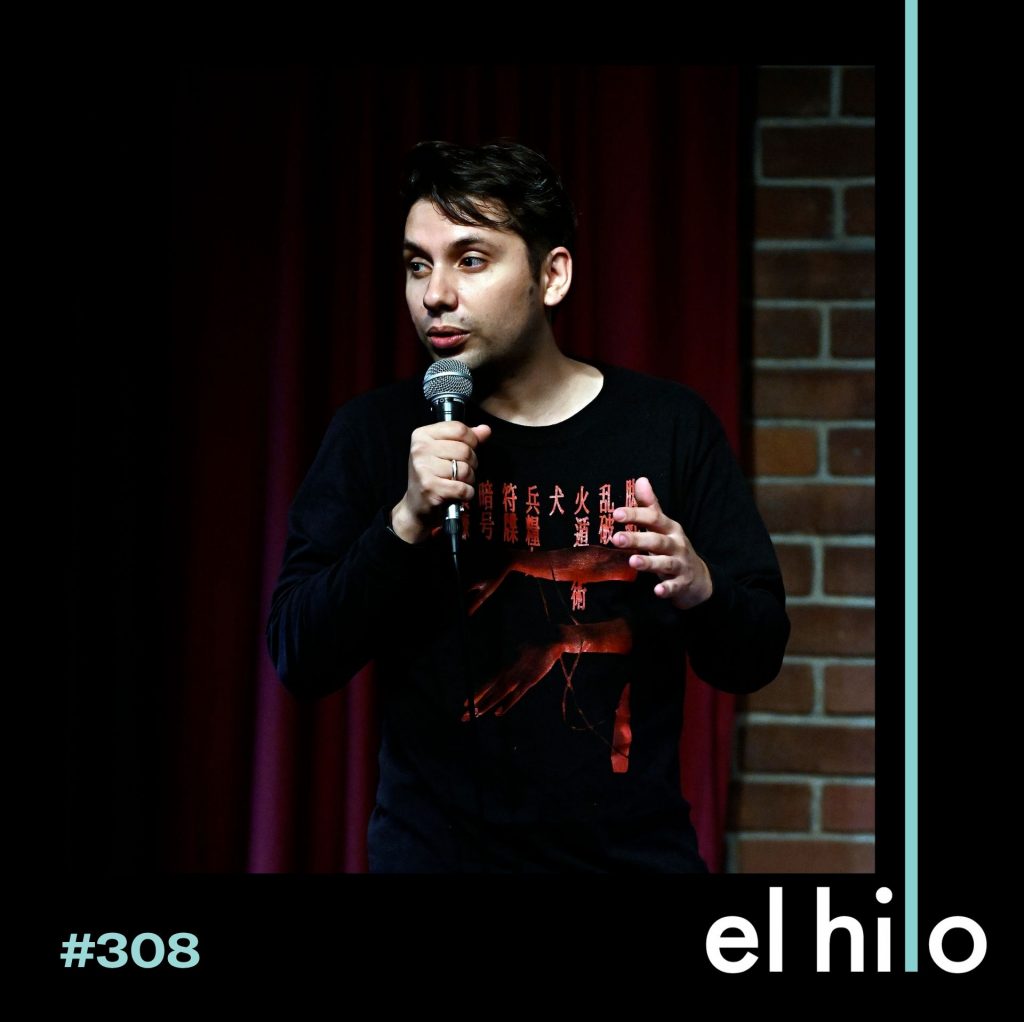

ESCÚCHANOS EN TU DISPOSITIVO MÓVIL