Cuba
Trump
Isla
Estados Unidos
Crisis
Colapso
Petróleo Venezuela
Régimen
Periodistas
Exilio
Desde que Donald Trump decidió bloquear el suministro de petróleo a Cuba, los titulares apocalípticos y los análisis sobre el futuro de la isla vuelven a inundar los medios. En medio de todo ese ruido y esa grandilocuencia, les pedimos a cuatro periodistas cubanos que nos ayudaran a ver la coyuntura a través de sus ojos: Mónica Baró Sánchez, Carlos Manuel Álvarez, Carla Gloria Colomé y Abraham Jiménez Enoa trabajan desde hace años para tratar de traducir una realidad que los afecta en forma directa. Su periodismo ha servido para complejizar la mirada tan obsoleta que muchos siguen teniendo sobre la vida política de la isla, y lo han pagado con la persecución y el exilio. En este episodio hablamos con ellos para enfocar lo que está pasando con Cuba lejos de las caricaturas, pero también para entender la incomodidad que supone no poder descansar en los imaginarios que el resto del mundo ha construido sobre su país.
Créditos:
-
Producción
Eliezer Budasoff, Daniela Cruzat -
Edición
Silvia Viñas -
Verificación de datos
Bruno Scelza -
Producción digital
Samantha Proaño, Franklin Villavicencio, Diego Corzo -
Diseño de sonido y mezcla
Elías González -
Música
Elías González -
Tema musical
Pauchi Sasaki -
Fotografía
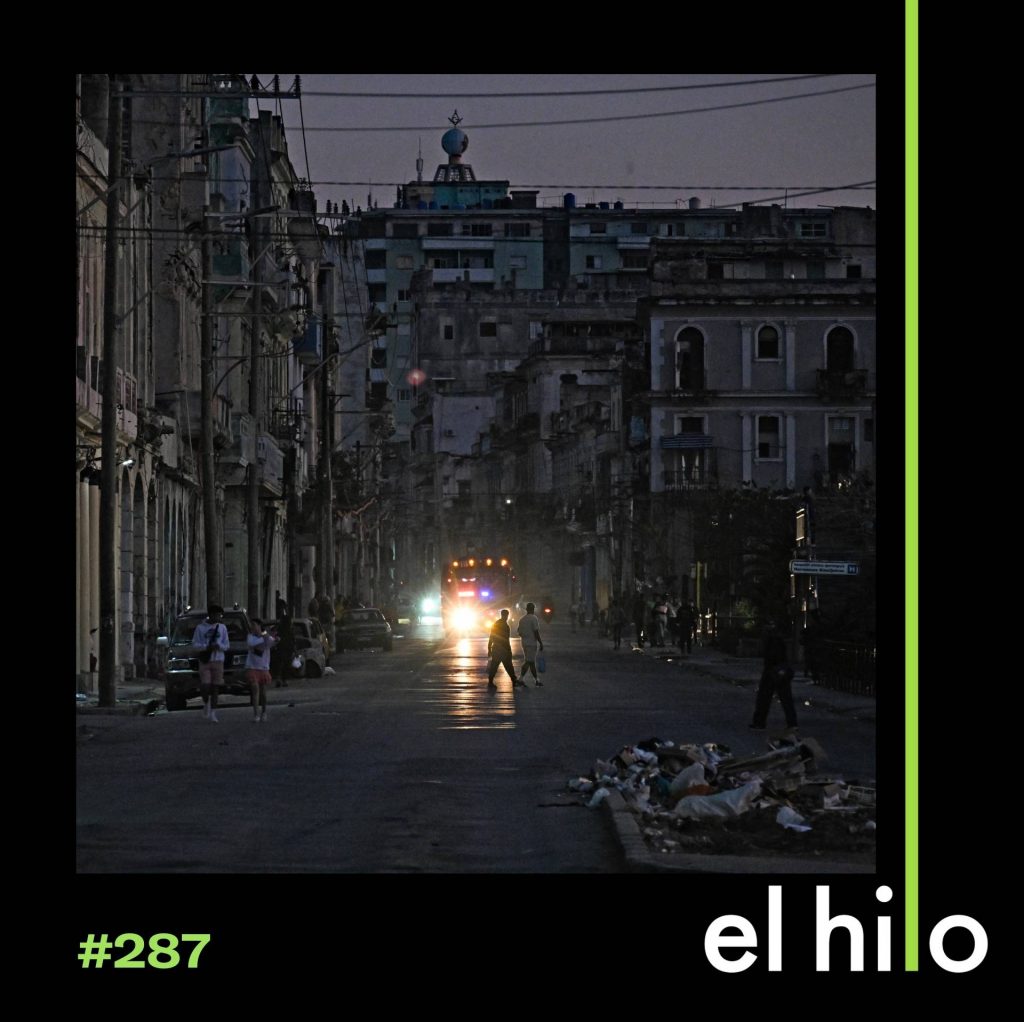
Getty Images / Yamil Lage
Etiquetas:
Transcripciones:
Transcripción:
Eliezer: Hace algunos días, un fin de semana lleno de titulares y análisis sobre Cuba, decidí escribirles por Whatsapp a cuatro periodistas cubanos que conozco desde hace tiempo:
Mónica, querida, mil gracias por responder al toque… Carlos, querido, muchísimas gracias por responder… Carla, querida, hola, ¿cómo estás?… Abraham, hermano, ¿cómo va todo? Muchas gracias por responder. Perdón por, por joderte un domingo…
A todos ellos, que son colegas que quiero y que respeto, les dije prácticamente lo mismo:
Después de leer, ¿no? Tantas cosas caricaturescas que salen por izquierda y por derecha, tanta gente que habla sin saber, tanta banalidad, pensé: me gustaría entender y ver lo que está sucediendo a través de los ojos de colegas de Cuba que han trabajado y trabajan seriamente para intentar explicarle las complejidades de su país al resto del mundo. Entre ellos a mí, ¿no?
El mensaje que les mandé, básicamente, era un pedido de ayuda para cubrir mejor la coyuntura cubana, para enfocar la mirada en medio de tanto ruido.
Silvia: Recordemos que, a principios de este año, después de la operación para sacar a Nicolás Maduro del poder, Donald Trump anunció que Venezuela no iba a enviar más petróleo ni dinero a Cuba. Después, a finales de enero, firmó una orden ejecutiva amenazando con imponer más aranceles a los países que mandaran petróleo a la isla. Desde entonces, muchos medios han vuelto a anunciar varias veces el colapso cubano. Y, sobre todo, han revivido narrativas y lugares comunes que se usaron para cubrir tantas otras crisis, como si nada hubiera cambiado en la isla desde la última vez que ellos le prestaron atención.
Archivo audio, Periodista, BBC Mundo: Cuba se acerca a un abismo impredecible.
Archivo audio, Presentadora, Fox Noticias: El presidente Donald Trump quiere terminar el trabajo que sus predecesores intentaron hacer durante casi siete décadas.
Archivo audio, Presentadora, Telesur: El pueblo de Cuba es víctima del más largo y cruel bloqueo económico de la historia. Hoy recrudecido vilmente con el propósito de asfixiar a millones de personas.
Archivo audio, Periodista, BBC Mundo: Largos apagones, basura en las calles y filas eternas para conseguir algunos litros de gasolina.
Archivo audio, Presentadora, Fox Noticias: ¿Ganarán los comunistas este enfrentamiento con los Estados Unidos o no?
Silvia: Los periodistas cubanos que van a escuchar en este episodio tienen varias cosas en común. La primera es que pertenecen a una generación que, hace más o menos una década, le dio vida a nuevos medios independientes en Cuba. Empezaron a cubrir su propia realidad y complejizaron la mirada tan obsoleta y maniquea que tanta gente tenía —y muchos siguen teniendo— sobre la vida política de la isla.
Eliezer: A causa de eso, tienen otra cosa en común: los cuatro están exiliados por la persecución del gobierno cubano. Se tuvieron que ir o no pudieron volver por hacer un periodismo que hubieran querido seguir haciendo en su país. Pero se llevaron la responsabilidad de seguir explicando Cuba como si fuera una carga de origen, y lo siguen haciendo a través de los medios, la literatura o la academia. El problema es que, lejos de la isla, todavía hay gente que prefiere pensar la realidad cubana sin detenerse a considerar lo que significa vivirla.
Mónica Baró: Piensan en Cuba desde España, desde Brasil, desde Estados Unidos. Piensan Cuba desde realidades que no tienen absolutamente nada que ver con Cuba. Y el problema es que la gente en Cuba, ahora mismo, está desesperada. Y la gente piensa Cuba desde la desesperación.
Silvia: Ella es Mónica Baró Sánchez. Mónica se fue del país hace unos cinco años por las amenazas de cárcel del gobierno. Ahora mismo vive en Miami, donde está haciendo un doctorado y sigue escribiendo como periodista independiente.
Mónica: La gente no se da cuenta de que de que ese es tu país, tú tienes familia ahí y que tú temes literalmente por la vida de tu familia, que no se sabe lo que pueda pasar, de lo complejo que es todo, de la violencia también que te he tocado sufrir de ese sistema, de lo manipulado que está todo. De la guerra propagandística que hay tan grande entre intereses que superan al final a la gente.
Abraham Jiménez Enoa: Hola querido, es que estamos desfasados con las siete horas que hay de diferencia.
Eliezer: Abraham Jiménez Enoa vive en Barcelona. Hace algunos años, en 2021, lo entrevistamos para un episodio sobre las protestas masivas que estaban haciendo historia en Cuba. Seis meses después se tuvo que ir porque el hostigamiento del régimen se había hecho insostenible, y había alcanzado a su familia.
Abraham: Lo que pasa con todo esto es que los que siempre terminan pagando las consecuencias son los cubanos, son los ciudadanos de a pie. Mi padre, mi abuelita, el vecino que no tiene que comer, que está atrapado entre las medidas de Trump y está atrapado entre el gobierno cubano, que también le ha hecho históricamente un bloqueo a su propio pueblo y los que pagan todo eso son los cubanos.
Eliezer: Ese domingo le escribí también a Carlos Manuel Álvarez, que vive desde hace algunos años en Nueva York. A Carlos Manuel le prohibieron volver entrar a Cuba en 2022. Pero ya en sus últimos viajes a la isla había sido detenido e interrogado.
Carlos Manuel: Creer que la crisis humanitaria de Cuba empieza con el bloqueo petrolero es es una muestra del desprecio, de la indiferencia que se tiene por la crisis humanitaria cubana per se y cómo la miramos o puede mirarse solo cuando entra en el tablero político de manera explícita los Estados Unidos.
Carla Colomé: Los cubanos no empezamos a vivir de esta forma ayer.
Silvia: Carla Colomé le respondió a Eliezer desde Miami, pero vive también en Nueva York. Hace algunos meses la entrevistamos por una historia sobre la deportación de migrantes en Manhattan que ella había publicado en el diario El País, donde cubre Cuba y comunidades hispanas en Estados Unidos.
Carla: He odiado un poco en estos días la grandilocuencia. He odiado en estos días palabras como: “No sé qué comunista, la caída del experimento socialista del Caribe”. A mí como cubana me cansan ya esas categorías, me cansan ya esos lugares comunes. O sea que ese experimento se agotó hace años. Sabes de verdad que el relato que tú quieres que haya en tu cabeza no existe y para los cubanos no existe desde hace décadas. Entonces, bueno, te decía que Cuba siempre ha sido tanto de los demás y tan poco de nosotros mismos.
Silvia: Bienvenidos a El hilo, un podcast de Radio Ambulante Studios. Soy Silvia Viñas.
Eliezer: Y yo soy Eliezer Budasoff.
Silvia: El episodio de hoy es un poco distinto de lo que hacemos habitualmente. No es la primera vez que hablamos con varias personas para hacer un panorama coral o iluminar una realidad compleja. Pero esta vez, Eliezer les pidió ayuda a colegas cubanos para evitar cualquier respuesta simple. O sea: para que la mirada que tenemos sobre lo que pasa en la isla sea menos distante, menos cómoda.
Eliezer: Para ellos, que tienen que hacer de traductores de una realidad que los afecta en forma directa, es mucho más difícil encontrar un lugar cómodo para pensar lo que está pasando en Cuba ahora mismo. Y parte de este episodio, además de contar esa realidad, busca entender eso: la incomodidad que supone no poder descansar en ninguno de los imaginarios que la gente ha construido sobre tu tierra.
Es 6 de marzo de 2026.
El día que les escribí a Mónica, a Carlos Manuel, a Abraham y a Carla, les dije que quería hacerles las mismas tres preguntas a cada uno. Eran tres puntos de partida para el pedido que les había hecho desde el principio: que me ayudaran a mirar. Para eso, todos tuvieron que hablarme de cuestiones personales, y lo hicieron con generosidad y franqueza.
Eliezer: La primera pregunta es, quería saber si podrías describirme cómo ves la situación ahora mismo en Cuba, ¿no? Y tal vez para que no se vaya tan amplia te preguntaría si hay algún detalle o dato de la realidad que atraviesa la isla ahora mismo que te parezca elocuente sobre el panorama actual, ¿no?
Carla: Hola, Eliezer, ¿cómo estás? Voy a tratar de acá de ensayar algunas de las cosas que me dices. Y lo estoy haciendo básicamente desde el portal de la casa de mi papá. Eso me suena tan raro.
Eliezer: El primer audio que me mandó Carla cuando le hice esta pregunta, la primera, tenía más de 30 minutos. Pude escuchar cómo caminaba y pensaba en voz alta, pero también entender cómo le dolían las cosas que me decía, porque era una catarsis.
Carla: Lo que me suena raro es que estoy en el portal de la casa de mi papá en Miami y para mí ahí está todo. Para mí está, o sea, mi drama personal, que es el drama de tanta gente hoy. Mi papá vive en los sures de Miami, Homestead. Es un un lugar, bueno, donde hay muchos sembrados de maíz, de fresas. Aquí vive mi papá desde hace tres años, cuando, bueno, finalmente decidimos, en el gran éxodo cubano de los últimos años, finalmente decidimos que él también debía irse. Fue algo que nunca tuvo en su mente, que tuvo otras posibilidades de salir de Cuba en años anteriores, incluso en crisis fuertes anteriores, como la crisis del período especial. Y mi papá nunca, nunca quiso. Básicamente vino por sus hijos, como le ha pasado a muchísima gente de su generación. Mi papá tiene 67 años, la edad de la revolución. O sea que hay un arco ahí importante, donde lo ha vivido todo, ¿no?
Entonces, bueno, yo te decía. ¿no? Estoy acá sentada y respondo estas preguntas desde el portal de un lugar donde no se suponía que estuviéramos, en un apartamento donde no se suponía que viviera, y menos a esta edad. Y todavía hoy, cuando hacen tres años de esa llegada, todavía hoy a mí me es difícil asimilar a mi papá en otro lugar que no sea nuestra casa de toda la vida, donde crecimos en una pequeña playa de pescadores al oeste de La Habana. Eso es un drama, o sea, se dice fácil. Se normaliza porque los cubanos se han estado yendo desde hace tantas décadas, pero no es normal.
Mónica: La gente sigue yéndose de Cuba masivamente. En los últimos cinco años se fueron unos 2.8 millones de personas y la mayoría de la gente que queda en Cuba desea irse o conoce gente que desea irse. Lo que pasa es que irse, por supuesto, implica una serie de recursos que no todo el mundo tiene porque emigrar es caro.
Eliezer: Un día antes de mandarme sus audios finales para este episodio, mientras acompañaba a su hermana y sus sobrinas en un mall de Miami, Mónica me dio una clase acelerada de historia cubana contemporánea en 19 audios de Whatsapp. El punto de partida era este presente, que condensó después en algunos datos inapelables.
Mónica: La población está muy envejecida, Cuba es el país más envejecido de América Latina y el Caribe: la tercera parte de la población aproximadamente tiene más de 60 años y la cifra de muertes supera la cifra de nacimientos desde hace unos diez años. Ese es el país que tenemos ahora mismo. Un país donde no hay futuro, donde la gente no ve futuro y donde el gobierno, quienes están tomando las decisiones por el pueblo entero, no están ofreciendo ningún tipo de solución a la crisis ni nada que a la gente le haga pensar que se va a salir de esto en algún momento.
Eliezer: Creo que la forma más simple de formular esta pregunta es, ¿estás más preocupado o más alerta que de costumbre? Y ¿por qué? O sea, ¿qué es lo que te hace pensar que las cosas podrían ser distintas de otra crisis? ¿O no?
Carlos Manuel: Yo me di cuenta que la situación era distinta, que tenía matices diferentes dentro de la carencia general cubana. Hace unos diez días, quizás no con el anuncio del bloqueo petrolero de Washington, ya eso había sucedido, sino cuando el gobierno cubano anunció que las reservas de combustible se iban a agotar en unos pocos días y que necesitaban tomar ciertas medidas todavía mucho más drásticas. La movilidad del país se redujo drásticamente dentro de una movilidad que ya de por sí es muy deficiente. Hubo un ejemplo muy concreto: yo estaba en Mérida con mi madre de visita en un lugar neutro.
Silvia: La ciudad de Mérida, en México, es un sitio donde Carlos Manuel y su madre pueden encontrarse, porque ninguno de los dos puede visitar el país donde vive el otro.
Carlos Manuel: Yo no puedo volver a Cuba, tengo prohibida la entrada. Ella no tiene visa para Estados Unidos y solemos encontrarnos ahí. Esta es la segunda vez que lo hacemos desde que yo salí de Cuba.
Eliezer: El problema fue cuando su madre tuvo que volver. La familia de Carlos Manuel no es de La Habana. Para llegar a su casa, su mamá tenía arreglado un transporte que la fuera a recoger, pero de pronto el gobierno cubano anunció medidas extremas.
Carlos Manuel: No había combustible, no podían ir a recogerla al aeropuerto. Tratamos de buscar por varios lugares y realmente nadie tenía gasolina para moverse. Los carros estatales además, no podían hacer ningún tipo de ruta por fuera de la establecida. De su horario laboral o dentro de los deberes propiamente laborales.
Silvia: Es decir, si un conocido, por ejemplo, iba a recoger a su mamá al aeropuerto y se cruzaba con la policía, tenía que explicar dónde había conseguido el combustible. Y podía ir preso.
Carlos Manuel: Yo no recuerdo una restricción tan, tan específica, tan pegada a la desesperación más absoluta como esa. En ese ejemplo pequeño pero muy revelador, a mí me pareció que estábamos dando otro paso más en un fondo de miseria y de escasez que ya desde antes es bastante límite, ¿no?
Mónica: A mí me ha llamado la atención, ¿no? Que la gente que va de visita o que ha estado yendo de visita en los últimos tres o cuatro años, siempre dice eso: “Empeora por día, empeora por días, empeora por días”. Y una se pregunta: “¿Qué tanto más puede empeorar ese país? ¿Qué tanto más puede pasar, qué tan grave puede llegar a ser la situación?”. Y a veces bromeamos con eso y decimos que vamos a llegar a la comunidad primitiva. O a veces decimos que los taínos en la comunidad primitiva estaban mejores que los cubanos ahora…
Eliezer: El humor, me dijo Mónica, es un recurso de supervivencia que todavía les queda a los cubanos para no enloquecer ante una realidad tan cruda.
Silvia: Pero la idea de la comunidad primitiva no está muy alejada de la realidad. Abraham, por ejemplo, le contó a Eliezer una escena que, como dijo en sus audios, sirve para describir a un país que está a punto de volverse un no-país. Fue algo que le pasó en febrero, cuando quiso llamar a su papá por su cumpleaños.
Abraham: Y bueno, yo quería felicitarlo, ¿no? Porque, bueno, de hecho mi padre no lo veo hace más de de cuatro años, el tiempo que llevo en el exilio, porque bueno, yo no he podido regresar, mi madre ha podido venir aquí y yo la he podido ver, ¿no? Pero mi padre no he podido verlo porque además está enfermo.
Silvia: El papá de Abraham, como el de Carla, tiene la edad de la revolución. Nació en 1959.
Abraham: Mi padre, para poder hablar con él tuvo que dejar su teléfono cargado durante casi sin usar su teléfono durante casi 15 o 18 horas. Las horas que no tuvo electricidad en su barrio. Mi padre vive en un barrio bastante bueno de La Habana. Y así todo, ahí no tenía electricidad. Cuando yo lo llamo era incluso el mediodía y no veo mi padre porque está dentro de su casa. No hay electricidad. La casa de mi padre es como un interior y entonces, casi metafóricamente, él me veía a mí y yo no lo veía a él.
Eliezer: Para que pudiera verle la cara, su padre tuvo que salir al portal de la casa.
Abraham: Y ahí comienzo a verlo y me encuentro a un padre mío. Mucho más demacrado, mucho más triste, más flaco, fue muy impactante verlo. Llevaba mucho tiempo sin verle la cara y fue como un piñazo en el estómago. Y luego estamos conversando, actualizándonos y tal. Y mi padre me dice: “No, mírate, porque está en el portal”. Era mediodía y me dice: “Te voy a enseñar el barrio, a ver si te acuerdas”. Y vira la cámara y me empezó a enseñar el barrio y ahí yo vi Cuba, ¿no? Y yo empecé a ver todo lo que, bueno, la situación del país: niños que no podían ir a la escuela y estaban jugando en la calle entre basura, porque bueno, los camiones de la basura no pueden pasar a recoger la basura. Gente cocinando en medio de las aceras con madera. Pasó en ese momento una señora que yo conozco que era la del CDR, Comité de Defensa de la Revolución, una escena durísima con una silla que parece que iba a romper para poder hacer leña. La señora que chivateaba a todo el mundo en el barrio y tal. Gente en los balcones viendo pasar la vida. Toda la gente como caras muy tristes y tal. Y en uno de esos balcones, veo a un vecino que era famoso en el barrio porque él cazaba gatos de noche, ¿no? En Cuba en esa época, bueno, parece una cosa surreal, pero se cazaba gato para poder comer.
Silvia: Esa época a la que se refiere Abraham, la de su infancia, es el Período especial, a principios de los 90, cuando la caída de la Unión Soviética y el llamado Bloque Socialista hizo que Cuba perdiera el suministro de petróleo y el 80% de su comercio exterior. Hubo apagones masivos y una escasez extrema de alimentos y combustible. Abraham recordó que el Estado les daba pollitos y criaban cerdos en las casas para poder comer.
Abraham: Entonces todo eso me vino en la cabeza a través de lo que yo estaba viendo. Entonces yo creo que esa llamada resume un poco el panorama y la tristeza y el dolor de, de un país que está totalmente al borde de ser un no-país, ¿no?
Eliezer: Hacemos una pausa y volvemos.
Cuando empecé a escribirles a los periodistas cubanos para tratar de ver la coyuntura a través de sus ojos, me quedó claro que era un ejercicio casi imposible. Primero porque nadie consigue imaginar un desenlace a la situación de Cuba, ¿qué forma puede tomar? Pero, sobre todo, porque es muy, muy difícil tratar de ponerse en esos zapatos. La segunda pregunta que les hice era sobre eso: quería saber cómo hacían para pararse frente a todo lo que estaba en juego.
Vos como, como los otros colegas y las compañeras a las que les he mandado estas preguntas, son gente que obviamente quiere a su país, que quiere a su comunidad, que está preocupada por el futuro colectivo, de sus seres queridos, de sus amigos, de sus compatriotas y a la vez están exiliados por la persecución del régimen. No puedes seguir haciendo periodismo en tu país. No puedes volver en este momento y has peleado por un cambio. Y por otro lado tienes un montón de gente que caricaturiza la situación por izquierda y por derecha, ¿no? Y que se cree en el derecho de pontificar sobre lo que deberían hacer o no deberían hacer los cubanos, ¿no? ¿Qué piensas cuando ves todos estos discursos divorciados de la realidad de una realidad que tú conoces tan, eh, de forma tan cercana?
Carlos Manuel: A mí con la segunda pregunta llego a los mismos callejones sin salida que tú. En primer lugar no veo una salida, no vislumbro una salida, muchísimo menos una salida que yo pudiese celebrar. Porque yo no creo que desde Trump, yo no creo que el fascismo pueda llevar democracia a ninguna parte El fascismo no puede liberar, no puede entregar a los demás lo que no tiene para sí mismo. Ahora bien, no fue el fascismo el que nos puso en el lugar de tener que apostar porque un fascista nos libere. Eso es responsabilidad del castrismo y muchos cubanos a lo largo de décadas peleamos, hablamos, gritamos para que una situación así no sucediese.
Carla: Ahora mismo hay una bulla muy grande donde todo el mundo obviamente habla de Cuba, o sea, es increíble, de verdad, lo atractivo que sigue siendo ese país hoy y la gente vive un mundo, vive una Cuba que ya no es la que es, en la que ni siquiera se reconocen ya los cubanos. Pero de la isla hacia afuera, el mundo sigue habitando ese país, ese país de su memoria, ese país de la izquierda, ese país del discurso y de la ideología que en algún punto, o sea, colapsó con todos sus símbolos dentro.
Mónica: Cuando tú estás en una posición de privilegio, cuando tú estás más o menos con una circunstancia de vida normal, claro que tú vas a ser políticamente correcto. Cuando tú tienes tu vida más o menos resuelta, tú vas a ser muy bueno y tú vas a tener los discursos más hermosos del mundo. Es muy difícil que tú le pidas a gente que está desesperada, que está viendo cosas horribles, que está viviendo una situación súper triste, que sea políticamente correcta. Esto no se trata de dónde está la razón, sino de comprender, de comprender. Porque a veces dónde está la razón no es donde está la justicia. A mucha gente en Cuba ahora mismo le da igual si llegan americanos o si llegan marcianos a sacar el país de esa crisis.
Carlos: No me parece, y esto es un problema gravísimo en el caso cubano, que nadie deba relativizar la injusticia ajena en beneficio de su propia lucha. Eso exactamente pasa con los cubanos, tristemente, de un lado y de otro. Vemos cómo tanta comunidad de la izquierda occidental, intelectuales, activistas, políticos, relativizan la desgracia propia de la situación en Cuba porque no les es funcional para sus propios intereses políticos. Al mismo tiempo, por supuesto, es algo que pasa también dentro de ciertas zonas del exilio cubano que creen que callando, mirando de lado a los crímenes, a la ilegitimidad y desde mi punto de vista, al fascismo galopante del trumpismo, pueden ganarse los favores porque es funcional para la causa de la liberación en Cuba.
Abraham: Estamos rodeados por gente que está absolutamente anestesiada, tanto derecha e izquierda, y entonces es muy difícil, ¿no? Los que critican el régimen cubano quieren que Trump entre con todas las tropas y bueno y se robe el país como si fuéramos, estuviéramos en el siglo 19, en el siglo 18, ¿no? Y los de izquierda que con todo esto de los aranceles y el petróleo y, bueno, de hecho hay como una flotilla ahora que han armado, que en un mes saldrá de aquí de Europa a entrar ayuda y víveres. Y claro, toda ayuda es bienvenida porque son gente que se está muriendo, es un país que está muriendo de hambre y, al menos yo no soy la persona para criticar una vida, porque yo creo que son cosas distintas. Pero claro, los que mandan esa flotilla durante décadas no han aceptado y no han levantado la voz para criticar y darse cuenta que Cuba es una dictadura, que ahí se violan todos los derechos humanos como en los peores regímenes, ¿no? Entonces es como sí, alzas la voz cuando, porque es un problema de antiimperialismo, pero no reconoces la falta de derechos de esa, de esa ciudadanía, ¿no?
Mónica: El régimen cubano no quiere ceder y utiliza ese sufrimiento del pueblo como coartada para decir: “Mira lo malo que es Estados Unidos”. Entonces, a nivel internacional el régimen cubano es una víctima de Estados Unidos y mucha gente que está en contra de Estados Unidos, más alineado con otras agendas, se pone del lado del régimen porque entiende el mundo en esos términos, ¿no? Como si los pueblos no existieran y solamente existieran los macropoderes. Y dentro de Cuba, Cuba es un verdugo. Es complicado cuando la gente ve que el mundo defiende al régimen que lo maltrata.
Carla: Todo esto está sucediendo o sea, todo se está debatiendo de toda esta Cuba, cuando hay más de mil presos políticos en cárceles, cuando hay gente que está siendo apresada en medio de todo esto. No hay gasolina para nada, no hay gasolina para las ambulancias en los hospitales, pero sí hay gasolina para las patrullas policiales que están parqueadas a las afueras de las casas de muchos disidentes, para no dejarlos salir. Y esa sigue siendo una realidad, porque esa es donde el gobierno se permite ser él.
Abraham: El Gobierno, un país que no tiene combustible, que no tiene comida, que, que no tiene nada, apresa a dos chicos que lo que hacen son subir videos por criticar al gobierno, ¿no? Es un país que no tiene recursos, pero los pocos recursos que le quedan lo destina a la represión.
Silvia: Hacemos una última pausa y volvemos.
Eliezer: Estamos de vuelta en El hilo.
Carla: Hoy le dije a un amigo: “Lo primero que haría y lo primero que haré, si en algún punto me permiten entrar a Cuba es no llegar a La Habana”. Si me lo permiten no me iría a La Habana. No quiero ir a La Habana nada, quiero desembarcar directamente en Oriente.
Silvia: Cuando Carla dice Oriente se refiere al extremo oriental de Cuba, lejos de La Habana y de su centralidad política. Es una región montañosa, más rural. Ahí las crisis económicas suelen sentirse con más intensidad.
Carla: Quiero entender a Cuba desde esa gente que son las que siempre las ha pasado tremendamente mal.
Mónica: Hay mucha gente que está ahora pensando en nosotros porque Estados Unidos, porque Donald Trump emitió la orden ejecutiva, pero, o sea, nosotros venimos padeciendo desde hace tanto tiempo, tanto tiempo, tanto tiempo y hasta que Estados Unidos no hace algo, es como que el mundo no reacciona, no reacciona.
Carla: Ahora mismo que están todos los periodistas tratando de ir a La Habana, de paso por La Habana, los fotógrafos, los videógrafos y demás, ¿dónde están los periodistas cubanos? ¿Dónde estamos nosotros que también queremos ir a ser testigo de lo que está pasando en nuestro país? Queremos ir a buscar las historias, queremos no solo decir que en Cuba hay hambre, represión y apagones. Queremos entender y traducirle a la gente qué significa tener hambre, qué significa vivir sin luz y qué significa estar reprimido. Es algo muy diferente, es fácil decir que en Cuba la gente vive así, pero ¿cómo tú traduces de verdad eso en una historia? Estamos impedidos de hacer eso, estamos completamente atados de pies y manos porque el país siempre ha sido de los demás y nunca de los cubanos.
Abraham: Es lo más difícil hacer periodismo ahora. Bueno, por la situación y por el exilio, ¿no? Que te distancia de la fuente y te distancia de tocar, palpar, ver la realidad con tus propios ojos. Tienes que empezar a ver a través de los ojos de otras personas y eso siempre, bueno, marca un sesgo y marca una manera distinta de cómo se entiende el periodismo, pero que no queda de otra que seguir contándolo de esa manera, porque si no, ¿quién lo va a contar?
Mónica: Es difícil ver a gente, a periodistas, yendo a mi país a contar lo que está pasando y yo no poder ir. Es difícil y una se cuestiona todo el tiempo: “¿Debí haberme ido? ¿Debí haber aguantado más? ¿Por qué no aguanté más? ¿Por qué no resistí más?”. Pero no aguanté más. No aguanté más. Realmente no, no pude. Y eso es algo con lo que una tiene que vivir.
Carla: De más está decirte que deseo lo mejor para mi país, que es desear lo mejor para mí, desear lo mejor para mi papá, desear lo mejor para las decenas de personas que entrevisto semanalmente y que viven con un nudo en la garganta. Lo mismo aquí, que en Cuba, porque me gusta resaltar una idea: el problema cubano no termina cuando te vas de Cuba. El drama y el dolor de los cubanos no termina cuando te vas. Lo seguimos cargando, lo seguimos arrastrando, seguimos nos ocupando de nuestras familias en Cuba, seguimos ocupándonos de nuestros padres y lo naturalizamos, pero no es normal, Eliezer, no es normal que vivamos como pueblo así. Que tengamos que, o sea, que estemos cargando décadas y décadas de una tristeza que te cambia el carácter, que te moldea como persona, que te hace, o sea, a veces te vuelve cínico ante el mundo, es muy duro de verdad, y nada. Y demás está decir que espero, o sea, en cualquier cosa que sea pronto, que sea ya, que el martirio de los cubanos se acorte, que haya un país al que podamos regresar, que quiero regresar a mi casa, que quiero regresar a mi playa, que quiero regresar a los lugares donde crecí, que quiero habitar el pueblo otra vez, es lo que más deseo.
Abraham: Ahora mismo yo estoy en Barcelona y estoy en Barcelona, no por decisión mía. Yo no puedo regresar a mi país y yo no quiero que de pronto yo pueda regresar a mi país, porque de pronto mi país fue liberado y alcanzó la libertad. Pero cuando yo regrese, mi país no tenga familia, no tenga amigos, no tenga a nadie, porque, bueno, se han muerto o lo que sea. Se han muerto de hambre o se han muerto por una bomba que le cae en la cabeza.
Mónica: Es muy difícil dar respuesta a estas preguntas, así como de manera muy fría, ¿no? Sí, es difícil, es difícil abrir esa herida y tratar de ser racional. Entonces nada, espero haberte ayudado he tratado de ser lo más honesta posible con con la respuesta y compartirte no sólo respuestas sino también mis preguntas con lo que está pasando. Te mando un abrazo grande.
Abraham: Te mando un abrazo grande. Besos
Carla: Espero que te sirva. Gracias por, nada, por escucharme.
Carlos: Te mando un abrazo grande.
Silvia: A finales de febrero, la administración de Trump dijo que permitirá la reventa de petróleo venezolano a Cuba. Pero con condiciones: solo pueden hacerlo empresas de Estados Unidos y únicamente venderle al sector privado de la isla, no al gobierno.
Y esta semana, el presidente de Cuba, Miguel Díaz- Canel, hizo un llamado urgente a reformar el modelo económico. El régimen publicó un decreto que autoriza la creación de empresas mixtas, o sea público-privadas. Es un giro significativo después de décadas de restricciones a la propiedad privada.
Eliezer: Este episodio fue producido por mí y Daniela Cruzat. Lo editó Silvia. Bruno Scelza hizo la verificación de datos. El diseño de sonido es de Elías González y la música es de él y Rémy Lozano.
El resto del equipo de El hilo incluye a Jesús Delgadillo, Samantha Proaño, Franklin Villavicencio, Diego Corzo, Natalia Ramírez, Paola Alean, Camilo Jiménez Santofimio, Elsa Liliana Ulloa y Daniel Alarcón. Carolina Guerrero es la CEO de Radio Ambulante Studios. Nuestro tema musical lo compuso Pauchi Sasaki.
El hilo es un podcast de Radio Ambulante Studios. Si valoras el periodismo independiente y riguroso, te pedimos que te unas a nuestras membresías. América Latina es una región compleja y nuestro periodismo necesita de oyentes como tú. Visita elhilo.audio/donar y ayúdanos con una donación.
Si quieres profundizar sobre el episodio de hoy, suscríbete a nuestro boletín de correo entrando a elhilo.audio/boletin. Lo enviamos cada viernes.
También puedes seguirnos en nuestras redes sociales. Estamos en Instagram, X, BlueSky, Facebook y Threads. Nos encuentras como @elhilopodcast. Déjanos allí tus comentarios y etiquétanos cuando compartas los episodios.
Gracias por escuchar.
Transcript:
The following English translation was generated with the assistance of artificial intelligence and has been reviewed and edited by our team for accuracy and clarity.
Eliezer: A few days ago, on a weekend full of headlines and analysis about Cuba, I decided to message four Cuban journalists I’ve known for a long time on WhatsApp:
Mónica, dear, thank you so much for responding right away… Carlos, dear, thank you so much for responding… Carla, dear, hi, how are you?… Abraham, brother, how’s everything going? Thanks so much for responding. Sorry for bothering you on a Sunday…
To all of them — colleagues I care about and respect — I said practically the same thing:
After reading, right? So many caricature-like things coming from the left and the right, so many people talking without knowing anything, so much banality, I thought: I’d like to understand and see what’s happening through the eyes of Cuban colleagues who have worked and continue to work seriously to try to explain the complexities of their country to the rest of the world. Including me, right?
The message I sent them was basically a request for help to better cover the Cuban situation, to focus our gaze amid so much noise.
Silvia: Let’s recall that, at the beginning of this year, after the operation to remove Nicolás Maduro from power, Donald Trump announced that Venezuela would no longer send oil or money to Cuba. Later, at the end of January, he signed an executive order threatening to impose additional tariffs on countries that sent oil to the island. Since then, many outlets have repeatedly announced the imminent collapse of Cuba. And, above all, they have revived narratives and clichés that were used to cover so many other crises, as if nothing had changed on the island since the last time they paid attention to it.
Audio clip, Journalist, BBC Mundo: Cuba is approaching an unpredictable abyss.
Audio clip, Host, Fox Noticias: President Donald Trump wants to finish the job his predecessors tried to accomplish over nearly seven decades.
Audio clip, Host, Telesur: The people of Cuba are victims of the longest and most cruel economic blockade in history. Today, it has been vilely intensified with the purpose of suffocating millions of people.
Audio clip, Journalist, BBC Mundo: Long blackouts, garbage in the streets, and endless lines to get a few liters of gasoline.
Audio clip, Host, Fox Noticias: Will the communists win this confrontation with the United States, or not?
Silvia: The Cuban journalists you are about to hear in this episode have several things in common. The first is that they belong to a generation that, roughly a decade ago, gave life to new independent media outlets in Cuba. They began covering their own reality and added complexity to the outdated, Manichean view that so many people had — and many still have — of the island’s political life.
Eliezer: Because of that, they share something else in common: all four are in exile due to persecution by the Cuban government. They had to leave, or were unable to return, for doing the kind of journalism they would have preferred to continue practicing in their country. But they carried with them the responsibility of continuing to explain Cuba — as if it were a burden of origin — and they still do so through media, literature, and academia. The problem is that, far from the island, there are still people who prefer to think about Cuban reality without stopping to consider what it means to actually live it.
Mónica Baró: They think about Cuba from Spain, from Brazil, from the United States. They think about Cuba from realities that have absolutely nothing to do with Cuba. And the problem is that the people in Cuba, right now, are desperate. And people are thinking about Cuba from that desperation.
Silvia: She is Mónica Baró Sánchez. Mónica left the country about five years ago due to the government’s threats of imprisonment. Right now she lives in Miami, where she is pursuing a doctorate and continues writing as an independent journalist.
Mónica: People don’t realize that this is your country, that you have family there, and that you’re literally afraid for your family’s life — that no one knows what might happen, how complex everything is, the violence that you’ve also had to endure from that system, how manipulated everything is. The massive propaganda war between interests that ultimately overshadow the people.
Abraham Jiménez Enoa: Hi there, we’re out of sync with the seven-hour time difference.
Eliezer: Abraham Jiménez Enoa lives in Barcelona. A few years ago, in 2021, we interviewed him for an episode about the mass protests that were making history in Cuba. Six months later he had to leave because the regime’s harassment had become unbearable and had extended to his family.
Abraham: What happens with all of this is that the ones who always end up paying the consequences are the Cubans, the ordinary citizens. My father, my grandmother, the neighbor who has nothing to eat, who is trapped between Trump’s measures and the Cuban government — which has also historically imposed a blockade on its own people — and the ones who pay for all of that are the Cubans.
Eliezer: That Sunday I also wrote to Carlos Manuel Álvarez, who has lived in New York for a few years now. Carlos Manuel was banned from re-entering Cuba in 2022. But even during his last visits to the island, he had been detained and interrogated.
Carlos Manuel: Believing that Cuba’s humanitarian crisis begins with the oil blockade is a sign of the contempt, the indifference toward Cuba’s humanitarian crisis in and of itself — and how we view it, or can only view it, when the United States explicitly enters the political picture.
Carla Colomé: Cubans didn’t start living this way yesterday.
Silvia: Carla Colomé responded to Eliezer from Miami, though she also lives in New York. A few months ago we interviewed her about a story she had published in the newspaper El País about the deportation of migrants in Manhattan, where she covers Cuba and Hispanic communities in the United States.
Carla: I’ve been a little put off these past few days by the grandiloquence. I’ve been put off by phrases like: “The fall of the socialist experiment in the Caribbean” or “some kind of communist whatever.” As a Cuban, I’m tired of those categories, tired of those clichés. That experiment ran out of steam years ago. You know that the narrative you want to have in your head doesn’t exist, and for Cubans it hasn’t existed for decades. So, as I was saying — Cuba has always belonged too much to everyone else and too little to Cubans themselves.
Silvia: Welcome to El hilo, a podcast from Radio Ambulante Studios. I’m Silvia Viñas.
Eliezer: And I’m Eliezer Budasoff.
Silvia: Today’s episode is a little different from what we usually do. It’s not the first time we’ve spoken with several people to create a chorus of perspectives or illuminate a complex reality. But this time, Eliezer asked Cuban colleagues for help to avoid any simple answers. In other words: to make our view of what’s happening on the island less distant, less comfortable.
Eliezer: For them — people who have to act as translators of a reality that affects them directly — it is much harder to find a comfortable place from which to think about what’s happening in Cuba right now. And part of this episode, beyond telling that story, seeks to understand exactly that: the discomfort of not being able to rest in any of the imaginaries that people have constructed about your homeland.
It is March 6, 2026.
The day I wrote to Mónica, Carlos Manuel, Abraham, and Carla, I told them I wanted to ask each of them the same three questions. They were three starting points for the request I had made from the beginning: to help me see. To do that, they all had to speak to me about personal matters, and they did so with generosity and candor.
Eliezer: The first question is — I wanted to know if you could describe for me how you see the situation in Cuba right now, right? And maybe, so it doesn’t get too broad, I’d ask whether there is some specific detail or piece of reality that the island is living through right now that you find particularly telling about the current picture, right?
Carla: Hi, Eliezer, how are you? I’m going to try to sketch out some of the things you’re asking me about. And I’m basically doing it from my dad’s porch. That sounds so strange to me.
Eliezer: The first audio Carla sent me when I asked her this question — the first one — was more than 30 minutes long. I could hear her walking and thinking out loud, but also understand how much the things she was telling me hurt her, because it was a catharsis.
Carla: What sounds so strange is that I’m on my dad’s porch in Miami, and for me, everything is there. I mean, my personal drama — which is the drama of so many people today. My dad lives in the southern suburbs of Miami, in Homestead. It’s a place, well, where there are a lot of cornfields, strawberry fields. My dad has lived here for three years, since, well, we finally decided — in the great Cuban exodus of recent years — that he, too, should leave. It was something he never imagined; he had other chances to leave Cuba in previous years, even during earlier severe crises, like the Special Period. But my dad never, ever wanted to. He basically came for his children, as has happened to so many people of his generation. My dad is 67, the same age as the Revolution. So there’s an important arc there, in which he’s lived through everything, right?
So, well, as I was saying, right? I’m sitting here, answering these questions from the porch of a place where we were never supposed to be, in an apartment where I was never supposed to live — and certainly not at this age. And even today, three years after that arrival, I still find it hard to picture my dad anywhere other than our lifelong home, where we grew up on a small fishing beach on the western outskirts of Havana. That is a tragedy — it’s easy to say, it rolls off the tongue. It gets normalized because Cubans have been leaving for so many decades, but it’s not normal.
Mónica: People keep leaving Cuba en masse. In the last five years, about 2.8 million people have left, and the majority of those who remain in Cuba want to leave or know someone who wants to leave. The thing is, leaving, of course, requires a set of resources that not everyone has, because emigrating is expensive.
Eliezer: The day before she sent me her final audio messages for this episode — while she was accompanying her sister and nieces at a mall in Miami — Mónica gave me a crash course in contemporary Cuban history across 19 WhatsApp voice messages. The starting point was this present moment, which she then condensed into a few inescapable facts.
Mónica: The population is very elderly. Cuba is the most aged country in Latin America and the Caribbean: roughly one-third of the population is over 60, and the death toll has exceeded the birth rate for about ten years. That is the country we have right now. A country with no future, where people see no future, and where the government — those making decisions on behalf of the entire people — is offering no kind of solution to the crisis or anything that would make people think this is going to get better at some point.
Eliezer: I think the simplest way to frame this question is: Are you more worried or more on edge than usual? And why? In other words, what makes you think things could be different from another crisis? Or not?
Carlos Manuel: I realized the situation was different, that it had distinct nuances within Cuba’s general state of deprivation. About ten days ago — not necessarily when Washington announced the oil blockade, since that had already happened — but when the Cuban government announced that fuel reserves were going to run out in just a few days and that they needed to take even more drastic measures. The country’s mobility was drastically reduced, within a mobility that was already deeply deficient. There was one very concrete example: I was in Mérida with my mother, visiting in a neutral location.
Silvia: The city of Mérida, in Mexico, is a place where Carlos Manuel and his mother can meet, because neither of them can visit the country where the other lives.
Carlos Manuel: I can’t go back to Cuba — I’m banned from entering. And she doesn’t have a visa for the United States. We usually meet there. This was the second time we’ve done that since I left Cuba.
Eliezer: The problem came when his mother had to return. Carlos Manuel’s family is not from Havana. To get home, his mother had arranged for a car to pick her up, but suddenly the Cuban government announced extreme measures.
Carlos Manuel: There was no fuel — they couldn’t go pick her up at the airport. We tried searching in several places and truly no one had gasoline to get around. State vehicles, moreover, could not make any route outside their established one — their work schedule or strictly job-related duties.
Silvia: Meaning that if an acquaintance, for example, went to pick up his mother at the airport and was stopped by the police, they would have to explain where they got the fuel. And they could go to prison.
Carlos Manuel: I don’t recall a restriction so, so specific, so rooted in absolute desperation as that one. In that small but very revealing example, it seemed to me that we were taking yet another step further into a depth of misery and scarcity that was already, even before, quite extreme, right?
Mónica: What has struck me, right? People who go to visit or who have been visiting over the last three or four years always say the same thing: “It gets worse by the day, worse by the day, worse by the day.” And you ask yourself: “How much worse can that country get? How much more can happen, how serious can the situation become?” And sometimes we joke about it and say we’re going to end up back in a primitive society. Or sometimes we say that the Taíno people in their primitive society were better off than Cubans are now…
Eliezer: Humor, Mónica told me, is a survival resource that Cubans still have to keep from going mad in the face of such a harsh reality.
Silvia: But the idea of a primitive society is not that far from reality. Abraham, for example, told Eliezer about a scene that, as he said in his audio messages, serves to describe a country on the verge of becoming a non-country. It happened in February, when he wanted to call his father on his birthday.
Abraham: And well, I wanted to wish him a happy birthday, right? Because, actually, I haven’t seen my father in more than four years — the time I’ve been in exile — because I haven’t been able to go back, and my mother has been able to come here and I’ve been able to see her, right? But my father I haven’t been able to see, also because he’s sick.
Silvia: Abraham’s father, like Carla’s, is the same age as the Revolution. He was born in 1959.
Abraham: My father, in order to talk with me, had to keep his phone charged for almost — barely using his phone — for almost 15 to 18 hours. The hours when there was no electricity in his neighborhood. My father lives in a pretty decent neighborhood in Havana. And even there, there was no electricity. When I called him, it was even midday and I couldn’t see my father because he was inside his house. No electricity. My father’s house is like an interior unit, and so, almost metaphorically, he could see me and I couldn’t see him.
Eliezer: For him to see his face, his father had to go out to the porch.
Abraham: And there I start to see him and I find a father of mine. Much more haggard, much sadder, thinner — it was very shocking to see him. I had gone a long time without seeing his face and it was like a punch to the stomach. And then we’re talking, catching up and all that. And my father says: “Look, because you’re on the porch.” It was midday and he said: “I’ll show you the neighborhood, see if you remember it.” And he turns the camera and starts showing me the neighborhood, and that’s when I saw Cuba, right? And I started to see everything that, well, reflects the state of the country: children who couldn’t go to school and were playing in the street among garbage, because the garbage trucks can’t go around collecting the trash. People cooking on the sidewalks with wood. At that moment a woman I know passed by — she was the CDR lady, the Committee for the Defense of the Revolution — a very hard scene, carrying a chair that it looked like she was going to break apart to use as firewood. The woman who used to report on everyone in the neighborhood. People on balconies watching life go by. Everyone with very sad faces. And on one of those balconies, I see a neighbor who was famous in the neighborhood because he used to hunt cats at night, right? In Cuba at that time — it sounds surreal, but people hunted cats to eat.
Silvia: The period Abraham is referring to, the one from his childhood, is the Special Period, in the early 90s, when the fall of the Soviet Union and the so-called Socialist Bloc caused Cuba to lose its oil supply and 80% of its foreign trade. There were massive blackouts and extreme food and fuel shortages. Abraham recalled that the State gave people chicks to raise and they kept pigs in their homes in order to eat.
Abraham: So all of that came rushing back to me through what I was seeing. And so I think that phone call captures something of the landscape and the sadness and the pain of a country that is completely on the brink of becoming a non-country, right?
Eliezer: We’ll take a break and be right back.
When I started writing to the Cuban journalists to try to see the current situation through their eyes, it became clear to me that it was an almost impossible exercise. First, because no one can envision an outcome to Cuba’s situation — what form could it take? But especially because it is very, very hard to try to put yourself in their shoes. The second question I asked them was about that: I wanted to know how they managed to stand firm in the face of everything that was at stake.
You — like the other colleagues I sent these questions to — are people who obviously love your country, who love your community, who are worried about the collective future of your loved ones, your friends, your compatriots. And at the same time you are in exile because of persecution by the regime. You can’t keep doing journalism in your country. You can’t go back right now, and you have fought for change. And on the other hand you have a whole lot of people who caricature the situation from the left and from the right, right? Who believes they have the right to pontificate about what Cubans should or shouldn’t do, right? What do you think when you see all these discourses so divorced from a reality you know so, uh, so closely?
Carlos Manuel: With the second question I arrive at the same dead ends you do. First of all, I see no way out, I can’t envision an exit — much less one I could celebrate. Because I don’t believe in Trump, I don’t believe that fascism can bring democracy anywhere. Fascism cannot liberate, cannot give others what it doesn’t have for itself. Now, it was not fascism that put us in the position of having to hope that a fascist might free us. That is the responsibility of Castroism, and many Cubans over the decades have fought, spoken, and shouted so that a situation like this would never happen.
Carla: Right now there’s a lot of noise where everyone is obviously talking about Cuba — it’s incredible, really, how fascinating that country continues to be today — and people are living in a world, inhabiting a Cuba that is no longer what it is, one that Cubans themselves no longer even recognize. But from the island outward, the world continues to inhabit that country, that country of their memory, that country of the left, that country of discourse and ideology that at some point — I mean — collapsed, along with all its symbols.
Mónica: When you’re in a position of privilege, when your life circumstances are more or less normal, of course you’re going to be politically correct. When your life is more or less settled, you’re going to be very righteous and you’re going to have the most beautiful speeches in the world. It’s very hard to ask people who are desperate, who are witnessing horrible things, who are living in an incredibly sad situation, to be politically correct. This isn’t about who’s right — it’s about understanding, understanding. Because sometimes where the right answer lies is not where justice lies. A lot of people in Cuba right now don’t care whether Americans come or whether Martians come to pull the country out of this crisis.
Carlos: It does not seem right to me — and this is a very serious problem in the Cuban case — that anyone should relativize someone else’s injustice for the benefit of their own struggle. This is exactly what happens with Cubans, sadly, on both sides. We see how much of the Western left — intellectuals, activists, politicians — relativizes the very real suffering of the situation in Cuba because it doesn’t serve their own political interests. At the same time, of course, this also happens within certain sectors of the Cuban exile community, who believe that by staying silent, by looking the other way at crimes and illegitimacy — and from my point of view, the galloping fascism of Trumpism — they can earn favors because it’s useful for the cause of liberation in Cuba.
Abraham: We are surrounded by people who are absolutely anesthetized, both on the right and the left, and so it’s very difficult, right? Those who criticize the Cuban regime want Trump to march in with all his troops and, well, steal the country as if we were in the 19th or 18th century, right? And those on the left — with all this about tariffs and oil — there’s actually a flotilla they’ve put together that in a month will leave from here in Europe to bring aid and supplies. And of course, all aid is welcome because these are people who are dying, it’s a country that is starving, and I’m at least not the person to criticize that kind of action, because I think those are different things. But of course, the people behind that flotilla have for decades refused to accept and failed to speak up to criticize and acknowledge that Cuba is a dictatorship, that all human rights are violated there as in the worst regimes, right? So it’s as if you raise your voice because it’s a matter of anti-imperialism, but you don’t acknowledge the lack of rights of those citizens, right?
Mónica: The Cuban regime doesn’t want to yield and uses the people’s suffering as a cover to say: “Look how bad the United States is.” So at the international level, the Cuban regime is presented as a victim of the United States, and many people who oppose the United States — more aligned with other agendas — side with the regime because they see the world in those terms, right? As if people didn’t exist and only macro-powers did. And within Cuba, the regime is the executioner. It’s complicated when people see the world defending the regime that mistreats them.
Carla: All of this is happening — all of this Cuba is being debated — while there are more than a thousand political prisoners in jails, while people are being arrested in the middle of all this. There is no gasoline for anything, no gasoline for hospital ambulances, but there is gasoline for the police patrols parked outside the homes of many dissidents, to keep them from going out. And that continues to be a reality, because that is where the government allows itself to truly be itself.
Abraham: The government — a country with no fuel, no food, no anything — arrests two young men whose only crime is posting videos criticizing the government, right? It’s a country with no resources, but it directs the few resources it has left toward repression.
Silvia: We’ll take one final break and be right back.
Eliezer: We’re back on El hilo.
Carla: Today I told a friend: “The first thing I would do — the first thing I will do, if they ever let me into Cuba — is not go to Havana.” If they let me, I wouldn’t go to Havana at all. I don’t want to go to Havana at all. I want to disembark directly in Oriente.
Silvia: When Carla says Oriente she is referring to the eastern tip of Cuba, far from Havana and its political centrality. It is a mountainous, more rural region. There, economic crises tend to be felt with greater intensity.
Carla: I want to understand Cuba through the eyes of those people who have always had it the hardest.
Mónica: There are a lot of people thinking about us right now because of the United States, because Donald Trump issued the executive order, but, I mean, we’ve been suffering for such a long time, such a long time, such a long time, and until the United States does something, it’s as though the world doesn’t react, doesn’t react.
Carla: Right now, with all the journalists trying to get into Havana, passing through Havana — the photographers, the videographers and so on — where are the Cuban journalists? Where are we, who also want to go and bear witness to what is happening in our country? We want to go find the stories, we don’t just want to say that in Cuba there is hunger, repression, and blackouts. We want to understand and translate for people what it means to be hungry, what it means to live without electricity, and what it means to be repressed. It’s a very different thing — it’s easy to say that people in Cuba live like this, but how do you truly translate that into a story? We are prevented from doing that. We are completely bound hand and foot because the country has always belonged to everyone else and never to Cubans themselves.
Abraham: Doing journalism right now is the hardest thing. Well, because of the situation and because of exile, right? Which distances you from the source and distances you from touching, feeling, seeing reality with your own eyes. You have to start seeing through the eyes of other people, and that always, well, introduces a bias and a different way of understanding journalism — but there’s no other choice but to keep telling it that way, because if not, who is going to tell it?
Mónica: It’s hard to watch people — journalists — go to my country to cover what’s happening and know that I can’t go. It’s hard, and you constantly question yourself: “Should I have left? Should I have held out longer? Why didn’t I hold out longer? Why didn’t I resist more?” But I didn’t hold out longer. I didn’t hold out longer. I truly couldn’t. And that’s something you have to live with.
Carla: It goes without saying that I wish the best for my country, which means wishing the best for myself, wishing the best for my dad, wishing the best for the dozens of people I interview every week who live with a lump in their throat. The same here as in Cuba, because I like to emphasize one idea: the Cuban problem doesn’t end when you leave Cuba. The pain and suffering of Cubans doesn’t end when you leave. We keep carrying it, we keep dragging it along, we keep taking care of our families in Cuba, we keep looking after our parents, and we normalize it — but it’s not normal, Eliezer, it is not normal for us to live as a people this way. To have to — I mean — to be carrying decades and decades of sadness that changes your character, that shapes you as a person, that sometimes makes you cynical toward the world. It’s very hard, truly, and nothing more to add. It goes without saying that I hope — whatever it is, that it comes soon, that it comes now — that the Cuban people’s ordeal be cut short, that there will be a country we can return to. I want to go home, I want to go back to my beach, I want to go back to the places where I grew up, I want to inhabit my town again — that is what I want most.
Abraham: Right now I’m in Barcelona, and I’m in Barcelona not by choice. I cannot return to my country, and I don’t want it to happen that I’m suddenly able to return because my country was liberated and achieved freedom — only to find that when I return, there is no family left, no friends, no one, because they’ve all died or whatever. Died of hunger or killed by a bomb that fell on their heads.
Mónica: It’s very hard to answer these questions just like that, in a very detached way, right? Yes, it’s hard, it’s hard to open that wound and try to be rational. So, well, I hope I’ve helped you — I’ve tried to be as honest as possible with my answers and share with you not only answers but also my questions about what’s happening. I’m sending you a big hug.
Abraham: Sending you a big hug. Kisses.
Carla: I hope it was useful. Thanks for, well, for listening to me.
Carlos: Sending you a big hug.
Silvia: At the end of February, the Trump administration said it would allow the resale of Venezuelan oil to Cuba. But with conditions: only American companies can do it, and they can only sell to the island’s private sector — not to the government.
And this week, Cuba’s president, Miguel Díaz-Canel, issued an urgent call to reform the economic model. The regime published a decree authorizing the creation of mixed enterprises — that is, public-private ventures. It is a significant shift after decades of restrictions on private property.
Eliezer: This episode was produced by me and Daniela Cruzat. It was edited by Silvia. Bruno Scelza handled the fact-checking. The sound design is by Elías González and the music is by him and Rémy Lozano.
The rest of the El hilo team includes Jesús Delgadillo, Samantha Proaño, Franklin Villavicencio, Diego Corzo, Natalia Ramírez, Paola Alean, Camilo Jiménez Santofimio, Elsa Liliana Ulloa, and Daniel Alarcón. Carolina Guerrero is the CEO of Radio Ambulante Studios. Our theme music was composed by Pauchi Sasaki.
El hilo is a podcast from Radio Ambulante Studios. If you value independent, rigorous journalism, we ask that you join our membership program. Latin America is a complex region, and our journalism needs listeners like you. Visit elhilo.audio/donar and help us with a donation.
If you’d like to explore today’s episode further, subscribe to our email newsletter by going to elhilo.audio/boletin. We send it every Friday.
You can also follow us on our social media. We’re on Instagram, X, BlueSky, Facebook, and Threads. You can find us as @elhilopodcast. Leave us your comments there and tag us when you share the episodes.
Thank you for listening.
Contenido relacionado
ESCÚCHANOS EN TU DISPOSITIVO MÓVIL