Colombia
Abelardo de la Espriella
Gustavo Petro
Iván Cepeda
Centro Democrático
Pacto Histórico
Polarización
Toma de posesión
Presidente
Presidencia
Democracia
Ultraderecha
El tigre
Abelardo de la Espriella es el nuevo presidente de Colombia, un país que hace una transición inédita de un gobierno de izquierda —el primero de su historia— a una figura de la ultraderecha. Un giro tan radical plantea una pregunta inevitable: ¿qué fue lo que pasó? Por eso le propusimos a María Jimena Duzán, una de las periodistas políticas más influyentes del país, hacer un experimento para tratar de entender por qué personas que creen en la democracia, que no están agobiadas por la urgencia económica ni la violencia, optaron por este cambio. En este episodio en alianza con el podcast A fondo entrevistamos a dos personas que votaron a Abelardo: una empresaria y académica pionera, experta en sostenibilidad; y un abogado que conoce el Estado desde dentro, que formó parte del gobierno de Juan Manuel Santos. Ellos nos cuentan qué los llevó a tomar esta decisión y qué esperan del nuevo gobierno.
Créditos:
-
Producción
Eliezer Budasoff, Daniela Cruzat, Jesús Delgadillo -
Edición
Eliezer Budasoff -
Verificación de datos
Bruno Scelza -
Producción digital
Samantha Proaño, Franklin Villavicencio, Diego Corzo -
Diseño de sonido y mezcla
Elías González -
Música
Elías González, Rémy Lozano -
Tema musical
Pauchi Sasaki -
Fotografía
Getty Images / Jaime Saldarriaga
Etiquetas:
Transcripciones:
Transcripción:
Eliezer Budasoff: Bienvenidos a El hilo, un podcast de Radio Ambulante Studios.
María Jimena Duzán: Bienvenidos a este capítulo, que es una alianza que hemos ido trabajando, no es verdad, Eliezer, desde hace rato con El hilo. Aquí está con nosotros Eliezer Budasoff.
Eliezer: Ella es María Jimena Duzán, una de las periodistas políticas más influyentes de Colombia.
María Jimena: Hicimos anteriormente un experimento interesante. Y a propósito de ese experimento, él nos propuso aquí en A fondo que hiciéramos otro…
Eliezer: Entrevistamos a María Jimena a finales de mayo, antes de la primera vuelta de las elecciones colombianas. Pero en este momento, el que están escuchando ahora, ya pasó un mes desde entonces, y estamos en Bogotá, en el estudio del podcast A fondo, para tratar de hacer algo mucho más difícil que analizar el panorama electoral: queremos entender por qué personas que creen en la democracia, que no están agobiadas por la urgencia económica ni viven bajo la presión de la violencia, votaron por un candidato como Abelardo De la Espriella, en un momento en que los gobiernos de ultraderecha están socavando los sistemas democráticos en todo el continente. Y queremos saber qué esperan del nuevo gobierno que hoy asume el control del país. Es un episodio distinto a los que solemos hacer. Las dos entrevistas que van a escuchar fueron grabadas el jueves 23 de julio, dos semanas antes de la investidura del nuevo presidente, y hubiera sido imposible hacerlas sin la generosidad de María Jimena y de los entrevistados, que se sometieron a una situación a la que mucha gente no se hubiera animado.
Es 7 de agosto de 2026.
Hacemos una pausa y volvemos con la primera entrevista.
La primera entrevistada de este episodio es María Emilia Correa, que tiene más de 20 años de experiencia en empresas multinacionales, sociedad civil y academia. María Emilia es magíster en sociología y una de las figuras más relevantes en el sector de la sostenibilidad en Colombia y Sudamérica: es cofundadora de Sistema B, una organización que promueve el desarrollo de empresas que buscan el equilibrio entre el bienestar y las ganancias.
María Emilia Correa: Tengo que decirles que cuando dije que iba a venir a esta conversación, medio mundo me ha preguntado: “Pero es, usted es de bruta, ¿cómo se va a meter a eso?” ¿Pero sabe por qué lo hago? ¿Sabe por qué lo hago? Porque desde el año 97 yo trabajo en todos los espacios donde estoy en la conversación de las diferencias. Yo pienso que el desafío democrático más importante que tiene Colombia y que tiene el mundo es que seamos capaces de vivir la genuina diferencia para trabajar juntos con un propósito común. Entonces yo vengo acá simplemente porque me parece sensacional que podamos hacer esto, conversar.
Eliezer: Yo estoy encantado, de estar con ustedes dos acá, con María Jimena, contigo, María Emilia. Eh, quería contar un poco justo hace un mes, antes de la primera vuelta de las elecciones en Colombia, hicimos un episodio para entender como cuál era el escenario político en el cual los votantes colombianos elegían su próximo gobierno, ¿no? En esa ocasión, María Jimena nos dijo una frase que a mí me quedó dando vueltas en la cabeza y es: “Si gana Abelardo de la Espriella, Colombia entra en un terreno desconocido”. Entonces, pensando en hacer algo juntos de nuevo, le pedimos ayuda para algo más complicado todavía. Y es entender por qué la mitad más uno de la sociedad colombiana, prefirió elegir lo desconocido antes que cualquier otra opción. Porque la figura de Abelardo, para los que cubrimos las elecciones en América Latina, es extraña y familiar a la vez, porque tiene muchos elementos que hemos visto, en otros candidatos asociados a nivel global o a nivel regional con la ultraderecha, ¿no? Y en muchos casos también sabemos cuál ha sido el resultado de alguno de esos políticos. El problema es que, claro, desde afuera de Colombia es muy fácil juzgar una elección que nos parece incomprensible, ¿no? Y a mí me gustaría empezar con una pregunta, que te la hago a ti, pero me gustaría si tú también puedes responderla, María Jimena. Y lo primero es: ¿ qué creen que es lo más difícil de entender para un extranjero sobre la política o la sociedad colombiana?
María Emilia: Es que yo creo que no solamente para los extranjeros, yo creo que para nosotros también tenemos una cantidad de preguntas de por qué estamos en este momento en Colombia. Yo creo que no es fácil explicar, el nivel de polarización al que estamos, el nivel de animosidad frente a las diferencias de opinión, y la oferta política que tenemos, que a mi ver, yo sin ser experta en la política ni mucho menos, no es lo que estábamos acostumbrados en Colombia. Colombia era un país tradicionalmente, digamos, un poco más hacia lo conservador, más hacia el centro, más predecible, digámoslo así, en muchos sentidos. Yo siento que de un tiempo para acá Colombia es bastante más impredecible.
María Jimena: Yo creo que estamos caminando sobre terrenos nuevos y eso no es malo. A mí me parece que eso es interesante, por lo menos. Eso crea una cantidad de incertidumbres, ¿no es verdad? Pero por primera vez nosotros tenemos un bloque de izquierda, cuando la izquierda en América Latina se está yendo al carajo, digámoslo así, políticamente. Bueno, aquí no, aquí se está fortaleciendo. Y por el otro lado, cuando la derecha tradicional ha sido absorbida por las derechas radicales, aquí todavía eso no ha pasado, porque tenemos una figura muy importante en la derecha que se llama Álvaro Uribe Vélez. Entonces, esto es un platanal muy raro en medio de una cantidad de similitudes, como por ejemplo, que ganó una persona o un presidente que es muy afín a toda la narrativa, eh, que impuso Donald Trump y que ha traído a su modo Milei, Kast en Chile, pues, Noboa en Ecuador y lo mismo, pues obviamente Bukele en El Salvador. Y lo otro es que, pues es la primera vez que nosotros realmente hacemos una transición de poder de izquierda a derecha. Nunca la habíamos hecho. Esta es la primera vez que hacemos esta cosa y por eso es tan traumático.
Eliezer: María Emilia, una cosa que tú decías recién, lo tengo anotado en una pregunta, ¿no? Es una cosa fundamental para romper con la polarización, es poder hablar de las decisiones políticas desde un principio de buena fe. Partimos de la idea de que nadie vota pensando que está empeorando a su país, sino que la gente vota tratando de resolver los problemas más urgentes que ve en su sociedad. Entonces, una primera pregunta para tratar de explicar el voto a Abelardo sería: ¿cuáles consideras que son los problemas más importantes de Colombia en este momento y en qué medida crees que el gobierno de Abelardo puede ayudar a resolverlos?
María Emilia: Mira, yo, yo quiero empezar por decir que, estas dos últimas elecciones presidenciales, yo he tenido que hacer una reflexión muy profunda sobre cómo decidir mi voto. Yo quisiera políticos más serenos, en primer lugar, pero además más centro, más participativos, ¿sí? Con propuestas, orientadas a una visión nacional común, en fin. Pero como eso no es lo que tenemos, ¿cierto? Entonces, esta situación donde la decisión es blanco y negro, ¿no es verdad? Dos extremos, me ha puesto a mí a pensar muy profundamente. Porque, porque realmente yo me lo pensé y me lo, y me lo estudié. Hice una reflexión en serio diciendo: “A ver, creo que tengo dos argumentos que para mí fueron los más decisivos, los más pesados para tomar esa decisión”. El primero es que yo creo que mi principal preocupación, e incluso temor en Colombia y en el mundo hoy es la concentración de poder. Yo creo que la concentración de poder, los monopolios, son peligrosos en la política, en la economía, en la academia, donde uno los quiera. Pero, ey, lo que estamos viendo hoy en el mundo, en la política, me produce realmente miedo. Entonces, en esa situación de incertidumbre, yo creo que regresar a esa estructura de separación de poderes y pesos y contrapesos es lo que a mí me da un camino de más tranquilidad frente al tema…
María Jimena: De Petro …
María Emilia: de la concentración de poder, porque es que la concentración de poder, es un riesgo para los dos, para Petro y para Abelardo…
María Jimena: Pero, María Emilia, no le parece a usted que, por ejemplo, yo, yo estoy de acuerdo cuando usted dice que en la época de Gustavo Petro, en estos cuatro años, funcionó todo el tema de los pesos y contrapesos, el sistema funcionó.
María Emilia: Funcionó, funcionó.
María Jimena: Y entonces trancó a Petro en muchas cosas que decía el Congreso lo paró, la Corte lo paró. En fin, el sistema funcionó.
María Emilia: Funcionó.
María Jimena: Pero mi pregunta es si usted cree que cuando usted decidió votar por Abelardo, usted puso eso en consideración de si este sistema, que sí funcionó con Petro, iba a funcionar como funcionó. Habida cuenta de que, desde luego, la derecha y la ultraderecha, pues es más funcional al sistema. Eso siempre ha pasado así, porque siempre han gobernado, digamos, de manera conjunta. ¿Usted nunca abrigó ese temor, por ejemplo?
María Emilia: Yo no le digo que mi decisión está exenta de dudas…
Eliezer: No, no, no, claro.
María Emilia: De crisis y de preocupaciones, porque tampoco es una visión ilusa de que vamos a entrar en el paraíso de la perfección. Pero mire, lo que pasa es que yo pienso que ese proceso de reforma de la Constitución que venía avanzando Petro y sobre el que Cepeda trabajó con una propuesta clara, recogieron firmas y plata y en fin, me indica que el camino no era el camino de, digamos, tener la Constitución del 91 como un faro y un norte en la gestión. Me da más sentido pensar que alguien que no ha propuesto ese cambio, de alguna manera, va a poder ser mejor controlado que alguien que quiere estar haciendo un cambio tan radical.
Eliezer: Para una Colombia que vivía sumida en la violencia, el narcotráfico y el terrorismo de los años 80, la Constitución de 1991 representó una salida institucional de aquella crisis. Impulsada por un amplio movimiento social, la constitución sentó las bases de la Colombia moderna como un Estado social de derecho. En 2024, después de varios frenos a las políticas de su gobierno, Gustavo Petro declaró su intención de convocar a una nueva Constituyente.
María Jimena: Para reformar la Constitución del 91. Y, eh, no solamente hizo eso, sino que recogió firmas y dejó planteada, eh, una, eh, posibilidad de hacer una constituyente como hecha a su medida, cosa que fue repudiada por muchísima gente. Y yo creo que fue uno de los problemas más grandes por los cuales en la primera vuelta no ganó Iván Cepeda, porque ahuyentó a mucha gente. Mire aquí a Mila, lo, la, la ahuyentó, ah, eh, y evidentemente yo creo que esa fue, una instrumento que utilizó Gustavo Petro que no le sirvió. Tanto es así que antes de la segunda vuelta, cuando pierde en la primera, lo primero que hace Iván Cepeda es decir: no va a la constituyente. Y esa constituyente se cierra, y ya para las elecciones de la segunda vuelta esa opción ya no está. Pero ya había hecho mella, y ya la gente decía: bueno, un momentico, no les creo, sí les creo, no les creo.
Eliezer: Antes de, de cerrar este punto, dijiste: “Hubo dos elementos que me llevaron a decidir”. ¿Uno es este y el otro?
María Emilia: Mira, el otro es que después de ese tema, que me parece que es el más, digamos, estructural y más profundo, yo prefiero tener un sistema institucional donde uno pueda ejercer control. Lo siguiente que hice fue revisar las propuestas. Las propuestas todos sabemos que en campaña se dice lo que se dice. Entonces, yo tampoco es que estoy diciendo que esto sea la verdad revelada ni mucho menos, ni creo que no va a cambiar ni nada de eso. Sin embargo, sí había un asunto estructural que para mí fue definitivo, y es esa propuesta estatizante de Cepeda y de la izquierda que está tan orientada al fortalecimiento del Estado y a la concentración de poder en el Estado, en las diferentes áreas de la función pública. Me parece que eso, además, primero, que me parece que no ha funcionado, pero además porque yo tengo una preocupación profunda que es la libertad de los ciudadanos de escoger sobre diferentes opciones. Si el Estado nos obliga a caminar solamente por una dirección, me parece que eso nos limita profundamente nuestra libertad como ciudadanos. Entonces, entre que no sirve y entre que no me parece el camino correcto para una sociedad libre y de futuro, me inclino más por el otro lado. Podríamos perdernos en la discusión de la emocionalidad, del personalismo.
Eliezer: De acuerdo.
María Emilia: Si la personalidad me gusta o no me gusta, si cuando tenía diez años, prestaba la pelota de fútbol o no lo prestaba, ¿cierto? y podemos tener muchas opiniones sobre las expresiones de los políticos, pero a mí me parece que los temas estructurales fueron los que a mí me dijeron: “¿Sabe qué? Yo me quedo más tranquila con esta decisión”, que era además, o esta o esta. Si hubiéramos tenido una tercera de centro, pues estamos hablando no estaríamos en esta conversación.
María Jimena: Claro, había una.
María Emilia: La hubo.
Eliezer: En la primera vuelta.
María Jimena: En la primera vuelta.
María Emilia: Sí, pero pues ya estamos hablando de otra cosa, ¿cierto?
Eliezer: De acuerdo.
María Jimena: si bien es cierto que usted dice que son esos dos puntos fundamentales los que la, la movieron, yo pregunto: esa decisión, de él de ser tan duro contra la izquierda y decir, por ejemplo, que los iba a destripar.
Archivo audio, Abelardo de la Espriella: Y sepan ustedes, señores de la izquierda, que en mí tendrán siempre un enemigo acérrimo que hará todo lo que esté a su alcance para destriparlos como corresponde, porque ustedes no merecen un trato diferente, para acabar a ese cáncer que significa la izquierda radical.
María Jimena: Me pareció interesante ver que esos son los dos más importantes y no el relato que él trae, que es: “Yo no quiero gobernar sino para los que están en mi manada y los que son de izquierda, a esos, con esos, no”.
María Emilia: Pues mire, ustedes son mucho más expertos que yo en temas de política, pero yo sí creo que la política maneja como dos niveles. Un nivel que digamos sería como el nivel histriónico, ¿no? De las grandes emociones, de cosas que uno no se puede imaginar cómo sería que le dijeran a uno en público esas cosas. Pero hay otro nivel donde las cosas funcionan de otra forma, que es un nivel mucho más profundo y donde suceden cosas como esta semana vemos el abrazo del Pacto Histórico y el Centro Democrático felices celebrando que acaban de lograr la elección del presidente del Senado.
Archivo audio, Reportero, Noticias Caracol: Petristas y uribistas celebraron en el recinto su inesperada unión para que no ganara Alfredo de Luque.
Eliezer: Esto pasó la misma semana que estábamos grabando el episodio. En Colombia, cuando llega un nuevo presidente, el Congreso suele respaldar a su candidato para presidir el Senado. En este caso, el uribismo, un aliado natural de este gobierno, entendía que ese cargo debía quedar en manos de uno de los suyos, porque además son la segunda fuerza con más curules. Pero De la Espriella trató de imponer a una figura nueva, sin partido propio, y se llevó una dosis de realidad política: el Centro Democrático de Álvaro Uribe y el Pacto Histórico de Gustavo Petro votaron juntos para bloquear esa candidatura.
María Emilia: Enemigos que la semana anterior estaban llegando a unos niveles extremos de nos vamos a destripar los unos a los otros y después nos abrazamos y saquemos una, una negociación-
María Jimena: Claro que es con Álvaro Uribe, no con Abelardo.
María Emilia: Lo que estoy haciendo es un ejemplo-
Eliezer: Sí.
María Emilia: de los niveles de la conversación pública, ¿sí? Que entonces a eso me parece que hay que sumarle esta época que estamos de las redes sociales, que las redes sociales nos han llevado a unos extremos, la gente saca, hace expresiones con cero reflexión, de una forma, de una agresividad, de una cosa que es brutal. Entonces, también vivimos una época donde estamos acostumbrándonos a unos niveles, digamos, de emocionalidad histriónica, que a mí, sinceramente, mmm, ya me están empezando a, ¿sabe? A volverse paisaje.
Eliezer: Ah, claro, claro, claro.
María Emilia: Es que si me, si me… no, no es que no me importen, es que si pesco esa pelea en cada locura que se le ocurra a cualquier político del planeta, de, de esa no vamos a salir.
Eliezer: No puede.
María Emilia: ¿Y sabe qué pasa? Que terminamos, yo pienso, los ciudadanos que no estamos, digamos, tan involucrados en la política ni nada. Mire lo que pasó en este proceso electoral, terminamos todos agarrados a muerte con los amigos, con los primos, con los tíos, mientras el Centro Democrático y el Pacto Histórico ahora vienen y se abrazan. Ojalá nos pudiéramos abrazar todos los que peleamos en este proce… en este periodo.
Eliezer: Una pausa y volvemos.
Eliezer: Estamos de vuelta en El hilo.
María Jimena: Voy a una de las promesas de Abelardo, que me pareció interesante. Cuando yo leí muy bien su, su proyecto de gobierno, y su programa de gobierno, él lo resume en la Patria milagro, que es, bueno, una recurso, ¿no es verdad? Que él tiene para decir que él va a cambiar muchas cosas.
Archivo audio, Abelardo de la Espriella: No se van a arrepentir, la Patria Milagro será una realidad. Vamos a reconstruir a la patria para llevarla a ese lugar de grandeza que se merece.
María Jimena: Pero sobre todo hay tres cosas que a mí siempre me han impresionado porque me parecen muy ambiciosas: crecimiento al siete por ciento, cuando ni siquiera, pues digo yo, ¿no? Es una opinión mía. O sea, es un continente que no, no está creciendo ni al tres. Pero además de eso, reducción a lo Milei del Estado del cuarenta por ciento. Y la famosa descentralización, que no sabemos cómo va a ser, si es una descentralización que nos va a aumentar el Estado o nos va a reducir el Estado, ¿sí? Y, eh, con quién va a descentralizar, ¿no? En un país tan centralista como Colombia, uno se pregunta si va a descentralizar de verdad, de manera democrática con las regiones, con quiénes en las regiones o si va a descentralizar para entregarle el poder de nuevo a las clase política tradicional y a los grandes clanes políticos. Esos son como los planes de él. ¿Usted qué opina? ¿Eso le gustó? ¿Le pareció interesante o no?
María Emilia: ¿Qué pienso yo respecto a eso? Yo pienso en primer lugar que Abelardo no está solo. Entonces, uno de los elementos que suman a mi decisión, que ya fue tomada, es que, las personas con las que trabaja Abelardo me parece que tienen el conocimiento y la capacidad, aunque, eh, con muchas cosas no necesariamente estoy de acuerdo, pero me parece que tienen el conocimiento y la capacidad de hacer gestión como ha sido tradicionalmente la gestión del Estado colombiano. Por ejemplo, la política, eh, monetaria de este país, la política financiera de este país ha sido tradicionalmente seria y responsable y, y el desafío de la inflación lo tenemos que manejar porque ese es el problema que se come la plata de los pobres, entre otras cosas. La gente que ha acompañado a Petro, hemos tenido una experiencia, digamos, compleja, porque con esa iniciativa, que me parece interesante, de abrir oportunidades a personas que no las han tenido antes, que me parece muy respetable y muy importante, pues, no podemos encargar a personas que no conocen de un tema a tratar de manejar temas de gran complejidad. Entonces, eso sí que me parece que es complicado y que genera incertidumbre. Entonces, no estamos eligiendo entre lo bueno y lo mejor, estamos eligiendo entre, entre dos incertidumbres, porque la verdad, como decimos, todavía nadie ha empezado a funcionar, digamos, no, mmm, veamos, veamos sus actos, porque las palabras, ¿cierto?
Eliezer: Recién dijiste algo que me parece clave y es: estamos hablando sobre hechos consumados, digamos, ¿no? Hay decisiones que ya se tomaron. Y entonces, ¿tú crees que en definitiva el gobierno de Abelardo de la Espriella, que no empezó todavía, que va a empezar, representaba un riesgo menor de desmantelamiento del Estado de derecho que la…
María Emilia: Total.
Eliezer: ¿Sí? ¿Eso es así?
María Emilia: Eso es así.
Eliezer: Ya.
María Emilia: Sí, eso es así. Ahora, también una propuesta económica y una propuesta de desarrollo que me parece que tiene mucho más sentido para el mundo de hoy, para el siglo veintiuno, que es un, que es una mirada de, de, de apertura de las oportunidades en todos los sentidos, de innovación, de desarrollo económico. Y puede ser pensar con el deseo, ¿sí?
Eliezer: Ya.
María Emilia: Pero si uno se pone una meta ambiciosa, eh, y trabaja hacia esa meta ambiciosa, yo prefiero eso que simplemente, eh, decir: “Esta economía no va a poder crecer”. Y miremos cómo ha crecido esta economía en estos últimos años. Es decir, a mí me parece que esto hay que revisarlo y pensarlo.
María Jimena: Pero la pregunta es que me sorprende que, eh, una cosa que se le exige mucho a, a Gustavo Petro y a la gente que trajo Gustavo Petro es que llegó sin experiencia. Pero resulta que el presidente electo no tiene experiencia, no tiene ninguna experiencia. Es que es el primer presidente que nosotros vamos a tener sin ninguna experiencia en la función pública, pero eso parece que no pesa.
María Emilia: Yo pienso que el equipo que están haciendo, José Manuel Restrepo, con la seriedad con que está manejando los temas, es una maravilla, este gobierno empieza el 7 de agosto, pero ya tenemos un gabinete definido, tenemos ya la gente haciendo, entendiendo qué es lo que tienen que hacer, funcionando a nivel internacional.
Eliezer: El economista Jose Manuel Restrepo, el nuevo vicepresidente colombiano, era el único de la fórmula que tenía experiencia en gestión pública. Fue ministro de Comercio y después de Finanzas durante el gobierno de Iván Duque, y es considerado una especie de garantía técnica frente a la inexperiencia de Abelardo.
María Jimena: Y por ejemplo, usted cuando ve que en las primeras de cambio ya él, lo primero que quiere hacer es, cosas que no estaban prácticamente en sus… libreto primero de la patria milagro.
María Jimena: Como por ejemplo, la manera como se va a posesionar.
Archivo audio, Presentador, Caracol Noticias: Un hecho absolutamente histórico. Nunca antes un presidente de la república se había posesionado fuera de Bogotá, lo será el primero, el señor Abelardo de la Espriella.
María Jimena: Rompiendo todo el protocolo y la tradición de los ciento cincuenta o ciento no sé cuántos años de vida republicana, en donde siempre el presidente se ha, posesionado ante los poderes públicos, en este caso frente al Congreso, que es el poder público sobre el cual, se hace el juramento del presidente.
Eliezer: Con la confirmación de su victoria, Abelardo de la Espriella pidió al congreso hacer su posesión en una guarnición militar en el Cauca, pero de inmediato fue rechazado, porque se trata de un evento civil. Después cambió su decisión por Cali, una solicitud que fue aprobada de forma extraordinaria. Gustavo Petro no va a asistir al acto de investidura, y sólo hará el traspaso protocolario en la Casa de Nariño.
María Emilia: Podemos tener muchas opiniones sobre todos estos temas y qué pasaría si tal cosa y cuál podría ser la consecuencia de si esto pasa.
María Jimena Duzán: Todavía no.
Eliezer: Estoy de acuerdo.
María Emilia: Pues vamos a ver. Pues mire, a ver, ¿usted está tranquila con Colombia hoy? Pues yo no sé si usted está tranquila, yo no sé. Es decir, Colombia es un país que ha logrado, es un país de una fuerza sorprendente que ha logrado superar unas cosas que uno dice: es inexplicable que Colombia siga funcionando a pesar de que hemos vivido las cosas que hemos vivido. Entonces, yo confío en que este país tiene fuerza, que tenemos millones de pequeños empresarios en este país que se levantan todos los días y que permiten que la economía mantenga una cierta continuidad, eh, que hay gente, los funcionarios públicos, millones de funcionarios públicos que mantienen las instituciones. Yo creo que una de las cosas importantes que, que es, que es el mensaje que tenemos, que me parece a mí que podríamos pasar ahora también nosotros los ciudadanos, es que no deberíamos alejarnos de la política, porque si tenemos interés en la política, deberíamos participar más en la política.
Eliezer: Absolutamente.
María Emilia: Yo personalmente estoy haciendo una invitación al sector empresarial, al sector privado, a que no necesariamente participemos en la política, electoral, que eso no nos corresponde , pero sí en la participación de la discusión pública sobre la construcción del país.
Eliezer: Obviamente, los votantes, ya no esperamos que una propuesta política represente todo lo que queremos, ¿no? Uno reduce su ambición a uno o dos elementos y si eso más o menos se resuelve está, está contento. Yo lo que te iba a preguntar es cómo se vería para ti el éxito o más bien la confirmación de que has tomado una decisión correcta después de un año del gobierno de Abelardo.
María Emilia: En primer lugar, me parecería muy fundamental que Abelardo sea capaz de separar sus creencias muy respetables personales de su función como presidente, ¿cierto? Porque la función de representar al país y de tomar decisiones para todos los colombianos, tiene que poder, digamos, separarla de sus valores y de sus convicciones personales. Yo espero que tenga la capacidad de hacerlo. espero en un año estar viendo un presidente como un estadista que está realmente funcionando, para el país completo, que está bien rodeado, que está trabajando con gente seria, Nadie va a solucionar los problemas del país en un año ni mucho menos, ¿cierto? Pero que están caminando en una dirección que ojalá, en primer lugar, baje la emocionalidad de la diferencia.
Eliezer: Sabes que cuando estábamos empezando pensar en este episodio, a trabajar en este episodio, yo le decía a María Jimena que siempre recuerdo una frase de un sociólogo francés que se llama Jean Baudrillard, seguro lo conoces, que decía: “Nadie desconoce que las campañas políticas son un insulto público a la inteligencia”.
María Emilia: Qué buena frase.
Eliezer: Es buenísimo, porque uno se siente identificado inmediatamente, ¿no? Y tú acabas de decir un argumento que yo no había pensado, que me parece bueno y es: bueno, yo prefiero a alguien que tenga una meta de crecimiento ambiciosa y que lo haga hasta donde pueda, ¿no? Ahora, tiene otras propuestas que a mí me parecen preocupantes, digamos, ¿no? Preocupantes, sobre todo cuando lo plantea en términos de velocidad. Uno sabe que problemas complejos, tú acabas de decir algo muy parecido. Los problemas complejos no se resuelven milagrosamente en tres meses, ¿no? y algunas de estas cosas, la construcción de 10 megacárceles, la destrucción de más de 300 mil hectáreas de coca, a mí me parecen particularmente preocupantes. Lo que te quería preguntar es: ¿qué cosas te preocupan del próximo gobierno, no?
María Emilia: Mira, me preocupa, que no sean capaces de gestionar la complejidad de los problemas que tenemos, porque no es gratis que hoy tengamos trescientas mil hectáreas de cultivos ilícitos. Y no es fácil simplemente decir: “Ah, listo, entonces vengan y fumiguen esa vaina” Hay gente que vive de eso. ¿Cierto? Es decir, eh, y a ver, eso son trescientas mil hectáreas, medio país. Y alrededor de eso hay una actividad criminal tremenda, con una capacidad de ingresos tremenda. Entonces, yo espero que tengan la serenidad, y la capacidad de, de, de comerse ese sándwich enorme a bocados chiquitos, de forma que realmente puedan ir caminando en la solución de los problemas de la forma correcta. Esa es mi esperanza.
María Emilia: Ahora, te quiero decir una cosa, yo me sueño con esa mirada que todo el mundo me dice: “No, es que usted es muy romántica”. Tenemos un amigo común que se burla de mí porque me dice: “Es que usted es muy ilusa”.
María Jimena: Ajá.
María Emilia: Yo le digo: “Yo prefiero ser ilusa que cínica”.
Eliezer: Absolutamente.
María Emilia: Y es una convicción personal, ¿sí? Es una decisión. Está bien, es lo que nosotros hemos estado hablando. Uno se puede, uno se puede… uno puede creer en la esperanza, en la esperanza como acción, como posibilidad, o sentarse a decir que nada funcione, entonces me quedo durmiendo entre mi casa y no hago nada salir. Yo prefiero inspirarme en las posibilidades. Entonces, ¿qué me soñaría yo? Ojalá pudiéramos trabajar una forma política que no requiere solamente que el gobierno de Abelardo José Manuel y todos sean serenos, sean sabios, sean generosos, sino que también la izquierda tiene que ser un poquito más generosa con este país, porque ese entusiasmo de destruir simplemente por ganarse una posición pública, hombre, eso no le hace bien a nadie.
María Jimena: Y también usted está muy en, tiene la ilusión de que todo este tema de la batalla cultural, por ejemplo, que es un tema que lo ha traído a colación el propio Abelardo de la Espriella, que tiene una connotación muy especial, porque, cuestiona, los derechos sexuales y reproductores de las mujeres, los derechos de las parejas gais a adoptar, en fin. Y toda una cosmovisión, digámoslo así, de lo que realmente es la familia y la sociedad. usted, digamos, esa parte no le, no le…
María Emilia: Es que usted me pregunta como: ¿eso no le molesta?
Eliezer: Claro, es que uno se contiene todo el tiempo. Uno se contiene todo el tiempo.
María Emilia: Eso es lo que me pasa cuando me dice, digo, yo, tú eres ambientalista, eres democrática, cómo votas-
María Jimena: Yo que la, yo que la conozco. No, por eso. Yo que la conozco, yo digo: “¿A usted no le molesta eso?” A mí me molesta.
María Emilia: Claro, pero mire, es que, a ver, claramente yo no comparto esos valores. Y por eso lo primero que dije es que espero, si eso es lo que espero que pase, es que estas personas sean capaces de separar su convicción valórica personal de su gestión como presen– como representantes de todos nosotros en el Estado. Esperemos que los que toman el Gobierno en este momento reconozcan eso. Que respeten las instituciones, ¿cierto? Yo sinceramente he reducido mis expectativas a cosas mínimas.
Eliezer: Claro.
María Jimena: Una amiga personal que usted conoce, cuando yo la llamé dijo, eh, para ver si, si venía acá, le dije, porque yo sabía que había votado por Abelardo de la Espriella, me dijo: “No, yo no voté por Abelardo de la Espriella, voté contra Petro”.
María Emilia: Es que eso sí.
María Jimena Duzán: Inmediatamente dijo: “No, yo no voté por él, sino voté contra, Gustavo Petro, porque no me gusta lo que pasó con Gustavo Petro, no me gusta”. Ese… ¿Ese no es su caso?
María Emilia: Pues mire, también hay un elemento de votar en contra de lo que pasó en el pasado, claro que sí. Pero, como le digo, yo también hice una reflexión en el sentido de decir: “A ver, revisemos esto que pasó en el pasado. ¿Me, me, me convence? No, no me convence, no me convence la capacidad con que se manejó, no me convencen los resultados, me los he estudiado los resultados en las áreas que me interesan, como la energía, el medio ambiente, en fin. No me convence, no. Continuidad de eso no me convence, claro que no.
Eliezer: Pero claro, porque uno se pregunta esto que tú decías que tenía María Jimena en la punta de la lengua es: «¿No te molesta que hable en contra de, de cosas que realmente no afectan a nadie?». Y digamos, creo que uno de los grandes problemas de, de esta época en términos políticos es que han logrado convencer a un montón de gente que mejorar las condiciones de vida de otros es algo que le han quitado a ellos, ¿no? Eso ha pasado un montón con los derechos del feminismo, por ejemplo, ¿no? Pero también en términos económicos y sociales, por ejemplo, en el gobierno de Javier Milei o en su base política hay un sector de la población que convencieron de ellos no eran millonarios porque gente pobre tenía un plan social, ¿no? Tenía asistencia del Estado. Y es al final como el hacer a la gente pelearse entre sí. Yo respeto un montón, digamos, que hayas venido justamente a esto, ¿no? A decir: “Mira, porque uno no vota desde la coherencia, uno vota desde la contradicción, que es lo que le queda”.
María Emilia: Fíjate, en, en eso que usted está, que usted está trayendo ahorita, yo he trabajado mi vida entera en temas ambientales, en temas de la protección de los derechos, en temas de promoción de la igualdad, de la reducción de la pobreza, ¿cierto? Entonces, ese efecto anti-woke me toca directamente a mí, obviamente. Ahora, la primera cosa que yo estoy haciendo muy profundamente en eso ha sido también escuchar y reflexionar, porque tengo una cantidad de gente que conozco inteligente, capaz, que tiene una posición distinta y yo digo quiero oír porque creo que necesito aprender y entender qué hay detrás de ese pensamiento que yo no puedo simplemente desconocer de un plumazo. Hay mucho del no quiero la continuidad, hay mucho de esa posición de ser poseedores de la verdad, que traemos una mirada que es la verdad revelada y que ustedes no tienen ni idea lo que sea y yo les digo que es lo correcto, genera una reacción super– la superioridad moral, genera una, una reacción muy, muy negativa, que yo la puedo entender perfectamente. Entonces, una de las cosas que uno tiene que saber es la realidad no es lo que yo quiero decir, la realidad es lo que sucede en la cabeza de los demás, ¿no es verdad? Entonces, creo que también vale la pena hacer una reflexión en ese sentido. Por eso digo, que ojalá Abelardo sea capaz de separar sus posiciones religiosas, que son super respetables, y yo no tengo nada en contra, digamos, que, que piense lo que quiere, yo puedo pensar lo que quiera. Afortunadamente, para eso hay libertad en este país y podemos pensar distinto. Pero otra cosa es cuando uno tiene una función pública de representar un país, ¿cierto? Entonces, ahí que nos acojamos a las leyes, que nos acojamos a las instituciones y lo que está ahí.
María Jimena Duzán: Yo creo que lo que está diciendo María Emilia, yo sí lo he sentido como en muchos lugares, digamos, ambientes en Colombia, y es que muchas de las personas que votaron por Abelardo, están esperando que, comience a gobernar primero, con el anhelo de que la mitad de lo que él dijo no se cumpla.
Eliezer: Claro.
María Emilia: Pues a ver.
María Jimena Duzán: Eso es lo que estoy– lo que, lo que yo he sentido, ¿sí?
Eliezer: Yo solamente quería, por un lado, reivindicar, digamos, como tu defensa de, de la política. Creo que, el haber convencido a mucha gente que la política era mala palabra, digamos, ha hecho a mucha gente retirarse de lo público y que al final sea el negocio de unas pocas personas, ¿no? y por otro lado, te quería preguntar de dónde crees que sacas la esperanza.
María Emilia: Esa pregunta. Ojalá supiera decir eso. No, mira, yo la verdad, yo estoy convencida que por mi personalidad tal vez, ¿sabes? Que a los problemas hay que trabajarles es la solución. Uno tiene la opción, como persona de preocuparse y también de ocuparse. Y yo soy una persona que exige ocuparse, ¿sí? Y exijo, eh, yo misma me exijo como la actitud de decir: “Vea, frente a ese problema, busquémosle el lado”, ¿cierto? Y he visto también la fuerza impresionante que trae invitar desde el entusiasmo de la colaboración y de la construcción conjunta a personas muy diversas, con opiniones políticas, religiosas, de género muy diversas. Cuando uno logra un momento donde con todas esas diferencias uno encuentra un punto en común que nos permite a todos movilizarnos, la fuerza, la robustez de esas soluciones, que vienen del entusiasmo, son mucho más poderosas que las que vienen de la crítica.
María Jimena Duzán: Hay que, a ver si, el presidente electo oye más a María Emilia…
Eliezer: voy a decir que Dios te oiga, yo voy a decir que Abelardo te oiga…
María Jimena Duzán: O sea, Abelardo te oiga porque, exacto, pues va, saquemos esta voz, la ponemos, eh, bien alta para que se escuche bastante.
María Emilia: Me encantaría que me escucharan- Porque no- Iván Cepeda, el Pacto Histórico, y Abelardo y su grupo. Porque independiente, es decir, la izquierda tiene un papel fundamental en este país con esa fuerza democrática que ha logrado construir, con todas las discusiones que podamos tener sobre el tema.
Eliezer: Muchas gracias, María Emilia. Muchas gracias.
María Emilia: Muchas gracias a ustedes. Muy interesante conversación, además. Muchas gracias.
Eliezer: Hacemos una pausa y volvemos.
Estamos de vuelta en El hilo.
Nuestro segundo entrevistado se llama Luis Guillermo Vélez. Es abogado y conoce cómo funciona el Estado por dentro: fue parte del gobierno de Juan Manuel Santos como Secretario General de la Presidencia. También ha sido invitado varias veces en A Fondo, el podcast de María Jimena.
De hecho, cuando hablé con ella sobre las posibles voces para este episodio, de inmediato pensó en Luis Guillermo…
María Jimena Duzán: Porque fue yo creo que la primera persona que haciendo nosotros un directo aquí en A fondo el día de las elecciones sin ningún problema, Eliezer, dijo fresco: Yo sí voté por Abelardo. Cosa que no es tan fácil porque la gente, en general, no le gusta cantar su voto porque el voto es un acto privado. Luis Guillermo Vélez. Bienvenido aquí.
Luis Guillermo: María Jimena, muchas gracias por invitarme a otro podcast de A fondo y de El hilo.
Eliezer Budasoff: La primera pregunta que tengo para justamente acercar a la audiencia y acercarnos a nosotros es una que ya respondió en la entrevista anterior y es: ¿Qué crees tú que es más complicado de entender para un extranjero sobre la política o la sociedad colombiana?
Luis Guillermo: De afuera de Colombia se ve un país obviamente violento, caótico en muchos aspectos, peligroso, con unas cantidades, digamos, de efervescencia social no muy bien canalizada, eh? Y eso es lo que se ve y que se ve en los noticieros, asesinatos, ese tipo de cosas, eh? Inseguridad, ilegalidad, pero al mismo tiempo es una gran paradoja colombiana. Tiene usted un país institucionalmente comparativamente con la región, bastante ordenado y con unas instituciones bastante sólidas y con un respeto, por lo menos en lo formal de la legalidad, bastante amplio. Y esas dos cosas conviven, y yo diría que es mucho más fuerte el tema institucional, estructural, los valores democráticos que hay en Colombia y que tienen los colombianos de todas las clases sociales en todas las regiones. Son de los más arraigados que hay en América Latina, si no los más. Y eso está ahí y eso casi nunca se reconoce, pero surge en determinados momentos de la historia nacional. Y no estoy hablando solamente de los últimos 20 años. Esto realmente tiene una trazabilidad muy extensa. Y yo creo que había un dato que se, se mencionaba mucho antes y que se dejó de mencionar, pero que es muy importante. Y es que Colombia ha sido comparado con todos los países de América Latina, el país con menor número de dictaduras y cuando se han dado dictaduras han sido las más cortas. Este ha sido un país muy refractario a los modelos autoritarios desde su independencia.
María Jimena Duzán: Estoy en parte de acuerdo, pero no hay que olvidar que el país ha cambiado mucho, ¿no?
Luis Guillermo: Sí, sin duda.
María Jimena Duzán: El país ha cambiado mucho desde hace unos 20 o 30 años por muchísimas razones y entre ellas porque los dos elementos que había que realmente estaban afectando una democracia que si bien es cierto es, le enseñan a uno en el colegio de las más antiguas de América Latina o…
Luis Guillermo: Enseñaba, también.
María Jimena Duzán: Enseñaban porque ya no enseñan, pues realmente era una democracia que creció siendo una de las más inequitativas del mundo.
Eliezer Budasoff: De acuerdo.
María Jimena Duzán: Entonces ese es un lastre que trae, pero esa, ese karma yo creo que se ha ido, digamos de alguna manera, confrontando con los avances que se han venido haciendo desde hace unos 20 o 30 años. El primer avance yo diría que es importante, y es que en el gobierno del presidente Álvaro Uribe, yo no voté por ese señor ni mucho menos, pero le reconozco al expresidente Álvaro Uribe, que hizo un acuerdo con los jefes narcoparamilitares en su momento que redujo sustancialmente los índices de violencia en Colombia. Eso permitió que en el gobierno de Juan Manuel Santos se pudiera hacer lo mismo con las FARC, que era el otro gran desafío institucional a la democracia, amenaza a la democracia que había y eso redujo sustancialmente de nuevo los índices de violencia. Los índices de violencia hoy en Colombia están por debajo de los índices de México, de los índices de Ecuador, es decir, en materia de convivencia pacífica. Digámoslo así, Colombia se ha vuelto un país más normal, como hablamos la vez pasada. Y desde luego ya no tenemos la lucha armada, no tenemos las FARC, no tenemos la combinación de formas de lucha y una izquierda por primera vez que llegó al poder y después de cuatro años pues pierde el poder y por primera vez estamos viendo una transmisión de mando de la izquierda a la ultraderecha.
Luis Guillermo: Efectivamente. A ver, yo estoy de acuerdo con un punto que usted planteó al principio de la intervención y es que el país cambió, no cambió como dice Petro que cambió, pero sí ha cambiado y lo que ha cambiado es un reacomodo de fuerzas políticas muy profundo que es. Es más, es inducido por la Constitución del año 91 que rompe el bipartidismo.
Eliezer: Ese sistema llevaba casi 150 años definiendo la política colombiana. Liberales y conservadores no eran solo partidos: eran casi una identidad nacional.
Para Luis Guillermo, lo que terminó de romperlo fue una elección: la de Álvaro Uribe en 2002. Fue, en efecto, el primer presidente elegido por fuera de los dos partidos tradicionales en toda la historia del país.
Ese reacomodo, dice él, se aceleró a partir de 2010 y quedó claramente visible en las elecciones de 2014. Y es, en esencia, el mismo reacomodo que seguimos viendo hoy: un espectro de derecha y un espectro de izquierda mucho más marcados que antes.
Luis Guillermo: Pero guarda ciertas características. Eso es importante para entender lo que está ocurriendo con el bipartidismo tradicional o anterior, más bien, y es su carácter multiclase. Esto es importantísimo porque el bipartidismo colombiano y eso muchos analistas de izquierda nunca lo quisieron reconocer. Era multiclase, Había campesinos liberales, campesinos conservadores, había trabajadores liberales, trabajadores del conservatorio. Es decir, eran partidos multiclase. Entonces, cuando esto se reacomoda, ese carácter multiclase se logra mantener en muchos aspectos. O sea, uno puede tener personas, digamos que votó por la izquierda y que son gente, digamos, relativamente afluente en la sociedad. Y también, eso es súper importante para entender lo que pasó en el 26 puede tener uno personas, campesinos, por ejemplo, que votaron por Abelardo de la Espriella o trabajadores, o la clase media. A mí me gusta usar esos términos tan marcados, pero la clase media baja de Bogotá, es decir, lo menos pudiente. Entonces ese, esa característica se mantiene en este nuevo reacomodo.
María Jimena Duzán: Pero si hay algo que no ha cambiado en este país es que seguimos siendo muy clasistas, muy una sociedad muy cerrada, sobre todo en las élites muy cerradas, que de alguna manera se sintieron como cimbroneadas por la llegada de Gustavo Petro y su gente. Claro, eso es evidente. Pero más allá de eso, yo le quería hacer una pregunta Usted vino aquí el día que hicimos la transmisión y ustedes dijo Mire, yo voté en Primera por Paloma, por Paloma Valencia, que era la candidata del Centro Democrático y en segunda vuelta voté por Abelardo de la Espriella. ¿Usted por qué votó por Abelardo de la Espriella?
Luis Guillermo: Bueno, creo que cada persona tendrá sus razones específicas, ¿de acuerdo? Y entonces yo les voy a dar mis razones en particular y son fundamentalmente dos y las voy a poner un poquito en orden. La primera es que yo sí creo que la propuesta de Gustavo Petro y de Iván Cepeda de una Asamblea Constituyente era en serio. Podrán decir que no, que eso era una cosa o la otra o lo que fuera, pero para mí eso era una amenaza suficientemente grande para colocarme claramente en la antípoda de la propuesta de la izquierda, porque yo creo que el pacto constitucional del año 91 es absolutamente fundamental para este país y ha generado unos cambios muy positivos. Todo lo que hemos hablado, cambios sociales y esa propuesta no era marginal, era una propuesta de una Constituyente de parte que ya la habían anunciado en su composición y era una constituyente que a mí me generaba muchos temores y muchas similitudes con las constituyentes que se han dado de continuidad de gobiernos de la izquierda, inclusive la izquierda autocrática de América Latina, como lo de Venezuela. Entonces para mí eso era el punto central. Y lo segundo, es que a mí me gusta mucho de las cosas que plantea la agenda, digamos, de Abelardo, digamos. Yo sí creo, por ejemplo, en explotar los hidrocarburos, por ejemplo. O sea, Colombia tiene que explotar el gas y no creo en ese tema, digamos de la agenda verde extremista. Creo en el cambio climático, por supuesto, pero sí creo, digamos que hay que explotar los hidrocarburos.
María Jimena Duzán: Y yo.
Luis Guillermo: Creo que se puede hacer fracking sin tener que destruir la naturaleza. Yo creo que eso se puede hacer.
Eliezer: El fracking es una técnica para extraer gas y petróleo atrapados en formaciones rocosas. Para hacerlo, se inyectan grandes cantidades de agua, arena y productos químicos a alta presión para fracturar la roca.
Sus críticos advierten que puede contaminar fuentes de agua, un recurso que también consume en grandes cantidades, genera emisiones de metano y puede provocar pequeños sismos.
El nuevo gobierno de Colombia quiere reactivar esta técnica para aumentar la producción de gas y petróleo, mientras otros sectores buscan prohibirla por sus posibles impactos ambientales.
Luis Guillermo: Creo una reforma de la salud donde haya participación público privada, eh Creo en los esquemas público privados de servicios públicos. Creo que tiene que haber seguridad y seguridad, eh, que tiene un componente militar muy muy amplio. En fin, yo, yo me identifico con una parte muy significativa de la propuesta política de Abelardo, tal vez no con el tema cultural, con ese, sí no.
María Jimena Duzán: La batalla cultural.
Luis Guillermo: La batalla cultural no, pues parcialmente. Pero por ejemplo, yo soy pro aborto, pro matrimonio igualitario, igualitario, todo eso. Yo tengo, digamos, toda esa agenda liberal completa, eh. Y digamos la defiendo. Y no solamente son diferentes, sino que me parecen importante para una sociedad. Entonces eso es como el componente que menos, digamos, comparto, pero lo demás sí. Entonces esas son las razones de mi decisión.
Eliezer Budasoff: Luis Guillermo Primero, has logrado realmente sorprenderme con la primera pregunta. ¿Cuando te pregunté cuál es el rasgo que menos entendería un extranjero? ¿Y es destacar el carácter democrático, porque efectivamente, uno históricamente asocia a la sociedad colombiana a una sociedad en la que todos se matan entre todos, no? Entonces, me parece realmente sorprendente. ¿No me parece tan sorprendente lo de lo que dices del fenómeno multiclase en todo el espectro político, porque eso me parece que las categorías con las que entendemos la política o con las que entendíamos la política se han cambiado muchísimo para esta época, no? ¿Cuáles crees que son en este momento los problemas más urgentes o más importantes de Colombia?
Luis Guillermo: Bueno, yo creo que los problemas más importantes son básicamente dos. O sea, creo que sí hay un tema de estabilidad fiscal importantísimo. Ha sido un activo del país los últimos 70 años, básicamente la estabilidad económica que pasa por la estabilidad fiscal ya. Entonces, creo que eso ha sido como un tema que se ha manejado bien y que estaba ahí y que la gente como que no lo reconocía mucho porque siempre ha estado. O sea, eso que pasa en tu país, en la Argentina, una inflación del 80% es una cosa que es, para un colombiano, inconcebible. Y eso es una cosa que le toca la fibra al, al, al que sea en el país, sí. Entonces el tema de estabilidad fiscal es un tema que es muy importante y el gobierno de Gustavo Petro lo está ignorando y lo está ignorando, una manera peligrosa. Y creo que el segundo elemento importantísimo es que es clave para todos los colombianos es el tema de seguridad. Y es cierto lo que dice María Jimena. O sea, no estamos en una situación como la del año, qué sé yo, 2008, de lejos.
María Jimena Duzán: Que no de 2014 ni de 2016, ni 2018.
Luis Guillermo: Yo trabajé en el proceso de paz del presidente Santos y yo respaldo, o sea, yo todavía lo defiendo y lo defiendo, no todos los componentes pero en, o sea, lo defiendo porque me parece que fue necesario, ha funcionado, ha dado resultados. Pero también creo que si tenemos unas zonas del país donde el Estado se ha replegado innecesariamente, realizando negociaciones de paz con grupos que no tienen características políticas, que creo que eso también es el gran problema de ese tema de la paz total, eh, Y son unos criminales y entonces creo que eso ha generado violencia e inseguridad y ha permitido que esos grupos se expandan. Entonces, para mí esos son los dos problemas principales.
María Jimena Duzán: Yo digamos, aclararía o plantearía que era una de los problemas que tuvo Gustavo Petro, digamos más complicados en términos de, de propuestas de gobierno fue la paz total. La paz total que significaba. Era una propuesta que presentó desde el comienzo de abrir una cantidad de mesas simultáneas de negociación sin tener realmente una estrategia muy clara para seguir y sin tener sobre todo un marco de referencia jurídico para ver qué era lo que se negociaba y qué no se negociaba. Muchísimas veces los gobiernos anteriores, incluidos Santos, trató de hacer eso mismo que hizo la paz total, pero con cierto marco que se estaba planteando. Acá no sucedió y efectivamente hay digamos que índices de violencia que se incrementaron, pero nunca hemos llegado. Óiganme bien, nunca hemos llegado a los niveles de hace diez años.
Luis Guillermo: De lejos, que no.
María Jimena Duzán: De lejos, pero de lejos. Entonces sí hemos visto un incremento en otros, digamos otros flagelos que no teníamos como muy contabilizados, como por ejemplo el encierro de las poblaciones. Eso ya no se usaba.
Eliezer: El encierro de las poblaciones o confinamiento se refiere a comunidades donde grupos armados restringen la movilidad de las personas y controlan buena parte de la vida cotidiana: quién entra, quién sale o qué actividades se pueden realizar.
María Jimena: Pero, y yo creo que eso permitió que la derecha, y muy hábilmente Abelardo de la Espriella, cogiera otra vez el argumento de la seguridad para mostrarla como si este país estuviera acabado…
Eliezer: Claro.
María Jimena: Y montar su patria milagro. Y fue muy eficaz. Pero realmente no estamos tan mal como ellos dicen.
María Jimena Duzán: Usted, entonces, cuando usted enumera las cosas que le gustan de Abelardo? Hay cosas que usted dice. La batalla cultural. No. Pero hay otra que él ha planteado muy seriamente y que tiene que ver con el tratamiento a la oposición y con el tratamiento a las personas que piensan distinto y sobre todo. Usted piensa que cuando él dice que va a destripar a la oposición, o cuando dice que va a utilizar todo su capital político en meter a la cárcel a la gente de izquierda y en extraditar a Gustavo Petro. ¿Usted qué dice?
Luis Guillermo: No, pues yo creo que eso está mal. El señor Presidente electo ha dicho que va a destripar la izquierda. Creo que eso es un tema inaceptable, inaceptable desde todos los puntos de vista. O sea, alguien dirá: No, es un tema, digamos, de retórica, ¿no? Es que retóricamente también está mal.
Eliezer: Ya, total.
Luis Guillermo: O sea, de ahí para abajo pues todo está mal. Solamente decir eso es, es inaceptable, es inaceptable y no es democrático. Yo creo que eso no es democrático. Ahora que uno diga que va a meter preso a X o Y pues el presidente no mete preso a nadie. O sea, aquí en Colombia, en eso sí, por lo menos somos todavía muy formalistas y lo seguimos siendo. Aquí hay una fiscalía que investiga, que acusa y unos jueces que condenan. Y aquí los jueces naturales del Presidente, que es el Congreso de la República y que hay una comisión de Acusaciones. En fin, yo creo que eso es también un exceso retórico y además es equivocado. Pero por otro lado, que se deba hacer un corte de cuentas frente a lo que pasó y los últimos cuatro años. Y yo sé que muchos gobiernos han sido corruptos y que por allá no sé cuando hicieron tales cosas y tales otras, pero digamos desde el punto digamos de lo concreto de este momento, el el gobierno entrante, si me parece que es legítimo que plantee un corte de cuentas de un gobierno que tiene muchos cuestionamientos de corrupción, no poquitos, grandes. Está el secretario general de la Presidencia fugado. Está el ministro de Hacienda o estuvo preso y sigue siendo investigado. Está el ministro del Interior en este momento preso, está la alta consejera de las regiones presa.
María Jimena Duzán: El ex ministro del Interior.
Luis Guillermo: Claro, pues los ex ministros hoy. Hoy el alto gobierno del señor Gustavo Petro, el año 2023, cuando decide romper su coalición de gobierno, está todo o preso o fugado, acusado de haber sobornado al Congreso. Entonces eso no es, eso no es poquito. O sea, no es que un funcionario federal se robó unas cosas en un ministerio, eso es una cosa seria. Entonces sí me parece legítimo que el nuevo gobierno plantee un corte de cuentas.
Eliezer Budasoff: Quería hacerte una pregunta puntual y es ¿qué es lo que te preocupa de el futuro gobierno de Abelardo de la Espriella?
Luis Guillermo: Sí, mira, te lo voy a decir, un término muy colombiano: que se coma el cuento. Que se crea su personaje. ¿Por qué? Porque este tipo de personas, como digamos, ese tipo de modelo, es el modelo Bukele. Milei es una fórmula, la fórmula ta ta ta. Muy bien. Y resulta que cada país es muy diferente. Argentina no es, no es, no es Ecuador ni es El Salvador. Y no somos los Estados Unidos. Entonces, yo creo que aquí hay unas realidades institucionales, como ya las hablamos, que le aplicaron a Gustavo Petro.
Luis Guillermo: Y se las van a aplicar igualitas al señor.
Eliezer Budasoff: Se las han aplicado.
Luis Guillermo: ¿Y quien se la aplicó?
María Jimena Duzán: El Centro Democrático.
Luis Guillermo: El señor Álvaro Uribe.
María Jimena Duzán: Claro, pues por primera vez no pudo un presidente de Colombia imponer.
Eliezer Budasoff: El presidente.
María Jimena Duzán: El presidente del Senado y desconociendo, intentó hacerlo, desconociendo pues, al partido más importante de la derecha, que era el Centro Democrático. Entonces Álvaro Uribe salió a decir que si el Tigre quería rugir, que él había pensado durante mucho tiempo en su casa. ¿Qué animal podía realmente enfrentarse al tigre? Y descubrió que ese animal eran las abejas y decidió que todos los 17 miembros del Centro Democrático que habían ganado su curul en el Senado tenían que convertirse en abejitas. Y picaron al tigre. Y el tigre pues terminó.
Luis Guillermo: Picado.
María Jimena Duzán: Picado.
Luis Guillermo: Entonces, yo creo que ellos tienen que ser conscientes de: uno, no tienen mayoría en el Congreso, no la tienen, tienen que armarla. ¿Con quien? Con el Centro Democrático, el siguiente obstáculo que hay aquí para cualquier presidente colombiano son las cortes, porque las cortes colombianas son tremendas, tremendas en muchos aspectos, pero sobre todo en su, digamos, independencia.
María Jimena Duzán: Pero una pregunta para Petro, para Petro también. Sí, pero una pregunta usted cree que el sistema, después de haber pasado por la experiencia de Gustavo Petro, que fue traumática, es la primera vez que el sistema hace pesos y contrapesos contra un, un presidente de izquierda. ¿Pero usted cree que en esta ocasión ese sistema que funcionó tan bien con Petro va a funcionar con un presidente? Sin duda. Abelardo De la Espriella.
Luis Guillermo: Las Cortes, sin duda.
María Jimena Duzán: Pero lo digo porque hay una sinergia evidente, mucho más evidente entre Abelardo de la Espriella y el sistema. El sistema de pesos y contrapesos. ¿Pues porque? Pues por culturalmente están más cercanos unos a otros. ¿Usted cree que ese sistema de pesos y contrapesos sí va a funcionar? Usted no tiene ese temor.
Luis Guillermo: No las cortes.
María Jimena Duzán: Cuando usted votó por Abelardo de la Espriella, usted dijo: Y eso no pasa.
Luis Guillermo: Las cortes creo que no van a ser condescendientes con, con Abelardo. Se van a comportar como se han comportado con todos los presidentes. Y si él hace las cosas más o menos bien, le aprueban las cosas. Pero si se va a sacar, digamos, una reforma por decreto, como alguien planteó en estos días, pues se lo paran inmediatamente.
Eliezer Budasoff: Digamos, tú dices: El peligro es que se coma el cuento, la garantía es las cortes.
Luis Guillermo: Sí, es que yo creo que si se come el cuento yo digo ojalá no se come el cuento porque nos ahorra mucho dolor de cabeza y se ahorra él mismo mucho dolor de cabeza.
Eliezer Budasoff: Tengo una pregunta que me parece importante a la luz del diálogo que venimos manteniendo, y es que hasta ahora digamos, como todo lo que entiendo de la agenda, digamos de Abelardo, es que no va a poder cumplir nada. Entonces, digo, en términos, en términos exagerados no estoy estoy exagerando. ¿Pero uno lee las propuestas de país milagro, digamos, no? Y uno dice bueno, esto es una ficción. Recortar el 40% del Estado es imposible. El crecimiento anual del 7% es imposible.
María Jimena Duzán: Esa sí es la máxima.
Eliezer Budasoff: Después habla, digamos, como de la construcción de diez megacárceles. De la destrucción de más de 300 mil hectáreas. Imposible. Bueno, entonces lo que yo pregunto es cómo se ve para ti el éxito de un gobierno de Abelardo en un año, por ejemplo. No digo todo el gobierno, digo de aquí a un año. ¿Qué te imaginás que sería exitoso?
María Jimena Duzán: Buena pregunta.
Luis Guillermo: Había un dicho. Había un dicho que no sé si todavía lo repiten, que decía que se hacía campaña en poesía y se gobernaba en prosa.
María Jimena Duzán: Muy, muy colombiano.
Luis Guillermo: A ver, yo creo que Abelardo no va a poder realizar muchas de las cosas que ha planteado, pero sí digamos, si se enfoca realísticamente en los problemas, puede lograr muchas cosas. ¿Qué no puede lograr? Recortar el Estado 40%. ¿Salirse de las Naciones Unidas como planteó? Pues obviamente, pues tampoco, ni el sistema interamericano. Seguramente se saldrá de algunas cosas y otras, pero, pero no en general, digamos tema internacional, pues obviamente no. El tema de seguridad creo que sí puede tener unos avances importantes en el tema de seguridad y puede reducir de una manera significativa el tema de los cultivos de coca. Yo creo que a la mitad relativamente fácil. Porque además porque va a empezar con las fumigaciones y las fumigaciones destruyen los cultivos de coca que no se han fumigado en más de 12 años.
María Jimena: Perdón, no, va a tener un problema porque el gobierno del presidente Gustavo Petro tiene ya fumigaciones y está fumigando, pero de acuerdo a un fallo de la Corte, sí. Entonces, si el presidente Abelardo de la Espriella quiere cambiar ese, digamos, ese marco tan restrictivo para la fumigación que se está haciendo hoy a través de drones y que ha sido muy ineficaz. Le toca primero, pues, hacer que se cambie. O sea, hacer todo para que el fallo de la Corte Constitucional cambie. Y eso pues yo te digo, eso le cuesta mucho trabajo. Pues para un presidente que no creo que invierta todo su capital político en cambiar ese fallo.
Luis Guillermo: O sea, como en todas las cosas, tú tienes, tú tienes. O sea, tú puedes tener éxitos rápidos en lo marginal y esos va a ser importante acabar con la coca. Pues eso, eso no lo va a lograr. Creo que tiene un tema, digamos que puede avanzar mucho en tema de seguridad en esas comunidades, digamos un poco acotar a todos esos bandas criminales que están ahí como loquitas, dando vueltas. Creo que eso también lo puede lograr. Va a lograr el tema de estabilidad fiscal porque le van a ayudar los Estados Unidos y le van a ayudar a los mercados. A diferencia de lo de Milei que ha sido tan traumático y tan duro, el caso colombiano es bastante más sencillo porque no es tan grave.
Eliezer Budasoff: Entonces no está tan…
Luis Guillermo: No está tan deteriorada. Entonces, si tienes una posibilidad de estabilizar eso de una manera importante.
María Jimena Duzán: Vamos a llegar a la Patria milagro.
Luis Guillermo: No, no, no.
María Jimena Duzán: Pero eso es una, una cosa muy importante, si logra esas tres cosas.
Luis Guillermo: La estabilidad creo que va a lograr una reforma a la salud. Y creo que el tema de hidrocarburos también lo va a poder reactivar y de pronto le funciona el tema este. El tema de fracking es difícil y además no vas a producir 500.000 barriles de fracking. Pero sí creo que se puede acelerar el tema de gas, que es tan importante y que está en las reservas y no tienen los problemas ambientales de lejos porque son offshore de lo que tiene lo otro.
Eliezer: Cuando Luis Guillermo habla de gas offshore, se refiere al gas que se extrae de yacimientos ubicados bajo el fondo del mar. Es una técnica distinta al fracking y, en general, tiene impactos ambientales diferentes. Pero eso no significa que esté libre de riesgos. Organizaciones ambientales han advertido sobre posibles efectos en los ecosistemas marinos y en las comunidades costeras, y algunos proyectos en Colombia han enfrentado cuestionamientos judiciales y ambientales.
Luis Guillermo: Yo creo que si él acota su agenda y se concentra en ese tipo de logros no maximalistas logra muchas cosas y puede mantener la popularidad alta si se come el cuento, como decíamos, y cree que esto es a lo MAGA o a lo Bukele. Si intenta hacer temas de choque, choque con las cortes, choques con el Congreso que voy a sacar, el pueblo, la calle, ese tipo de cosas. Si intenta hacer eso no lo va a lograr, va a generar un trauma institucional monumental, va a generar una oposición muy grande y le va a abrir todo el espacio a la oposición de izquierda para que en cuatro años vuelva a decir: Miren, miren lo que les dijimos.
Eliezer Budasoff: Luis Guillermo, Podemos seguir hablando un montón. Yo a mí me gustaría, digamos como cerrar con una pregunta que tiene que ver con tu experiencia de gestión y tu amor por la historia, ¿cuál es para ti la mejor época que ha vivido Colombia y cuál ha sido la peor? Y si crees que es posible, en tu opinión, que el país se aproxime a alguno de esos dos escenarios en un futuro.
Luis Guillermo: Esa es una súper pregunta, súper pregunta. Que nos hiciéramos esa pregunta un poco más. Yo, yo como soy un optimista irredimible, yo creo que la mejor época del país es ahora. Colombia es una historia de éxito. Es un país que puede decir: hoy día el colombiano promedio vive mejor que en cualquier momento de la historia nacional. Hoy en día hay un poco lo que decía John Rawls el filósofo decía, es decir: un país es justo cuando uno lo pueden tirar en cualquier posición de la sociedad y es aceptable. Eso es como un parámetro, digamos, de ejercicio mental. Entonces yo lo haría de la historia de Colombia. ¿Cuál es el mejor momento de la historia de Colombia para que alguien al azar lo tiren? Y la respuesta es hoy, pero hoy es mejor que hace 30 años que hace diez que hace 100.
María Jimena Duzán: Le quiero, le quiero hacer una pregunta, usted no cree que ese país que ha avanzado y que ha avanzado con diferentes gobiernos, unos más, otros menos?
Luis Guillermo: Hay unos muy malos.
María Jimena Duzán: Muy malos. ¿No cree que de pronto todo lo que se ha conseguido puede de pronto echarse a la basura o al vacío? En el gobierno de Abelardo de la Espriella, por el que usted votó.
Luis Guillermo: Claro, también muy buena pregunta. Es. Y mirémoslo en términos históricos. Y ese y ese tal vez es como el raciocinio último de la decisión que una persona como yo tomé. Es decir, qué es, o sea, ¿cómo se pone más en riesgo el avance del país eligiendo a Iván Cepeda o Abelardo De la Espriella? Y en mi caso particular mi decisión fue: se pone menos en riesgo eligiendo Abelardo De la Espriella. Porque yo sí creo que hemos avanzado mucho en los últimos 120 años, por lo menos. Claro, todavía falta muchísimo más. Y mucha gente que va a escuchar este podcast dice: “Pero cómo lo dice, mire que la inseguridad, mire que seguimos en la pobreza, mire que me acaban de robar en el bus, mire que me acaban de, que acabo de perder el empleo, mire que pedí un antibiótico y no me lo dieron”. Pero cualquiera de esas cosas, cuando uno lo mira históricamente, pues estamos mejor ahora que antes. Es la verdad.
Eliezer Budasoff: Me parece una gran respuesta, sobre todo porque uno de los síntomas más fuertes y más peligrosos de la derecha es tratar de reinterpretar la historia, no de volver a un supuesto pasado de grandeza.
Luis Guillermo: Que aquí no, aquí no existió, o sea, aquí no tuvimos. Mejor dicho, aquí el pasado siempre es, siempre ha sido más malo.
María Jimena Duzán: Sí, esa es la diferencia, yo creo. Y comenzando el podcast, tú hacías la pregunta de qué es lo que es distinto de Colombia. Y yo me comparo, por ejemplo, con otros países de América Latina. Yo creo que nosotros venimos remontando y esa es la gran diferencia con otros países.
Eliezer Budasoff: Otra línea de tiempo.
María Jimena Duzán: Es otra y nosotros siempre hemos ido como a destiempo. Cuando había botas militares aquí había esta democracia que…
Luis Guillermo: Limitaba.
María Jimena Duzán: Lo que es limitada y todo, pero no se había roto, pues no se rompió en ese momento la institucionalidad. Pero en general siempre vamos como en contravía y yo creo que estamos remontando y remontando. Y ahora la prueba máxima, pasamos de la izquierda de Petro a la ultraderecha de Abelardo de la Espriella. Vamos a ver cómo nos va.
Eliezer Budasoff: Luis Guillermo, te agradezco un montón que hayas aceptado la invitación y la franqueza. María Jimena, hace cuatro horas estamos entrevistando a gente. Gracias por ser tan buena anfitriona, por sumarte a esto con tanto entusiasmo. Yo seguiría hablando dos horas más.
Luis Guillermo: Muchas gracias, María Jimena por la invitación.
María Jimena Duzán: [01:01:32] Muchas gracias. Gracias, Eliezer, por la idea.
Daniela Cruzat: Este episodio fue producido por Eliezer, Jesús Delgadillo y por mí, Daniela Cruzat. Lo editó Eliezer. Bruno Scelza hizo la verificación de datos. El diseño de sonido es de Elías González y la música es de él y Rémy Lozano.
El equipo de producción de El hilo está formado también por Samantha Proaño y Franklin Villavicencio, con el arte y diseño de Diego Corzo. El resto del equipo incluye a Natalia Ramírez, Paola Alean, Camilo Jiménez Santofimio, Elsa Liliana Ulloa, Silvia Viñas y Daniel Alarcón. Carolina Guerrero es la CEO de Radio Ambulante Studios. Nuestro tema musical lo compuso Pauchi Sasaki.
Este episodio fue grabado en Bogotá, en los estudios del podcast A fondo, de María Jimena Duzán, con la ayuda de su productora, Beatriz Acevedo, y su editor audiovisual, Santiago Acosta. Agradecemos también a David Trujillo, productor senior de Radio Ambulante, por su apoyo.
El hilo es un podcast de Radio Ambulante Studios. Si valoras el periodismo independiente y riguroso, te pedimos que te unas a nuestras membresías. América Latina es una región compleja y nuestro periodismo necesita de oyentes como tú. Visita elhilo.audio/donar y ayúdanos con una donación.
Si quieres profundizar sobre el episodio de hoy, suscríbete a nuestro boletín de correo entrando a elhilo.audio/boletin. Lo enviamos cada viernes.
También puedes seguirnos en nuestras redes sociales. Estamos en Instagram, X, BlueSky, Facebook y Threads. Nos encuentras como @elhilopodcast. Déjanos allí tus comentarios y etiquétanos cuando compartas los episodios.
Gracias por escuchar.
Transcript:
The following English translation was generated with the assistance of artificial intelligence and has been reviewed and edited by our team for accuracy and clarity.
Eliezer Budasoff: Welcome to El hilo, a podcast from Radio Ambulante Studios.
María Jimena Duzán: Welcome to this episode, which is part of an alliance we’ve been building for a while now with El hilo, isn’t that right, Eliezer? Eliezer Budasoff is here with us.
Eliezer: This is María Jimena Duzán, one of Colombia’s most influential political journalists.
María Jimena: We did an interesting experiment once before. And because of that experiment, he suggested here on A fondo that we do another one…
Eliezer: We interviewed María Jimena in late May, before the first round of Colombia’s elections. But by the time you’re hearing this, a month has already gone by since then, and we’re in Bogotá, in the studio of the podcast A fondo, trying to do something much harder than analyze the electoral landscape: we want to understand why people who believe in democracy, who aren’t weighed down by economic urgency or living under the pressure of violence, voted for a candidate like Abelardo De la Espriella, at a moment when far-right governments are undermining democratic systems across the continent. And we want to know what they expect from the new government taking control of the country today. This is a different kind of episode from what we usually do. The two interviews you’re about to hear were recorded on Thursday, July 23rd, two weeks before the new president’s inauguration, and they would have been impossible to do without the generosity of María Jimena and her guests, who agreed to a situation many people wouldn’t have dared to.
It’s August 7, 2026.
We’ll take a quick break and be back with the first interview.
Our first guest in this episode is María Emilia Correa, who has more than 20 years of experience in multinational companies, civil society, and academia. María Emilia holds a master’s degree in sociology and is one of the most prominent figures in the sustainability sector in Colombia and South America: she is a co-founder of Sistema B, an organization that promotes the growth of businesses that seek a balance between wellbeing and profit.
María Emilia Correa: I have to tell you, when I said I was coming to this conversation, half the world asked me: “Are you out of your mind? Why would you get mixed up in that?” But do you know why I’m doing it? Do you know why? Because since 1997 I’ve worked in every space where I find myself in the conversation about our differences. I think the most important democratic challenge Colombia faces, and the world faces, is being able to live out genuine differences in order to work together toward a common purpose. So I’m here simply because I think it’s wonderful that we get to do this, to talk.
Eliezer: I’m delighted to be here with the two of you, with María Jimena, and with you, María Emilia. I wanted to mention that, a month ago, before the first round of Colombia’s elections, we did an episode to understand the political landscape in which Colombian voters were choosing their next government. On that occasion, María Jimena said something that’s stayed with me ever since: “If Abelardo de la Espriella wins, Colombia enters unknown territory.” So, thinking about doing something together again, we asked for her help with something even more complicated: understanding why half of Colombian society plus one chose the unknown over any other option. Because for those of us who cover elections in Latin America, Abelardo’s figure is both strange and familiar at the same time — he has a lot of elements we’ve seen in other candidates associated, globally or regionally, with the far right. And in many cases we also know how things turned out for some of those politicians. The problem, of course, is that from outside Colombia it’s very easy to judge an election that seems incomprehensible to us. I’d like to start with a question — I’ll direct it to you, but I’d love for you to answer it too, María Jimena. First: what do you think is hardest for a foreigner to understand about Colombian politics or society?
María Emilia: I think it’s not just foreigners — I think we ourselves have a lot of questions about why we’re at this point in Colombia. I don’t think it’s easy to explain the level of polarization we’ve reached, the level of animosity toward differences of opinion, and the political options we have, which, in my view — and I’m no political expert — aren’t what we were used to in Colombia. Colombia was traditionally a country that leaned a bit more conservative, more toward the center, more predictable, let’s say, in many ways. I feel that, for some time now, Colombia has become considerably more unpredictable.
María Jimena: I think we’re walking on new ground, and that’s not a bad thing. I actually find it interesting, at least. It creates a lot of uncertainty, doesn’t it? But for the first time we have a left-wing bloc at a moment when the left in Latin America is falling apart, politically speaking, let’s put it that way. Well, not here — here it’s actually getting stronger. And on the other hand, while the traditional right has been absorbed by the radical right elsewhere, that hasn’t happened here yet, because we have a very important figure on the right named Álvaro Uribe Vélez. So this is a strange anomaly in the middle of a lot of similarities — for example, the fact that the person who won, the president, is very much in line with the whole narrative that Donald Trump imposed and that, in their own way, Milei, Kast in Chile, Noboa in Ecuador, and obviously Bukele in El Salvador have brought along too. And the other thing is that this is the first time we’ve actually had a transfer of power from the left to the right. We had never done that before. This is the first time we’ve done this, and that’s why it’s so traumatic.
Eliezer: María Emilia, something you just said — I actually had it written down as a question. A fundamental thing for breaking with polarization is being able to talk about political decisions starting from a principle of good faith. We start from the idea that no one votes thinking they’re making their country worse, but that people vote trying to solve the most urgent problems they see in their society. So, a first question to try to explain the vote for Abelardo would be: what do you consider Colombia’s most important problems right now, and to what extent do you think Abelardo’s government can help solve them?
María Emilia: Look, I want to start by saying that in these last two presidential elections I’ve had to think very deeply about how to decide my vote. I would want calmer politicians, first of all, but also more centrist, more participatory ones, with proposals oriented toward a shared national vision, and so on. But since that’s not what we have, right? So, in this situation where the choice is black and white — two extremes — it’s made me think very deeply. Because I really did think it through and study it. I did a serious reflection and said: “Let’s see, I think I have two arguments that were the most decisive, the most weighty, for me in making that decision.” The first is that I believe my main concern, even fear, in Colombia and in the world today, is the concentration of power. I think the concentration of power — monopolies — is dangerous in politics, in the economy, in academia, wherever you find it. And, hey, what we’re seeing today in the world, in politics, genuinely scares me. So, in that situation of uncertainty, I think going back to that structure of separation of powers and checks and balances is what gives me a path toward more peace of mind on that issue…
María Jimena: With Petro…
María Emilia: …with the concentration of power, because the concentration of power is a risk for both of them, for Petro and for Abelardo…
María Jimena: But, María Emilia, don’t you think that, for example — and I agree when you say that during Gustavo Petro’s four years, the whole system of checks and balances worked, the system functioned—
María Emilia: It worked, it worked.
María Jimena: And so it blocked Petro on a lot of things — Congress stopped him, the Court stopped him. In short, the system worked.
María Emilia: It worked.
María Jimena: But my question is whether, when you decided to vote for Abelardo, you took into account whether that system — which did work under Petro — would keep working the same way. Given that, of course, the right and the far right tend to be more functional within the system. That’s always been the case, because they’ve historically governed, let’s say, in a more coordinated way. Did that fear never cross your mind, for instance?
María Emilia: I’m not saying my decision is free of doubts…
Eliezer: No, no, no, of course.
María Emilia: …of crises, of concerns, because it’s not that I have some naive vision that we’re entering a paradise of perfection. But look, what happens is I think that process of constitutional reform that Petro was pushing forward, and that Cepeda worked on with a clear proposal — they gathered signatures and money and so on — tells me that path wasn’t the path of, let’s say, treating the 1991 Constitution as a guiding light for governance. It makes more sense to me to think that someone who hasn’t proposed that kind of change will, in some way, be easier to keep in check than someone who wants to carry out such a radical change.
Eliezer: For a Colombia mired in violence, drug trafficking, and terrorism in the 1980s, the 1991 Constitution represented an institutional way out of that crisis. Driven by a broad social movement, the constitution laid the foundations of modern Colombia as a social state governed by the rule of law. In 2024, after facing several setbacks to his government’s policies, Gustavo Petro announced his intention to convene a new Constituent Assembly.
María Jimena: To reform the ’91 Constitution. And he didn’t just do that — he also gathered signatures and put forward the possibility of a constituent assembly seemingly tailored to his own needs, which many people found repugnant. And I think that was one of the biggest reasons Iván Cepeda didn’t win in the first round — it scared a lot of people off. Look at Mila here — it scared her off too — and I clearly think that was a tool Gustavo Petro used that backfired on him. So much so that before the runoff, once he’d lost the first round, the first thing Iván Cepeda did was say: there won’t be a constituent assembly. And that option was shut down, so by the time the runoff came around it was already off the table. But the damage had been done, and people were already saying: well, hold on — I don’t believe them, I do believe them, I don’t believe them.
Eliezer: Before we close this point, you said: “There were two things that led me to my decision.” Is this one, and what’s the other?
María Emilia: Look, the other one is that after that issue, which I think is the more structural and deeper one, I prefer to have an institutional system where checks can be exercised. The next thing I did was look at the proposals. We all know that on the campaign trail, people say what they say. So I’m not saying this is gospel truth or that things won’t change or any of that. Still, there was a structural issue that was decisive for me, and it’s that statist proposal from Cepeda and the left that’s so oriented toward strengthening the state and concentrating power in the state, across different areas of public administration. I think that, first of all, it hasn’t worked, but also because I have a deep concern about citizens’ freedom to choose among different options. If the state forces us to walk in only one direction, I think that deeply limits our freedom as citizens. So, between something that doesn’t work and something that doesn’t seem like the right path for a free society with a future, I lean the other way. We could get lost in the discussion of emotionality, of personalism.
Eliezer: Agreed.
María Emilia: Whether or not I like someone’s personality, whether when they were ten years old they shared their soccer ball or not, right? We can have plenty of opinions about how politicians express themselves, but for me the structural issues were what told me: “You know what? I’m more at peace with this decision,” which was, on top of it, this or that. If we’d had a third, centrist option, well, we wouldn’t be having this conversation.
María Jimena: Right, there was one.
María Emilia: There was.
Eliezer: In the first round.
María Jimena: In the first round.
María Emilia: Yes, but by then we’re talking about something else, right?
Eliezer: Agreed.
María Jimena: Even granting that those are the two fundamental points that swayed you, I have to ask: what about his decision to be so hard on the left, saying, for instance, that he was going to gut them?
Audio clip, Abelardo de la Espriella: And know this, gentlemen of the left: in me you will always have a relentless enemy who will do everything in his power to gut you as you deserve, because you don’t deserve any different treatment, in order to put an end to the cancer that the radical left represents.
María Jimena: I found it interesting to see that those are the two most important things for you, and not the story he tells, which is: “I don’t want to govern for anyone but my own pack, and those on the left — not for them.”
María Emilia: Well look, you two are much more expert than I am on political matters, but I do think politics operates on two levels. One level, let’s say, is the theatrical level, right? The one full of big emotions, of things you can’t imagine being said to you in public. But there’s another level where things work differently, a much deeper level, where things happen like what we saw this week: the Pacto Histórico and the Centro Democrático embracing, happily celebrating that they’d just managed to secure the election of the Senate president.
Audio clip, Reporter, Noticias Caracol: Petro supporters and Uribe supporters celebrated on the floor their unexpected alliance to keep Alfredo de Luque from winning.
Eliezer: This happened the same week we were recording the episode. In Colombia, when a new president takes office, Congress usually backs his candidate to preside over the Senate. In this case, the uribista bloc, a natural ally of this government, felt that the post should go to one of their own, especially since they’re the second-largest force in seats. But De la Espriella tried to push through a new figure with no party of his own, and got a dose of political reality: Álvaro Uribe’s Centro Democrático and Gustavo Petro’s Pacto Histórico voted together to block that candidacy.
María Emilia: Enemies who, the week before, were at the point of saying we’re going to gut each other, and then afterward they hug it out and strike a deal—
María Jimena: Sure, but that’s with Álvaro Uribe, not with Abelardo.
María Emilia: What I’m doing is giving an example—
Eliezer: Right.
María Emilia: —of the different levels of public conversation, you know? And I think we also have to add to that this era of social media we’re living in, which has pushed us to extremes — people post things, make statements with zero reflection, in a way, with an aggressiveness, that’s just brutal. So we’re also living in an era where we’re getting used to certain levels of theatrical emotionality that, honestly, are starting to just become background noise to me.
Eliezer: Right, right, right.
María Emilia: It’s not that—it’s not that I don’t care, it’s that if I get caught up in every outrageous thing any politician on the planet says, we’re never going to get anywhere.
Eliezer: You can’t.
María Emilia: And you know what happens? I think we — citizens who aren’t, let’s say, all that involved in politics — end up… look at what happened during this election, we all ended up fighting to the death with friends, with cousins, with uncles, while the Centro Democrático and the Pacto Histórico turn around now and hug it out. I wish all of us who fought during this proc… during this period could hug it out too.
Eliezer: We’ll take a break and be right back.
Eliezer: We’re back on El hilo.
María Jimena: I want to bring up one of Abelardo’s promises that I found interesting. When I read his government plan closely, his platform, he sums it up as la Patria Milagro — the Miracle Homeland — which is, well, a device he uses to say he’s going to change a lot of things.
Audio clip, Abelardo de la Espriella: You won’t regret it — the Miracle Homeland will become a reality. We are going to rebuild our homeland and bring it to the place of greatness it deserves.
María Jimena: But there are three things that have always struck me because they seem so ambitious: seven percent growth, when not even—well, that’s just my opinion—it’s a continent that isn’t growing at even three percent. On top of that, a Milei-style forty percent cut to the state. And the famous decentralization, which we don’t know how it’s going to work — whether it’s decentralization that will grow the state or shrink it. And who is he going to decentralize with? In a country as centralist as Colombia, you have to wonder whether he’s really going to decentralize democratically with the regions, with whom in the regions, or whether he’s going to decentralize in a way that just hands power back to the traditional political class and the big political clans. Those are more or less his plans. What do you think? Did you like that? Did it seem interesting to you, or not?
María Emilia: What do I think about that? First of all, I think Abelardo isn’t alone. So one of the things that factored into my decision — which was already made — is that the people Abelardo works with, I think, have the knowledge and the ability, even though there’s a lot I don’t necessarily agree with, but I think they have the knowledge and the ability to run things the way the Colombian state has traditionally been managed. For example, this country’s monetary policy, its financial policy, has traditionally been serious and responsible, and the challenge of inflation is one we have to manage, because that’s the problem that eats away at the money of the poor, among other things. The people who’ve been around Petro — we’ve had a complicated experience there, because with that initiative, which I do find interesting, of opening up opportunities to people who haven’t had them before, which I find very respectable and very important, well, you still can’t hand people who don’t know a subject the job of managing issues of enormous complexity. So that does seem complicated to me and it does generate uncertainty. So we’re not choosing between good and better, we’re choosing between two uncertainties, because honestly, as we say, no one has actually started governing yet—let’s watch their actions, because words…
Eliezer: You just said something I think is key: we’re talking about done deals here, right? Decisions that have already been made. So, do you think that, ultimately, Abelardo de la Espriella’s government — which hasn’t started yet, which is about to begin — represents a lower risk of dismantling the rule of law than the…
María Emilia: Absolutely.
Eliezer: Yes? That’s how it is?
María Emilia: That’s how it is.
Eliezer: Okay.
María Emilia: Yes, that’s how it is. Now, also an economic proposal and a development proposal that I think makes a lot more sense for today’s world, for the twenty-first century — one that’s about opening up opportunities in every sense, about innovation, about economic development. And maybe that’s wishful thinking, sure.
Eliezer: Right.
María Emilia: But if you set an ambitious goal and work toward that ambitious goal, I’d rather do that than simply say: “This economy isn’t going to be able to grow.” Let’s look at how this economy has grown in recent years. I mean, I think this is something worth reviewing and thinking through.
María Jimena: But here’s what surprises me: something that’s been heavily demanded of Gustavo Petro, and of the people he brought into government, is that they came in without experience. But it turns out the president-elect has no experience either — none at all. He’s actually the first president we’re going to have with zero experience in public office, but that doesn’t seem to count against him.
María Emilia: I think the team they’re putting together — José Manuel Restrepo, with the seriousness with which he’s handling things — it’s wonderful. This government starts on August 7th, but we already have a cabinet in place, we already have people working, understanding what they need to do, engaging at the international level.
Eliezer: Economist José Manuel Restrepo, Colombia’s new vice president, was the only member of the ticket with experience in public administration. He served as Minister of Trade and later Minister of Finance under Iván Duque, and is seen as a kind of technical guarantee against Abelardo’s inexperience.
María Jimena: And, for example, when you see that right out of the gate, the first things he wants to do are things that weren’t really in his… original Miracle Homeland script.
María Jimena: Like, for example, the way he’s going to be sworn in.
Audio clip, Anchor, Caracol Noticias: An absolutely historic moment. Never before has a president of the republic been sworn in outside of Bogotá — he will be the first, Mr. Abelardo de la Espriella.
María Jimena: Breaking with all the protocol and tradition of the hundred and fifty, or however many, years of republican life, in which the president has always been sworn in before the branches of public power — in this case, before Congress, which is the public body before which the president’s oath is taken.
Eliezer: Once his victory was confirmed, Abelardo de la Espriella asked Congress to hold his inauguration at a military garrison in Cauca, but that was immediately rejected, since it’s a civilian event. He then changed his request to Cali, which was approved on an extraordinary basis. Gustavo Petro will not attend the inauguration ceremony, and will only carry out a purely ceremonial handover at the Casa de Nariño.
María Emilia: We can have all kinds of opinions about these things — what would happen if this or that, what the consequences might be if this happens.
María Jimena Duzán: Not yet.
Eliezer: I agree.
María Emilia: Well, we’ll see. Look, let me ask you: are you at peace with Colombia today? Because I don’t know if you are, honestly, I don’t know. I mean, Colombia is a country that has managed, it’s a country with remarkable strength that has managed to overcome things that make you say: it’s inexplicable that Colombia keeps functioning despite everything we’ve lived through. So I trust that this country has strength, that we have millions of small business owners in this country who get up every single day and keep the economy running with a certain continuity, that there are people, public servants, millions of public servants who keep the institutions standing. I think one of the important things — the message we have, which I think we citizens could also take on board now — is that we shouldn’t step away from politics, because if we care about politics, we should be participating in it more.
Eliezer: Absolutely.
María Emilia: I’m personally making an appeal to the business sector, to the private sector, that we don’t necessarily need to get involved in electoral politics — that’s not our place — but we do need to take part in the public discussion about building this country.
Eliezer: Obviously, as voters, we no longer expect a political platform to represent everything we want, right? We narrow our ambitions down to one or two things, and if those get more or less resolved, we’re satisfied. What I wanted to ask you is: what would success look like to you — or rather, what would confirm that you made the right decision — a year into Abelardo’s government?
María Emilia: First of all, I think it would be fundamental for Abelardo to be able to separate his very respectable personal beliefs from his role as president, right? Because the job of representing the country and making decisions for all Colombians has to be, let’s say, separate from his personal values and convictions. I hope he has the ability to do that. In a year, I hope to see a president acting like a statesman who’s genuinely functioning for the whole country, who is well surrounded, who’s working with serious people. No one is going to solve the country’s problems in a year, far from it, right? But I hope they’re moving in a direction that, first and foremost, lowers the emotional temperature of our differences.
Eliezer: You know, when we were starting to think about this episode, to work on it, I told María Jimena I always remember a line from a French sociologist named Jean Baudrillard — you probably know him — who said: “No one is unaware that political campaigns are a public insult to intelligence.”
María Emilia: What a great line.
Eliezer: It’s really good, because you immediately feel it in your gut, right? And you just made an argument I hadn’t thought of, which I find compelling: you’d rather have someone with an ambitious growth target who gets as far with it as they can. Now, he has other proposals that I find worrying — especially when he frames them in terms of speed. We know complex problems — you just said something similar — don’t get solved miraculously in three months. Some of these things, like building 10 mega-prisons, or destroying more than 300,000 hectares of coca crops, strike me as particularly worrying. What I wanted to ask you is: what worries you about the incoming government?
María Emilia: Look, what worries me is that they might not be able to manage the complexity of the problems we have, because it’s not for nothing that we currently have three hundred thousand hectares of illicit crops. And it’s not that simple to just say: “Oh, fine, then let’s go fumigate that stuff.” There are people who live off that. Right? I mean, that’s three hundred thousand hectares, half the country. And around that there’s tremendous criminal activity, with enormous earning power. So I hope they have the composure, and the ability, to take that huge sandwich in small bites, so that they can actually make progress solving the problems the right way. That’s my hope.
María Emilia: Now, I want to tell you something. I dream of that outlook, and everyone tells me: “No, you’re being far too romantic.” We have a mutual friend who teases me by saying: “You’re far too naive.”
María Jimena: Uh-huh.
María Emilia: And I tell him: “I’d rather be naive than cynical.”
Eliezer: Absolutely.
María Emilia: And it’s a personal conviction, you know? It’s a choice. It’s fine — it’s what we’ve been talking about. You can… you can… you can believe in hope, in hope as action, as possibility, or you can sit around saying nothing works, and then just stay home asleep and never go out and do anything. I’d rather draw inspiration from possibilities. So what would I dream of? I wish we could build a kind of politics that doesn’t only require Abelardo’s government, José Manuel, and everyone else to be calm, wise, and generous — the left also needs to be a little more generous with this country, because that eagerness to tear everything down just to win a public position, honestly, does no one any good.
María Jimena: And you’re also very much hoping—you have hope—that this whole culture war issue, for example, which is something Abelardo de la Espriella himself has brought up, one that carries a very particular weight, because it calls into question women’s sexual and reproductive rights, gay couples’ right to adopt, and so on — a whole worldview, let’s say, of what family and society really are. Does that part not—does that part not…
María Emilia: You’re basically asking me: doesn’t that bother you?
Eliezer: Right, because you’re constantly holding yourself back. You’re holding yourself back all the time.
María Emilia: That’s exactly what happens to me when someone says, well, you’re an environmentalist, you’re a democrat, how can you vote—
María Jimena: I know her, that’s why I ask. Because I know her, I say: “Doesn’t that bother you?” It bothers me.
María Emilia: Of course — but look, clearly I don’t share those values. And that’s why the first thing I said is that I hope — if that’s what I hope happens — is that these people are able to separate their personal moral convictions from their role as, let’s say, representatives of all of us within the state. Let’s hope the people taking office right now recognize that. That they respect the institutions, right? Honestly, I’ve scaled my expectations down to the bare minimum.
Eliezer: Right.
María Jimena: A personal friend of yours — when I called her to see if she’d come on, since I knew she’d voted for Abelardo de la Espriella — told me: “No, I didn’t vote for Abelardo de la Espriella, I voted against Petro.”
María Emilia: Yes, that does happen.
María Jimena Duzán: She said right away: “No, I didn’t vote for him, I voted against Gustavo Petro, because I don’t like what happened under Gustavo Petro, I don’t like it.” Isn’t that… isn’t that your case too?
María Emilia: Well, look, there’s also an element of voting against what happened in the past, sure. But as I said, I also did some real soul-searching, in the sense of saying: “Let’s look at what happened in the past. Does it convince me? No, no, it doesn’t convince me. The competence with which it was handled doesn’t convince me, the results don’t convince me — I’ve studied the results in the areas that matter to me, like energy, the environment, and so on. It doesn’t convince me, no. The continuity of that doesn’t convince me, not at all.”
Eliezer: But of course, because you have to ask yourself what María Jimena had right on the tip of her tongue: “Doesn’t it bother you that he speaks out against things that don’t actually affect anyone?” And I think one of the big problems of this era, politically speaking, is that people have managed to convince a lot of others that improving other people’s living conditions is something that’s been taken away from them. That’s happened a lot with feminist rights, for example. But also in economic and social terms — in Javier Milei’s government, for instance, or in his political base, there’s a segment of the population that’s been convinced they weren’t millionaires because poor people had a welfare program, right? Had state assistance. And in the end, it comes down to making people fight each other. I really respect that you came here to say precisely that: “Look, we don’t vote out of coherence, we vote out of contradiction — that’s what’s left.”
María Emilia: You know, on that point you’re raising — I’ve spent my whole life working on environmental issues, on protecting rights, on promoting equality, on reducing poverty, right? So that anti-woke backlash hits me directly, obviously. Now, the first thing I’ve been doing very seriously about that has also been listening and reflecting, because I know a lot of smart, capable people who hold a different position, and I say I want to listen, because I think I need to learn and understand what’s behind that thinking — I can’t just dismiss it out of hand. There’s a lot of “I don’t want continuity” in it, a lot of that stance of being holders of the truth, where we come in with a view that’s the revealed truth and you people have no idea what you’re talking about and I’ll tell you what’s correct — that generates a super—moral superiority generates a very, very negative reaction, which I can completely understand. So one of the things you have to keep in mind is that reality isn’t what I want to say it is — reality is what’s happening inside other people’s heads, isn’t it? So I think it’s worth reflecting on that too. That’s why I say I hope Abelardo is able to separate his religious positions — which are very respectable, and I have nothing against him thinking whatever he wants, I can think whatever I want too, thankfully there’s freedom in this country for that and we can think differently. But it’s another thing entirely when you hold public office representing a country, right? That’s where we need to abide by the laws, abide by the institutions, and what’s already in place.
María Jimena Duzán: I think what María Emilia is describing is something I’ve sensed too, in a lot of places, a lot of circles in Colombia — that many of the people who voted for Abelardo are hoping he’ll start governing, but secretly hoping that half of what he said won’t actually happen.
Eliezer: Right.
María Emilia: Well, let’s see.
María Jimena Duzán: That’s what I’ve—that’s what I’ve sensed, you know?
Eliezer: I just wanted, on the one hand, to acknowledge your defense of politics, let’s say. I think convincing so many people that politics was a dirty word has driven a lot of people away from public life, and in the end it just becomes the business of a select few, right? And on the other hand, I wanted to ask you where you think you draw your hope from.
María Emilia: That question. I wish I knew how to answer that. No, look, honestly, I’m convinced it might just be my personality, you know? Those problems need to be worked on — that’s the solution. As a person, you have the choice of worrying about something, and also of doing something about it. And I’m someone who demands action. I demand it, I hold myself to that attitude of saying: “Look, let’s find a way through this problem,” right? And I’ve also seen the impressive strength that comes from inviting, from the enthusiasm of collaboration and building things together, very diverse people — with very different political, religious, and gender perspectives. When you manage to reach a moment where, despite all those differences, you find common ground that lets everyone mobilize together, the strength, the robustness of those solutions — the ones that come from enthusiasm — are far more powerful than the ones that come from criticism.
María Jimena Duzán: Let’s hope the president-elect listens more to María Emilia…
Eliezer: I’ll say let’s hope God hears you — I’ll say let’s hope Abelardo hears you…
María Jimena Duzán: I mean, let’s hope Abelardo hears you — exactly, well, let’s get this voice out there, let’s turn it up loud so it’s really heard.
María Emilia: I’d love for them to listen to me — because not—Iván Cepeda, the Pacto Histórico, and Abelardo and his group. Because regardless, the left has a fundamental role to play in this country, with the democratic strength it’s managed to build, with all the debates we might have about the subject.
Eliezer: Thank you so much, María Emilia. Thank you so much.
María Emilia: Thank you all as well. A really interesting conversation, too. Thank you so much.
Eliezer: We’ll take a break and be right back.
We’re back on El hilo.
Our second guest is Luis Guillermo Vélez. He’s a lawyer who knows how the state works from the inside: he was part of Juan Manuel Santos’s government as Secretary General of the Presidency. He’s also been a guest several times on A Fondo, María Jimena’s podcast.
In fact, when I asked her about possible voices for this episode, she immediately thought of Luis Guillermo…
María Jimena Duzán: Because he was, I think, the first person who — when we were doing a livestream here on A fondo on election day, no problem at all, Eliezer — said flat out: yes, I voted for Abelardo. Which isn’t easy, because people generally don’t like to reveal their vote, since voting is a private act. Luis Guillermo Vélez, welcome.
Luis Guillermo: María Jimena, thank you so much for having me on another episode of A fondo and El hilo.
Eliezer Budasoff: The first question I have, precisely to bring the audience — and ourselves — closer to this, is one you already answered in the previous interview: what do you think is hardest for a foreigner to understand about Colombian politics or society?
Luis Guillermo: From outside Colombia, you obviously see a country that’s violent, chaotic in many respects, dangerous, with a fair amount of, let’s say, social unrest that isn’t very well channeled. And that’s what you see, what shows up on the news — killings, that kind of thing. Insecurity, lawlessness. But at the same time, it’s a great Colombian paradox. You have a country that, institutionally, compared to the region, is fairly orderly, with fairly solid institutions and a fairly broad respect — at least formally — for the rule of law. And those two things coexist, and I’d say the institutional, structural side — the democratic values that exist in Colombia, that Colombians of every social class in every region hold — is actually much stronger. They’re among the most deeply rooted in Latin America, if not the most. And that’s there, and it’s almost never recognized, but it surfaces at certain moments in our national history. And I’m not just talking about the last 20 years — this really traces back a long way. And I think there was a statistic that used to get mentioned a lot and stopped being mentioned, but it’s very important: compared to every other country in Latin America, Colombia has had the fewest dictatorships, and when there have been dictatorships, they’ve been the shortest. This has been a country very resistant to authoritarian models since its independence.
María Jimena Duzán: I partly agree, but we shouldn’t forget the country has changed a lot, right?
Luis Guillermo: Yes, no question.
María Jimena Duzán: The country has changed a great deal over the last 20 or 30 years for many reasons, among them that the two things that were really damaging a democracy that — even though they used to teach you in school it was one of the oldest in Latin America—
Luis Guillermo: Used to teach, too.
María Jimena Duzán: Used to, because they don’t teach that anymore — it really was a democracy that grew up being one of the most unequal in the world.
Eliezer Budasoff: Agreed.
María Jimena Duzán: So that’s a burden it carries, but I think that karma has, in a way, been confronted by the progress that’s been made over the last 20 or 30 years. The first advance, I’d say an important one, is that under President Álvaro Uribe’s government — I didn’t vote for that man, far from it — but I’ll give former president Álvaro Uribe credit for having reached an agreement with the narco-paramilitary leaders at the time, one that substantially reduced violence in Colombia. That paved the way for Juan Manuel Santos’s government to do the same thing with the FARC, which was the other great institutional challenge to democracy, the other threat to democracy that existed, and that again substantially reduced levels of violence. Violence rates in Colombia today are lower than in Mexico, lower than in Ecuador — that is, in terms of peaceful coexistence. Let’s put it this way: Colombia has become a more normal country, as we talked about last time. And of course we no longer have the armed struggle, we don’t have the FARC, we don’t have the combination of forms of struggle, and a left that came to power for the first time and, after four years, loses power — and for the first time we’re seeing a transfer of power from the left to the far right.
Luis Guillermo: Exactly. Look, I agree with a point you raised at the start: the country changed — not the way Petro says it changed, but it has changed, and what’s changed is a very deep realignment of political forces. In fact, it’s a realignment driven by the 1991 Constitution, which broke up the two-party system.
Eliezer: That system had shaped Colombian politics for almost 150 years. Liberals and conservatives weren’t just parties — they were almost a national identity.
For Luis Guillermo, what finally broke it apart was an election: Álvaro Uribe’s in 2002. He was, in fact, the first president elected from outside the two traditional parties in the country’s entire history.
That realignment, he says, sped up after 2010 and became clearly visible in the 2014 elections. And it’s, in essence, the same realignment we’re still seeing today: a right-wing spectrum and a left-wing spectrum that are much more sharply defined than before.
Luis Guillermo: But it retains certain traits. That’s important for understanding what’s happening with the old, traditional two-party system, or rather what came before — its multi-class character. This is hugely important, because the Colombian two-party system — and a lot of left-wing analysts never wanted to admit this — was multi-class. There were liberal peasants and conservative peasants, liberal workers and conservative workers. In other words, they were multi-class parties. So when this realigns, that multi-class character largely gets preserved. I mean, you can have people who, let’s say, voted for the left and who are, relatively speaking, fairly affluent in society. And also — this is really important for understanding what happened this year — you can have peasants, for example, who voted for Abelardo de la Espriella, or workers, or the middle class. I like using such sharply drawn terms, but the lower middle class in Bogotá, meaning the less well-off. So that trait carries over into this new realignment.
María Jimena Duzán: But if there’s one thing that hasn’t changed in this country, it’s that we remain deeply classist — a very closed society, especially among elites who are very closed off, and who in some way felt shaken by the arrival of Gustavo Petro and his people. Sure, that’s obvious. But beyond that, I wanted to ask you: you came on here the day we did the livestream and you said, look, I voted in the first round for Paloma, for Paloma Valencia, the Centro Democrático candidate, and in the runoff I voted for Abelardo de la Espriella. Why did you vote for Abelardo de la Espriella?
Luis Guillermo: Well, I think everyone has their own specific reasons, right? So I’ll give you mine in particular, and there are essentially two, and I’ll put them in order a bit. The first is that I genuinely believe Gustavo Petro and Iván Cepeda’s proposal for a Constituent Assembly was serious. People can say it wasn’t, that it was one thing or another, but to me that was a big enough threat to place me clearly on the opposite side of the left’s proposal, because I believe the 1991 constitutional pact is absolutely fundamental for this country and has produced very positive changes. Everything we’ve talked about — social changes — and that proposal wasn’t marginal, it was a proposal for a partisan Constituent Assembly whose composition had already been announced, and it was an assembly that raised a lot of fears for me, with a lot of similarities to the constituent assemblies that have been used to prolong left-wing governments, including the autocratic left in Latin America, like Venezuela. So that was the central issue for me. And second, there’s a lot I genuinely like about what Abelardo’s agenda, let’s say, proposes. I do believe, for example, in extracting hydrocarbons. I mean, Colombia has to develop its gas, and I don’t buy into that extremist green-agenda stance. I believe in climate change, of course, but I do believe we need to extract hydrocarbons.
María Jimena Duzán: And I.
Luis Guillermo: I think fracking can be done without destroying nature. I think that’s possible.
Eliezer: Fracking is a technique for extracting gas and oil trapped in rock formations. To do it, large quantities of water, sand, and chemicals are injected at high pressure to fracture the rock.
Critics warn that it can contaminate water sources — a resource it also consumes in large quantities — generates methane emissions, and can trigger small earthquakes.
Colombia’s new government wants to bring this technique back to boost gas and oil production, while other sectors are pushing to ban it because of its potential environmental impact.
Luis Guillermo: I believe in a healthcare reform with public-private participation. I believe in public-private schemes for public services. I believe there needs to be security, and security with a very, very broad military component. Overall, I identify with a very significant part of Abelardo’s political platform — maybe not so much the cultural issue, that one, no.
María Jimena Duzán: The culture war.
Luis Guillermo: Not the culture war — well, partly. But for example, I’m pro-choice, pro marriage equality, all of that. I hold, let’s say, the whole liberal agenda, and I defend it. And it’s not just that we differ on it — I think it matters for a society. So that’s the part I share the least, but everything else, yes. So those are the reasons behind my decision.
Eliezer Budasoff: Luis Guillermo, you’ve genuinely managed to surprise me with the first question. When I asked what trait a foreigner would least understand, you highlighted the democratic character of the country — because historically people tend to associate Colombian society with one where everyone is killing everyone else, right? So I find that genuinely surprising. What doesn’t surprise me as much is what you say about the multi-class phenomenon across the whole political spectrum, because it seems to me the categories we use — or used — to understand politics have shifted enormously for this era. What do you think are, right now, Colombia’s most urgent or most important problems?
Luis Guillermo: Well, I think the most important problems are basically two. I mean, I think there’s a hugely important issue of fiscal stability. It’s been an asset of the country for the last 70 years — basically, economic stability that runs through fiscal stability. So I think that’s something that’s been managed well, and it was just there, and people didn’t really appreciate it because it’s always been there. I mean, what’s happening in your country, in Argentina — 80 percent inflation — is something that’s simply inconceivable for a Colombian. And that touches a nerve for anyone in the country. So the issue of fiscal stability is very important, and Gustavo Petro’s government is ignoring it — ignoring it in a dangerous way. And I think the second hugely important issue, one that’s key for every Colombian, is security. And what María Jimena says is true — we’re not in a situation like, I don’t know, 2008, not even close.
María Jimena Duzán: Nor 2014, nor 2016, nor 2018.
Luis Guillermo: I worked on President Santos’s peace process, and I stand behind it — I mean, I still defend it, and I defend it, not every component of it, but overall I defend it, because I think it was necessary, it worked, it delivered results. But I also think that in some parts of the country where the state has withdrawn unnecessarily, carrying out peace negotiations with groups that don’t have political characteristics — which I think is also the big problem with this whole “total peace” approach — these are criminals, and I think that’s generated violence and insecurity and allowed those groups to expand. So, for me, those are the two main problems.
María Jimena Duzán: I would say, or clarify, that one of the more complicated problems Gustavo Petro had, in terms of his government’s proposals, was total peace. What total peace meant. It was a proposal that, from the start, opened a number of simultaneous negotiating tables without really having a very clear strategy going forward, and without, above all, a legal framework to define what was and wasn’t negotiable. Plenty of times, previous governments — including Santos’s — tried to do the same thing total peace attempted, but within a certain framework that had been laid out. That didn’t happen here, and indeed violence rates did rise in some ways, but we’ve never reached — listen closely — we’ve never reached the levels of ten years ago.
Luis Guillermo: Not even close, no.
María Jimena Duzán: Not even close, not even close. So we have seen an increase in other, let’s say, other scourges we didn’t really used to track, like the confinement of communities. That wasn’t something we used to see.
Eliezer: The confinement of communities, or lockdown, refers to communities where armed groups restrict people’s movement and control much of daily life: who comes in, who goes out, or what activities can take place.
María Jimena: But, and I think that’s what let the right — and Abelardo de la Espriella very skillfully — pick the security argument back up, to portray the country as if it were falling apart…
Eliezer: Right.
María Jimena: …and build his Miracle Homeland on it. And it worked very well. But we’re not really in as bad shape as they say.
María Jimena Duzán: So, when you list the things you like about Abelardo — you say no to the culture war. But there’s something else he’s proposed very seriously, something to do with how he’ll treat the opposition and people who think differently, and especially — what do you make of it when he says he’s going to gut the opposition, or when he says he’s going to spend all his political capital jailing people on the left and extraditing Gustavo Petro? What do you say to that?
Luis Guillermo: No, well, I think that’s wrong. The president-elect has said he’s going to gut the left. I think that’s unacceptable, unacceptable from every point of view. Someone might say: no, that’s just rhetoric, right? Well, rhetorically it’s also wrong.
Eliezer: Right, absolutely.
Luis Guillermo: I mean, from there down, everything about it is wrong. Just saying that is unacceptable, it’s unacceptable and it’s not democratic. I don’t think that’s democratic. Now, when someone says they’re going to lock up so-and-so, well, the president doesn’t lock anyone up. I mean, here in Colombia, at least on that point, we’re still very formalistic, and we continue to be. There’s a prosecutor’s office that investigates, that brings charges, and judges who convict. And the president’s natural judges are Congress, and there’s a Commission of Accusations. Anyway, I think that’s also rhetorical excess, and it’s also wrong. But on the other hand, I do think it’s legitimate to call for accountability for what happened over the last four years. And I know a lot of governments have been corrupt, and that so-and-so did such-and-such a while back, but speaking concretely about right now, the incoming government — I do think it’s legitimate for it to demand an accounting from a government that faces a lot of corruption allegations, not minor ones, serious ones. The Secretary General of the Presidency is a fugitive. The Finance Minister was jailed, or was, and is still under investigation. The Interior Minister is currently in jail, the high commissioner for the regions is in jail.
María Jimena Duzán: The former Interior Minister.
Luis Guillermo: Right, well, they’re all former ministers today. Today, Gustavo Petro’s inner circle — back in 2023, when he decided to break up his governing coalition — is either entirely in jail or on the run, accused of having bribed Congress. So that’s not, that’s not a small thing. It’s not like some federal official pocketed something from a ministry — this is serious. So I do think it’s legitimate for the new government to call for an accounting.
Eliezer Budasoff: I wanted to ask you something specific: what worries you about Abelardo de la Espriella’s future government?
Luis Guillermo: Yes, look, I’ll put it in a very Colombian expression: that he buys into his own hype. That he believes in his own character. Why? Because this type of figure, this type of model, is the Bukele model. Milei is a formula, the formula goes like this, like that. Fine. But it turns out every country is very different. Argentina isn’t Ecuador, isn’t El Salvador. And we’re not the United States. So I think there are institutional realities here, as we’ve already discussed, that were applied to Gustavo Petro.
Luis Guillermo: And they’re going to apply the exact same ones to this man.
Eliezer Budasoff: They already have.
Luis Guillermo: And who applied them?
María Jimena Duzán: The Centro Democrático.
Luis Guillermo: Mr. Álvaro Uribe.
María Jimena Duzán: Right, so for the first time a Colombian president couldn’t force through—
Eliezer Budasoff: The president.
María Jimena Duzán: —the president of the Senate, while dismissing, tried to do it while sidelining the most important party on the right, the Centro Democrático. So Álvaro Uribe came out and said that if the Tiger wanted to roar, well, he had spent a long time at home thinking about which animal could actually take on a tiger. And he figured out it was bees, and decided that all 17 members of the Centro Democrático who’d won a Senate seat needed to turn into little bees. And they stung the tiger. And the tiger ended up…
Luis Guillermo: Stung.
María Jimena Duzán: Stung.
Luis Guillermo: So I think they need to be aware that, one, they don’t have a majority in Congress, they don’t have it, they need to build it. With whom? With the Centro Democrático. The next obstacle here for any Colombian president is the courts, because Colombian courts are formidable, formidable in many respects, but above all in their, let’s say, independence.
María Jimena Duzán: But a question about Petro, about Petro too. Yes, but a question: do you think the system — after having gone through the experience of Gustavo Petro, which was traumatic, the first time the system applied checks and balances against a left-wing president — do you think that same system, which worked so well against Petro, is going to work the same way with a president like—no question—Abelardo De la Espriella?
Luis Guillermo: The courts, no question.
María Jimena Duzán: But I say that because there’s an obvious synergy — much more obvious — between Abelardo de la Espriella and the system, the system of checks and balances. Why? Because culturally they’re much closer to each other. Do you think that system of checks and balances is actually going to work? Doesn’t that worry you at all?
Luis Guillermo: Not the courts.
María Jimena Duzán: When you voted for Abelardo de la Espriella, you said: and that won’t happen.
Luis Guillermo: I don’t think the courts are going to go easy on Abelardo. They’re going to behave the way they’ve behaved with every president. If he does things more or less right, they’ll approve them. But if he tries to push through, say, a reform by decree, as someone suggested the other day, they’ll shut it down immediately.
Eliezer Budasoff: So, you’re saying: the danger is that he buys into his own hype, and the safeguard is the courts.
Luis Guillermo: Yes, I think that if he buys into it — and I hope he doesn’t, because it would save us a lot of headaches, and it would save him a lot of headaches too.
Eliezer Budasoff: I have a question I think is important given the conversation we’ve been having, which is that so far, as I understand it, Abelardo’s agenda basically won’t be able to deliver on anything. So, I mean, exaggerating a bit — or actually not exaggerating that much — you read the Miracle Homeland proposals and think, well, this is fiction. Cutting the state by 40% is impossible. 7% annual growth is impossible.
María Jimena Duzán: That’s the big one.
Eliezer Budasoff: Then there’s talk of building ten mega-prisons, destroying more than 300,000 hectares of coca. Impossible. So what I’m asking is: what would success look like to you for an Abelardo government after one year, for example? I’m not talking about the whole term, just a year from now. What do you imagine would count as successful?
María Jimena Duzán: Good question.
Luis Guillermo: There used to be a saying — I don’t know if people still say it — that you campaign in poetry and govern in prose.
María Jimena Duzán: Very, very Colombian.
Luis Guillermo: Look, I think Abelardo won’t be able to deliver on a lot of what he’s proposed, but if he stays realistic and focuses on the actual problems, he can accomplish a lot. What can’t he pull off? Cutting the state by 40%. Pulling out of the United Nations, as he suggested? Well, obviously not that either, nor the inter-American system. He’ll probably withdraw from a few things here and there, but not in general — on the international front, obviously not. On security, I think he could make real progress and significantly reduce coca cultivation. I think he could cut it roughly in half, fairly easily — also because he’s going to start with fumigation, and fumigation destroys coca crops that haven’t been sprayed in more than 12 years.
María Jimena: Sorry, no — he’s going to run into a problem there, because President Gustavo Petro’s government is already carrying out fumigation, but under a Court ruling, using drones, which has been very inefficient. So if President Abelardo de la Espriella wants to change that very restrictive framework that’s governing fumigation today, he’ll first have to get that changed — meaning he’ll have to do everything he can to get the Constitutional Court’s ruling overturned. And I’ll tell you, that’s a heavy lift. For a president who I don’t think is going to spend all of his political capital changing that ruling.
Luis Guillermo: I mean, as with everything, you can have quick wins on the margins, and that’s going to be important — ending coca. Well, that specific goal, he’s not going to achieve. But I think there’s an area where he can make a lot of progress on security in those communities — rein in a bit all those criminal gangs that are running around out there like crazy. I think he can pull that off too. He’s going to achieve fiscal stability, because the United States is going to help him and the markets are going to help him. Unlike Milei’s case, which has been so traumatic and so harsh, the Colombian case is a lot simpler, because things aren’t nearly as bad here.
Eliezer Budasoff: So it’s not as…
Luis Guillermo: It’s not as deteriorated. So there’s a real chance to stabilize things in a meaningful way.
María Jimena Duzán: Let’s get to the Miracle Homeland.
Luis Guillermo: No, no, no.
María Jimena Duzán: But that’s actually a very important thing, if he manages those three things.
Luis Guillermo: I think stability is going to let him push through a healthcare reform. And I think he’ll also be able to revive the hydrocarbons issue, and maybe that one works out for him. Fracking is tricky, and besides, you’re not going to produce 500,000 barrels through fracking anyway. But I do think the gas issue can be accelerated — it’s so important, and it’s sitting there in reserves, and it doesn’t have anywhere near the environmental problems the other stuff has, because it’s offshore.
Eliezer: When Luis Guillermo talks about offshore gas, he’s referring to gas extracted from deposits located under the seabed. It’s a different technique from fracking and, generally speaking, has different environmental impacts. But that doesn’t mean it’s risk-free. Environmental organizations have warned about possible effects on marine ecosystems and coastal communities, and some projects in Colombia have faced legal and environmental challenges.
Luis Guillermo: I think that if he keeps his agenda narrow and focuses on that kind of non-maximalist achievement, he can accomplish a lot and keep his approval ratings high — if he buys into the hype, as we were saying, and thinks this is the MAGA or Bukele playbook. If he tries to pick fights — clash with the courts, clash with Congress, saying I’ll take it to the streets, to the people, that kind of thing — if he tries that, he’s not going to pull it off. He’ll trigger a huge institutional trauma, generate massive opposition, and hand the entire stage to the left-wing opposition to come back in four years and say: look, look, we told you so.
Eliezer Budasoff: Luis Guillermo, we could keep talking for hours. I’d like to close, let’s say, with a question about your experience in government and your love of history: what do you think has been Colombia’s best era, and what’s been the worst? And do you think it’s possible the country could move closer to either of those two scenarios in the future?
Luis Guillermo: That’s a great question, a really great question — we should ask ourselves that more often. I’m an incurable optimist, so I think the best era for the country is right now. Colombia is a success story. It’s a country where you can say: today, the average Colombian lives better than at any other point in our national history. It reminds me a bit of what the philosopher John Rawls used to say: a country is just when you can drop someone into any position in society at random and it’s still acceptable. That’s like a mental exercise, a parameter. So I’d apply that to Colombia’s history — what’s the best moment in Colombian history for someone to be randomly dropped into? And the answer is right now, and today is better than 30 years ago, than 10 years ago, than 100.
María Jimena Duzán: I want to ask you: don’t you think that country has progressed — has progressed under different governments, some more than others?
Luis Guillermo: Some very bad ones.
María Jimena Duzán: Very bad ones. Don’t you think all that progress could suddenly be thrown away, or lost, under the government of Abelardo de la Espriella — the man you voted for?
Luis Guillermo: Sure, also a very good question. Let’s look at it in historical terms. And that, maybe, is the ultimate reasoning behind the decision someone like me made. I mean, which choice puts the country’s progress more at risk — electing Iván Cepeda or Abelardo De la Espriella? And in my particular case, my decision was: electing Abelardo De la Espriella puts it less at risk. Because I do believe we’ve made a lot of progress over at least the last 120 years. Sure, there’s still a long way to go. And a lot of people listening to this podcast will say: “How can you say that, look at the insecurity, look, we’re still stuck in poverty, look, I just got robbed on the bus, look, I just lost my job, look, I asked for an antibiotic and they wouldn’t give it to me.” But whatever any of those things are, when you look at them historically, we’re better off now than before. That’s the truth.
Eliezer Budasoff: I think that’s a great answer, especially because one of the strongest and most dangerous symptoms of the right is trying to reinterpret history, rather than going back to some supposed golden age.
Luis Guillermo: Around here it’s the opposite — we never had that, we never had it. Or rather, here the past has always, always been worse.
María Jimena Duzán: Yes, that’s the difference, I think. And at the start of the podcast you asked what’s different about Colombia. And I compare us, for example, to other Latin American countries. I think we’ve been catching up, climbing back, and that’s the big difference with other countries.
Eliezer Budasoff: A different timeline.
María Jimena Duzán: It’s a different one, and we’ve always been kind of out of step. When there were military boots on the ground here, there was still this democracy that…
Luis Guillermo: Limited it.
María Jimena Duzán: A limited one, and all, but it hadn’t broken — the institutional order didn’t collapse at that point. But in general we’ve always sort of gone against the current, and I think we keep climbing back, again and again. And now the ultimate test: we went from Petro’s left to Abelardo de la Espriella’s far right. We’ll see how it goes.
Eliezer Budasoff: Luis Guillermo, thank you so much for accepting the invitation, and for your candor. María Jimena, we’ve been interviewing people for four hours now. Thank you for being such a wonderful host, for joining this with so much enthusiasm. I could keep talking for another two hours.
Luis Guillermo: Thank you so much, María Jimena, for the invitation.
María Jimena Duzán: Thank you so much. Thanks, Eliezer, for the idea.
Daniela Cruzat: This episode was produced by Eliezer, Jesús Delgadillo, and me, Daniela Cruzat. It was edited by Eliezer. Bruno Scelza did the fact-checking. Sound design is by Elías González, who composed the music together with Rémy Lozano.
El hilo’s production team also includes Samantha Proaño and Franklin Villavicencio, with art and design by Diego Corzo. The rest of the team includes Natalia Ramírez, Paola Alean, Camilo Jiménez Santofimio, Elsa Liliana Ulloa, Silvia Viñas, and Daniel Alarcón. Carolina Guerrero is the CEO of Radio Ambulante Studios. Our theme music was composed by Pauchi Sasaki.
This episode was recorded in Bogotá, at the studios of A fondo, María Jimena Duzán’s podcast, with the help of her producer, Beatriz Acevedo, and her audiovisual editor, Santiago Acosta. We’d also like to thank David Trujillo, senior producer at Radio Ambulante, for his support.
El hilo is a podcast from Radio Ambulante Studios. If you value independent, rigorous journalism, we invite you to join our membership program. Latin America is a complex region, and our journalism needs listeners like you. Visit elhilo.audio/donar and help us with a donation.
If you want to dig deeper into today’s episode, subscribe to our newsletter at elhilo.audio/boletin. We send it out every Friday.
You can also follow us on social media. We’re on Instagram, X, BlueSky, Facebook, and Threads. You’ll find us as @elhilopodcast. Leave us your comments there, and tag us when you share our episodes.
Thanks for listening.
Contenido relacionado
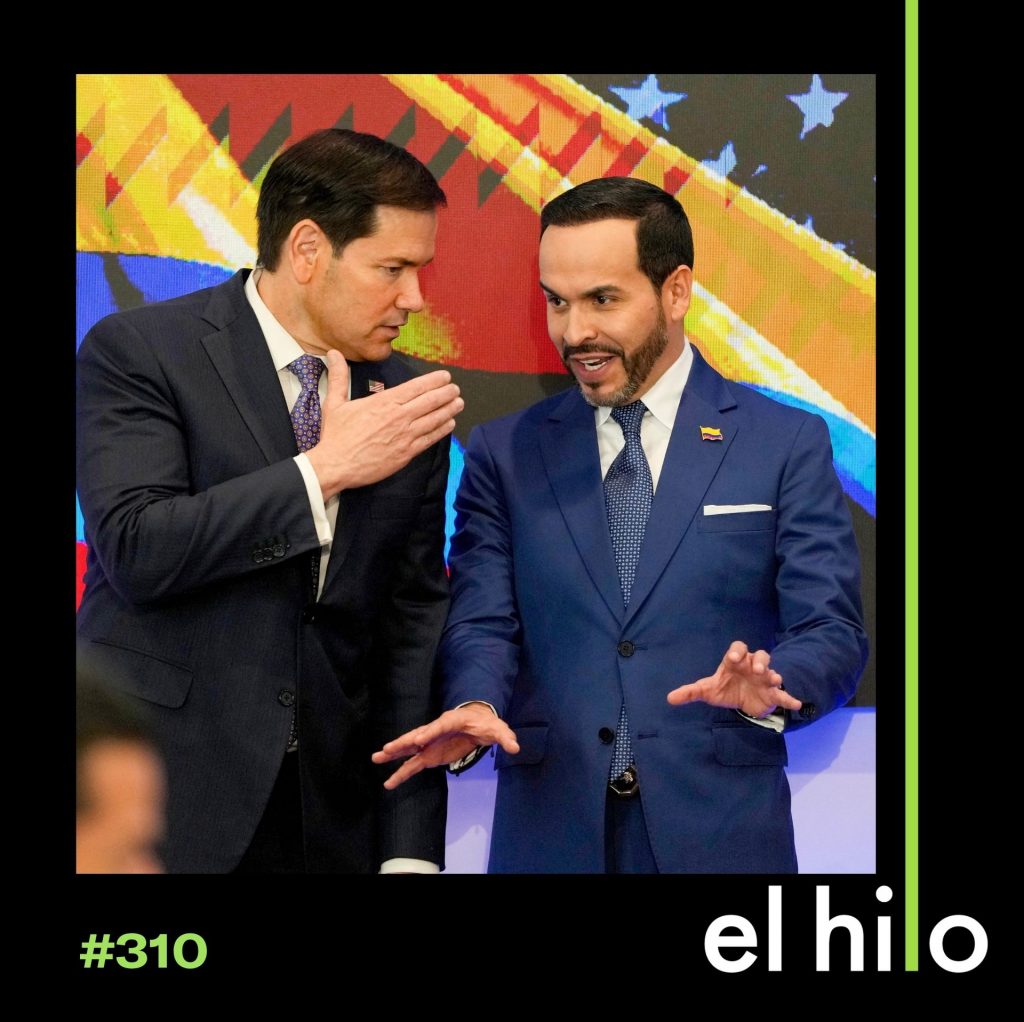


ESCÚCHANOS EN TU DISPOSITIVO MÓVIL